
How can we help today?
Choose an option to see quick actions and get help faster.AC Inspection in Morgantown, KY
AC Inspection in Morgantown, KY
Struggling with AC inefficiency in Morgantown? Explore our comprehensive AC inspection services for optimal performance. Ensure your home's comfort with our expert solutions.
Is Your Cooling System Increasing Energy Bills Without Delivering Comfort?
Feeling the rising temperatures and humidity in Morgantown isn't pleasant when your air conditioning unit fails to perform efficiently. When your cooling system struggles to maintain a consistent temperature, immediate professional intervention is required to restore comfort and prevent costly breakdowns. Contact us today to schedule a comprehensive system evaluation or to discuss available financing options for major repairs.
Homeowners frequently ignore minor inefficiencies until the system stops working entirely during a heatwave. Delaying an inspection often results in higher monthly utility costs and reduced equipment lifespan. Carter Heating and Cooling provides thorough assessments to identify the root cause of performance issues before they escalate into catastrophic failures.
- Comprehensive system diagnostics completed within hours, not days.
- Transparent, upfront pricing structures with absolutely no hidden fees.
- Guaranteed quality service performed by certified, background-checked professionals.
All services performed meet strict local codes and come with extended warranties and flexible financing options for qualified homeowners.
What a Comprehensive AC Inspection Includes
A professional air conditioning inspection is a rigorous technical audit of your HVAC system’s health. It goes beyond a simple filter change or a quick glance at the outdoor unit. The goal is to verify that the equipment operates within the manufacturer's specified parameters for pressure, temperature, and electrical consumption.
In Morgantown, where the humid subtropical climate places a heavy load on cooling infrastructure, specific components are prone to faster degradation. A proper inspection evaluates the entire refrigeration cycle, the electrical control circuit, and the air distribution system. This holistic approach ensures that every part of the unit contributes to cooling efficiency rather than hindering it.
Critical Component Analysis
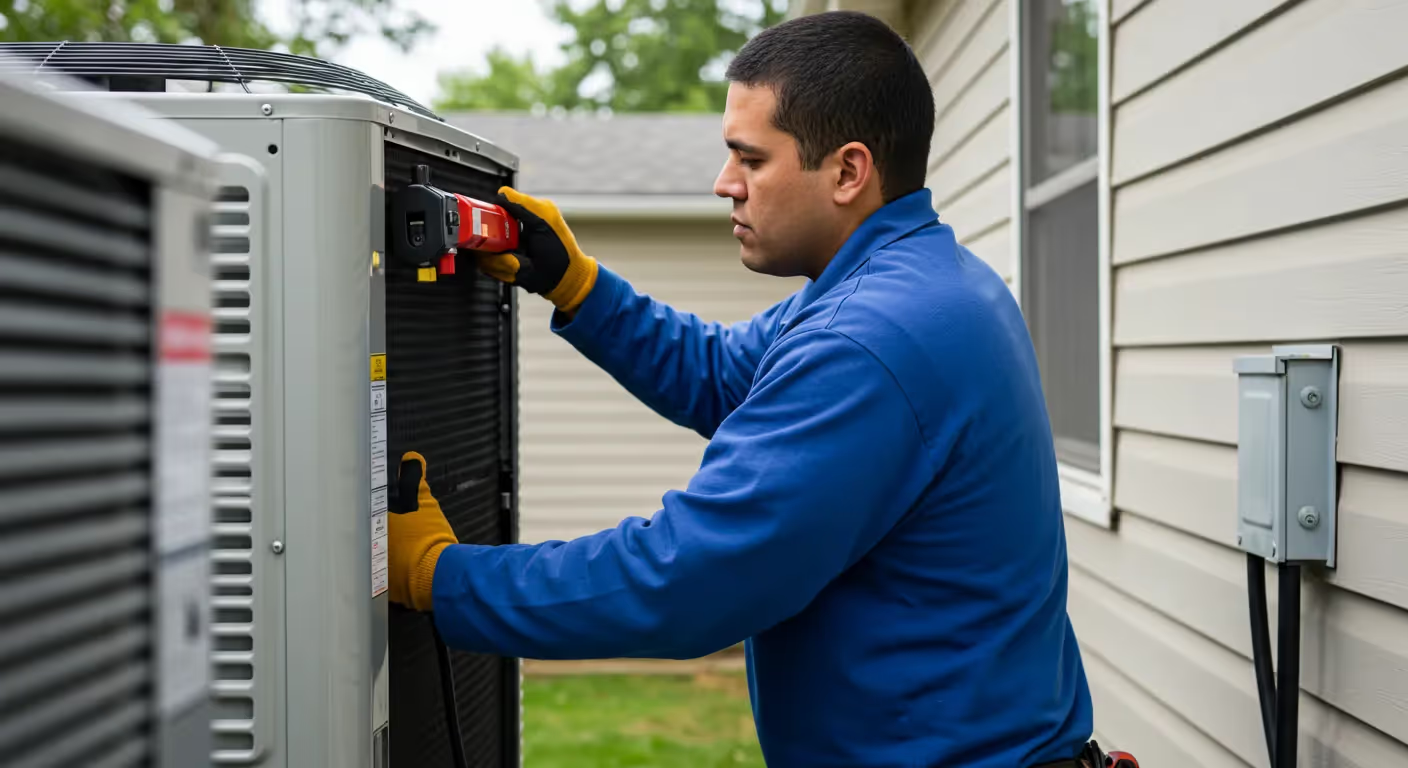
Technicians focus heavily on the internal components that drive the cooling process. This includes measuring the amperage and voltage of the compressor and fan motors. If a motor draws too much power, it indicates internal friction or failing windings, which are precursors to burnout.
- Refrigerant Charge Verification: Incorrect refrigerant levels—whether too high or too low—drastically reduce efficiency. Low levels often indicate a leak that must be located and sealed, while high levels can damage the compressor.
- Capacitor Testing: Start and run capacitors are essential for starting motors and keeping them running. These inexpensive parts are the most common cause of system failure; testing their microfarad ratings ensures they are within the acceptable range.
- Contactor Inspection: The contactor is the switch that controls the flow of electricity to the compressor. Pitted or burnt contacts can cause voltage drops and eventual compressor failure.
- Condensate Drain Line Clearing: In high-humidity environments, AC units remove significant moisture from the air. Clogged drain lines can lead to water damage and system shutoff via safety float switches.
Airflow and Static Pressure Testing
Cooling capacity is irrelevant if the system cannot move air effectively through the ductwork. Static pressure testing measures the resistance against the blower motor. High static pressure suggests undersized ducts, dirty coils, or restrictive filters, all of which strain the blower and reduce the system’s SEER rating in real-world applications.
Technicians examine the evaporator coil for dust buildup and impact. Even a micro-layer of dust on the coil acts as an insulator, preventing the refrigerant from absorbing heat from your home. This forces the unit to run longer cycles to achieve the thermostat setting, driving up electricity usage.
The Inspection Process: Step-by-Step
Understanding the workflow of a professional visit helps homeowners prepare and ensures transparency. The process is designed to be systematic, leaving no component unchecked.
- Visual and Safety Audit: First, the technician performs a safety check around the unit. This involves looking for loose electrical connections, exposed wiring, and signs of overheating. The area surrounding the outdoor condenser is checked for debris, vegetation encroachment, or structural damage caused by weather.
- System Operation and Diagnostics: Next, the system is engaged to run a full cycle. Thermostats are calibrated to ensure they read the room temperature accurately. During operation, temperature differentials (Delta T) are measured between the return air and supply air. A healthy system typically shows a drop of 16 to 22 degrees Fahrenheit.
- Cleaning and Adjustment: Then, critical maintenance tasks are performed. Electrical connections are tightened to prevent arcing. Moving parts, such as fan bearings, are lubricated if applicable. The condenser coil is often cleaned to remove dirt, pollen, and grass clippings that block heat rejection.
- Reporting and Recommendations: Finally, the technician provides a detailed report of the findings. This includes the current status of the equipment, immediate repair needs, and potential future issues. If the system is operating well, this report serves as documentation for warranty maintenance compliance.
Carter Heating and Cooling utilizes advanced diagnostic tools during this phase to detect issues that are invisible to the naked eye, such as minute refrigerant leaks or internal electrical resistance.
When Replacement Beats Repair: The Decision Guide
Determining whether to invest in an inspection and subsequent repair or to replace the entire system is a financial decision based on data. While an inspection aims to extend the life of the unit, there are thresholds where continued repair becomes economically unviable.
The 5000 Rule
Industry professionals often use the "$5000 Rule" to aid decision-making. Multiply the age of your equipment by the estimated cost of the repair. If the total exceeds $5,000, replacement is generally the smarter investment. For example, if a 12-year-old unit requires a $500 repair (12 x 500 = 6,000), the money is better spent on a new, more efficient system.
Efficiency Considerations
Older units, particularly those installed more than 10 to 15 years ago, likely have a SEER (Seasonal Energy Efficiency Ratio) rating of 10 or 12. Modern standards and units often exceed SEER 14 or 16. Upgrading to a higher efficiency unit can result in monthly energy savings that offset the monthly cost of financing a new system. An inspection will reveal the actual operating efficiency of the current unit, providing real data for this calculation.
Frequency of Breakdowns
If a system requires refrigerant top-offs every season or has suffered multiple component failures (fan motor, capacitor, control board) within a two-year window, the unit has likely reached the end of its reliable service life. Inspections in this scenario often serve as a confirmation that the compressor—the heart of the system—is nearing failure.
Managing Local Climate and Seasonality Factors
Operating an air conditioning system in Morgantown requires specific attention to regional weather patterns. The local climate is classified as humid subtropical, meaning summers are not just hot but laden with moisture. This humidity creates a specific set of challenges for HVAC equipment that a standard inspection must address.
Humidity Control and Moisture Removal
The primary function of an AC in this region is dehumidification. If an AC unit is short-cycling (turning on and off too quickly), it cools the air but fails to remove humidity. This leaves the home feeling clammy and promotes mold growth in ductwork. Inspections verify that the system runs long enough to pull moisture across the evaporator coil and drain it away effectively.
Seasonal Debris and Weather Impact
With annual rainfall averaging around 50 inches and significant precipitation in March and April, outdoor units are frequently subjected to mud splatter and storm debris. Leaves, pine needles, and grass clippings can mat against the condenser fins, restricting airflow.
- Winter Impact: Although snowfall averages only 10 inches, freeze-thaw cycles can shift the concrete pad the condenser sits on, straining refrigerant lines.
- Spring Cleaning: The wet spring season often leads to rapid vegetation growth around the unit. An inspection ensures that the required 24-inch clearance is maintained for proper heat dissipation.
Regulatory Compliance and Codes
Local building codes and environmental regulations regarding refrigerant handling are strictly enforced. Older systems utilizing R-22 refrigerant are becoming increasingly expensive to service due to phase-outs. A professional inspection identifies if your system relies on obsolete refrigerants and ensures that any handling or disposal meets federal and local environmental standards.
Identifying Hidden Hazards Through Inspection
Beyond comfort and cost, an AC inspection is a matter of safety. HVAC systems involve high-voltage electricity and high-pressure gases. Neglected systems can develop hazardous conditions that put the property and occupants at risk.
Electrical Fire Risks
Vibrations from the compressor and fan can loosen electrical connections over time. Loose connections create resistance, which generates heat. This can lead to melted wires, arcing, and electrical fires. Technicians use thermal imaging or spot thermometers to identify hot spots in the electrical panel of the AC unit.
Condensate Leaks and Water Damage
A blocked condensate drain is one of the most common causes of home water damage related to HVAC systems. If the drain line blocks and the secondary drain pan is rusted or lacks a safety switch, water can overflow into attics, ceilings, or finished basements. This water damage often goes unnoticed until structural damage has occurred. Regular inspections ensure the drainage system is clear and safety switches are functional.
Mold and Indoor Air Quality
A neglected system with a dirty evaporator coil and a wet drain pan is a breeding ground for biological growth. As air passes over the contaminated coil, mold spores and bacteria are distributed throughout the living space. This degrades indoor air quality and can trigger allergies or respiratory issues. Checking the biological status of the internal components is a key part of the health check.
Why Professional Execution Matters
The difference between a quick check-up and a professional inspection lies in the depth of diagnostics. Homeowners often attempt DIY maintenance, such as hosing down the outdoor unit, but lack the tools to measure superheat, subcooling, or static pressure.
Professional technicians arrive equipped with digital manifolds, anemometers, and combustion analyzers (for furnace overlaps). They understand the intricate balance between airflow and refrigerant flow. A slight imbalance in refrigerant charge can reduce efficiency by 20%, a metric impossible to gauge without specialized gauges.
Furthermore, professional service providers carry the necessary insurance and certifications to protect the homeowner from liability. They have access to OEM (Original Equipment Manufacturer) parts, ensuring that any replacement components meet the exact specifications of the unit, preserving existing warranties.
Securing Your System's Performance
Ignoring the warning signs of a struggling air conditioner typically leads to emergency calls during the hottest weeks of the year. Proactive evaluation of your cooling infrastructure ensures consistent temperature control, lowers energy consumption, and extends the operational life of the equipment. It transforms an unpredictable liability into a reliable utility.
Whether the system requires a simple tune-up, a complex repair, or a strategic replacement, the goal remains the same: reliable, efficient cooling that handles the local climate demands. Make the decision to prioritize system health before the heat becomes unmanageable.
Contact Carter Heating and Cooling today to schedule your AC inspection and ensure your home remains comfortable all season long.

Great Service at a Fair Price
Veterans Discount


Senior Discount

Law Enforcement

Fire fighters/ems

Hear From Your Neighbors!
Hear from your neighbors to see how our commitment to dependable service and lasting comfort has made a difference in their homes.