
How can we help today?
Choose an option to see quick actions and get help faster.Emergency Repair in Bowling Green, KY
Emergency Repair in Bowling Green, KY
Experiencing an HVAC emergency in Bowling Green, KY? Contact us for immediate 24/7 emergency repairs and restore home comfort swiftly. Learn more today.
Immediate Help for Home Emergencies
When a home emergency strikes in the middle of the night or during a weekend, you can’t wait for regular business hours. You need fast, reliable repair services now to restore safety and comfort to your home. Contact us immediately to dispatch a technician or inquire about financing options for urgent repairs.
Carter Heating and Cooling understands that heating and cooling failures rarely happen at convenient times:
- Get emergency repairs any hour, any day — services available 24/7.
- Our team responds quickly, ensuring that your urgent issues are addressed immediately.
- Benefit from our local experts who know your area and are ready to help quickly.
All services are guaranteed with verified licensing and warranties for your peace of mind.
What to Expect From 24/7 Emergency Service
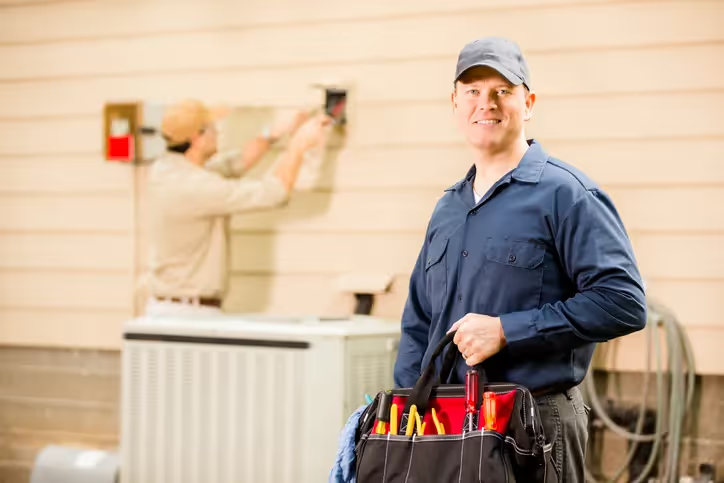
When your HVAC system fails in Bowling Green, KY, the primary goal is stabilizing your home environment before extreme temperatures cause damage to the property or health risks to your family. Emergency service is distinct from routine maintenance; it focuses on rapid mobilization and targeted problem-solving.
The Scope of Emergency Repairs
Not every noise or rattle constitutes an emergency, but specific scenarios demand immediate professional intervention. Emergency service covers critical failures that compromise safety or habitability:
- Complete System Failure: If the furnace or air conditioner refuses to turn on during extreme weather, the temperature inside the home can rise or fall to dangerous levels within hours.
- Gas Leaks or Smells: The scent of sulfur or rotten eggs near a furnace indicates a potential gas leak, requiring immediate shut-off and professional inspection to prevent fire or explosion hazards.
- Electrical Burning Odors: Acrid smells coming from vents suggest overheating wires or motors, which pose a significant fire risk if the system is left running.
- Water Leaks: Excessive condensate drainage or frozen coils that are thawing can cause water damage to flooring, ceilings, and drywall.
- Loud, Screeching Noises: Metal-on-metal sounds often indicate a seized motor or bearing failure that can destroy the entire unit if not stopped immediately.
Timelines and Availability
The hallmark of emergency service is availability outside of the standard 9-to-5 window. You receive priority status in the dispatch queue:
- Immediate Dispatch: Technicians are on standby to respond to calls during nights, weekends, and holidays.
- Fully Stocked Vehicles: Service trucks arrive loaded with common universal parts—capacitors, contactors, motors, and control boards—to maximize the chance of a "one-trip" fix.
- Diagnostic Focus: The immediate objective is to identify the root cause and, at a minimum, implement a temporary fix to restore climate control while a permanent solution is finalized.
How the Emergency Repair Process Works
Navigating a system failure is stressful, but the process of correcting it follows a structured, efficient path designed to minimize downtime. We utilize a streamlined workflow to ensure you know exactly what is happening at every stage of the repair:
- Initial Assessment: Upon arrival, the technician performs a safety check and runs diagnostics on the thermostat, electrical connections, and mechanical components to pinpoint the failure.
- Clear Explanation: Once the issue is identified, the technician explains the cause of the breakdown, showing you the failed part or the reading on the diagnostic tools.
- Upfront Options: You receive a breakdown of the necessary repairs. If multiple solutions exist (such as a temporary patch versus a full part replacement), these options are presented clearly.
- Execution of Repair: With your approval, the technician proceeds with the repair using on-hand inventory. This may involves brazing refrigerant lines, replacing electrical relays, or clearing condensate blockages.
- System Testing: After the repair is complete, the system is cycled through a full run to ensure it reaches the set temperature and operates without abnormal noise or vibration.
- Final Report: You receive documentation of the work performed, the parts used, and any recommendations for future care to prevent a recurrence.
Deciding Between Repair and Replacement
During an emergency call, homeowners often face a difficult decision: is it worth pouring money into a broken unit, or is it time to invest in a new system? This decision usually comes down to safety, age, and cost efficiency.
The 50% Investment Rule
A common industry standard for making this decision is the "50% Rule." If the cost of the emergency repair approaches or exceeds 50% of the value of a new system (or 50% of the cost of a new unit installation), replacement is generally the smarter financial move.
System Age and Reliability
Heating and cooling systems have a finite lifespan. In areas like Bowling Green, where systems work hard in both summer and winter, wear and tear accelerates:
- Under 10 Years Old: Unless the unit has been severely neglected or suffered catastrophic damage (like a lightning strike), repair is usually the best option. Parts are likely under warranty, and the technology is still relevant.
- 10 to 15 Years Old: This is the "gray area." If the repair is minor (like a capacitor or sensor), fix it. If the compressor or heat exchanger has failed, replacement offers better long-term value.
- Over 15 Years Old: Systems of this age are operating on borrowed time. Major repairs are rarely cost-effective. New units offer significantly higher efficiency, which can lower utility bills immediately.
Refrigerant Considerations
Older air conditioners may utilize R-22 refrigerant (Freon), which has been phased out and is prohibitively expensive to restock. If an older unit has a refrigerant leak, topping it off is often a waste of money compared to installing a modern system that uses compliant, eco-friendly refrigerants.
Safety Implications
Safety is the ultimate tie-breaker. If a furnace has a cracked heat exchanger, it cannot be safely repaired; it must be replaced to prevent carbon monoxide poisoning. Similarly, if a system has experienced repeated electrical shorts that threaten the home's wiring, a full replacement ensures the safety of the household.
Local Factors Impacting HVAC Emergencies
The climate and infrastructure in this region create specific challenges for heating and cooling systems. Understanding these local factors helps explain why systems fail and how to prevent future emergencies.
High Humidity and Summer Load
Summers here are characterized by intense humidity. Your air conditioner does more than just cool the air; it dehumidifies it:
- Mold and Moisture: If an AC fails for an extended period, indoor humidity spikes rapidly, encouraging mold growth in carpets and drywall.
- Drainage Issues: The high volume of moisture pulled from the air can overwhelm condensate drain lines. Algae buildup in these lines is a common cause of emergency calls when water triggers safety float switches, shutting down the unit.
Winter Ice and Heating Demand
Winters bring freezing temperatures and occasional ice storms:
- Heat Pump Defrost Cycles: Heat pumps are common in the area. During icy conditions, the outdoor unit must run a defrost cycle. If the defrost board fails or sensors malfunction, the unit can turn into a block of ice, crushing the fan blades or burning out the compressor.
- Frozen Pipes: A furnace failure during a cold snap puts the home’s plumbing at risk. If the interior temperature drops below freezing, pipes can burst, turning an HVAC issue into a major plumbing disaster.
Local Utilities and Codes
Dealing with emergency replacements or major electrical repairs involves coordination with local standards:
- Utility Requirements: Interaction with Bowling Green Municipal Utilities (BGMU) may be necessary if the electrical service to the HVAC unit needs upgrading or if there are issues with the meter during a new installation.
- Permitting: Major repairs or replacements must adhere to local building codes to ensure safety and efficiency. This includes proper venting for gas furnaces and disconnect boxes for outdoor AC units.
Specialized Emergency Troubleshooting
When Carter Heating and Cooling arrives at your home, we look beyond the obvious symptoms to find the underlying cause. Simply resetting a breaker doesn't solve the problem if the motor that tripped it is seizing up. Our approach involves deep-dive troubleshooting.
Electrical Diagnosis
Electrical failures are the most common cause of "no heat" or "no cool" calls:
- Capacitors: These components store energy to start the compressor and fan motors. They weaken over time and often fail during the first heat wave of the summer.
- Contactors: These switches control the flow of electricity to the high-voltage components. Pitted or burnt contactors can cause motors to run erratically or not at all.
- Wiring Issues: Vibrations can loosen wire connections over time, leading to arcing and burnt wires.
Airflow and Pressure Analysis
A system cannot heat or cool if it cannot move air:
- Static Pressure: High static pressure (often caused by dirty filters or undersized ductwork) kills blower motors. We measure pressure to ensure the repair lasts.
- Refrigerant Charge: Incorrect refrigerant levels reduce efficiency and can damage the compressor. We use precision gauges to ensure the charge meets manufacturer specifications.
Ignition and Combustion (Gas Furnaces)
For gas heat, safety is paramount:
- Flame Sensors: A dirty flame sensor will shut the furnace down seconds after it lights to prevent gas buildup. Cleaning or replacing this sensor is a common emergency fix.
- Igniters: Hot surface igniters are brittle and can crack, preventing the gas from lighting.
- Inducer Motors: These motors clear exhaust gases. If they fail, the pressure switch prevents the furnace from firing.
Why Professional Emergency Service Matters
Attempting DIY repairs during an HVAC emergency can be dangerous and costly. Modern systems operate on high-voltage electricity and use combustible gases or high-pressure refrigerants:
- Warranty Protection: Most manufacturer warranties require repairs to be performed by a licensed professional. DIY attempts can void these warranties, leaving you responsible for the full cost of future parts.
- Correct Diagnosis: Misdiagnosing a problem leads to "parts changing"—replacing good parts hoping to fix the issue. A professional diagnosis identifies the actual failure point immediately.
- Safety Assurance: Professionals carry the tools to detect gas leaks and carbon monoxide, ensuring the home is safe for occupancy after the repair is finished.
- Long-Term Reliability: An emergency fix shouldn't just be a patch. It should be a repair that holds up under the stress of the season.
When your system goes down, you need a partner who understands the urgency of the situation and the technical requirements of modern HVAC equipment. We provide the expertise needed to navigate these stressful situations, ensuring your home returns to a comfortable temperature as quickly as possible.
Restore Comfort Quickly With Carter Heating and Cooling
When an HVAC emergency disrupts your home, you need more than a quick fix—you need a trusted local team that can respond 24/7, diagnose issues accurately, and guide you confidently between repair and replacement. Carter Heating and Cooling delivers fast-response emergency service, expert troubleshooting, and clear options that fit your budget, including HVAC financing options, ongoing protection through our HVAC maintenance plan, and access to current HVAC specials in Bowling Green, KY. If your system has failed or is showing serious warning signs, contact Carter Heating and Cooling today to schedule your emergency repair service and get your home safe, comfortable, and back to normal as quickly as possible.
Schedule your emergency repair service now.

Great Service at a Fair Price
Veterans Discount


Senior Discount

Law Enforcement
Fire fighters/ems
Hear From Your Neighbors!
Hear from your neighbors to see how our commitment to dependable service and lasting comfort has made a difference in their homes.