
How can we help today?
Choose an option to see quick actions and get help faster.Heating Service in Bowling Green, KY
Heating Service in Bowling Green, KY
Heating Service in Bowling Green, KY
Struggling with Climate Control? Get Reliable Heating Services Now!
Facing unexpected chills or a malfunctioning heater just when you need it most can disrupt your entire household routine. Carter Heating and Cooling offers rapid, reliable solutions around the clock to restore warmth to your home immediately. Contact us now to request emergency service or to inquire about our financing options for system replacements.
Residents in Bowling Green know that while winters may be mild, temperatures can drop below freezing, making a functional heating system a non-negotiable safety requirement. When your system fails, you need more than a quick fix; you need a permanent solution that ensures efficiency and longevity.
- Enjoy immediate emergency services with 24/7 availability for critical failures.
- Benefit from highly-rated local expertise and prompt installations that minimize downtime.
- Get climate control that lasts with premium, energy-efficient units designed for local weather patterns.
Securing your comfort involves working with certified professionals who provide comprehensive service warranties and code-compliant repairs.
Comprehensive Diagnostics and Immediate Heating Restoration
When a heating system falters, the priority is identifying the root cause accurately to prevent recurring issues. Modern heating systems, whether gas furnaces or electric heat pumps, rely on a complex interplay of electrical components, airflow dynamics, and fuel combustion. A surface-level inspection often misses the underlying problems that lead to total system failure later in the season.
The diagnostic process begins with a thorough evaluation of the thermostat communication. Often, the issue is not with the heat generation itself but with the control signals sent from the interface to the main unit. Technicians verify that the thermostat is correctly reading ambient temperatures and sending the appropriate voltage signals to the furnace board.
Following the control check, the focus shifts to the mechanical and electrical safety circuits. This includes:
- Limit Switch Verification: Ensuring the fan turns on at the right temperature to prevent the heat exchanger from overheating.
- Ignition System Testing: Checking the hot surface ignitor or pilot light assembly for proper function and resistance.
- Flame Sensor Cleaning: Removing oxidation from the flame sensor to ensure the gas valve stays open during the heating cycle.
- Blower Motor Amp Draw: Measuring the electrical usage of the motor to predict potential burnouts or capacitor failures.
Airflow restrictions are another primary culprit for heating inefficiency. If the system is strangling for air due to dirty filters or blocked returns, the internal components work twice as hard, leading to premature wear. A complete restoration service involves assessing static pressure within the ductwork to ensure the system is breathing correctly. This holistic approach ensures that once the heat comes back on, it stays on, operating safely and efficiently.
The Heating Service and Installation Workflow
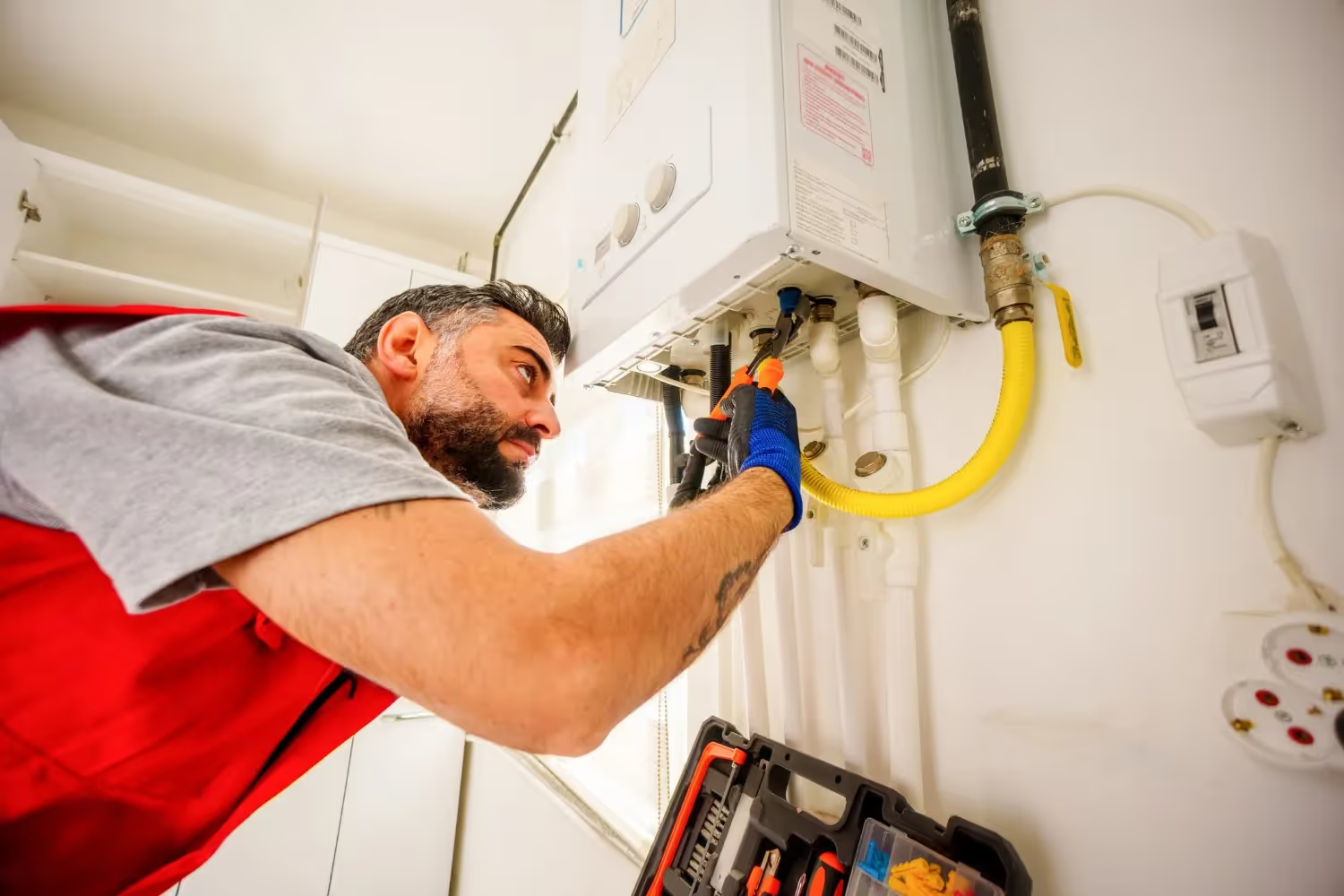
Understanding what happens during a service visit or installation helps homeowners prepare for the work ahead. Professional heating service follows a structured workflow designed to maintain safety standards and ensure the highest quality of workmanship. This process eliminates guesswork and ensures that every component is installed or repaired according to manufacturer specifications.
Site Assessment and Sizing
The first step in any major service or installation is a Manual J load calculation if a new unit is being considered. This calculation determines the exact heating requirements of the property based on square footage, insulation levels, window types, and local climate data. Installing a unit that is too large causes short-cycling, while a unit that is too small will run continuously without reaching the set temperature.
Preparation and Safety Setup
Technicians prepare the workspace to protect the property. Drop cloths are laid down, and gas or electrical supplies are safely disconnected. If an old unit is being removed, environmental protocols are followed to capture any refrigerants (in the case of heat pumps) and dispose of old equipment responsibly.
Installation and Connection
- The new furnace or air handler is positioned and leveled to ensure proper drainage of condensate.
- Gas lines are connected using hard pipe or approved flexible connectors, followed immediately by a bubble test to check for leaks.
- Electrical connections are tightened to specific torque settings to prevent arcing or overheating wires.
- Flue pipes and venting are installed to ensure carbon monoxide is safely exhausted outside the home, adhering to local building codes.
System Commissioning
Once the physical installation is complete, the system is commissioned. This is not simply turning it on; it involves adjusting the gas pressure at the manifold to match the manufacturer’s rating plate. Technicians adjust the blower speed to achieve the correct temperature rise (the difference in temperature between the supply and return air). This fine-tuning ensures the system operates at its rated efficiency (AFUE) from day one.
Deciding Between Heating Repair and System Replacement
Homeowners frequently face the dilemma of whether to invest in another repair or to commit to a full system replacement. Making the right decision depends on a combination of financial logic, system age, and performance expectations. While a repair might seem cheaper upfront, an inefficient or dying system can cost thousands more in energy bills and repeated service calls over time.
The 50% Rule
A standard industry guideline is the 50% rule. If the cost of the repair approaches 50% of the value of a new system, replacement is generally the wiser financial choice. For example, replacing a cracked heat exchanger or a failed compressor out of warranty is a major expense. Putting that money toward a new unit with a fresh warranty often yields a better return on investment.
Age of the Equipment
Heating systems have a finite lifespan. Gas furnaces typically last 15 to 20 years, while heat pumps may last 10 to 15 years due to their year-round usage. If your unit is approaching or has exceeded this age range, parts may become obsolete or difficult to source. Even if a repair keeps it running, the efficiency of an older unit has likely degraded significantly.
Efficiency and Operating Costs
Older systems often operate at 60% to 70% AFUE (Annual Fuel Utilization Efficiency). This means 30 to 40 cents of every dollar spent on heating fuel is wasted. Carter Heating and Cooling can install modern systems that achieve ratings of 90% to 98% AFUE. The monthly savings on utility bills can offset the monthly cost of financing a new system.
Comfort and Reliability
If the current system results in uneven heating, with some rooms freezing while others are hot, or if the unit is excessively noisy, repair rarely solves these fundamental design or wear issues. Newer systems offer features like:
- Modulating Gas Valves: These adjust the flame size in small increments to maintain a precise temperature.
- Variable Speed Blowers: These run at lower speeds for longer periods to improve air filtration and eliminate cold drafts.
- Smart Thermostat Integration: Allowing for remote monitoring and automated scheduling to maximize savings.
Regional Considerations for Heating Efficiency
Operating a heating system in Kentucky requires specific attention to the local climate environment. The region experiences significant humidity variations and temperature swings that impact how heating systems perform and deteriorate. Understanding these local factors ensures that the selected equipment is capable of handling the load.
Humidity Control in Winter
While summers in the area are humid, winters can be dry, or conversely, damp and cold. A well-functioning heating system should not strip all moisture from the air, which can cause discomfort and respiratory issues. Conversely, heat pumps need to handle the defrost cycles efficiently when outdoor temperatures hover near freezing with high ambient moisture. Proper drainage installation is critical to prevent ice buildup on outdoor units during these conditions.
Heat Pumps vs. Gas Furnaces
In this region, dual-fuel systems are often the most efficient choice. A heat pump handles the heating load during mild winter days (above 40°F), which is highly efficient. However, when temperatures plunge below freezing, the system automatically switches to a gas furnace for auxiliary heat. This "hybrid" approach maximizes electricity savings while ensuring powerful heating during cold snaps.
Permits and Utility Requirements
Local building codes dictate specific requirements for venting, gas line sizing, and electrical circuit capacity. Upgrading a heating system often requires pulling a permit to ensure the work meets safety standards. This includes verifying that the flue liner in the chimney is compatible with the new, high-efficiency furnace. High-efficiency units produce acidic condensate that can eat through old masonry or metal liners, so installing PVC venting or specialized liners is often required for compliance and safety.
Technical Execution and Long-Term Reliability
The difference between a heating system that fails in five years and one that lasts for twenty lies in the technical execution of the service. High-quality heating service is not just about swapping parts; it is about understanding the thermodynamics of the home.
Proper airflow is the lifeblood of any HVAC system. Technicians ensure that the ductwork is sized correctly for the new unit. If a high-output furnace is connected to undersized ductwork, the system will overheat, triggering safety limits and shortening the life of the heat exchanger. Professional service includes an evaluation of the static pressure to guarantee the blower motor is not overworking.
Furthermore, electrical safety is paramount. Loose connections are a leading cause of system failure and fire hazards. Professional maintenance involves tightening all electrical terminals and inspecting wire insulation for signs of heat stress or rodent damage.
Take Action Now!
Choosing the right service provider means choosing peace of mind. It means knowing that the technician has checked the carbon monoxide levels, verified the gas pressure, and calibrated the thermostat. It means that when the temperature drops, the system will respond immediately.
For homeowners requiring consistent performance, energy efficiency, and rapid response times, professional intervention is the only path to comfort. Ensure your home remains warm and safe through the season. Contact us today to schedule your heating service or system assessment.

Great Service at a Fair Price
Veterans Discount


Senior Discount

Law Enforcement

Fire fighters/ems

Hear From Your Neighbors!
Hear from your neighbors to see how our commitment to dependable service and lasting comfort has made a difference in their homes.