
How can we help today?
Choose an option to see quick actions and get help faster.Heating Replacement in Bowling Green, KY
Heating Replacement in Bowling Green, KY
Heating Replacement in Bowling Green, KY
Is Your Heating System Failing When You Need It Most?
Facing unpredictable heating issues or realizing your current unit can no longer keep up with the winter chill in Bowling Green? When your furnace or heat pump stops working efficiently, you need a solution that restores safety and comfort to your home immediately. Contact us today to schedule an assessment or apply for financing to get your new system installed without delay.
Carter Heating and Cooling provides comprehensive replacement services designed to minimize downtime and maximize energy efficiency. We understand that a breakdown during a cold snap is more than an inconvenience; it is a disruption to your daily life. Our team focuses on accurate load calculations and precise installation techniques to ensure your new equipment performs flawlessly for years to come — read our reviews.
- Get 24-hour emergency service to ensure you are never left in the cold.
- Professional installations with top-rated equipment tailored to your home’s layout.
- Transparent pricing with no hidden fees so you know exactly what to expect.
All services are fully licensed, ensuring your peace of mind with robust manufacturer warranties and flexible financing options.
What to Expect From a Professional Heating Replacement
Replacing a heating system involves much more than simply swapping out one metal box for another. It is a construction project within your home that requires technical expertise, electrical knowledge, and gas piping skills. When you authorize a replacement, the goal is to improve your home's overall energy profile, not just restore heat.
A complete replacement service covers every aspect of the transition from old technology to modern efficiency. This begins with the safe disconnection and removal of your existing unit. Old furnaces and heat pumps often contain refrigerants or components that must be disposed of according to strict environmental regulations. We handle all disposal logistics, ensuring your property is left clean and free of debris.
The scope of work includes:
- Site Preparation: Technicians lay down drop cloths and wear shoe covers to protect your flooring and furniture during the removal and installation phases.
- System Adaptation: We modify existing plenum and ductwork connections to ensure the new, likely more compact and efficient unit fits perfectly and seals tightly against air leaks.
- Component Replacement: Beyond the main unit, we replace necessary peripheral components such as the flue pipe, condensate lines, and often the thermostat to ensure compatibility with modern communication protocols.
- Safety Checks: For gas furnaces, we inspect gas lines for leaks and ensure proper ventilation to prevent carbon monoxide buildup. For electric systems, we verify voltage and amperage capacity.
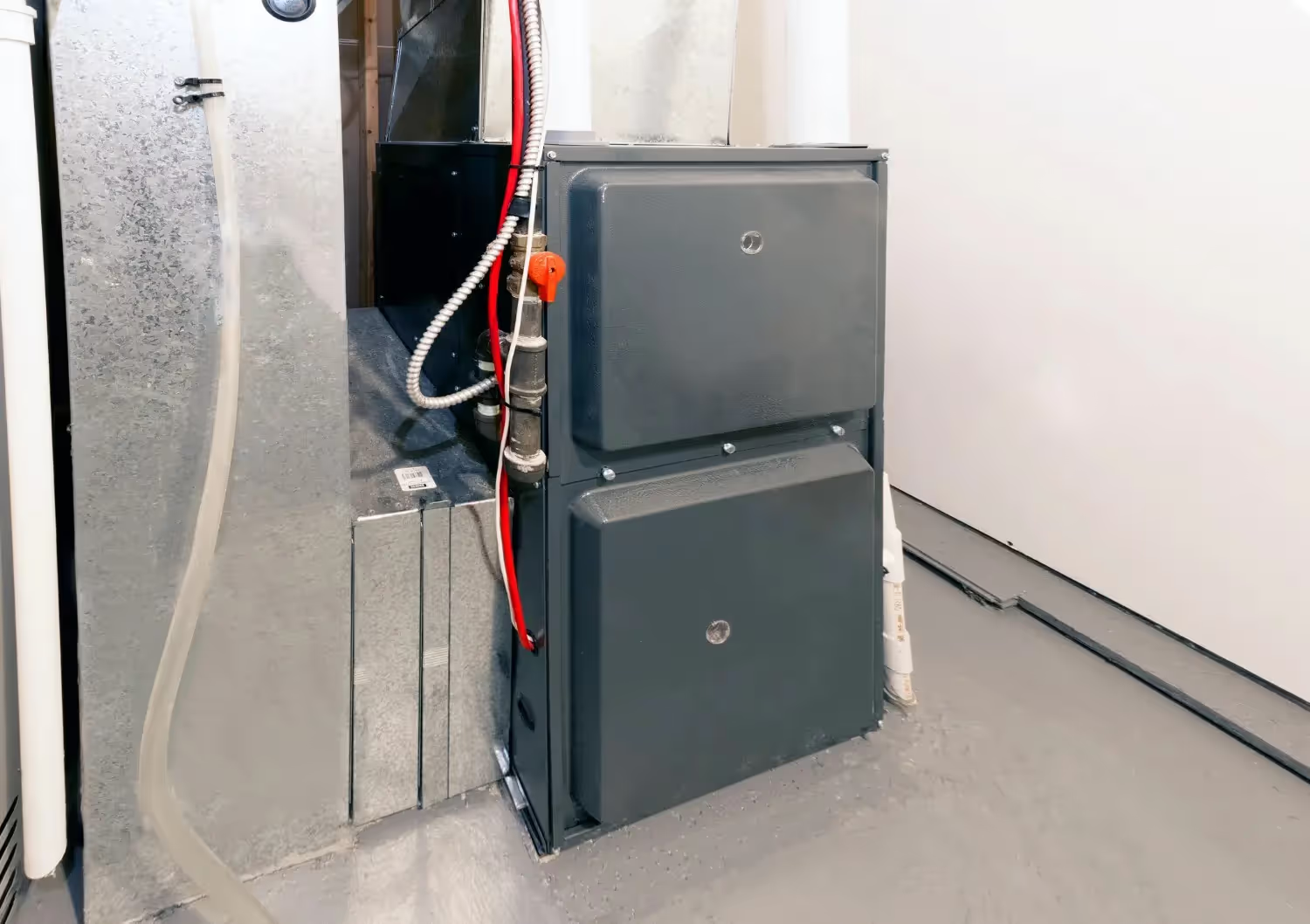
The Installation Process Step-by-Step
Understanding the installation timeline helps you plan your day — check our FAQs. Most residential replacements are completed within a single day, minimizing the time your home is without heat. The process is systematic, ensuring no step is overlooked for the sake of speed.
- Assessment and Sizing: Before any equipment is ordered, a technician performs a Manual J load calculation. This determines the exact heating requirements of your specific floor plan, insulation levels, and window orientation. This step prevents the installation of an oversized or undersized unit.
- Safe Removal: The crew shuts off power and gas supplies. They carefully disconnect the old equipment, preserving the integrity of the surrounding ductwork and utility lines.
- Positioning and Leveling: The new unit is moved into place. Whether it is located in a basement, attic, or crawlspace, the unit must be perfectly level to ensure proper drainage of condensate and smooth operation of internal fans.
- Connection and Integration: Technicians connect the high-voltage wiring, low-voltage control wires, gas piping, and ductwork. This phase requires adherence to local building codes to ensure safety.
- Commissioning and Testing: Once physically installed, the system is not just turned on; it is commissioned. We measure static pressure, check temperature rise, and verify that the thermostat is communicating correctly with the furnace or air handler.
Heat Pumps vs. Furnaces: Choosing the Right System
In the humid subtropical climate of Bowling Green, homeowners often face a choice between traditional furnaces and modern heat pumps. The region experiences distinct seasons with hot summers and moderately cold winters, making this decision critical for year-round comfort and efficiency.
Gas furnaces remain a popular choice due to their ability to generate high heat output quickly. If your home has access to natural gas, a high-efficiency furnace (AFUE 90% or higher) can provide an economical way to heat your home during the deepest freezes of January and February. Modern condensing furnaces extract nearly all the heat from the combustion process, wasting very little energy compared to older models.
Heat pumps are increasingly common in our area because they handle both heating and cooling. Since they move heat rather than generate it, they are incredibly efficient during the mild transitional weather of spring and autumn.
- Dual Fuel Systems: For maximum efficiency, many homeowners opt for a dual-fuel approach. This pairs an electric heat pump with a gas furnace. The heat pump handles the workload on mild days (above 35-40 degrees), which constitutes a large portion of the local winter. The gas furnace takes over only when temperatures drop significantly, providing the "emergency heat" needed for extreme cold snaps.
- AFUE Ratings: For furnaces, look at the Annual Fuel Utilization Efficiency (AFUE). A rating of 80% means 20% of the fuel energy escapes up the chimney. We recommend systems with 90% to 98% AFUE for long-term savings.
- HSPF2 Ratings: For heat pumps, the Heating Seasonal Performance Factor (HSPF2) measures efficiency. Higher numbers indicate a more efficient unit, which translates to lower monthly electric bills.
When Replacement Beats Repair
Deciding whether to repair an aging unit or invest in a replacement is a common dilemma. While repairs can solve immediate problems, they are often temporary fixes for a system near the end of its lifespan. Continuing to patch up a failing system can cost more in the long run due to inefficiency and repeated service calls.
Consider replacement if your system meets the following criteria:
- The 50% Rule: If the cost of the repair equals 50% or more of the cost of a new system, replacement is the financially sound choice.
- Age of Equipment: Furnaces typically last 15-20 years, while heat pumps last 10-15 years. If your unit is in this age range and requires a major component like a compressor or heat exchanger, retirement is usually the best option.
- Rising Energy Bills: As components wear out, motors work harder and coils get dirty, causing the system to draw more power. If your utility bills are creeping up despite normal usage, the system has likely lost its efficiency.
- Frequent Breakdowns: If you have required repairs more than twice in the last two years, the system has become unreliable. Reliability is crucial during winter when freezing pipes becomes a risk.
- Safety Concerns: Cracked heat exchangers in gas furnaces can leak carbon monoxide. If a safety inspection reveals a crack, the unit must be replaced immediately for the safety of your household.
Navigating Local Requirements and Climate Factors
Operating in Bowling Green requires specific knowledge of local climate challenges and regulatory requirements. The weather patterns here include high humidity in the summer and damp cold in the winter. This affects how heating systems should be configured. For instance, variable-speed blowers are highly recommended as they help control humidity levels year-round, preventing the "clammy" feeling that can occur in homes with single-stage equipment.
Permitting is another critical aspect of the replacement process. Most heating replacements require a permit from the local building department to ensure the work meets safety standards.
- Code Compliance: Local codes dictate specific requirements for venting, gas line materials, and electrical disconnects. Professional installers handle the permit application and ensure the final work passes the municipal inspection.
- Utility Coordination: Whether your home relies on Bowling Green Municipal Utilities or other local providers, we ensure your new equipment matches the available service amperage and gas pressure delivery.
- Ductwork Insulation: Because many local homes have ductwork running through unconditioned spaces like crawlspaces or attics, we inspect duct insulation during replacement. Proper insulation prevents heat loss before the air even reaches your living rooms.
Why Professional Sizing Matters
One of the most common issues with builder-grade heating installations is improper sizing. An oversized furnace will short-cycle, turning on and off frequently. This causes wear on the ignition system, creates uncomfortable temperature swings, and fails to properly filter the air. An undersized unit will run continuously on cold days, failing to reach the set temperature and driving up energy costs.
Carter Heating and Cooling utilizes precise load calculation software to match the equipment capacity to your home’s thermal envelope. We account for:
- Square Footage: The total volume of air that needs to be conditioned.
- Insulation Values: The R-value of insulation in your walls, attic, and floors.
- Windows and Doors: The type of glazing and the quality of weatherstripping.
- Internal Heat Loads: Heat generated by appliances, lighting, and occupants.
By right-sizing the equipment, we ensure steady operation, consistent temperatures, and extended equipment life.
The Role of Thermostats and Zoning in Replacement
Modern heating replacement is not just about the heavy machinery; it is also about control. Upgrading your thermostat is a standard part of the replacement process that unlocks the full potential of high-efficiency equipment.
Smart thermostats allow for remote access, learning algorithms that adapt to your schedule, and detailed energy usage reports. When replacing your system, we can also discuss zoning capabilities. Zoning divides your home into different areas with independent temperature controls. This is particularly useful for two-story homes where the upstairs tends to be hotter or colder than the downstairs.
- Communicating Systems: Advanced HVAC systems use communicating thermostats that send data back and forth between the unit and the controller. This allows the system to make minute adjustments to fan speed and heat output for maximum precision.
- Sensor Placement: We review the location of your thermostat. If it is located near a drafty door or a heat-producing appliance, it will read the temperature incorrectly. Relocating the thermostat during replacement can solve chronic comfort issues.
Ensuring Long-Term Performance
Investing in a new heating system is a significant decision that impacts your home’s value and your family's comfort. The quality of the installation is just as important as the brand of the equipment. A top-tier furnace installed poorly will fail sooner than a mid-range unit installed perfectly.
We differentiate our services by adhering to strict installation protocols that go beyond the manufacturer's minimum requirements. This includes verifying airflow with static pressure testing, setting gas manifolds to the correct pressure for optimal combustion, and ensuring all electrical connections are torqued to spec to prevent overheating.
From the initial consultation to the final walkthrough, our focus is on providing a solution that you do not have to worry about. We provide clear documentation of the work performed, register your equipment warranties for you, and offer maintenance plans to keep the new system running at peak efficiency.
Ready to Upgrade?
If you are ready to upgrade your home’s comfort and efficiency, do not wait for a total breakdown. Contact Carter Heating and Cooling today to discuss your heating replacement options.

Great Service at a Fair Price
Veterans Discount


Senior Discount

Law Enforcement

Fire fighters/ems

Hear From Your Neighbors!
Hear from your neighbors to see how our commitment to dependable service and lasting comfort has made a difference in their homes.