

How can we help today?
Choose an option to see quick actions and get help faster.Furnace Inspection in Bowling Green, KY
Furnace Inspection in Bowling Green, KY
Furnace Inspection in Bowling Green, KY
Prevent a Complete Heating Breakdown During Freezing Weather
Don't let a faulty furnace leave you out in the cold this winter; ensure your home stays warm and safe with our expert furnace inspection services. Contact us today to schedule a comprehensive diagnostic or apply for financing to cover necessary repairs immediately.
- Quick diagnosis and detailed inspection within hours of your call.
- Transparent pricing and reliable service from certified technicians.
- 24/7 availability for all furnace emergencies in Bowling Green.
Licensed, bonded, and insured—your peace of mind is our priority.
Detailed Scope of Professional Furnace Inspection
A furnace inspection is not merely a glance at the unit; it is a rigorous, point-by-point analysis of the entire heating system designed to uncover latent issues before they evolve into expensive failures. In Bowling Green, where winter temperatures frequently drop below freezing, the reliability of your heating equipment is tied directly to the thoroughness of its maintenance. Homeowners often ask what is specifically included in a professional tune-up. The process involves a deep dive into the mechanical, electrical, and safety components of the unit.
The primary focus begins with the heat exchanger. This component is critical for separating combustion gases from the breathable air in your home. Over time, the constant expansion and contraction caused by heating cycles can lead to hairline cracks. A professional inspection utilizes camera scopes and combustion analyzers to detect these breaches. If a crack is present, it poses a severe carbon monoxide risk, requiring immediate attention. Carter Heating and Cooling technicians prioritize this safety check above all else to ensure the air circulating through your vents is free of poisonous gases.
Beyond safety, the inspection targets efficiency and mechanical operation. The blower motor and wheel are examined for debris buildup, which can restrict airflow and cause the motor to overheat or fail prematurely. Electrical connections are tightened and tested for voltage drops or amperage spikes, which are common indicators of failing components. The ignition system, whether it is a hot surface igniter or a pilot light, is tested for reliability. A weak igniter is a leading cause of sudden furnace failure on the coldest nights of the year.
Furthermore, the inspection includes a complete assessment of the burner assembly. Dirty or misaligned burners result in improper combustion, leading to soot buildup, reduced efficiency, and uneven heating. By cleaning and adjusting the burners, the system burns fuel more efficiently, directly impacting monthly utility costs. The flue pipe and venting system are also checked for blockages, corrosion, or leaks to ensure that all exhaust gases are safely expelled from the property. This comprehensive approach ensures that every aspect of the furnace contributes to a warm, safe environment.
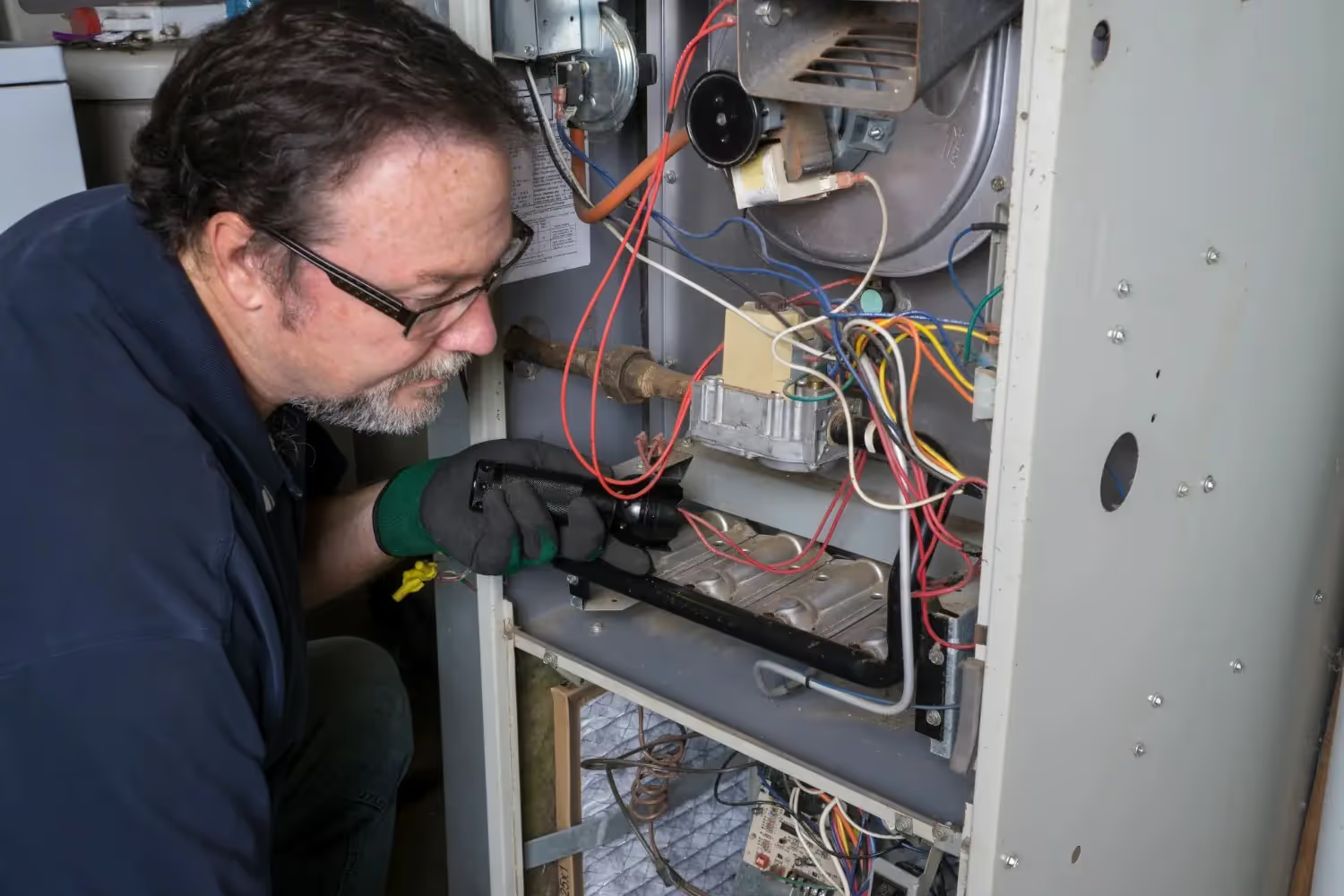
The Inspection Workflow: From Arrival to Diagnosis
Understanding the workflow of a service visit helps homeowners prepare and eliminates uncertainty regarding the process. When a technician arrives at your property, the objective is to gather data, test performance, and provide a clear report on the system's health. The process is systematic, ensuring no component is overlooked and that the diagnosis is based on measurable data rather than guesswork.
- Initial System Assessment: The technician begins by operating the thermostat to observe the startup sequence. This reveals how the system communicates with the control board and identifies any delays or irregularities in the ignition cycle.
- Safety and Limit Control Testing: The safety switches, including the high-limit switch and the flame rollout switch, are manually tested. These controls are designed to shut the furnace down if it overheats or if flames escape the combustion chamber. Verifying their functionality is a non-negotiable step.
- Airflow and Filter Evaluation: The technician inspects the air filter and the return air drop. Restricted airflow effectively chokes the system, causing the heat exchanger to overheat. Static pressure measurements may be taken to ensure the ductwork is sized correctly for the furnace’s output.
- Combustion Analysis: Using specialized tools, the technician measures the efficiency of the fuel burn and checks for the presence of carbon monoxide in the exhaust and the ambient air. This step confirms that the fuel-to-air ratio is optimized for maximum heat output.
- Component Lubrication and Adjustment: Moving parts, such as motor bearings, are lubricated if applicable. Belts are checked for cracks and tension, and gas pressure is adjusted at the valve to match manufacturer specifications.
- Final Reporting: Once the physical inspection is complete, the technician compiles the findings. You receive a detailed report outlining the condition of each component, any immediate repairs needed, and recommendations for future maintenance to extend the unit's lifespan.
Deciding Between Furnace Repair and System Replacement
A thorough inspection often leads to a decision point: should you invest in repairing the existing unit or is it more economical to replace it? This decision relies on specific criteria regarding the age, condition, and repair history of the furnace. While a simple sensor cleaning or capacitor replacement is a straightforward repair, major component failures require a strategic evaluation of the system's future viability.
The age of the system is the primary factor. Furnaces typically have a service life of 15 to 20 years. If your unit is approaching or has surpassed this range, putting money into significant repairs is often a diminishing return. Older units are significantly less efficient than modern standards. A furnace manufactured 15 years ago may operate at 70% or 80% AFUE (Annual Fuel Utilization Efficiency), meaning 20 to 30 cents of every dollar spent on gas is wasted up the chimney. Replacing it with a high-efficiency model can result in immediate operational savings that offset the installation cost over time.
The "50% Rule" is a helpful metric for homeowners. If the cost of the necessary repair approaches 50% of the cost of a new system, replacement is generally the wiser financial move. For example, replacing a cracked heat exchanger is labor-intensive and expensive. If the rest of the parts are also old, fixing the heat exchanger does not guarantee that the blower motor or control board won't fail next month. Investing in a new system provides a fresh warranty and resets the clock on component reliability.
Frequency of breakdown is another indicator. If you find yourself calling for service multiple times in a single season, the system has likely become unreliable. In the unpredictable winter climate of Bowling Green, reliability is paramount. A system that struggles to keep up with the thermostat set point, or one that causes rising energy bills despite regular maintenance, signals that the internal components are worn beyond the point of cost-effective repair.
Local Climate Factors and Regulatory Compliance
The climate in this region presents specific challenges for heating systems. We experience hot, humid summers followed by winters that bring freezing precipitation and moderate snowfall. The transitional months can be deceptively unpredictable, with temperature swings that force HVAC systems to switch between heating and cooling rapidly. This fluctuation places significant stress on the system's reversing valves (in heat pumps) and ignition sequences. Ensuring your furnace is inspected before the deep freeze sets in is crucial for handling the load when temperatures drop into the 20s or below.
- Permitting and Code Compliance: Major repairs or system replacements often require adherence to local building codes. This ensures that gas lines are sized correctly, venting meets safety standards, and electrical connections are grounded properly. Professional technicians handle the navigation of these regulations to ensure all work is compliant.
- Utility Integration: Whether your home relies on natural gas, propane, or electricity, the inspection must account for the specific utility requirements in the area. Checking gas pressure coming into the home and ensuring valid connections with local utility feeds prevents fuel waste and hazardous leaks.
- Insulation and Ductwork: The effectiveness of a furnace is heavily dependent on the home's envelope. Local inspections often reveal that perceived furnace issues are actually due to poor insulation or leaky ductwork in crawl spaces and attics, which are common in regional housing architecture.
- Humidity Control: Winter air here can be dry, but the structural integrity of the home requires balanced humidity. Technicians verify that humidifiers (if installed) are working correctly to prevent wood warping and static electricity, which can damage sensitive furnace electronics.
Why Professional Verification Matters for System Longevity
Attempting to diagnose furnace issues without professional training is dangerous and often results in misdiagnosis. Modern heating systems are complex appliances that integrate computer boards, variable-speed motors, and precise gas calibration. A visual check by a homeowner cannot detect a cracked heat exchanger or a failing pressure switch. Professional verification provides the documentation required to keep manufacturer warranties valid. Most equipment manufacturers stipulate that annual maintenance by a certified professional is a condition of the warranty coverage.
Neglecting these inspections leads to "drift," where the system slowly moves out of its optimal operating parameters. This drift causes the furnace to run longer to satisfy the thermostat, increasing wear and tear on every component. A verified inspection resets the system to factory specifications, reducing the mechanical load. This proactive approach adds years to the life of the furnace.
Furthermore, professional technicians carry the necessary certifications, such as NATE (North American Technician Excellence), which demonstrate a mastery of HVAC protocols. When you hire a certified provider, you are paying for the assurance that the technician understands the thermodynamics and electrical theory required to fix the problem correctly the first time. This level of expertise is essential for identifying safety hazards like carbon monoxide leaks that are odorless and invisible.
Why Choose Carter Heating and Cooling?
- Trusted Expertise: Our certified technicians bring years of hands-on experience and NATE certification to every inspection and repair.
- Safety First: We prioritize the safety of your home, detecting hidden hazards like cracked heat exchangers and carbon monoxide leaks.
- Transparent Pricing: No surprises—our quotes are clear, competitive, and backed by honest recommendations.
- Rapid Response: From minor tune-ups to emergency repairs, we’re available 24/7 to ensure your home stays warm.
- Comprehensive Service: Every inspection covers mechanical, electrical, and safety components—nothing is overlooked.
- Peace of Mind: Licensed, bonded, and insured, we guarantee professionalism and reliability with every visit.
Securing Your Home Comfort This Season
The difference between a cozy winter and a heating emergency often comes down to preventative care. Waiting until the system fails during a snowstorm leads to rush charges, potential hotel stays, and the stress of freezing pipes. By prioritizing a furnace inspection now, you gain a detailed understanding of your system's condition and the opportunity to address minor repairs before they become catastrophic failures.
Carter Heating and Cooling focuses on delivering precise, honest assessments to homeowners. We provide the data you need to make informed decisions about your property's heating infrastructure. Whether you require a routine tune-up, a safety certification, or a detailed report on an aging unit, our team is prepared to mobilize.
Do not gamble with the safety and warmth of your home this winter. Take action to verify your system is operating at peak performance.
Schedule your furnace inspection now to guarantee reliable heat all winter long.

Great Service at a Fair Price
Veterans Discount


Senior Discount

Law Enforcement

Fire fighters/ems

Hear From Your Neighbors!
Hear from your neighbors to see how our commitment to dependable service and lasting comfort has made a difference in their homes.