

How can we help today?
Choose an option to see quick actions and get help faster.Humidifier Service in Bowling Green, KY
Humidifier Service in Bowling Green, KY
Facing issues with your home humidifier in Bowling Green? Contact us for rapid, expert repair services and ensure your indoor air quality and comfort are restored quickly. Schedule your service today!
Immediate Humidifier Troubles? We Are Here to Help
Is your whole-home humidifier leaking water, failing to turn on, or simply not maintaining the humidity levels your home needs? When the air inside your home becomes uncomfortably dry, you need a trusted solution immediately to protect your health and your property—contact us today to schedule your service. At Carter Heating and Cooling, we understand that a malfunctioning humidifier in Bowling Green disrupts your comfort, which is why we prioritize efficient, accurate repairs and installations:
- Guaranteed same-day or timely service options to get your system back on track.
- Extensive expertise in repairing all major humidifier makes and models, as well as full system replacements.
- All services are backed by comprehensive warranties for your peace of mind and long-term protection.
Licensed, bonded, and insured – your assurance of quality service.
Immediate Solutions to Common Humidifier Issues
Dry indoor air is more than just a nuisance; it affects the structural integrity of your home and the health of your family. When your whole-home humidifier fails, the drop in relative humidity can happen rapidly, especially during the colder months when your furnace is running constantly. Our technicians are trained to identify the root cause of the failure immediately, rather than just treating the symptoms. We address the mechanical and electrical faults that stop your system from introducing moisture into your ductwork.
One of the most frequent issues we resolve is water leakage. A humidifier that leaks can cause significant damage to your furnace, flooring, and surrounding drywall. This is often caused by a blocked drainage line, a cracked water panel, or a faulty solenoid valve that is stuck in the open position. If you notice water pooling around your HVAC unit, it requires immediate professional attention to prevent water damage and mold growth.
Another common problem is a humidifier that runs but does not produce humidity. This often indicates an issue with the humidistat, the control mechanism that reads moisture levels in the home, or a failure in the wiring that connects the humidifier to the furnace board. In some cases, the water supply line may be clogged with mineral deposits, a common occurrence given local water conditions. We have the tools to clear these lines or replace the necessary components to restore proper flow.
We also troubleshoot systems that are making unusual noises. Humidifiers are generally quiet; humming, buzzing, or grinding sounds suggest internal component failure. Fan-powered units, in particular, may suffer from motor issues or bearing wear. Addressing these noises early can prevent a total system burnout. Whether the issue is a clogged pad, a burnt-out motor, or a control board failure, our team provides the technical fix required to restore balance to your indoor air.
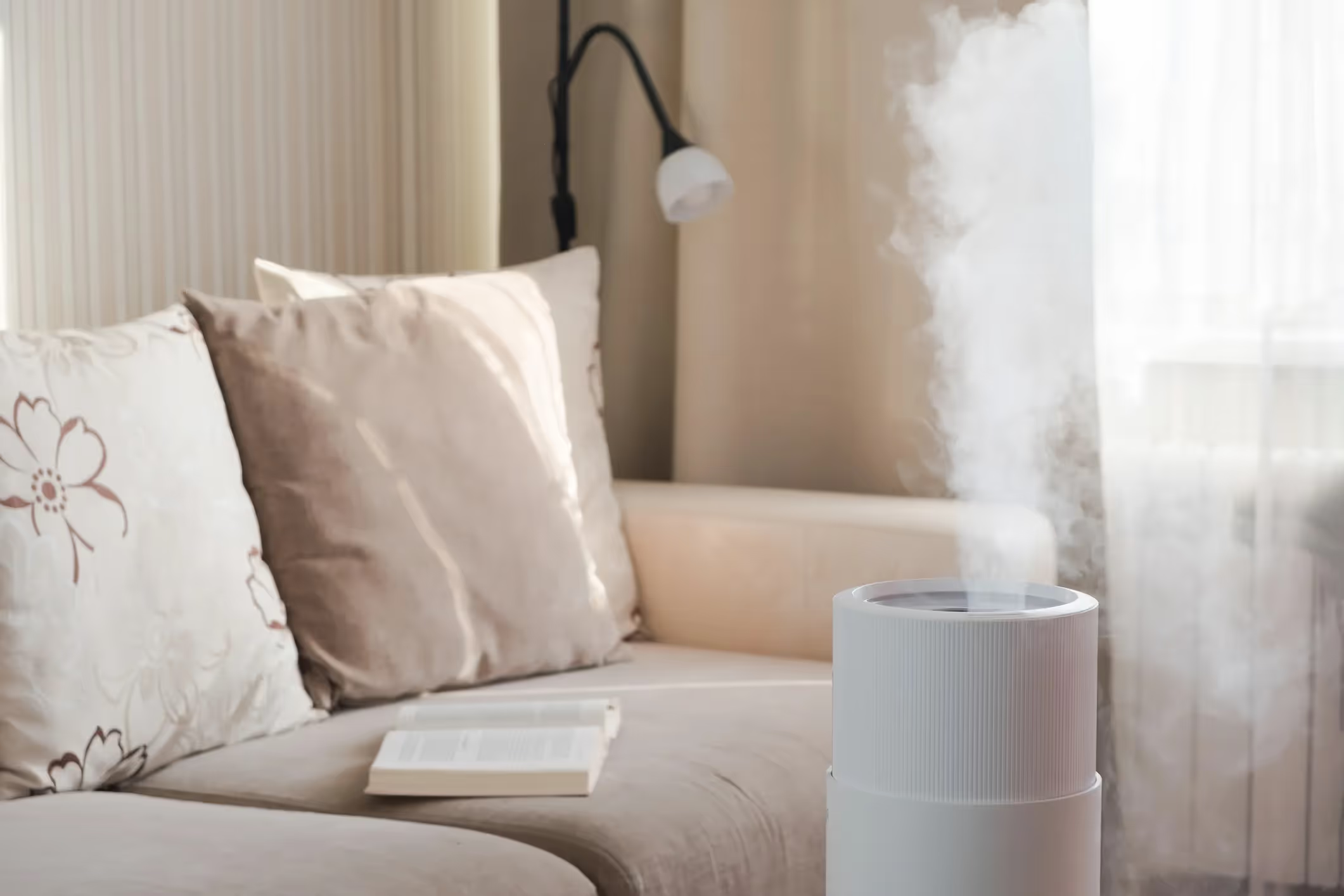
What You Can Expect from Our Service Today
When you reach out for professional service, you expect a process that is streamlined, transparent, and respectful of your time. We do not believe in guessing games or temporary patches. When a technician arrives at your home in Bowling Green, they arrive with a fully stocked truck containing common parts for major humidifier brands. This preparation allows us to complete most repairs during the initial visit, reducing the time your home is without proper humidity control.
Our diagnostic approach is thorough. We do not simply look at the humidifier; we inspect how it interacts with your heating system. Since whole-home humidifiers rely on the furnace blower to distribute moisture, we check the interlock connections to ensure the two systems are communicating correctly. You will receive a clear explanation of exactly what is wrong, why it happened, and what is required to fix it.
Transparency extends to our operational standards. We provide upfront details on the scope of work before lifting a wrench. You will know the status of your water panel, the condition of your solenoid valve, and the amperage draw of your unit. We believe that an informed homeowner can make the best decisions regarding their property.
Additionally, our service includes a comprehensive safety check. Humidifiers involve both water and electricity, a combination that demands strict adherence to safety codes. We ensure that all wiring is grounded, water lines are secure, and drainage is routed correctly to prevent backups. You can expect a clean workspace and a fully tested system before we consider the job complete.
Our Complete Humidifier Service Process
Delivering consistent results requires a standardized, rigorous service process. We follow a specific set of protocols for every service call to ensure nothing is overlooked. Whether we are performing a routine maintenance check or a complex repair, our workflow is designed to maximize the efficiency and lifespan of your equipment:
Initial System Assessment and Humidistat Testing
First, we assess the current humidity levels in your home using professional-grade hygrometers. We compare these readings to the settings on your humidistat to determine if the controls are accurate. We inspect the manual or digital humidistat to ensure it triggers the unit correctly when humidity drops below the set point. If the control is faulty, the entire system remains dormant, regardless of the mechanical condition of the humidifier.
Physical Inspection of the Water Panel and Solenoid
Next, we open the unit to inspect the core components. The water panel (or evaporator pad) is the heart of the system. If this is clogged with scale or sediment, air cannot pass through it effectively to pick up moisture. We also test the solenoid valve, which controls the flow of water onto the panel. We use a multimeter to ensure the valve is receiving the correct voltage and opening and closing fully. A valve that only partially opens will result in insufficient humidity, while one that fails to close causes flooding.
Drainage and Supply Line Verification
We then move to the plumbing connections. We check the saddle valve or water supply line for leaks or blockages. In older installations, saddle valves can seize, cutting off water flow. We also trace the drain line to ensure it has the proper slope and is free of algae or mineral buildup. Proper drainage is critical to preventing water from backing up into the system or onto your floor.
Electrical and Interlock Verification
The electrical connection between the humidifier and the furnace is inspected next. We verify that the humidifier only runs when the furnace blower is active. This prevents water from flowing when no air is moving, which protects your ductwork from moisture saturation. We tighten all electrical connections and check for signs of wire fraying or heat damage.
Operational Testing and Calibration
Finally, we run the system through a full cycle. We force the system to call for humidity and observe the operation. We check for leaks, listen for fan engagement (on powered models), and verify that the water flows evenly across the evaporator pad. We also verify the damper position on bypass models to ensure it is set correctly for the season.
Deciding When to Repair vs. Replace Your Humidifier
Determining whether to invest in repairs or opt for a new installation is a common decision homeowners face. Humidifiers are durable, but they are not indefinite. Carter Heating and Cooling helps you navigate this decision by looking at the age of the unit, the cost of the repair, and the overall efficiency of the current system:
The Frequency of Breakdowns
If your unit requires multiple repairs within a short timeframe, replacement is often the more economical choice. Constant failure of small components like valves, motors, or sensors suggests that the unit has reached the end of its useful service life. Continuing to repair a failing unit can quickly exceed the cost of a modern, more efficient replacement. Apply for financing today.
Age of the Equipment
Most whole-home humidifiers have a lifespan of 10 to 15 years, depending on water quality and maintenance frequency. If your unit is approaching or has surpassed this age range, parts may become obsolete or prohibitively expensive. Newer models offer better water efficiency and more precise digital controls, which can improve comfort and lower water bills.
Condition of the Water Panel Housing
Over time, the plastic housing that holds the water panel can become brittle or cracked due to constant exposure to moisture and temperature fluctuations. If the casing is cracked, it cannot be effectively repaired and poses a leak risk. In this scenario, replacement is the only safe option to prevent water damage to your furnace.
Mold or Biological Growth
If a unit has been neglected for a long period, mold or bacteria may have established deep inside the unit or the connecting ductwork. While cleaning is possible, severe contamination often requires removing the unit entirely to sanitize the HVAC system and installing a new, sterile unit to ensure healthy air quality.
Efficiency and Water Waste
Older flow-through humidifiers can waste a significant amount of water. If you are concerned about water usage, upgrading to a modern system that utilizes water more effectively or exploring steam humidification options might be the right move. We can calculate the potential water savings of a new unit compared to your existing model.
Region-Specific Guidelines on Humidifier Use and Care
Operating a humidifier in Bowling Green requires understanding our specific climate patterns. We reside in a humid subtropical climate, which means our weather fluctuates significantly between the seasons. While summers are hot and humid, requiring dehumidification, our winters are cool to cold, with average lows dipping into the 40s and high 30s.
During the winter, your heating system runs frequently to combat the chill. Gas furnaces and heat pumps naturally dry out the air as they heat it. Without a humidifier, indoor relative humidity can drop below 20%, which is drier than many deserts. This lack of moisture causes wood floors to shrink and crack, static electricity to build up, and respiratory issues to worsen. In our region, keeping your indoor humidity between 35% and 45% during the winter is critical for protecting your home’s woodwork and your health.
However, local water quality plays a significant role in maintenance. The water in our area can contain minerals that leave scale deposits on your humidifier’s water panel and valve. This "scale" hardens quickly and blocks airflow. Residents in this area must replace their water panels at least once a year, preferably before the heating season begins. If you have particularly hard water, checking the panel mid-winter is recommended to ensure it hasn't calcified completely.
It is also important to manage the damper position on bypass humidifiers. In our region, as spring approaches and we switch from heating to cooling, the damper on the humidifier must be closed. If left open during the humid summer months while the AC is running, it can cause the cooling coil to freeze or reduce the efficiency of your air conditioner. Our technicians always check damper settings and educate homeowners on how to adjust them as the seasons change.
Why Choose Us? Our Commitments to You
Selecting a service provider for your indoor air quality needs is about trust and technical capability. You need a team that understands the specific configurations of HVAC systems found in this area. We focus on delivering results that improve your daily comfort without complicating the process. Our technicians are trained to handle high-voltage electrical connections and plumbing integration safely, ensuring that your home remains code-compliant and safe.
We are committed to inventory availability. Nothing is more frustrating than waiting days for a simple part. We stock our vehicles with the most frequently failed components, allowing us to finish the job on the first visit in the vast majority of cases. Whether it is a solenoid valve, a transformer, or a new humidistat, we are prepared to fix it immediately.
Your home relies on balanced humidity for comfort and protection. We treat every service call as an opportunity to demonstrate our reliability and expertise. We do not upsell unnecessary accessories; we focus on getting your existing equipment running at peak performance or providing honest advice when it is time to upgrade.
Dry Air Causing Discomfort or Damage? Get Professional Help Now
If your air feels dry, your furniture is cracking, or your system has stopped working, do not wait for the problem to worsen. Proper humidity control is essential for a healthy home environment. Contact us today to secure your appointment and restore comfort to your home.

Great Service at a Fair Price
Veterans Discount


Senior Discount

Law Enforcement

Fire fighters/ems

Hear From Your Neighbors!
Hear from your neighbors to see how our commitment to dependable service and lasting comfort has made a difference in their homes.