
How can we help today?
Choose an option to see quick actions and get help faster.Furnace Installation in Bowling Green, KY
Furnace Installation in Bowling Green, KY
Furnace Installation in Bowling Green, KY
Reliable Heating Solutions to Keep Your Home Warm and Efficient
Is your furnace struggling to keep your home warm during the cold Bowling Green winters? Are you facing frequent breakdowns, rising energy bills, or uneven heating? Don’t let an unreliable heating system leave you in the cold or drain your wallet. Our expert furnace installation services provide a fast, efficient, and lasting solution to restore comfort and safety to your home. We offer tailored system upgrades designed to meet your specific needs, backed by flexible financing options to fit your budget. Contact us today to schedule your consultation and take the first step toward dependable warmth this winter.
Get Your Furnace Installed by Trusted Professionals Now
Stop worrying about cold rooms and high utility bills. Our certified technicians ensure your new furnace is perfectly sized and installed to maximize energy efficiency and performance. Experience priority scheduling, comprehensive warranties, and code-compliant installations that protect your home and family.
Homeowners in Bowling Green often face the frustration of a furnace that cycles too frequently or simply cannot combat the freezing temperatures that arrive in January and February. When a heating system nears the end of its lifespan, repairs become a temporary patch rather than a permanent solution. Investing in a modern replacement restores comfort and safety to your home immediately.
- Ensure your home maintains stable temperatures regardless of freezing overnight lows or fluctuating weather conditions.
- Access priority scheduling for urgent replacements to minimize downtime and prevent frozen pipes.
- Secure long-term performance with comprehensive manufacturer warranties and compliant installation methods.
- Maximize energy efficiency with systems correctly sized for your specific square footage and insulation levels.
All installations meet local building codes with guaranteed permits and flexible financing options available to suit your budget.
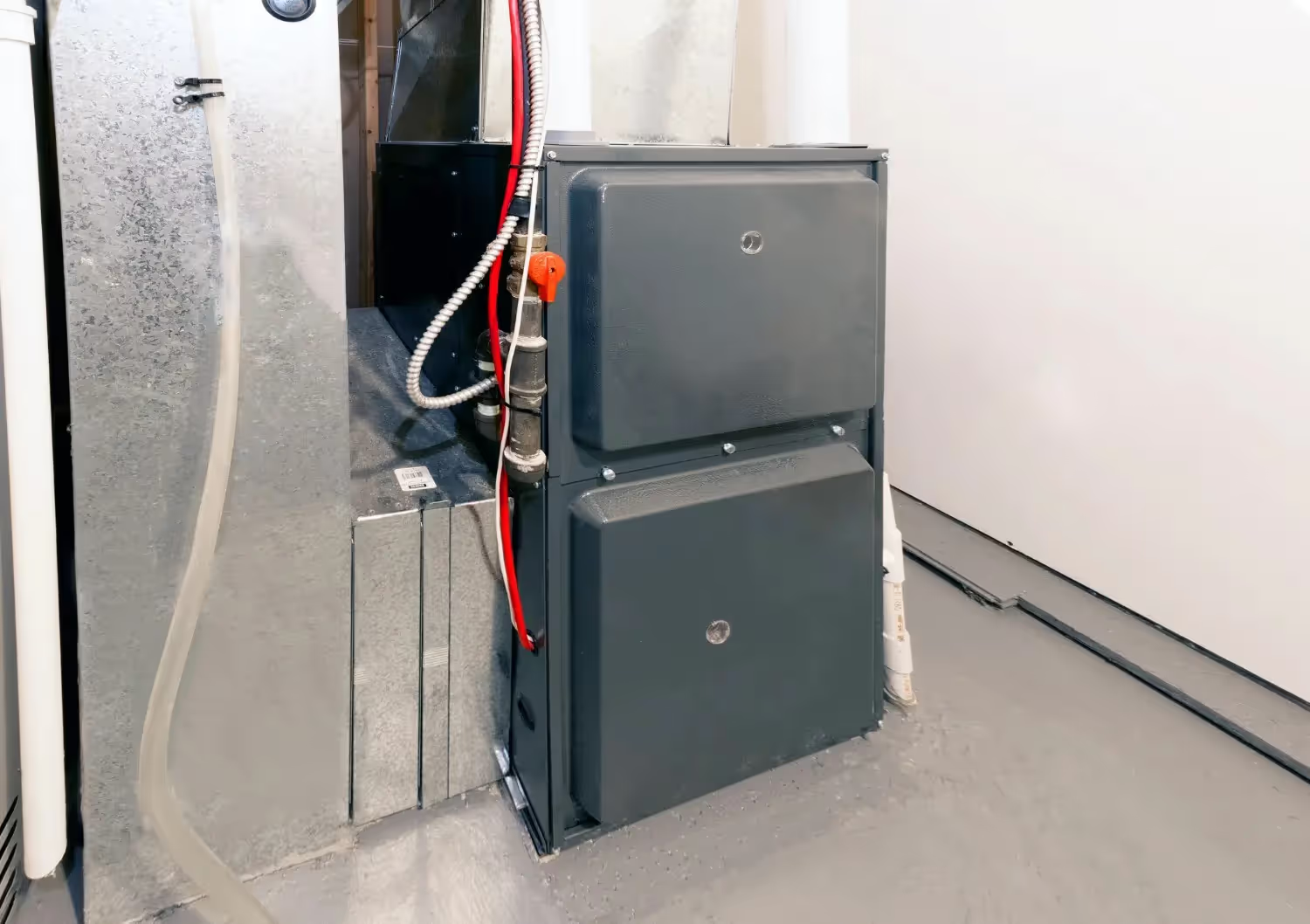
What Is Included in Your Furnace Installation Package
When you invest in a new heating system, you are purchasing more than just the equipment box; you are paying for a comprehensive solution that integrates seamlessly with your home’s existing infrastructure. A professional installation package covers every aspect required to turn a piece of machinery into a functional, safe, and efficient heat source for your living space.
Equipment and Component Sizing
The core of the installation is the furnace unit itself. We provide high-efficiency models that utilize modern technology to convert fuel into heat with minimal waste. This includes the selection of Annual Fuel Utilization Efficiency (AFUE) ratings that align with your energy goals. Whether you require a standard efficiency model or a high-efficiency condensing furnace, the package includes the specific unit matched to your home's "Manual J" load calculation. This calculation ensures the unit is neither too large (causing short cycling) nor too small (running constantly without reaching the thermostat set point).
Air Distribution and Ventilation Upgrades
A powerful furnace is useless without proper airflow. The installation process includes an inspection of the plenum, the box connecting the furnace to your ductwork. If the existing plenum is damaged or sized incorrectly for the new unit, fabrication of a new transition is included. Furthermore, the venting system is critical. Standard efficiency furnaces use metal flues, while high-efficiency models require PVC venting to handle cooler exhaust gases and condensation. Your installation includes the necessary piping, routing, and termination caps to ensure dangerous combustion gases are vented safely outside.
Electrical and Gas Connections
Connecting the unit to your home’s energy source requires licensed precision. For gas furnaces, this involves hard-piping the gas line to the unit with a dedicated shut-off valve and sediment trap (drip leg) to protect the gas valve from debris. Electrical connections are updated to meet current codes, often involving a new service switch and proper grounding. If a thermostat upgrade is necessary to handle two-stage or modulating heating features, the installation of a smart or programmable thermostat is typically part of the scope.
Site Preparation and Disposal
The service includes the labor required to protect your home during the swap-out. Drop cloths and floor protectors are utilized to prevent damage to flooring. Once the new system is in place, the removal and environmentally responsible disposal of your old furnace and any related debris are handled entirely by the installation team. You are left with a clean workspace and a functioning system.
Our Streamlined Furnace Installation Process Explained
Replacing a central heating system is a major project, but a structured approach minimizes disruption to your daily routine. We utilize a systematic process to ensure every technical specification is met while keeping the project on a strict timeline. Carter Heating and Cooling follows a rigorous protocol to guarantee consistency and quality.
- Initial Site Assessment: The process begins with a technical evaluation of your current system setup. Technicians measure the square footage, check window insulation quality, and inspect ductwork integrity. This data dictates the exact size of the furnace required.
- System Selection: Based on the assessment, you receive clear options regarding efficiency levels (80% vs. 90%+ AFUE), blower motor types (standard vs. variable speed), and fuel sources.
- Safe Removal: Technicians shut off gas and electrical supplies before disconnecting the old unit. Great care is taken to avoid damaging the surrounding area, such as the attic, basement, or utility closet walls.
- Positioning and Leveling: The new furnace is positioned on vibration-absorbing pads or a leveled platform. Proper leveling is essential for the drainage of condensate in high-efficiency models and for the quiet operation of the blower motor.
- Connection of Utilities: The gas lines are reconnected and tested for leaks using electronic sniffers and bubble solutions. Electrical wiring is terminated at the unit, ensuring polarity and grounding are correct.
- Venting and Drainage: Flue pipes are installed with the correct slope to prevent moisture backflow. For condensing furnaces, condensate drain lines are routed to a floor drain or condensate pump.
- Commissioning and Testing: This is the most critical step. The system is fired up, and technicians measure gas pressure at the manifold, temperature rise (the difference between supply and return air temperature), and static pressure in the ducts. This ensures the unit is operating within manufacturer specifications.
- Final Walkthrough: The lead technician demonstrates how to operate the new thermostat, how to change the filter, and reviews the maintenance requirements with you.
Deciding Between Furnace Repair vs. Replacement
Homeowners often struggle to determine if a breakdown warrants a simple repair or a full system replacement. Making the right financial decision depends on balancing the immediate cost of repair against the long-term efficiency and reliability of a new unit. There are specific technical indicators that suggest replacement is the more prudent path.
The Age of the System
The average lifespan of a gas furnace is between 15 and 20 years. If your unit is approaching or has surpassed the 15-year mark, major components like the heat exchanger or blower motor are statistically likely to fail soon. Investing money into a system this old is often considered "throwing good money after bad." A new system resets the clock on reliability and immediately lowers monthly fuel consumption due to technological advancements.
The 50% Rule
A common industry standard for decision-making is the 50% rule. If the cost of the necessary repair approaches 50% of the cost of a brand-new unit, replacement is the smarter financial move. For example, replacing a cracked heat exchanger or a failed compressor in a dual-fuel system is expensive. When you factor in the warranty coverage of a new unit versus the lack of warranty on an old unit, the math favors replacement.
Rising Energy Bills
Furnaces lose efficiency as they age due to wear and tear on internal components and the buildup of sediment or corrosion. If you notice your heating bills creeping up year over year despite comparable weather conditions and usage, your furnace is working harder to produce the same amount of heat. Upgrading from an old 70% AFUE furnace to a modern 96% AFUE model can result in significant savings that help offset the installation cost over time.
Safety Concerns
The most critical factor is safety. A cracked heat exchanger, a common issue in old furnaces, can leak carbon monoxide into the living space. If a technician detects a crack or a breach in the combustion chamber, the unit must be shut down immediately. In this scenario, replacement is not just an option; it is a safety necessity. Other safety issues, such as recurring flame rollout or electrical shorts, also signal that the unit has become a hazard.
Local Compliance and Considerations for Your New Furnace
Operating a heating system in Bowling Green, KY, requires specific attention to regional climate factors and local building regulations. The humid subtropical climate means the area experiences distinct seasons, with summers that are hot and humid and winters that can dip well below freezing.
Managing Humidity and Temperature
While the primary job of a furnace is to heat, the blower motor inside the furnace is the engine for your air conditioning system during the summer. Because this region experiences high humidity, choosing a furnace with a variable-speed blower motor is highly beneficial. Variable-speed motors allow the system to run at lower speeds during the summer, pulling more moisture out of the air for superior dehumidification. In the winter, this same feature prevents the "blast of cold air" often felt when a standard furnace first kicks on, providing a more consistent and comfortable heat delivery.
Venting and Gas Safety Codes
Local building codes strictly regulate how gas furnaces are installed to ensure public safety. This includes specific requirements for combustion air. Modern homes are built tighter for efficiency, which can starve a furnace of the air it needs to burn fuel safely. Installations often require the addition of fresh air intakes or specific louvered doors to ensure adequate combustion air is available. Additionally, flue pipes must maintain specific clearances from windows, doors, and walkways to prevent exhaust fumes from re-entering the home.
Permit and Utility Coordination
Professional installation involves pulling the necessary mechanical permits required by the city or county. This adds a layer of protection for the homeowner, as it typically triggers a third-party inspection to verify the work meets safety standards. Furthermore, if you are switching from electric heat to gas, or upgrading the size of your gas service, coordination with local utility providers is necessary to ensure the meter and supply lines can handle the increased load (BTU input) of the new appliances.
Why Choose Us? Trusted Heating Solutions
Selecting the right contractor is as important as selecting the brand of the furnace. The quality of the installation dictates 70% of the system's efficiency and longevity. Poor installation practices can reduce a high-efficiency unit's performance to that of a budget model and lead to premature failure.
We prioritize technical precision and adherence to manufacturer guidelines. Our technicians are trained to perform load calculations rather than guessing based on the size of the old unit. We utilize advanced diagnostic tools to calibrate gas pressure and airflow, ensuring the system runs safely and efficiently from the first cycle.
Beyond technical skill, we respect your property. The installation team uses shoe covers, drop cloths, and protective gear to ensure your home remains clean throughout the process. We handle all logistics, from permit acquisition to the final disposal of the old unit, providing a turnkey solution that relieves the stress of home improvement.
Upgrade Your Furnace Today!
When the temperature drops, you need a partner who responds quickly and delivers results that last; read our reviews. Carter Heating and Cooling is committed to providing heating solutions that offer reliability, safety, and efficiency for years to come.
Don’t let a failing furnace compromise your comfort this winter; contact us now to schedule your comprehensive installation estimate.

Great Service at a Fair Price
Veterans Discount


Senior Discount

Law Enforcement

Fire fighters/ems

Hear From Your Neighbors!
Hear from your neighbors to see how our commitment to dependable service and lasting comfort has made a difference in their homes.