
How can we help today?
Choose an option to see quick actions and get help faster.Furnace Maintenance in Bowling Green, KY
Furnace Maintenance in Bowling Green, KY
Furnace Maintenance in Bowling Green, KY
Is your furnace struggling to heat your home efficiently? Are you hearing unusual noises or noticing sudden spikes in your energy bills? These are signs that your furnace needs immediate professional maintenance to avoid costly breakdowns and keep your home safe and warm during Bowling Green’s chilly winters. Don’t wait until your system fails; contact Carter Heating and Cooling now for expert furnace maintenance that restores performance, enhances safety, and extends the life of your heating system. Schedule Your Furnace Maintenance Today
Avoid Costly Breakdowns and Inefficient Heating
Unpredictable energy spikes, strange noises, or a system that struggles to reach the set temperature are clear indicators that your heating unit requires professional attention. Ignoring these warning signs can lead to total system failure right when the Bowling Green temperatures drop, leaving your home uncomfortable and unsafe. For immediate scheduling or to discuss financing options for major repairs, contact us today.
Carter Heating and Cooling provides comprehensive furnace maintenance designed to restore efficiency, ensure safety, and prolong the lifespan of your heating equipment. We understand that local homeowners need a system that performs reliably through the fluctuating Kentucky winters.
- Restored System Reliability: Our technicians identify and resolve minor wear and tear before it evolves into a catastrophic breakdown.
- Transparent Service Protocols: We provide a clear, itemized report of your system’s health with no hidden fees or surprise charges.
- Certified Technical Expertise: Your maintenance is performed by skilled professionals trained to handle specific furnace makes and models.
All maintenance services are backed by a satisfaction guarantee and comprehensive warranty support.
The Scope of Professional Furnace Maintenance
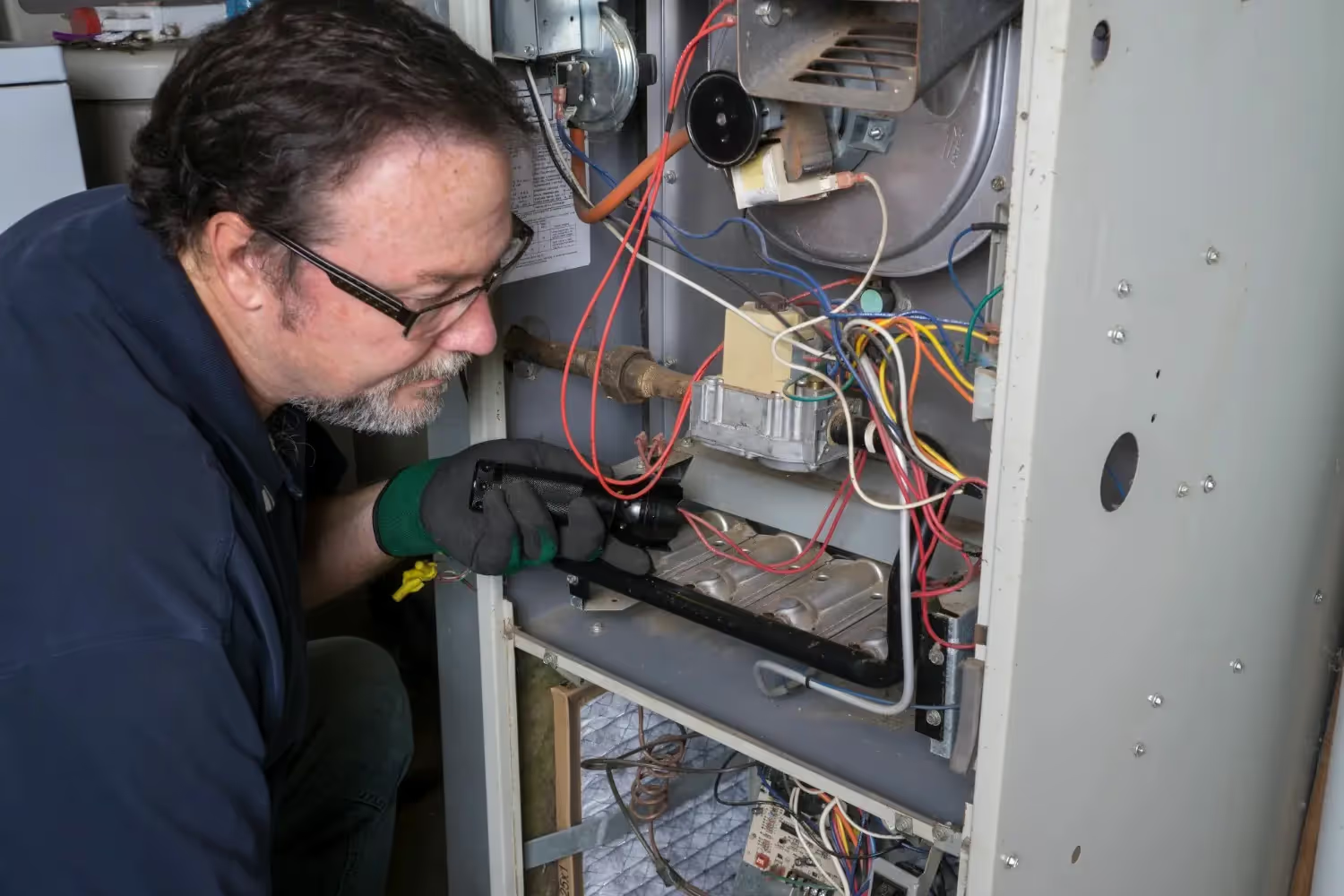
Effective maintenance goes beyond a simple filter change. It involves a rigorous inspection and calibration of the entire heating system to ensure every component functions within manufacturer specifications. A furnace is a complex machine involving combustible gases, high-voltage electricity, and moving mechanical parts. Neglecting any one of these areas can compromise the safety and efficiency of the entire home.
Critical Safety Inspections
The most vital aspect of furnace maintenance is safety. Gas furnaces burn fuel to generate heat, creating byproducts that must be safely vented. Over time, the repeated cycles of heating and cooling can cause metal components to expand and contract, potentially leading to stress cracks.
- Heat Exchanger Analysis: We inspect the heat exchanger for cracks or corrosion. A compromised heat exchanger allows carbon monoxide to leak into the living space, posing a severe health risk.
- Vent System Verification: Technicians ensure that the flue pipe and venting system are clear of obstructions like bird nests, debris, or rust, guaranteeing that exhaust gases are expelled outside.
- Safety Switch Testing: Modern furnaces are equipped with limit switches and flame sensors. We test these mechanisms to ensure the unit shuts down immediately if an unsafe condition, such as overheating or pilot failure, is detected.
- Gas Line Leak Detection: We examine gas connections and lines for any signs of leaks or wear that could lead to fire hazards.
Performance and Efficiency Tuning
Once safety is confirmed, the focus shifts to performance. A tuned system requires less energy to produce the same amount of heat, directly impacting monthly utility costs in Bowling Green.
- Burner Assembly Cleaning: Soot and rust can accumulate on the burners, causing improper combustion. We clean and align the burners to ensure a smooth, efficient flame.
- Blower Motor Calibration: The blower moves air through your home. We inspect the blower motor and wheel for dust buildup, check the amperage draw, and lubricate bearings if necessary to prevent overheating.
- Electrical Connection Tightening: Loose wires create resistance, which generates heat and can lead to component failure. We tighten all electrical connections and measure voltage to ensure stable operation.
- Thermostat Synchronization: We verify that your thermostat is reading indoor temperatures accurately and communicating correctly with the furnace control board.
How the Maintenance Process Works
We have streamlined our maintenance process to minimize disruption to your day while maximizing the thoroughness of the service. Understanding the sequence of events helps homeowners prepare for the visit and know exactly what is happening with their heating infrastructure.
- Initial System Assessment: The technician begins by operating the system in its current state to listen for unusual sounds, check airflow, and observe the startup cycle. This establishes a baseline for performance.
- Power Down and Disassembly: To access internal components safely, electrical power and gas supply to the unit are turned off. Access panels are removed to expose the blower, burners, and controls.
- Deep Cleaning and Inspection: The core work involves physical cleaning of internal components. Dust is vacuumed from the cabinet, sensors are wiped clean, and filters are assessed. Simultaneously, the technician visually inspects parts for signs of wear, such as frayed belts or corroded contacts.
- Reassembly and Testing: Once cleaning and adjustments are complete, the unit is reassembled. The technician restores power and initiates a full heating cycle to measure temperature rise (the difference between air entering and leaving the furnace) to ensure it falls within the manufacturer’s rated range.
- Reporting and Recommendations: You receive a detailed account of what was done. If a part is near the end of its life or a repair is recommended, this is discussed with clear options provided, rather than a high-pressure sales pitch.
Deciding Between Maintenance, Repair, and Replacement
Homeowners often struggle to determine if a simple tune-up is sufficient or if more drastic measures are required. While maintenance extends life, it cannot fix a broken component that has already failed. Understanding where your heating system falls on the lifecycle curve is essential for making financial decisions.
When Maintenance is Sufficient
Routine maintenance is the correct path for systems that are currently operational but may be overdue for service.
- The system is under 10 years old.
- Heating is relatively consistent, with no cold spots in the home.
- Energy bills have remained stable year-over-year.
- The goal is warranty compliance and preventative care.
When Repair is Necessary
If specific components have failed, maintenance alone will not restore heat. A repair service is required when a specific part needs replacement to restore function.
- The furnace is making loud banging, screeching, or rattling noises.
- The system short-cycles (turns on and off rapidly without reaching the target temperature).
- The pilot light is yellow instead of blue (indicating a combustion issue).
- There is zero heat production despite the thermostat calling for heat.
When Replacement is the Smarter Investment
There comes a point where pouring money into an aging unit yields diminishing returns.
- Age of Unit: If the furnace is over 15 years old, it has surpassed its expected service life. Parts may be obsolete or expensive to source.
- Cost of Repair: If a repair costs more than 50% of the price of a new unit, replacement is generally the more economic choice.
- Frequency of Breakdowns: If you have required multiple repairs in the last two heating seasons, the system is likely unreliable.
- Efficiency Standards: Older units may have an AFUE (Annual Fuel Utilization Efficiency) rating of 60-70%, whereas modern units reach 95%+. Upgrading can significantly reduce gas consumption.
Local Factors Impacting Heating Systems
Operating a furnace in this region presents specific challenges due to the humid subtropical climate. While winters are generally mild compared to northern states, the area experiences sharp drops in temperature and significant humidity fluctuations that impact HVAC equipment.
Humidity and Component Corrosion
Bowling Green is known for high humidity levels throughout the year. Even in winter, moisture can be an issue. High humidity levels in basements or crawl spaces where furnaces are often located can accelerate rust and corrosion on the heat exchanger and electrical contacts. Regular maintenance includes checking for moisture damage that is specific to this climate profile.
The "False Spring" Stress
The region often experiences "false springs" where temperatures rise significantly in January or February, only to plummet again. This variability forces the furnace to cycle on and off more frequently than in climates with consistent cold. This frequent cycling puts higher stress on the igniter and flame sensor. Maintenance ensures these high-wear parts are capable of handling rapid shifts in weather patterns.
Utility Provider Considerations
Whether your home is serviced by Bowling Green Municipal Utilities or another local provider, energy rates fluctuate. An inefficient furnace draws more amperage and burns more gas, directly inflating utility bills. Local building codes also dictate specific requirements for venting and clearance around heating units. Professional technicians are familiar with these local codes and ensure your system remains compliant, which is crucial if you plan to sell your home in the future.
Why Professional Execution Matters
Attempting DIY maintenance on a modern furnace is rarely advisable and often dangerous. Carter Heating and Cooling employs strict protocols to ensure every maintenance visit adds value and safety to your home.
- Warranty Preservation: Most furnace manufacturers, such as Carrier, Trane, or Lennox, require proof of annual professional maintenance to keep the warranty valid. Skipping this can void coverage for major parts like the heat exchanger.
- Advanced Diagnostic Tools: Professionals use manometers to measure gas pressure and multimeters to check electrical capacitance—tools the average homeowner does not possess. These readings provide the only accurate way to judge the internal health of the system.
- Carbon Monoxide Safety: You cannot smell or see carbon monoxide leaks until it is too late. Professional-grade detectors used during maintenance are far more sensitive than standard residential alarms, catching minute leaks before they become life-threatening.
- Airflow Optimization: Improper airflow is a leading cause of premature compressor and heat exchanger failure. Technicians measure static pressure to ensure the ductwork is not strangling the system, a common issue in older local homes.
The Long-Term Value of Seasonal Preparation
Waiting until the first freezing night to test your furnace is a gamble that often results in emergency service calls. Seasonal preparation involves proactive scheduling before the demand spikes. By servicing the unit in the autumn, you ensure that the system is ready to handle the peak load of January and February.
This proactive approach also allows for better budgeting. Identifying a worn capacitor or a fraying belt during a scheduled maintenance visit is significantly cheaper than paying for an emergency after-hours repair when that part fails at 2:00 AM. It shifts the dynamic from reactive crisis management to planned home upkeep.
Furthermore, a well-maintained system contributes to better indoor air quality. The furnace acts as the lungs of your home, circulating air through every room. If the interior of the furnace is choked with dust, mold spores, or pet dander, those contaminants are blown back into your living space. Comprehensive cleaning during maintenance reduces this recirculated particulate matter, creating a healthier environment for families.
Take Action Today!
Ensuring your furnace is operating at peak efficiency is the most effective way to control winter heating costs and guarantee safety. Don't wait for the system to fail. Secure your comfort and peace of mind with professional maintenance.
Schedule your comprehensive furnace inspection and tune-up now.

Great Service at a Fair Price
Veterans Discount


Senior Discount

Law Enforcement

Fire fighters/ems

Hear From Your Neighbors!
Hear from your neighbors to see how our commitment to dependable service and lasting comfort has made a difference in their homes.