
How can we help today?
Choose an option to see quick actions and get help faster.Ductless Inspection in Bowling Green, KY
Ductless Inspection in Bowling Green, KY
Experiencing issues with your ductless mini-split in Bowling Green? Contact us for professional inspection and repair services. Ensure optimal performance and efficiency!
Is Your Mini-Split Blowing Weak Air or Leaking Water?
You expect immediate relief from the humidity and heat characteristic of Bowling Green, but a malfunctioning ductless system can leave your home uncomfortable and your energy bills soaring. If your system is leaking water down the wall, making grinding noises, or simply failing to cool, you need professional attention immediately to prevent permanent compressor damage; contact us now to schedule a comprehensive inspection.
Residents in this area rely heavily on ductless mini-splits to manage the humid subtropical climate, yet these systems require specialized attention when performance dips. Ignoring subtle signs like a musty smell or a blinking error code often leads to complete system failure during the peak of summer or the dead of winter. A professional inspection cuts through the guesswork, isolating the mechanical or electrical failure so you can restore comfort quickly.
- Quick, same-day diagnosis and resolution of critical ductless system failures.
- Professional, licensed technicians trained specifically on inverter technology and zone control systems.
- 24/7 availability for emergency repairs when your system fails outside of business hours.
All services are performed by licensed professionals with a comprehensive warranty for peace of mind.
What to Expect During a Professional Ductless Inspection
A ductless mini-split inspection goes far beyond a simple filter check. Because these systems operate without ductwork and often utilize sophisticated inverter technology, the inspection process requires specific diagnostic tools to ensure the communication between the indoor air handler and the outdoor condenser is flawless. When a technician arrives at your property, the goal is to evaluate the entire operational health of the unit, identifying not just what is broken, but what is causing efficiency loss.
The inspection covers the critical components that drive performance. Technicians examine the indoor blower wheel, which is prone to accumulating mold and dust debris that disrupts airflow. In high-humidity environments, the condensate drain line is a primary focus; if this line becomes clogged with algae or debris, water will back up and leak into your living space. The inspection also verifies the tightness of electrical connections, as loose wiring can cause intermittent power failures or circuit board burnouts.
- Refrigerant Charge Verification: The system must maintain precise refrigerant levels to heat or cool effectively. Technicians measure superheat and subcooling to detect leaks or under-charge issues.
- Evaporator Coil Condition: The technician inspects the coils for dirt buildup or freezing, which restricts heat transfer and forces the compressor to work harder than necessary.
- Electrical Component Analysis: This includes testing the control board, capacitors, and the communication wire that signals the outdoor unit to ramp up or down.
- Condensate Pump Functionality: For units that require a pump to move water away, the technician tests the pump’s operation to prevent potential water damage to walls or flooring.
- Thermostat and Remote Calibration: Ensuring the unit is reading the room temperature accurately is vital for consistent comfort and auto-shutoff features.
The Inspection and Troubleshooting Process
Understanding the workflow of a ductless inspection helps you prepare for the service visit. The process is designed to be efficient and minimally invasive, focusing on gathering data to provide an accurate diagnosis. Unlike central HVAC systems where much of the equipment is hidden in attics or crawlspaces, much of the ductless inspection happens right in the room where the unit is mounted and at the outdoor condenser site.
The technician begins by operating the system in both cooling and heating modes (if applicable) to observe the startup sequence. They listen for irregular sounds such as clicking, buzzing, or grinding, which often point to failing bearings or electrical shorts. Once the system is running, the technician uses temperature probes to measure the "Delta T"—the temperature difference between the air entering the unit and the air blowing out. A low Delta T indicates the system is not exchanging heat properly.
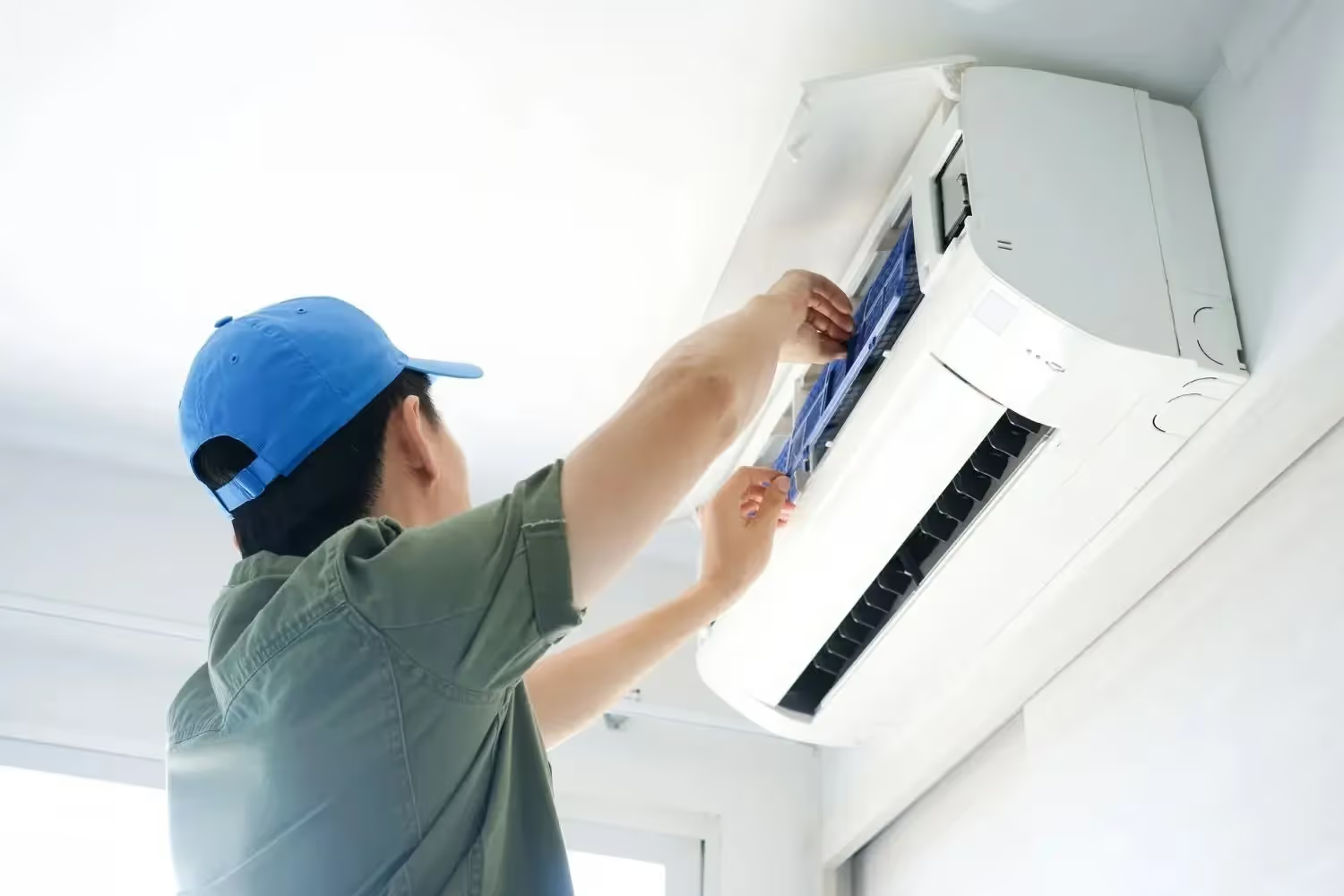
- First, the technician isolates power to the unit to safely inspect internal electrical components and tighten connections.
- Next, the indoor unit’s filters and front casing are removed to access the coil and blower wheel for visual inspection of mold or debris.
- Then, the technician moves outdoors to inspect the condenser unit, checking for airflow restrictions, fan blade balance, and compressor amp draw.
- Afterward, gauges or probes are attached to the service ports to read internal pressures and verify the refrigerant cycle is operating within manufacturer specifications.
- Finally, the technician clears the condensate drain line using nitrogen or a vacuum to ensure water flows freely away from the home.
Once the physical assessment is complete, the technician compiles the findings. You receive a detailed report explaining the root cause of any issues, such as a slow refrigerant leak or a failing circuit board. This report serves as the basis for any recommended repairs, giving you a clear picture of the system’s health without vague terminology.
Determining When Repairs Are Necessary vs. System Replacement
One of the main objectives of an inspection is to help you decide whether to invest in repairs or consider a replacement. Ductless systems typically have a lifespan of 15 to 20 years, but this depends heavily on usage and maintenance. When an inspection reveals major component failure, such as a bad compressor or a leaking coil, the cost of repair must be weighed against the age and efficiency of the unit.
If your system is under ten years old and the repair cost is less than 50% of the price of a new unit, repair is generally the most logical path. Common repairs like replacing a control board, a fan motor, or flushing a drain line are cost-effective and extend the life of the system. However, if the unit utilizes outdated refrigerant (like R-22) or requires a compressor replacement on an out-of-warranty unit, the investment often yields diminishing returns — apply for financing to ease the burden.
- Frequency of Breakdowns: If you are calling for service multiple times a year, the cumulative cost of repairs likely exceeds the monthly savings of a new, efficient unit.
- Efficiency degradation: An older unit that struggles to maintain temperature despite repairs will result in higher electrical bills, offsetting the cost of a replacement over time.
- Parts Availability: As models phase out, sourcing specific circuit boards or motors for older ductless brands can become difficult and expensive, leading to longer downtime.
- Compressor Health: The compressor is the heart of the system. If the inspection reveals a grounded or seized compressor, replacement of the entire outdoor unit is usually the recommended course of action.
Carter Heating and Cooling focuses on providing honest assessments based on data. If a system is nearing the end of its life, the technician will explain the efficiency gains of modern systems, which often feature higher SEER ratings and better humidity control, rather than pushing for a temporary fix that wastes money.
Navigating Local Climate and Requirements
Operating a ductless system in Bowling Green presents specific challenges due to the regional climate. The humid subtropical weather means your system deals with heavy moisture loads during the summer. This excess humidity makes the condensate drain system critical; if the drain line is not pitched correctly or becomes blocked by algae growth (which thrives in this climate), water damage is a near certainty. A proper inspection verifies that your system is effectively dehumidifying the air, which is essential for preventing mold growth inside the home.
Winter conditions also impact inspection requirements. While winters are generally mild, temperatures can drop significantly, causing the outdoor unit to enter "defrost mode" to melt ice off the coils. If the sensors controlling this function fail, the outdoor unit can turn into a block of ice, stopping all heat output. An inspection verifies the defrost control board and sensors are active and ready for freezing temperatures.
- Permitting and Code Compliance: If an inspection leads to a major repair involving refrigerant handling or a full system replacement, local regulations must be followed. Proper handling of refrigerants is mandated by EPA regulations to prevent environmental harm.
- Electrical Standards: Local building codes dictate specific requirements for the electrical disconnect box and wire sizing for HVAC equipment. Inspectors check that your existing setup meets current safety standards to prevent fire hazards.
- Seasonal Maintenance Cycles: Because the weather fluctuates, many residents skip the transition maintenance. However, ensuring the reversing valve shifts properly from cooling to heating is a key checkpoint before winter sets in.
Technicians familiar with the local area understand the load calculations required for these homes. They check if the unit is undersized for the space it serves, a common issue that causes the unit to run continuously without ever reaching the set temperature.
Why Professional Diagnosis Matters
Attempting to diagnose a ductless system without training is dangerous and often results in misdiagnosis. These systems operate on high-voltage electricity and contain high-pressure refrigerant. A homeowner might assume a unit needs "freon" when the actual issue is a dirty blower wheel or a failing sensor. Adding refrigerant to a system that doesn't need it can destroy the compressor, turning a minor cleaning job into a catastrophic failure.
Furthermore, mini-split systems rely heavily on electronics. Inverter boards convert AC power to DC power to vary the motor speed. Testing these components requires specialized multimeters and knowledge of DC voltage curves. A general handyman or DIY approach lacks the precision needed to pinpoint electronic faults, often leading to "parts throwing"—replacing components at random in hopes of a fix.
- Access to Proprietary Diagnostics: Professional technicians have access to manufacturer-specific error code manuals and tech support lines that are not available to the general public.
- Warranty Preservation: Most manufacturer warranties require proof of professional maintenance and repair. DIY repairs or work by unlicensed individuals can void the parts warranty immediately.
- Safety Assurance: Handling capacitors that hold an electrical charge even when power is off requires safety protocols. Professionals ensure the system is safe to operate before leaving your home.
- Comprehensive Cleaning: A professional inspection often reveals the need for a deep clean. Technicians use bib kits and pressurized water systems to clean the blower wheel inside the home without making a mess, a task impossible to do effectively with standard household tools.
Detailed Checks for Long-Term Reliability
The value of an inspection lies in its ability to predict future failures. Technicians look for "soft" failures—components that are working but are out of range. For example, a capacitor that is rated for 35 microfarads but reads 31 is on the verge of failure. Catching this during an inspection allows for a cheap, proactive replacement rather than an expensive emergency service call on the hottest day of the year.
This level of scrutiny extends to the installation quality. Ductless units must be mounted perfectly level for the drainage to work. The outdoor unit must have sufficient clearance from walls and shrubs to breathe. Technicians inspect the line set insulation; if the insulation has rotted away due to UV exposure, the copper lines will sweat, reducing efficiency and dripping water outdoors.
- Vibration Analysis: Excessive vibration in the outdoor unit can lead to refrigerant leaks at the solder joints. Technicians check mounting pads and brackets to ensure stability.
- Flare Nut Tightness: The connection points where copper lines meet the unit are the most common leak spots. Torque specifications are checked to ensure a leak-free seal.
- Remote Control Logic: Sometimes the issue isn't the unit, but the remote. Technicians verify the remote is sending the correct infrared signal to the receiver eye on the indoor unit.
Secure Your Comfort and System Efficiency
A ductless system is an investment in efficient comfort, but it requires precise care to operate at its peak. Whether you are dealing with a sudden breakdown, a mysterious noise, or simply want to ensure your system is ready for the upcoming season, a professional inspection provides the answers you need. Ignoring the warning signs leads to higher repair costs and uncomfortable downtime.
Carter Heating and Cooling provides the expertise required to diagnose, repair, and maintain complex ductless mini-split systems. Don't let a minor issue escalate into a major replacement. Take control of your home’s climate and ensure your system is operating safely and efficiently.
Contact us today to schedule your ductless inspection and restore your home’s comfort.

Great Service at a Fair Price
Veterans Discount


Senior Discount

Law Enforcement

Fire fighters/ems

Hear From Your Neighbors!
Hear from your neighbors to see how our commitment to dependable service and lasting comfort has made a difference in their homes.