

How can we help today?
Choose an option to see quick actions and get help faster.Dehumidifier Installation in Bowling Green, KY
Dehumidifier Installation in Bowling Green, KY
Discover the best dehumidifier installation services in Bowling Green to manage home humidity efficiently. Contact us today for a bespoke solution!
Struggling with Humidity at Home? Perfect Dehumidifier Installations Ready
Battling the Bowling Green humidity can be frustrating, especially in the oppressive summer heat when the air inside your home feels heavy and sticky despite the air conditioner running constantly. Contact us today at [Insert Phone Number] or reach out online to secure a consultation for a whole-home solution:
- Achieve optimal humidity levels with expert installation, tailored to your home’s specific square footage and airflow needs.
- Reduce allergens and mold risks with improved indoor air quality throughout every room.
- Enjoy quieter operation and energy efficiency with the latest integrated models.
All installations are fully licensed, covered by extensive warranties, and available with flexible financing options.
End the Struggle With Excess Humidity
High humidity is more than just a comfort issue; it is a pervasive problem that affects the structural integrity of your property and the health of the occupants. In our region, outdoor humidity levels frequently spike, infiltrating homes through ventilation, cracks, and everyday activities like cooking and showering. When an air conditioner cannot remove latent heat (moisture) fast enough, the result is a clammy, uncomfortable environment. This often forces homeowners to lower the thermostat further, driving up energy bills without actually solving the moisture problem.
Carter Heating and Cooling understands that true comfort requires controlling both temperature and humidity independently. Relying on portable, single-room dehumidifiers is often inefficient for an entire house. These units are noisy, require constant manual draining, and fail to circulate dry air into the corners of the home where mold and mildew thrive. A dedicated, whole-home dehumidification system addresses the root cause by mechanically removing moisture at the source—your HVAC system’s return air—before it circulates through the ducts.
Unchecked humidity leads to significant biological growth. Dust mites, mold spores, and bacteria reproduce rapidly in environments with relative humidity above 50%. This biological activity can aggravate asthma and allergies. Furthermore, excess moisture warps hardwood flooring, swells door frames, and damages drywall. By installing a professional-grade system, you arrest these issues immediately, protecting your investment and ensuring that your indoor climate remains stable regardless of the weather outside.
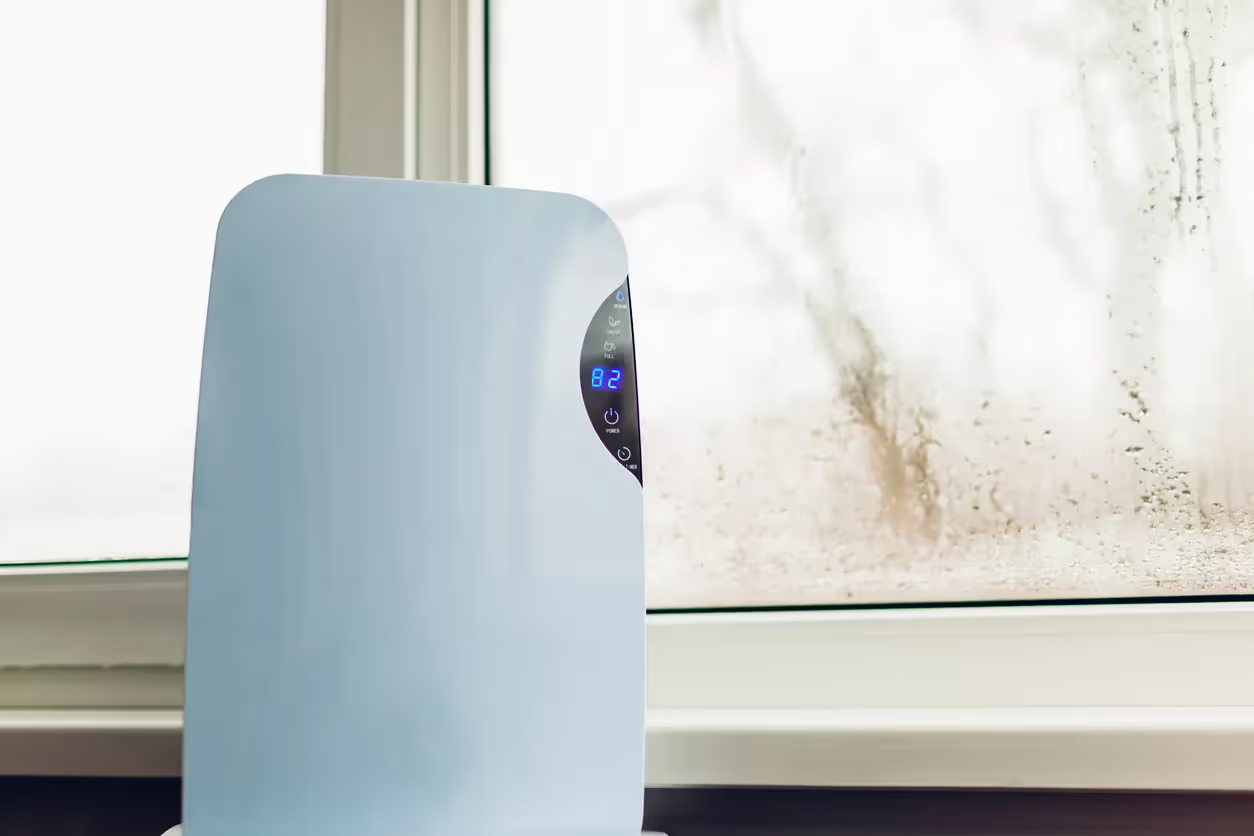
Dehumidifier Installation: What to Expect
Investing in a whole-home dehumidifier is a definitive step toward total home comfort, but understanding the installation scope helps homeowners prepare for the upgrade. Unlike portable units that are simply plugged into a wall outlet, a whole-home system is an integrated HVAC component. The installation focuses on integrating the unit directly with your existing central heating and cooling infrastructure.
When you move forward with an installation, the process begins with a technical site evaluation. Technicians do not guess on unit size; they calculate the specific moisture removal requirements based on the volume of the home, the tightness of the building envelope, and the number of occupants. This ensures the selected unit has the capacity—measured in pints per day—to maintain a consistent relative humidity between 45% and 50%.
The physical installation typically takes one day to complete. It involves mechanical work to alter ductwork, electrical work to provide dedicated power, and plumbing work to handle automatic drainage. You will receive a system that operates autonomously. There are no buckets to empty and no need to move the unit from room to room.
Included in a standard installation are:
- The high-capacity dehumidifier unit suited for your specific square footage.
- All necessary supply and return ductwork modifications to create a bypass or independent loop.
- A dedicated condensate drain line setup, often including a condensate pump if gravity drainage is not accessible.
- A digital control interface or integration with your existing smart thermostat.
- A post-installation test to verify airflow static pressure and moisture removal rates.
Our Step-by-Step Installation Process
A correct installation is critical for the longevity of the equipment and the efficiency of your HVAC system. An improperly installed dehumidifier can disrupt airflow, causing the main air handler to work harder or leading to back-drafting issues. We follow a rigorous, technical protocol to ensure seamless integration.
Site Assessment and Load Calculation
The process starts by determining the total moisture load. Technicians assess the infiltration rates of the home and the square footage. This data determines whether a 70-pint, 90-pint, or larger capacity unit is required. Placing a unit that is too small will result in continuous running without reaching the set point, while an oversized unit may short-cycle.
Unit Placement and Leveling
Most whole-home dehumidifiers are installed near the indoor air handler, which is typically located in a basement, crawlspace, or attic. The unit must be placed on isolation pads to reduce vibration and noise. It is leveled precisely to ensure the internal drain pan flows correctly. If the unit is going into an unconditioned crawlspace, we ensure it is elevated off the ground to prevent corrosion or water damage.
Ductwork Integration
This is the most technical phase. We typically utilize a "return-to-supply" or "dedicated return" configuration.
- Technicians cut into the existing return plenum to pull moist air into the dehumidifier.
- After the air is dried, it is discharged into the supply plenum to be distributed throughout the house.
- Motorized dampers may be installed to prevent air backflow when the dehumidifier is not running, ensuring the central AC pressure remains balanced.
Drainage Configuration
Whole-home units generate a significant amount of water—often several gallons a day during peak summer in Bowling Green.
- We run a hard-piped drain line from the unit to a floor drain or sump pit.
- If gravity drainage isn't possible, a condensate pump is installed to lift the water to an appropriate exit point or tie it into the main HVAC drain line with a P-trap to prevent sewer gas backup.
Electrical and Controls
The unit requires a dedicated power circuit to handle the compressor load safely. Once powered, we wire the low-voltage controls. This can be done in two ways: installing a separate humidistat near the unit or wiring the dehumidifier to a sophisticated main thermostat upstairs. This allows you to monitor and adjust humidity levels from your living room or smartphone.
System Startup and Verification
Finally, the system is powered on. We verify the static pressure in the ducts to ensure the fans are not fighting each other. We test the humidity sensors to ensure they trigger the unit accurately. The technician then walks you through the filter maintenance (usually a simple annual cleaning) and operation of the controls.
Knowing When to Upgrade Your Dehumidifier
Homeowners often hesitate to replace existing humidity control solutions until they fail completely. However, waiting for total failure often results in weeks of unchecked moisture accumulation. If you are currently relying on portable units or an aging whole-home system, proactive replacement is often the more economical choice.
Recognizing the signs of a failing or insufficient system allows you to upgrade before mold takes hold:
- Consistent Noise and Vibration: As compressors age, they become louder. If your current unit vibrates excessively or makes grinding noises, the internal components are likely worn out.
- Ice Formation on Coils: If you notice frost or ice building up on the coils of your dehumidifier, it indicates a refrigerant leak or airflow issue. While repairs are possible, the cost of recharging refrigerant and fixing leaks in older units often approaches the cost of a new, more efficient system.
- Inability to Reach Set Point: If the unit runs 24/7 but the hygrometer still reads above 55% or 60%, the compressor has lost efficiency or the unit is undersized for the current climate conditions.
- Age of the Equipment: Most dehumidifiers have a lifespan of 8 to 12 years. Units older than this are significantly less energy-efficient than modern models. Upgrading reduces electricity usage, as newer Department of Energy (DOE) standards require higher moisture removal per kilowatt-hour.
Repairing a portable unit or an outdated whole-home system is rarely cost-effective. The labor and parts for compressor replacement usually exceed 50% of the price of a new installation. Furthermore, new installations come with fresh manufacturer warranties, whereas repairs typically only offer a short guarantee on the specific part fixed.
Local Guidelines & Seasonal Considerations in Bowling Green
Installing HVAC equipment in our area requires specific attention to local climate patterns and building codes. Bowling Green experiences a humid subtropical climate, which means the "latent load" (moisture) is often higher than the "sensible load" (heat). During the shoulder seasons of spring and fall, temperatures may be mild (70°F), meaning your air conditioner won't run enough to remove humidity. This is where a dedicated dehumidifier becomes essential for local homes:
- Permitting and Electrical Codes: Dehumidifier installations often involve installing new electrical circuits. Local building codes require that these circuits be installed by qualified professionals to prevent fire hazards. We ensure that all wiring meets the National Electrical Code (NEC) as adopted by local jurisdictions. This includes proper grounding and the use of GFCI protection where necessary, particularly in unfinished basements or crawlspaces.
- Crawlspace Considerations: Many homes in our service area are built on crawlspaces. In these environments, unencapsulated earth releases massive amounts of moisture into the home structure. When installing in a crawlspace, we assess the need for a vapor barrier in conjunction with the dehumidifier. Local codes may also dictate specific clearances around the unit for serviceability.
- Condensate Management: Local regulations regarding wastewater discharge must be followed. Condensate cannot always be drained directly outside if it creates a nuisance or erosion issue near the foundation. We ensure drain lines are routed to code-compliant disposal points, such as sanitary drains or sump pits, ensuring compliance with local plumbing standards.
- Sizing for Local Housing Stock: Older homes in the area may have less insulation and leakier windows, leading to higher infiltration rates. We do not use "rule of thumb" sizing based solely on square footage. We adjust our calculations based on the age and construction style of your specific home to ensure the unit can keep up with the deep summer humidity typical of Kentucky.
Why Choose Us? Our Commitments & Credentials
Selecting a contractor for indoor air quality solutions is a decision that impacts your home’s long-term livability. You need a partner who views your home as a complete system, not just a collection of parts. See our reviews to learn more:
- Technical Accuracy and Sizing: We utilize industry-standard manuals for load calculation. We do not guess. Ensuring the right fit means your unit runs efficiently and lasts longer. An oversized unit will short-cycle, leading to premature failure, while an undersized unit will fail to protect your home.
- Licensed and Insured Professionals: Every technician on our team is fully vetted, background-checked, and licensed. We carry full liability and workers' compensation insurance, protecting you from any liability during the project. We treat your home with respect, using drop cloths and shoe covers, and we leave the workspace cleaner than we found it.
- Comprehensive Warranties: We stand behind our work. Our installations come with robust manufacturer warranties on parts and compressors, often extending up to 5 or 10 years. Additionally, we provide labor warranties to cover the quality of the installation itself. You receive documentation for all warranties upon project completion.
- Transparent Pricing and Financing: We provide clear, upfront quotes before work begins. There are no hidden fees for ductwork transitions or electrical connections. For homeowners looking to manage cash flow, we offer financing options that allow you to upgrade your comfort now and pay over time.
Carter Heating and Cooling is dedicated to providing superior indoor air quality solutions that stand the test of time. If you are ready to eliminate dampness, protect your property from mold, and breathe easier, take the next step today.
Take Control of Indoor Moisture: Schedule Your Dehumidifier Installation Today
Managing humidity effectively is essential for protecting your home, improving indoor air quality, and maintaining year-round comfort. With Carter Heating and Cooling, you receive precise system sizing, professional installation, and dependable support to ensure your dehumidifier performs at peak efficiency.
Don’t let humidity compromise your comfort any longer; contact us now to schedule your professional dehumidifier installation.

Great Service at a Fair Price
Veterans Discount


Senior Discount

Law Enforcement

Fire fighters/ems

Hear From Your Neighbors!
Hear from your neighbors to see how our commitment to dependable service and lasting comfort has made a difference in their homes.