

How can we help today?
Choose an option to see quick actions and get help faster.AC Replacement in Edmonton, KY
AC Replacement in Edmonton, KY
Need urgent AC installation in Edmonton, KY? Our quick, reliable services ensure cool comfort with same-day availability. Call now for a detailed assessment.
Is Your AC Ready for Kentucky's Humid Summers?
Struggling with an inefficient air conditioner in Edmonton’s sticky heat usually means you are considering a replacement sooner than expected. When your cooling system fails to keep up with the rising humidity or breaks down completely, you need a solution that restores comfort immediately; call us to schedule an assessment or apply for financing to get started. Carter Heating and Cooling understands that a reliable air conditioner is not a luxury in this region—it is a necessity for your safety and home preservation.
- Ensure comfort with our same-day AC installation service availability.
- Enjoy peace of mind with comprehensive warranties for every replacement.
- Benefit from affordable solutions with flexible financing options.
Licensed and insured—your trusted local experts in AC efficiency and sustainability.
Comprehensive AC Replacement Scope
When you authorize a system replacement, you are purchasing more than just a metal box to sit outside your home. You are investing in a complete overhaul of your home’s climate control infrastructure. A proper installation involves a series of technical checkpoints designed to ensure the new unit operates at its rated efficiency for the next decade or longer.
The scope of work begins with the safe reclamation of old refrigerant. Venting refrigerant is illegal and harmful to the environment, so certified technicians must capture the old chemical before dismantling the existing unit. Following removal, the focus shifts to preparing the site. This includes leveling the ground or replacing the composite pad to ensure the new condenser sits perfectly flat. A tilted unit can lead to premature compressor failure due to improper oil distribution within the system.
Inside the home, the evaporator coil—the component responsible for absorbing heat—is replaced to match the new outdoor condenser. Mixing old indoor coils with new outdoor units results in efficiency losses and voided warranties. The transition also requires a thorough inspection of the plenum and immediate ductwork connections. If the existing connections are loose or leaking, the new system will simply push expensive conditioned air into your attic or crawlspace.
Electrical components are also upgraded during this process. The service disconnect box, located near the outdoor unit, is typically replaced to ensure a safe, weather-tight electrical connection. New whip wiring is installed to connect the disconnect box to the unit, adhering to current safety codes. Finally, the copper line set, which carries the refrigerant between the indoor and outdoor units, is either replaced or thoroughly flushed to remove contaminants from the previous system.
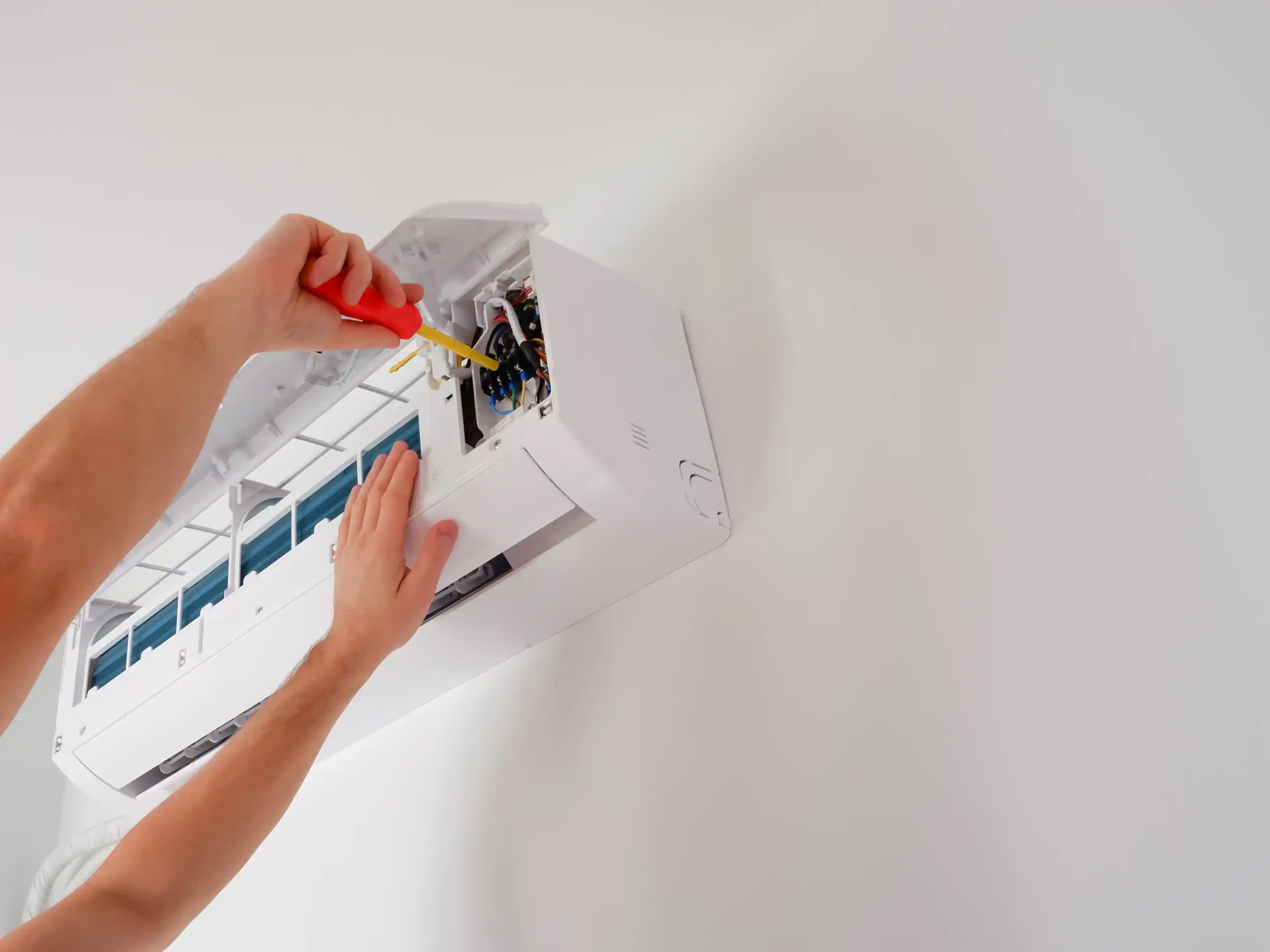
The Installation Process Step-by-Step
A systematic approach to installation eliminates errors and ensures that your home in Edmonton is cool from the moment the system is powered on. We utilize a rigid protocol to manage the removal of the old system and the commissioning of the new one.
Site Assessment and Protection
The process begins with a walkthrough to determine the safest path for bringing in heavy equipment. Technicians lay down drop cloths and shoe covers to protect flooring and carpets. The electrical circuit powering the HVAC system is locked out at the breaker panel to ensure zero risk of electrical shock during the procedure.
System Removal and Disposal
Technicians disconnect the high-voltage and low-voltage wiring. The refrigerant lines are cut after the chemical has been recovered. The old outdoor unit and indoor coil are removed from the property. All debris, including old mounting pads and packaging from the new unit, is consolidated for disposal.
Positioning and Connection
The new condenser is positioned on a vibration-absorbing pad. Inside, the new evaporator coil is fitted to the furnace or air handler. The copper line set is brazed using nitrogen purging. Flowing nitrogen through the lines while brazing prevents oxidation scale from forming inside the pipe, which could otherwise clog the sensitive expansion valve in the new unit.
Evacuation and Charging
Once connected, the system is pressure-tested with nitrogen to identify potential leaks. If the system holds pressure, a vacuum pump is attached to remove moisture and non-condensable gases from the lines. Achieving a deep vacuum (measured in microns) is critical; moisture left in the system creates acid that eats away at motor windings. Finally, the system is charged with the precise amount of refrigerant required by the manufacturer.
Commissioning and Testing
The unit is powered on, and technicians measure static pressure, airflow, and temperature split (the difference in temperature between air entering and leaving the system). The thermostat is calibrated or replaced to communicate effectively with the new equipment. Only when the system meets all performance benchmarks is the job considered complete.
When to Replace vs. Repair Your Cooling System
Deciding between another repair bill and a full replacement is often a financial calculation based on the age and condition of the unit. While repairs can extend the life of a system, there is a tipping point where throwing money at an old machine becomes a sunk cost — consider our maintenance plan to prolong unit life.
The 5000 Rule
A common industry standard for decision-making is the "5000 Rule." Multiply the age of your air conditioner by the estimated cost of the repair. If the total exceeds $5,000, replacement is generally the smarter financial move. For example, if you have a 12-year-old unit requiring a $500 repair (12 x 500 = 6,000), the math suggests replacing the unit is more viable than fixing it.
Refrigerant Type Restrictions
If your current system utilizes R-22 (Freon), you are facing a significant obsolescence issue. The production and import of R-22 have been banned, making remaining supplies effectively liquid gold. A simple refrigerant leak in an R-22 system can cost nearly as much to refill as a down payment on a modern, eco-friendly system. Modern units use R-410A or newer refrigerants like R-32 and R-454B, which are available, affordable, and compliant with environmental regulations.
Compressor Failure
The compressor is the heart of the air conditioner. If it fails, the cost to replace it often rivals the cost of a new outdoor unit. Putting a new compressor in an old shell is risky because the other aging components—capacitors, fan motors, and coils—are likely near the end of their lifespan as well. A total system failure often follows a major component replacement on an aged unit.
Rising Energy Bills
As air conditioners age, their SEER (Seasonal Energy Efficiency Ratio) degrades. An AC unit installed 15 years ago likely started at 10 or 12 SEER and is now operating much lower due to wear and tear. Replacing this with a modern 15+ SEER2 system can drastically reduce monthly electrical consumption. If your cooling bills in Edmonton are spiking despite normal usage, the equipment is likely working twice as hard to produce the same amount of cooling.
Local Considerations for Edmonton, KY
Operating an air conditioning system in South Central Kentucky requires specific attention to humidity control and regional infrastructure. The climate here is classified as humid subtropical, meaning the air carries significant moisture from late spring through early autumn.
Humidity Management
An air conditioner does two things: it lowers temperature and removes moisture. In our region, moisture removal is just as important as temperature reduction. If a unit is oversized, it will cool the house too quickly and shut off before it has had time to dehumidify the air. This results in a "clammy" feeling, mold growth risks, and warped wood floors. Carter Heating and Cooling ensures that every replacement is sized according to Manual J load calculations, ensuring the unit runs long enough to pull humidity out of the air effectively.
Permits and Inspections
Replacing an HVAC system involves electrical and mechanical work that must adhere to local building codes. In Metcalfe County and surrounding areas, ensuring that the new installation meets safety standards is non-negotiable. This includes proper breaker sizing to prevent fire hazards and disconnect placement for emergency shutoffs. Professional installation includes handling the verification that all electrical connections meet the National Electrical Code (NEC) requirements tailored to local enforcement.
Seasonal Timing
The best time to address a failing system is before the peak heat of July and August. Installation schedules fill up rapidly once the first heatwave hits Kentucky. Proactive replacement in the spring or early summer ensures you have access to the specific equipment inventory you want, rather than settling for whatever is in stock during a supply crunch. Additionally, attic temperatures in mid-summer can reach dangerous levels, making installation more difficult and time-consuming.
Why Technical Precision Matters
The longevity of your new air conditioning system depends almost entirely on the quality of the installation. Industry data suggests that a significant percentage of HVAC equipment failure is due to improper installation rather than manufacturing defects.
Proper Airflow Design
A high-efficiency AC unit cannot function without proper airflow. If your existing ductwork is undersized, crushed, or leaking, a new high-performance unit will suffocate. It leads to high static pressure, which overworks the blower motor and creates noise. Part of the replacement process involves assessing the duct system to ensure it can handle the cubic feet per minute (CFM) of air required by the new equipment.
Matched Systems
Replacing only the outdoor unit while leaving an old, incompatible indoor coil is a recipe for inefficiency. This practice, often called a "mismatch," prevents the system from achieving its rated SEER2 efficiency. It can also cause issues with refrigerant metering, leading to frozen coils or liquid slugging back to the compressor. A complete system replacement ensures that the indoor and outdoor components are engineered to work together seamlessly.
Warranty Registration and Integrity
Manufacturers offer extended parts warranties—often up to 10 years—but these are contingent on professional installation and registration. If a system is installed by an unlicensed contractor or if the equipment is not registered within a specific window, the warranty may revert to a basic 5-year term or be voided entirely. Professional installers handle the registration process to lock in your coverage.
Securing Your Home Comfort
Choosing the right partner for AC replacement defines the future comfort of your home. You need a team that prioritizes technical accuracy, respects your property, and understands the specific climate challenges of Kentucky — read our client reviews to learn more. From the initial load calculation to the final thermostat programming, every step should be executed with the intent of maximizing the lifespan and efficiency of your investment.
If your current system is showing signs of failure or simply cannot keep up with the heat, do not wait for a total breakdown. Secure your home’s comfort and efficiency today.
Contact us now to schedule your comprehensive AC replacement evaluation.

Great Service at a Fair Price
Veterans Discount


Senior Discount

Law Enforcement

Fire fighters/ems

Hear From Your Neighbors!
Hear from your neighbors to see how our commitment to dependable service and lasting comfort has made a difference in their homes.