

How can we help today?
Choose an option to see quick actions and get help faster.HEPA Air Cleaner Installation in Morgantown, KY
HEPA Air Cleaner Installation in Morgantown, KY
Secure high-quality indoor air with our HEPA air cleaner installation and breathe easier in Morgantown. Schedule your service today for clean, allergen-free air.
Breathe Easier with Professional HEPA Air Cleaner Installation
Poor indoor air quality creates constant respiratory irritation, fatigue, and health risks for families living in Morgantown. Contact Carter Heating and Cooling today to schedule a comprehensive air quality assessment or to discuss our available financing options for new system installations.
Residents in our area often battle high humidity levels and seasonal allergens that standard furnace filters cannot capture. A whole-home HEPA (High-Efficiency Particulate Air) system integrates directly with your central heating and cooling unit, trapping microscopic particles before they circulate through your ductwork. We provide hospital-grade air purification solutions designed to meet the specific residential codes and climate demands of Kentucky.
- Reduce allergens, mold spores, and pollutants significantly with a professionally installed, whole-home HEPA system.
- Receive expert advice on unit sizing and installation that aligns strictly with local building standards and manufacturer specifications.
- Invest in long-term health with cost-effective solutions, transparent warranties, and efficient service timelines.
All installations are fully compliant with local safety codes and come with comprehensive warranties and flexible financing options to ensure your home remains safe and comfortable.
The Scope of Whole-Home HEPA Filtration Services
Installing a whole-home HEPA air cleaner is a significant upgrade from using portable, room-specific units. This service involves modifying your existing HVAC infrastructure to accommodate a filtration system capable of capturing 99.97% of particles as small as 0.3 microns. Unlike standard 1-inch fiberglass filters that primarily protect the furnace equipment, a dedicated HEPA system protects the occupants of the home by removing bacteria, viruses, smoke, pollen, and pet dander.
The service begins with a load calculation and airflow analysis. HEPA filters are dense; they create resistance against airflow, known as static pressure. Simply sliding a HEPA filter into a standard slot can suffocate your furnace or air handler, leading to equipment failure. Our installation process focuses on bypassing this issue or utilizing fan-powered units that assist air movement, ensuring your heating and cooling equipment continues to run efficiently while the air is scrubbed clean.
Homeowners receive a turnkey solution that includes:
- System Selection: Identification of the correct bypass or fan-powered HEPA unit based on the square footage of the home and the cubic feet per minute (CFM) capacity of the existing blower.
- Ductwork Modification: precise cutting and sealing of the return air plenum to integrate the filtration unit without creating air leaks.
- Electrical Integration: Hardwiring the unit to the existing electrical panel or HVAC control board so the filtration system activates automatically with the furnace fan.
- Performance Verification: Post-installation testing to measure static pressure and particulate reduction.
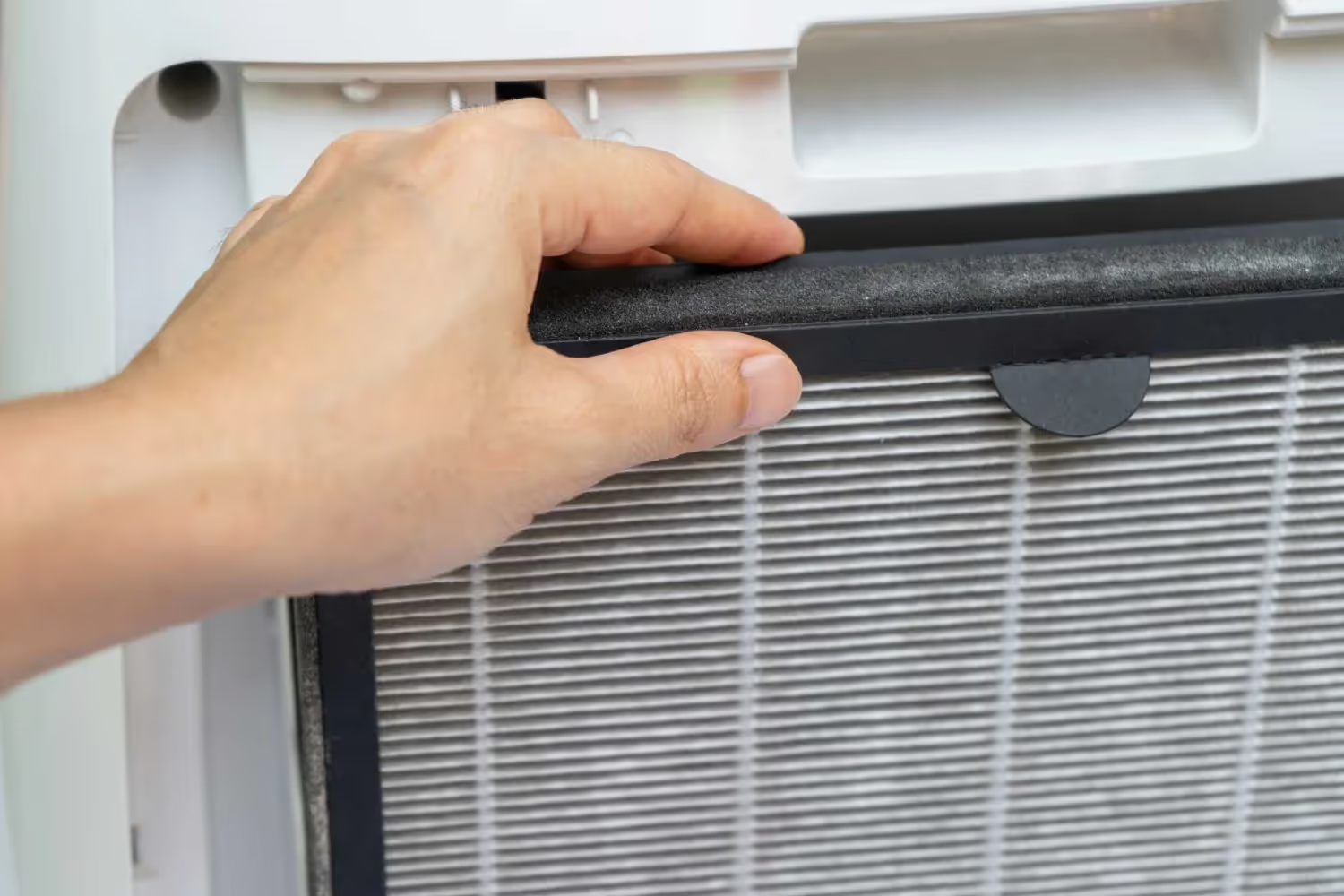
Comprehensive Installation Process Steps
Our technicians follow a rigid protocol to ensure the air cleaner functions correctly without compromising the efficiency of your central HVAC system. This process is technical and requires specialized tools to measure airflow and pressure differentials.
Site Assessment and Unit Sizing
The first step involves inspecting the current HVAC layout. Technicians measure the physical space around the furnace or air handler to determine if there is room for a bypass loop or a duct-mounted unit. We calculate the Total External Static Pressure (TESP) of the current system to ensure the blower motor can handle the addition of a high-efficiency filter.
Ductwork Preparation
Technicians mark and cut openings into the return air drop and the supply plenum. This is typically where a "bypass" configuration is installed. Ideally, about 30% to 50% of the air returning to the furnace is diverted through the HEPA filter on each pass. This incremental filtration ensures that all air in the home is scrubbed multiple times per hour without restricting the main airflow required for heating or cooling.
Mounting and Sealing
The HEPA unit is mechanically fastened to the floor or wall and connected to the ductwork using rigid metal ducts or flex ducts, depending on the specific application. All connections are sealed with mastic or foil tape to prevent unconditioned basement or attic air from being drawn into the system.
Electrical Connection
For fan-powered HEPA units, a dedicated electrical connection is established. The system is interlocked with the main HVAC blower. This means the air cleaner runs whenever the central fan creates circulation, ensuring continuous filtration. Some setups allow the HEPA unit to run independently for air polishing even when heating or cooling is not required.
Final Testing and Calibration
Once installed, the system is powered on, and technicians verify the pressure drop. If the pressure is too high, adjustments are made to the bypass dampers. A particle counter may be used to verify that the air leaving the HEPA unit is meeting the expected cleanliness standards.
Repair vs. Replacement: When to Install a New System
Homeowners often debate whether to upgrade their current media cabinet or repair an older electronic air cleaner versus installing a modern HEPA system. Understanding the lifecycle of air quality equipment helps in making the right financial decision.
Obsolescence of Electronic Air Cleaners
Many homes in Morgantown were equipped with electrostatic precipitators in the 1990s and early 2000s. These units often break down, making snapping noises or failing to charge the collection plates. Repair parts for these older units are becoming scarce and expensive. If an electronic air cleaner has failed, replacing it with a media-based HEPA system is often more reliable and cost-effective, eliminating the need for complex electrical repairs and frequent plate washing.
Inefficiency of Standard Media Cabinets
If your current system utilizes a 4-inch or 5-inch media filter (MERV 10-13), you are getting decent filtration, but it is not HEPA grade. If members of the household suffer from severe allergies, asthma, or immune sensitivities, a standard media cabinet upgrade is insufficient. In these cases, moving to a bypass HEPA system is the necessary step to achieve hospital-grade air quality.
Persistent Odors and VOCs
Standard filters capture dust but do nothing for volatile organic compounds (VOCs) or odors. HEPA systems often include a carbon pre-filter stage specifically designed to adsorb chemicals and cooking odors. If indoor odors persist despite cleaning, or if the home feels "stale," installing a multi-stage HEPA system is the superior solution compared to attempting to retrofit carbon sheets onto standard filters.
Local Climate Factors and Installation Requirements
The climate in this region plays a massive role in indoor air quality requirements. Morgantown experiences a humid subtropical climate, characterized by hot, muggy summers and substantial rainfall. This moisture creates an ideal breeding ground for biological contaminants.
Humidity and Mold Spores
During the humid summer months, mold spores enter homes through open doors, windows, and even on clothing. Once inside, they circulate through the HVAC system. A HEPA filter is one of the few physical barriers tight enough to capture mold spores before they can colonize in the ductwork or on the AC evaporator coil. We ensure that the installation location allows for easy filter changes, which is critical during high-pollen spring and fall seasons.
Code Compliance and Safety
Local building codes regarding HVAC modifications require that any addition to the system does not compromise the safety of gas-fired equipment. If a filter restricts airflow too much, it can cause a gas furnace to overheat and shut down on a high-limit switch. Our installations account for these safety margins. We adhere to National Electric Code (NEC) standards when hardwiring fan-powered units, ensuring dedicated circuits are used where necessary to prevent breaker trips.
Energy Efficiency Considerations
Local utility rates mean that homeowners are conscious of energy usage. While a HEPA system adds a motor or resistance to the system, modern units are designed for low energy consumption. By keeping the evaporator coil and blower wheel cleaner, a HEPA system actually helps the central HVAC unit maintain its efficiency rating (SEER/AFUE) over time, offsetting the minor cost of running the air cleaner.
Technical Specifications: HEPA vs. MERV 13
To understand the value of this installation, it is helpful to distinguish between standard high-efficiency filters and true HEPA filtration. This technical distinction drives the decision-making process for most homeowners.
The MERV Rating Scale
Most residential filters are rated on the Minimum Efficiency Reporting Value (MERV) scale, typically topping out at MERV 13 or 16 for residential use. A MERV 13 filter captures fewer than 75% of particles in the 0.3-1.0 micron range. While good for general dust, it allows a significant amount of lung-damaging fine particulate matter to pass through.
The HEPA Standard
True HEPA is not just a marketing term; it is a standard (IEST-RP-CC001) requiring 99.97% efficiency at 0.3 microns. This is the "most penetrating particle size," meaning particles both larger and smaller are captured even more efficiently due to physical laws of diffusion and interception.
Bypass Configuration Necessity
Because HEPA media is so dense, it cannot be placed directly in the airstream of a residential furnace (unlike MERV filters). This is why the "bypass" installation method is non-negotiable for true HEPA performance. We install the unit in a parallel loop, cleaning a portion of the air on every cycle. This method ensures the house achieves the necessary air exchange rate without damaging the central heating and cooling equipment.
Why Professional Integration is Critical
Attempting to install a whole-home air filtration system without professional oversight often leads to negative pressure issues and equipment damage. The specific interaction between the air cleaner and the central blower requires precise calculation.
Static Pressure Management
Every piece of ductwork adds resistance. Adding a HEPA filter adds significant resistance. If this isn't calculated correctly, the central blower motor will work harder to overcome the drag, leading to premature motor failure and higher electricity bills. Carter Heating and Cooling technicians utilize manometers to measure static pressure before and after installation to guarantee the system operates within manufacturer parameters.
Leak-Free Duct Integration
A HEPA filter is useless if air can bypass the filter media through gaps in the metal work. Air follows the path of least resistance. If the transition ducting is not sealed with professional-grade mastic, dirty air will be pulled in from the surrounding utility room, completely negating the purpose of the filter. We ensure an airtight seal on all modifications.
Proper Electrical Interlocking
For the system to be effective, it must run in tandem with the central fan. DIY installations often rely on separate plug-ins or manual switches, which leads to the system being left off or running when the central fan is off (which can cause back-drafting issues). Professional interlocking ensures seamless, automated operation.
Maintaining Your HEPA System for Longevity
Once installed, a HEPA system requires specific maintenance to operate at peak efficiency. Unlike standard 1-inch filters that need monthly changes, HEPA systems have a different service cycle.
Pre-Filter Maintenance
Most whole-home units have a carbon or foam pre-filter. This captures large dust bunnies and pet hair, protecting the expensive HEPA media. These pre-filters typically need to be changed or vacuumed every 3 to 6 months, depending on the number of pets and occupants in the home.
HEPA Cartridge Replacement
The main HEPA cylinder or cartridge has a large surface area and typically lasts between two to three years. However, in homes with smokers, burning candles, or heavy construction dust, this lifespan may decrease. We provide clear schedules and can supply the specific OEM replacements needed for your unit.
System Checks
During annual HVAC maintenance, the air cleaner should be inspected. This includes checking the fan operation (if powered), inspecting the seals on the access door, and verifying that the pressure drop across the filter has not exceeded the limit, which would indicate a saturated filter.
Secure Your Indoor Air Quality Today
A whole-home HEPA installation transforms a residence into a sanctuary from outdoor pollutants and indoor contaminants. By integrating hospital-grade filtration directly into the central HVAC system, homeowners ensure that every room receives purified air without the noise or clutter of portable units. Our team ensures that the integration is seamless, safe, and effective against the specific humidity and allergen challenges found in our region.
For reliable, code-compliant HEPA air cleaner installation in Morgantown, trust the experts at Carter Heating and Cooling.
Contact us today to schedule your indoor air quality evaluation and installation.

Great Service at a Fair Price
Veterans Discount


Senior Discount

Law Enforcement

Fire fighters/ems

Hear From Your Neighbors!
Hear from your neighbors to see how our commitment to dependable service and lasting comfort has made a difference in their homes.