
How can we help today?
Choose an option to see quick actions and get help faster.Hepa Air Cleaner Service in Lewisburg, KY
Hepa Air Cleaner Service in Lewisburg, KY
Improve your home's air quality with our professional HEPA air cleaning services in Lewisburg, KY. Experience relief from allergies and ensure cleaner air. Contact us today!
Why Quality HEPA Air Cleaning Services Are Essential for Your Home
Struggling with allergies or noticing more dust at home? It might be time to consider enhancing your home’s air quality with professional HEPA air cleaning, specifically designed to address the particulate challenges found in Lewisburg, KY. Contact us today to schedule a comprehensive indoor air quality assessment and filtration system installation.
High-efficiency particulate air (HEPA) filtration is not merely an accessory; it is a critical component for maintaining a healthy indoor environment. Standard furnace filters are designed primarily to protect HVAC equipment, but they often fail to trap microscopic irritants that affect human health. A dedicated HEPA system integrates with your existing ductwork to scrub the air of contaminants that bypass standard filtration methods.
- Capture up to 99.97% of airborne particles, including pollen, dust, and other allergens, with certified HEPA filters.
- Improve your home's air quality effectively with cutting-edge technology designed for superior filtration.
- Experience relief from allergies and breathe easier with a professionally installed HEPA air cleaning system.
All our services are backed by industry-leading warranties and our commitment to 100% customer satisfaction. Carter Heating and Cooling ensures that every installation meets rigorous standards for airflow and filtration efficiency.
Comprehensive HEPA Filtration Solutions
Implementing a whole-home HEPA air cleaner is a significant upgrade from using portable, room-specific units. A whole-home approach treats the air at the source—your central HVAC system—ensuring that clean air is circulated to every room in the house. The service focuses on the installation, maintenance, and optimization of these high-capacity filtration units.
When you invest in professional air cleaner service, the focus shifts to the seamless integration of the unit with your current heating and cooling infrastructure. HEPA filters are dense; they require specific airflow management to function correctly without restricting the air supply to your furnace or air conditioner. The service includes a technical evaluation of your ductwork and blower motor capabilities to ensure the system enhances air quality without straining your HVAC equipment.
The scope of service covers several key areas:
- Bypass System Installation: Many whole-home HEPA systems are installed in a "bypass" configuration. This pulls a portion of the air from the return duct, filters it through the HEPA media, and returns it to the supply duct. This method cleans the air repeatedly throughout the day without creating excessive static pressure that could damage your furnace.
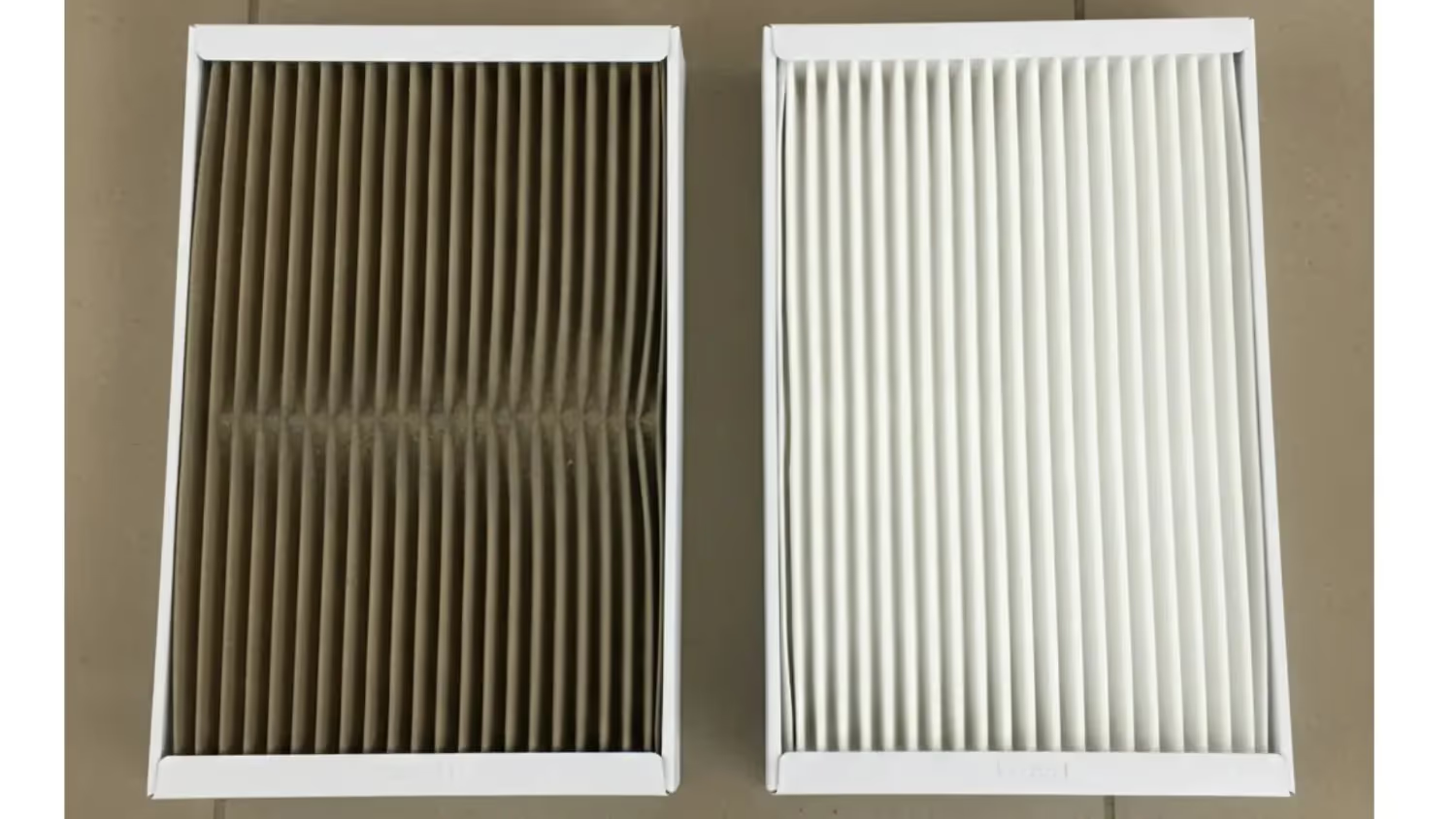
- Media Integrity Checks: The effectiveness of a HEPA filter relies on the integrity of the media. Service includes inspecting filters for tears, gaps, or saturation that could allow particles to bypass the filter material.
- Seal Verification: A HEPA filter is only as good as its seal. If air can leak around the frame of the filter, the efficiency drops significantly. Technicians ensure that gaskets and seals are airtight, forcing 100% of the air passing through the unit to go through the filtration media.
- Carbon Filtration Integration: Many HEPA systems also include a stage of activated carbon filtration to absorb volatile organic compounds (VOCs), odors, and chemical vapors, which HEPA media alone cannot capture.
The Installation and Service Process
Professional installation follows a strict protocol to ensure maximum pollutant capture. The process begins with calculating the required clean air delivery rate (CADR) based on the square footage of the home and the volume of air handling required. This ensures the selected unit is powerful enough to turn over the air in the home multiple times per hour.
First, technicians conduct a static pressure test on the existing HVAC system. This baseline measurement is crucial. High-efficiency filters add resistance to airflow. If the existing ductwork is already restrictive, adding a HEPA unit without modification could reduce system efficiency. Based on these readings, the technician determines the optimal installation location—typically on the return air side or in a dedicated bypass loop.
Next, the physical installation involves cutting into the existing plenum or ductwork. This requires precision sheet metal work to create a connection that is both structurally sound and airtight. Technicians install the mounting cabinet, ensuring it is level and securely braced. The HEPA unit is then connected, often requiring low-voltage wiring to synchronize its operation with the main HVAC blower fan. This synchronization ensures the air cleaner runs whenever the air is circulating.
Finally, the system undergoes rigorous testing. This involves using particle counters to measure the air quality before and after the filter installation. Technicians verify that the pressure drop across the filter falls within manufacturer specifications. The homeowner is then briefed on the operation, including how to read filter change indicators and the expected lifecycle of the media based on current household usage patterns.
Deciding Between Repair and System Replacement
Homeowners often face the decision of whether to repair an existing air filtration setup or upgrade to a modern HEPA system. This decision relies on several technical factors regarding the age of the equipment and its current filtration capability.
If an existing electronic air cleaner or older media cabinet is physically damaged—such as bent collection cells, corroded contacts, or warped door seals—repair is often diminishing returns. Older electrostatic precipitators, for example, lose efficiency as they get dirty and can emit ozone, a lung irritant. In contrast, modern HEPA media systems provide consistent filtration efficiency that actually improves slightly as the filter loads, up to the point of replacement.
Consider replacement if the current system uses obsolete filter sizes that are difficult to source or prohibitively expensive. Many older proprietary systems have high maintenance costs that exceed the price of installing a new, universal-standard HEPA bypass system over a few years — apply for financing.
Furthermore, if the goal is specifically to address sub-micron particles—viruses, bacteria, and smoke—standard media cabinets (MERV 8-11) are insufficient. If the household health needs have changed, such as a new diagnosis of asthma or severe allergies, upgrading to true HEPA (MERV 17 equivalent or higher) is the only way to achieve the necessary particulate reduction. Repairing a lower-efficiency unit will not change its fundamental inability to capture the smallest, most dangerous particles.
Controlling Indoor Air Quality in a Humid Subtropical Climate
Lewisburg experiences a humid subtropical climate that presents unique challenges for indoor air quality. With an average annual precipitation of around 50 inches and significant summer thunderstorms, moisture management is a constant concern. High humidity levels create an ideal breeding ground for biological pollutants such as mold spores, dust mites, and bacteria.
While a dehumidifier manages moisture levels, a HEPA air cleaner is the defense line against the biological particulates that thrive in that moisture. Mold spores, once airborne, can circulate through the HVAC system indefinitely if not physically trapped. A HEPA filter captures these spores, preventing them from colonizing other parts of the home or being inhaled by occupants.
Seasonality also dictates service needs. In the spring and fall, pollen counts spike. During the winter, although snowfall is limited to 5 to 10 inches annually, the cold weather forces homeowners to keep windows sealed tight for months. This "tight home" effect traps indoor pollutants—pet dander, cooking smoke, and dust—creating concentrations that are significantly higher than outdoor levels.
Carter Heating and Cooling recommends servicing air cleaning systems just prior to peak allergy seasons. This ensures that the filter media has maximum capacity available to handle the influx of pollen in spring or the increased dust load during the winter heating season. Proper timing of filter changes prevents the system from becoming a source of resistance during extreme weather when the HVAC system is working hardest.
Technical Advantages of Professional Air Cleaning
The distinction between a professional-grade HEPA service and consumer-grade solutions lies in capacity and capture velocity. Store-bought portable units often lack the fan power to effectively clean the air in a large room, let alone an entire home. They often recirculate the same pocket of air, leaving dead zones in the house where pollutants accumulate.
Centralized HEPA systems utilize the power of the home’s air handler or a dedicated high-velocity fan to ensure comprehensive air mixing. This means particulates from every room with a return vent are drawn back to the central filtration point. The capture efficiency of these systems is verified down to 0.3 microns, the standard for HEPA certification. This size range includes the most penetrating particle size (MPPS), which is the hardest to trap.
Another differentiator is the service life of the media. Professional HEPA systems utilize deep-pleated media with a massive surface area. This allows the filter to hold a significant volume of particulate matter before airflow is restricted. Unlike 1-inch standard filters that require monthly changes, high-capacity HEPA cartridges can often last 12 to 24 months depending on the pollutant load.
Furthermore, professional service includes the handling of contaminated media. When a HEPA filter is fully loaded, it contains a concentrated mass of allergens, mold, and bacteria. Improper removal can release these contaminants back into the home. Technicians are trained to bag and seal used filters directly at the unit to prevent cross-contamination during the replacement process.
Maintaining a Healthier Home Environment
Investing in HEPA air cleaner service is a proactive step toward safeguarding respiratory health and enhancing the comfort of the living space. It transforms the HVAC system from a simple temperature control device into a comprehensive environmental management tool. By removing the vast majority of airborne irritants, homeowners protect not only their families but also the longevity of their heating and cooling equipment by keeping internal components free of debris.
Clean air is a necessity, particularly in regions where humidity and seasonal allergens pose a constant threat to indoor environmental quality. Relying on professional expertise ensures that the filtration system is correctly sized, properly installed, and maintained for peak performance year-round. Carter Heating and Cooling remains dedicated to providing the technical proficiency required to keep indoor air pure and healthy. Take control of your indoor air quality today. Schedule a professional consultation to discuss HEPA filtration options tailored to your specific needs.

Great Service at a Fair Price
Veterans Discount


Senior Discount

Law Enforcement

Fire fighters/ems

Hear From Your Neighbors!
Hear from your neighbors to see how our commitment to dependable service and lasting comfort has made a difference in their homes.