
How can we help today?
Choose an option to see quick actions and get help faster.Eliminate Cold Drafts and System Failures Immediately
If your furnace is malfunctioning, you are not just facing a chilly home; you could be looking at rapidly increasing energy bills and potential safety hazards. Let our certified technicians provide fast, effective fixes to get your warmth back; Contact us today to schedule your service or discuss financing options. Residents in Elkton, KY understand that when the temperature drops, a reliable heating system is not a luxury, but a necessity for safety and comfort.
We prioritize restoring your heating system’s efficiency and reliability through a structured, transparent approach. Our team focuses on accurate diagnostics to identify the root cause of the failure rather than simply swapping out parts until the unit turns on. This ensures long-term performance and prevents recurring breakdowns during the coldest weeks of the year.
- Rapid response times with same-day service availability to restore heat quickly.
- Transparent pricing structures and no hidden fees for diagnostics or repairs.
- Comprehensive service checks that identify underlying issues to prevent future failures.
All services are backed by a warranty, ensuring your peace of mind and protecting your investment in home comfort.
Comprehensive Furnace Diagnostics and Repair Services
When a heating system fails, the symptoms are often obvious, but the underlying causes can vary significantly. Modern furnaces are complex machines that integrate electrical components, gas flow systems, and airflow mechanics. A breakdown in any one of these areas can cause the entire system to shut down or operate inefficiently. Professional service addresses these specific components to restore full functionality.
Carter Heating and Cooling employs a rigorous diagnostic protocol to isolate the exact point of failure. This approach minimizes downtime and ensures that you do not pay for unnecessary repairs. Service calls typically address a wide range of mechanical and electrical issues that plague residential heating systems.
Ignition and Pilot Control Issues
One of the most common reasons a furnace fails to produce heat is a malfunction in the ignition system. Whether your unit utilizes a standing pilot light or a modern electronic ignition system, failure here means the burners will never light. Technicians inspect the hot surface igniter for cracks or resistance issues and check the flame sensor for carbon buildup. If the flame sensor is dirty, it will signal the gas valve to close as a safety precaution, shutting down the unit. Cleaning or replacing these sensors restores the heating cycle immediately.
Airflow and Blower Motor Repairs
Heat cannot circulate if the blower motor is compromised. Issues with the blower motor often manifest as a humming noise, weak airflow from vents, or the furnace overheating and shutting down. Service visits include testing the capacitor, which provides the torque needed to start the motor, and inspecting the belt on older units. If the motor is overheating due to dirt accumulation or bearing failure, technicians can often clean or lubricate the component. In cases where the winding is damaged, a motor replacement ensures warm air reaches every room in the house.
Thermostat and Control Board Calibration
The thermostat serves as the brain of your heating system. If it loses calibration or loses connection with the furnace control board, the system will not maintain the desired temperature. Problems here often look like "short cycling," where the furnace turns on and off rapidly without heating the home. Technicians verify the wiring connections between the thermostat and the furnace control board. They also test the voltage to ensure the control board is sending the correct signals to the blower, gas valve, and igniter.
Heat Exchanger Inspections
The heat exchanger is the critical component that separates combustion gases from the breathable air in your home. Over time, the constant expansion and contraction from heating cycles can cause cracks. A cracked heat exchanger is a serious safety risk as it can allow carbon monoxide to leak into the living space. Professional service always includes a thorough visual inspection and, if necessary, a combustion analysis to ensure the integrity of this vital component.
The Furnace Service and Restoration Process
Understanding what happens during a service visit helps homeowners feel confident in the work being performed. The goal is to move from a state of malfunction to a fully operational system with minimal disruption to your daily routine. The process is designed to be systematic, ensuring no safety checks are missed and that the repair is durable.
- Initial System Assessment: The technician begins by discussing the specific symptoms you have noticed, such as strange noises, smells, or specific rooms that remain cold. This is followed by a visual inspection of the venting, drainage, and electrical connections.
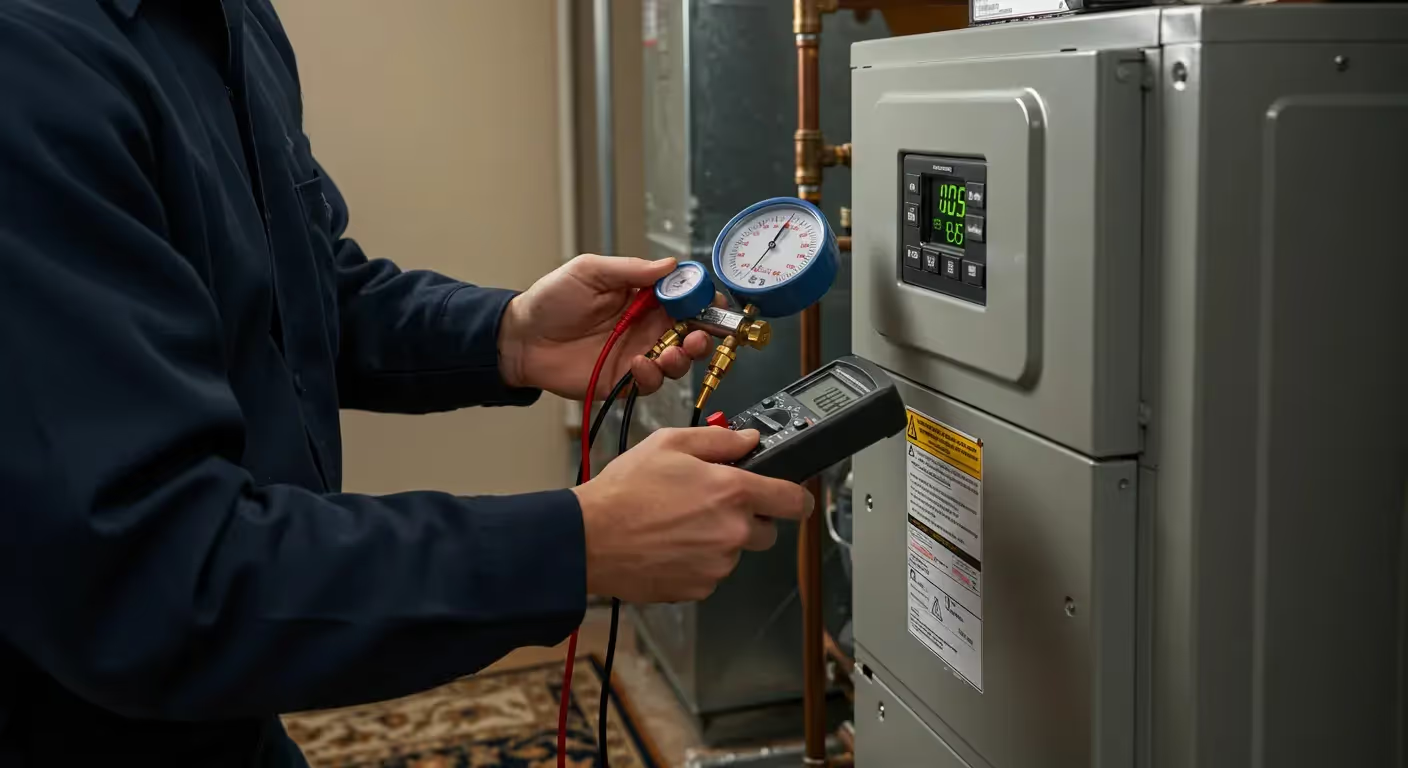
- Diagnostic Testing: Using specialized tools like multimeters and manometers, the technician tests electrical circuits for voltage drops and measures gas pressure at the manifold. This data confirms exactly which part is failing.
- Upfront Explanation and Approval: Once the issue is identified, the technician provides a detailed explanation of the problem, the proposed solution, and the associated costs. Work only proceeds after you understand the scope and approve the repair.
- Execution of Repairs: The technician performs the necessary repairs, whether that involves replacing a faulty pressure switch, cleaning the burners, or swapping out a control board. High-quality parts are used to match the manufacturer's specifications.
- Safety Verification and Cycle Testing: After the repair, the furnace is not just turned on; it is put through a full heating cycle. The technician monitors the temperature rise (the difference between air entering and leaving the furnace) to ensure it falls within the manufacturer’s rated range.
- Carbon Monoxide Screening: A final safety check involves scanning the area for any gas leaks or carbon monoxide presence to ensure the home is safe for occupancy.
Deciding Between Repair and System Replacement
Homeowners often face the difficult choice of sinking money into an existing unit or investing in a new system. While repair is often the most cost-effective immediate solution, there are specific scenarios where replacement becomes the smarter financial move. Making this decision requires analyzing the age of the unit, the cost of the current repair, and the system’s recent history.
The Age of the System
Furnaces typically have a lifespan of 15 to 20 years. If your unit is nearing the 15-year mark and requires a major repair, such as a blower motor or gas valve replacement, the return on investment for that repair diminishes. In Elkton, where winters can put significant strain on heating units, an aging system is more likely to suffer a catastrophic failure during a cold snap.
The 50% Rule
A common industry standard for decision-making is the "50% Rule." If the cost of the repair approaches 50% of the cost of a new system, replacement is generally recommended. This is because a repair of that magnitude on an older unit usually indicates that other components are also near the end of their lifecycle. Spending half the cost of a new unit to fix an old one often leads to "throwing good money after bad."
Frequency of Breakdowns
If you have required furnace service more than twice in the last two years, the system has likely become unreliable. Recurring repair costs add up quickly. A system that breaks down frequently is also less efficient, meaning you are paying a premium for fuel to operate a unit that struggles to keep the house warm.
Safety Concerns
Certain failures dictate an immediate replacement for safety reasons. If the heat exchanger is cracked, repair is rarely an option due to the high risk of carbon monoxide poisoning. In these instances, replacing the furnace is the only responsible choice to ensure the safety of the household.
Navigating Local Climate and Regulations
The climate in this region dictates specific requirements for furnace performance. With winter lows frequently dropping into the 20s and occasional snowfall ranging between 10 to 15 inches, a heating system must be capable of handling heavy loads without faltering. A system that is undersized or poorly maintained will struggle to maintain indoor temperatures when the outdoor thermometer plunges, leading to excessive wear on components.
Seasonality and Maintenance Timing
The transition seasons in Kentucky are critical for furnace health. Spring brings significant precipitation, and the resulting humidity can affect furnaces that sit idle during the summer months. Moisture can lead to rust on burners or electrical corrosion. It is vital to have the system serviced before the first hard freeze arrives. Dealing with a breakdown in the middle of a snowstorm often results in longer wait times and emergency service rates.
Permits and Code Compliance
Any major work on a heating system, particularly involving gas lines or full unit replacements, must adhere to local building codes. These regulations are in place to ensure proper venting of exhaust gases and secure gas connections. Professional technicians are familiar with the specific codes in Elkton and the surrounding county areas. They ensure that all repairs meet safety standards, avoiding issues with insurance claims or future property sales.
Utility Coordination
For homes using natural gas, coordination with local utility providers is sometimes necessary if pressure issues are detected at the meter. Professional service providers can distinguish between a furnace issue and a supply issue, advising homeowners when the utility company needs to be involved.
Why Professional Heating Service is Essential
Attempting DIY repairs on a furnace is dangerous and often results in further damage. Modern high-efficiency furnaces utilize complex logic boards and precise fuel-to-air mixtures that require specialized training to adjust. Professional technicians carry the necessary certifications to handle refrigerants (for heat pumps) and combustible gases safely.
Specialized Tools and Diagnostics
Accurate troubleshooting requires more than a screwdriver. Technicians utilize combustion analyzers to measure the efficiency of the burn and ensure no carbon monoxide is leaking. They use manometers to set gas pressure to the exact inch of water column specified by the manufacturer. These tools ensure the furnace runs at peak efficiency, which directly translates to lower monthly utility bills.
protecting Your Warranty
Most furnace manufacturers require proof of professional maintenance to keep the warranty valid. If a part fails and the homeowner cannot prove the system was serviced by a licensed professional, the manufacturer may void the warranty, leaving the homeowner responsible for the full cost of the replacement part. Carter Heating and Cooling ensures that all documentation is accurate and preserves the integrity of your manufacturer warranty.
Long-Term Efficiency
A system that is professionally tuned simply runs better. Clean burners utilize fuel more effectively. A balanced blower wheel moves air more quietly and with less electricity. The value of professional service lies not just in fixing the immediate problem, but in optimizing the entire system to run as efficiently as possible for as long as possible.
Secure Your Comfort Today
A broken furnace disrupts your life and threatens the safety of your home during freezing temperatures. Waiting to address strange noises, erratic cycling, or a lack of heat can lead to more expensive repairs or a total system replacement. Do not let a minor malfunction turn into a winter emergency.
Ensure your home remains warm and safe throughout the season. Contact us now to schedule your furnace service and restore reliable heat to your home.

Great Service at a Fair Price
Veterans Discount


Senior Discount

Law Enforcement

Fire fighters/ems

Hear From Your Neighbors!
Hear from your neighbors to see how our commitment to dependable service and lasting comfort has made a difference in their homes.