
How can we help today?
Choose an option to see quick actions and get help faster.Heating Inspection in Elkton, KY
Heating Inspection in Elkton, KY
Heating Inspection in Elkton, KY
Ensure Your Home Stays Warm This Winter
As the Elkton winter approaches, ensuring your heating system is reliable becomes crucial. Don’t let a cold snap catch you off-guard; contact us today to schedule a comprehensive system audit.
A professional heating inspection identifies potential failures before they leave you without heat in freezing temperatures. Ignoring minor irregularities now often leads to expensive emergency repairs later in the season. We provide the technical assessment required to keep your home safe and comfortable.
- Same-day heating inspections to quickly address any concerns.
- Certified technicians ensure your system meets local standards.
- Emergency services available for urgent heating issues.
All services backed by industry-standard warranties and comprehensive service guarantees.
What a Comprehensive Heating Evaluation Includes
A heating inspection is more than a quick visual check; it is a rigorous diagnostic process designed to uncover underlying issues within your HVAC system. The goal is to verify that every component, from the thermostat to the exhaust vent, is functioning within the manufacturer's specifications. This ensures that the system operates safely, efficiently, and reliably throughout the heating season.
Technicians focus on three primary categories during an inspection: safety, performance, and mechanical integrity. Each category involves specific tests and measurements using calibrated tools.
Safety Inspection Points
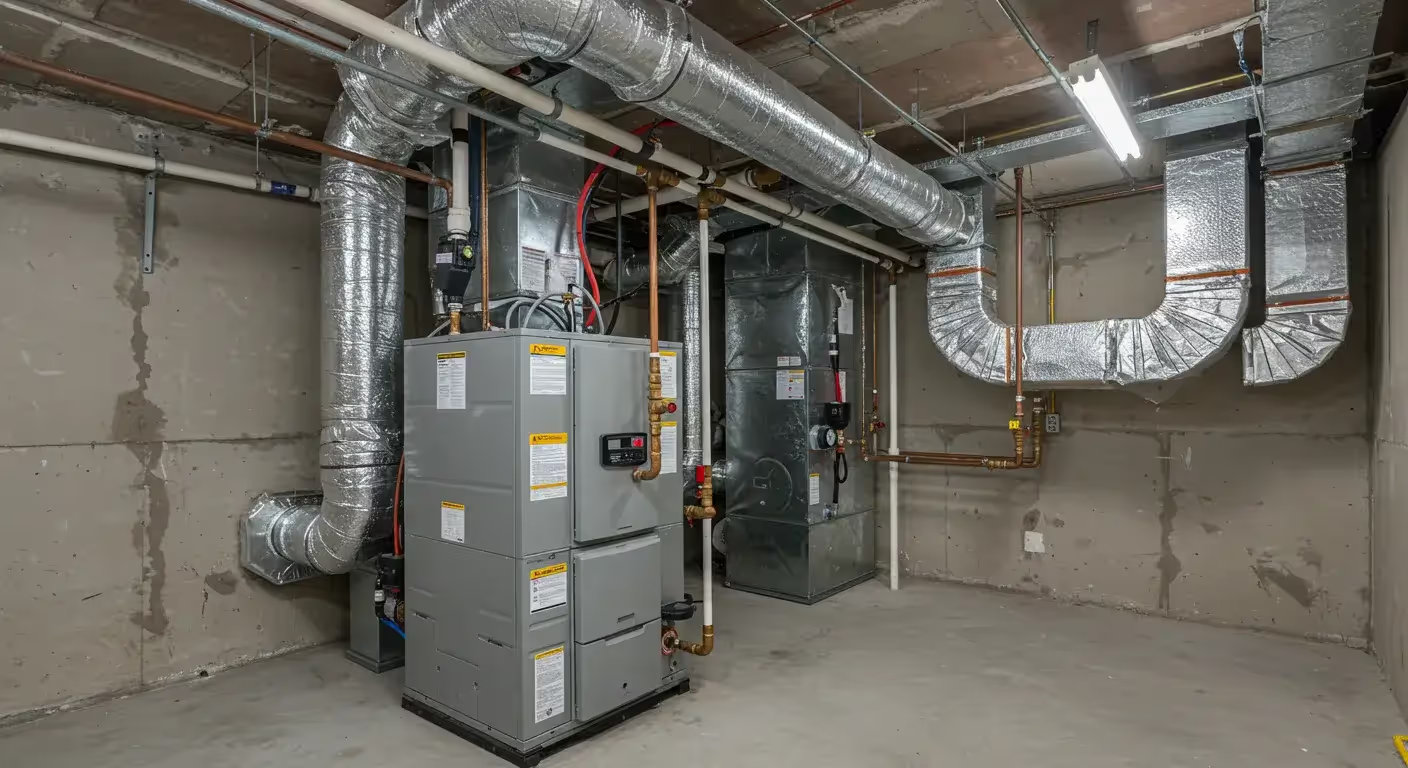
The most critical aspect of any heating maintenance visit is ensuring the safety of the household. Heating systems, particularly gas furnaces, involve combustion processes that must be precisely controlled to prevent hazards.
- Heat Exchanger Analysis: The heat exchanger is inspected for cracks or corrosion. A compromised heat exchanger can allow carbon monoxide to leak into the living space, posing a severe health risk.
- Gas Pressure and Piping: Technicians measure gas pressure to ensure it matches the unit’s specifications. They also test gas piping and connections for leaks using electronic detectors.
- Vent System and Draft Check: The venting system is examined for blockages, proper slope, and deterioration. A draft test ensures that combustion gases are being safely expelled from the home.
- Limit Switch Testing: The high-limit switch is tested to verify that it shuts off the burners if the furnace overheats, preventing fire hazards.
- Carbon Monoxide Detection: Ambient air and supply air are tested for the presence of carbon monoxide to confirm containment.
Performance and Efficiency Checks
Efficiency checks determine how well the system converts energy into heat. A system running at peak efficiency uses less fuel and provides consistent comfort.
- Thermostat Calibration: The thermostat is tested to ensure it reads the indoor temperature accurately and communicates effectively with the heating unit.
- Airflow Measurement: Static pressure and temperature rise are measured to verify proper airflow. Restricted airflow forces the system to work harder, increasing energy bills.
- Filter Assessment: The air filter is checked for debris. Clogged filters are a primary cause of reduced efficiency and system overheating.
- Burner Ignition and Flame Sensor: The burners are inspected for proper ignition and flame characteristics. A dirty flame sensor can cause the system to short-cycle, reducing efficiency.
Mechanical Integrity and Component Wear
Mechanical checks focus on the moving parts and electrical components that drive the system. Identifying wear and tear early prevents sudden breakdowns.
- Blower Motor and Wheel: The blower motor amp draw is measured to ensure it is not overworking. The blower wheel is checked for dust buildup, which can cause imbalance and noise.
- Belt Tension and Alignment: For belt-driven motors, the belt is checked for cracks and proper tension. Misalignment can cause premature wear on bearings.
- Capacitor Testing: Run capacitors are tested to ensure they are within the rated microfarad range. Weak capacitors can lead to motor failure.
- Electrical Connections: All wiring and connections are tightened and inspected for signs of overheating or corrosion.
How the Inspection Process Works
Understanding the sequence of a professional inspection helps homeowners know what to expect. The process is designed to be thorough, transparent, and minimally intrusive to your daily routine. Carter Heating and Cooling follows a structured protocol to ensure no component is overlooked.
Arrival and Initial Assessment
The process begins with the technician arriving at the scheduled time. They will typically start by discussing any specific concerns you have noticed, such as strange noises, cold spots in the house, or rising utility bills. This information helps direct their focus during the diagnostic phase.
- First, the technician performs a visual inspection of the unit’s exterior and the surrounding area to check for clearance issues or obvious damage.
- Next, the system is turned on to observe its startup sequence. The technician listens for unusual sounds and watches for delayed ignition.
- Then, the thermostat settings are reviewed to ensure the system is responding correctly to calls for heat.
Diagnostic Testing and Cleaning
Once the initial assessment is complete, the technician moves into the hands-on testing phase. This involves removing access panels to reach internal components.
- The electrical power is turned off to safely inspect wiring and capacitors.
- Gauges and meters are attached to measure gas pressure, voltage, and amperage.
- Essential components, such as the flame sensor and burners, are cleaned to remove soot and oxidation that can hinder performance.
- The heat exchanger is inspected using cameras or mirrors to detect hairline cracks that are not visible from the outside.
Reporting and Recommendations
After the physical inspection is complete, the technician compiles a detailed report of the findings. This is not just a receipt but a health report for your heating system.
- The technician reviews the findings with you, explaining the condition of critical components.
- If issues are found, they provide clear options for repair or adjustment, distinguishing between urgent safety repairs and recommended preventative maintenance.
- A final operational check is performed to ensure the system is left in a safe, running condition before the technician departs.
Determining the Health of Your Heating Unit
A heating inspection often serves as a decision point for homeowners: is the system healthy enough to keep running, or is it time to consider a replacement? Understanding when to repair and when to replace is vital for financial planning and home comfort.
The Age and Reliability Factor
Heating systems have a finite lifespan. Furnaces typically last 15 to 20 years, while heat pumps may last 10 to 15 years. As a system approaches the end of its expected life, the risk of catastrophic failure increases.
- Repair: If the unit is under 10 years old and has been well-maintained, repairs are usually the most cost-effective option.
- Replace: If the unit is over 15 years old and requires a significant repair, replacement is often the smarter financial move.
- The 50% Rule: A common industry guideline suggests that if the cost of the repair equals 50% or more of the cost of a new system, replacement is recommended.
Frequency of Breakdowns
A reliable heating system should not require multiple service calls in a single winter. If you find yourself calling for repairs frequently, the system is likely unreliable.
- Repair: Isolated issues, such as a failed sensor or a worn belt, are standard maintenance items and do not necessarily indicate a failing system.
- Replace: If you have repaired the system multiple times in the last two years, the cumulative cost of repairs often outweighs the investment in a new, warrantied unit.
Energy Efficiency and Utility Costs
Older systems are significantly less efficient than modern units. A steady increase in heating bills, even with normal usage, indicates that the system is losing efficiency.
- Repair: Cleaning coils and changing filters can restore some efficiency, but they cannot overcome the limitations of outdated technology.
- Replace: Upgrading to a high-efficiency model can lower heating costs by a substantial margin, offsetting the installation cost over time.
Comfort and Air Quality
The primary job of a heating system is to maintain a comfortable environment. If some rooms are freezing while others are hot, or if the air feels excessively dry or dusty, the system may be failing to distribute air effectively.
- Repair: Ductwork modifications or zoning controls can sometimes improve comfort issues without replacing the main unit.
- Replace: If the heat exchanger is cracked or the blower motor is failing, the system may be unable to provide consistent comfort or safe air quality.
Weathering Kentucky Seasons Efficiently
The climate in Elkton presents specific challenges for heating systems. The region experiences a mix of freezing winter nights and fluctuating humidity levels, which can accelerate wear and tear on HVAC equipment.
Humidity and Component Corrosion
Kentucky is known for its humidity, which doesn't disappear entirely during the cooler months. Moisture levels can impact the longevity of your heating unit.
- Excess moisture in the basement or crawlspace can lead to rust on the furnace cabinet and burners.
- During the inspection, technicians check for signs of oxidation that could compromise the structural integrity of the unit.
- Proper venting is essential to ensure that moisture generated during combustion is expelled outside rather than condensing inside the flue.
Fluctuating Temperatures and Thermal Stress
Winters in this region often see temperature swings where days are mild and nights drop below freezing. This causes the heating system to cycle on and off frequently.
- Frequent cycling puts thermal stress on the heat exchanger, expanding and contracting the metal.
- Over time, this stress causes metal fatigue and cracking.
- Routine inspections identify these stress points early, preventing a mid-winter failure when the temperature drops drastically.
Insulation and Ductwork Impact
The efficiency of a heating system is heavily dependent on the home’s insulation and ductwork. In many local homes, ductwork located in unconditioned spaces like attics or crawlspaces can lose significant heat.
- An inspection includes a check of accessible ductwork for leaks or disconnections.
- Sealing leaks ensures that the heated air reaches the living spaces rather than being lost to the outdoors.
- Technicians assess whether the current system size is appropriate for the home’s insulation levels.
Why Technical Precision Matters
Choosing the right provider for a heating inspection comes down to technical expertise and adherence to safety standards. A superficial check might miss the warning signs of a carbon monoxide leak or a failing compressor.
Our approach prioritizes data-driven diagnostics. We do not rely on guesswork. Every recommendation provided is backed by specific measurements and testing results. This transparency ensures that you understand exactly what your system needs and why.
- Certified Expertise: Technicians undergo rigorous training to stay updated on the latest heating technologies and safety codes.
- No Hidden Fees: The inspection scope and costs are clearly defined upfront.
- Safety First: The primary objective is the safety of your home and family. All safety controls are tested without exception.
- Detailed Documentation: You receive a full report of the system’s status, providing a baseline for future maintenance.
A heating system is a complex integration of gas, electricity, and air handling. It requires a specialist who understands how these elements interact. By securing a professional inspection, you are investing in the longevity of your equipment and the safety of your home.
Don't wait for the first freeze to discover a problem. Secure your appointment for a heating inspection now and ensure your home remains warm and safe all season long.
Detailed Heating Inspections That Deliver Clear, Informed Results
Uncertain about your system’s performance? Our comprehensive heating inspection in Elkton, KY, provides a complete evaluation of your unit’s condition, efficiency, and safety. Carter Heating and Cooling offers expert insight with transparent recommendations, so you can make confident decisions for your comfort.
Schedule a Thorough Heating Inspection With Trusted Local Experts

Great Service at a Fair Price
Veterans Discount


Senior Discount

Law Enforcement

Fire fighters/ems

Hear From Your Neighbors!
Hear from your neighbors to see how our commitment to dependable service and lasting comfort has made a difference in their homes.