
How can we help today?
Choose an option to see quick actions and get help faster.Restore Warmth and Safety to Your Home Immediately
Is your home uncomfortably cold due to a faulty heating system that leaves your family shivering during the drop in temperatures? A broken heater during the winter months in Elkton is more than just a nuisance; it is a genuine disruption to your daily life and a potential safety hazard. Carter Heating and Cooling offers immediate repair services to restore your comfort quickly, diagnosing the root cause of the failure and implementing a lasting fix. Contact us today to schedule a dispatch or click here to apply for our financing options.
- Same-day service is available to tackle heating emergencies promptly and restore heat to your property.
- All service technicians are certified and trained to handle various makes and models, ensuring high-quality repairs.
- We provide competitive rates and clear, upfront pricing so you know the cost before work begins.
All services are fully insured and come with a satisfaction guarantee to give you peace of mind regarding the quality of the work.
Comprehensive Heating Diagnostics and Repair Services
When a heating system fails, homeowners need more than a guess; they require a precise diagnosis followed by an effective repair. Modern heating systems are complex appliances that rely on a sequence of electrical signals, fuel combustion, and airflow management. When one component fails, the entire system can shut down or operate inefficiently. Professional technicians arrive equipped to troubleshoot the entire heating assembly, ensuring that the fix addresses the core issue rather than just a symptom.
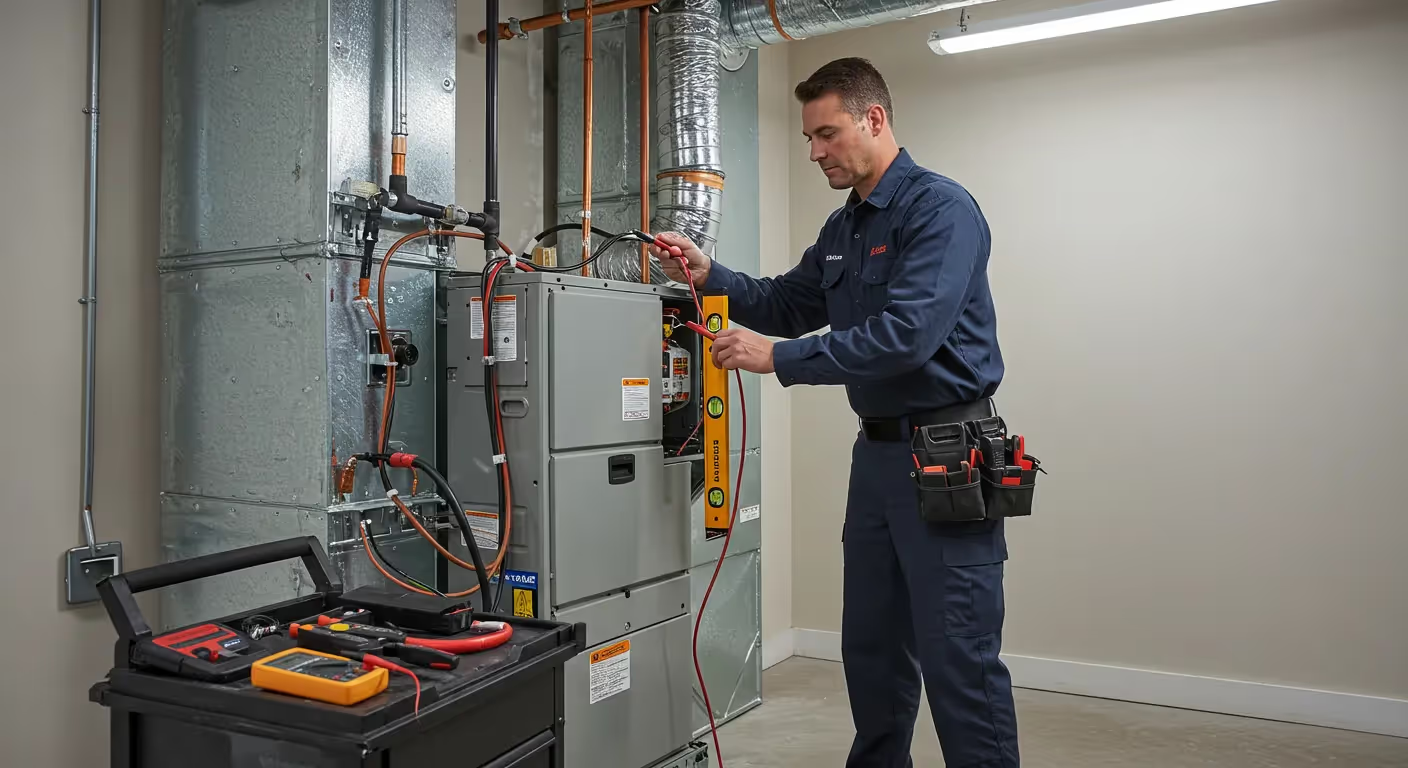
The repair process begins with a thorough inspection of the unit. Technicians check the thermostat to ensure it is communicating correctly with the furnace or heat pump. If the thermostat is functioning, the focus shifts to the internal components of the heating unit. For gas furnaces, this involves inspecting the ignition system, including the pilot light or hot surface ignitor, and verifying that the flame sensor is detecting heat properly. Electrical connections are tightened, and safety switches, such as the limit switch and rollout switch, are tested to ensure they are not tripping due to overheating or back-drafting.
Common repairs often involve the replacement of worn-out parts that have succumbed to years of thermal stress. Blower motors, which are responsible for pushing warm air through the ductwork, can seize or burn out. Capacitors, which help start these motors, frequently degrade over time. In heat pumps, issues often arise with the reversing valve or the refrigerant levels. Regardless of the specific part failure, the goal is to restore the system to manufacturer specifications.
- Technicians examine the heat exchanger for cracks or corrosion, which is critical for preventing carbon monoxide leaks.
- Airflow restrictions are identified by checking filters, blower wheels, and ductwork dampers.
- Ignition sequences are tested to ensure the burners light safely and consistently every time the thermostat calls for heat.
- Safety controls are verified to ensure the system shuts down automatically if a hazardous condition is detected.
The Heating Installation and Replacement Process
There comes a point where repair is no longer the most economical or effective option, and a new system installation becomes necessary. The process of installing a new heating system is rigorous and requires strict adherence to technical standards to ensure efficiency and longevity. A poor installation can reduce a unit's efficiency by up to 30%, meaning that the expertise of the installer is just as important as the brand of equipment chosen.
The installation workflow involves several critical phases, starting with a load calculation. This calculation determines the exact heating requirements of the specific property in Elkton. It takes into account factors such as square footage, insulation levels, window quality, and the orientation of the home. Installing a unit that is too large will cause short-cycling, leading to premature wear, while a unit that is too small will run continuously without ever reaching the set temperature.
Once the correct size is determined, the physical replacement process begins:
- First, the existing unit is safely disconnected from gas lines, electrical supplies, and ductwork, then removed from the property.
- Next, the installation area is prepared, which may involve modifying the plenum or transition ductwork to fit the new, more efficient equipment.
- Technicians then position the new furnace or heat pump, leveling it to ensure proper drainage of condensate and quiet operation.
- Gas lines are reconnected and leak-tested, while electrical wiring is installed according to current safety codes.
- Venting systems are inspected or replaced to ensure that exhaust gases are safely piped out of the home.
- Finally, the system is started, and technicians perform a full commissioning sequence, measuring static pressure, temperature rise, and gas pressure to verify optimal performance.
Deciding Between Repair and System Replacement
Homeowners often face a difficult decision when a heating system breaks down: is it better to pay for a repair or invest in a new unit? This decision relies on several data points, including the age of the system, the frequency of breakdowns, and the cost of the current repair. Making the right choice depends on a logical assessment of the equipment's remaining lifespan versus the immediate cost of restoration.
The "50% Rule" is a common metric used in the industry. If the cost of the repair approaches 50% of the value of the system, or 50% of the cost of a new unit, replacement is generally the wiser financial move. Additionally, the age of the equipment is a primary factor. Most gas furnaces have a lifespan of 15 to 20 years, while heat pumps typically last 10 to 15 years. If a unit in Elkton is nearing the end of this expected life cycle and requires a major component replacement, such as a heat exchanger or compressor, investing that money into a new system with a warranty is often more prudent.
Efficiency is another major consideration. Older systems typically have lower AFUE (Annual Fuel Utilization Efficiency) ratings, meaning they waste more energy for every dollar spent on heating. Modern systems can achieve efficiency ratings upwards of 95%, which can result in significant savings on monthly utility bills. If a system is old and inefficient, the savings from a new unit can eventually offset the installation cost.
- Consider replacement if the heat exchanger is cracked, as this is a major safety hazard and an expensive repair.
- Evaluate the frequency of repairs; if the system has required multiple service calls in the last two years, it is likely becoming unreliable.
- Check the availability of parts; for very old systems, sourcing replacement parts can be difficult and expensive.
- Assess home comfort levels; if some rooms are always cold or the air is excessively dry, a new system with better humidity control and zoning might be the solution.
Local Heating Considerations for the Region
Operating a heating system in Kentucky requires understanding the specific climatic challenges of the region. The local climate is classified as humid subtropical, but winters involve distinct cold spells where temperatures frequently drop into the 20s. This variation means that heating systems must be versatile. They need to handle mild autumn evenings as well as deep-freeze conditions in January and February.
Humidity control is also a factor. While winters are generally drier, the transition seasons can bring moisture that affects how warm the air feels. A properly sized and serviced system helps manage indoor humidity, preventing issues like mold growth or overly dry air that can irritate respiratory systems.
Compliance with local regulations is non-negotiable for professional service providers. In Elkton, any significant alteration to a heating system, particularly those involving gas lines or electrical circuits, must adhere to local building codes. These codes are in place to ensure fire safety and proper ventilation. Professional technicians handle the permitting process and ensure that all work meets or exceeds the standards set by local authorities.
- Utility infrastructure varies, with many homes relying on natural gas or propane, while others utilize electric heat pumps. Service providers must be adept at handling both combustion and refrigerant-based systems.
- Insulation and ductwork in older regional homes may require inspection to ensure the heating system isn't losing energy through leaks in crawl spaces or attics.
- Seasonality dictates that the best time for maintenance is early autumn, before the first frost necessitates continuous system operation.
Critical Maintenance for Heating Longevity
The longevity of a heating system is directly correlated to the quality and frequency of maintenance it receives. Neglect is the leading cause of premature system failure. Over time, dust and debris accumulate on vital components, acting as an insulator that causes motors to overheat and heat exchangers to crack. A scheduled maintenance plan is the most effective way to protect the investment made in a heating system.
During a maintenance visit, technicians perform a deep clean and tune-up of the system. This is not merely a visual inspection but a hands-on service that restores the unit to peak efficiency. For gas furnaces, cleaning the burners ensures a clean, blue flame that burns fuel efficiently. Cleaning the blower wheel ensures that the motor doesn't have to work harder than necessary to move air.
Electrical components are also a focus of maintenance. Vibrations from normal operation can loosen electrical connections over time, leading to resistance and heat buildup that can melt wires or damage control boards. tightening these connections prevents sudden electrical failures. Furthermore, checking the calibration of the thermostat ensures that the system is cycling on and off at the correct times, preventing energy waste.
- Filters should be checked and replaced regularly to maintain proper airflow and protect the blower motor.
- Condensate drains in high-efficiency furnaces and heat pumps must be cleared to prevent water damage and system shutoffs.
- Moving parts, such as fan motors and bearings, are lubricated to reduce friction and wear.
- The flue pipe is inspected for obstructions like bird nests or soot buildup that could block exhaust gases.
Why Professional Service Matters
Choosing the right service provider is about more than just fixing a machine; it is about ensuring the safety and comfort of a home. Heating systems, particularly those that burn fuel, carry inherent risks if mishandled. Carbon monoxide is a colorless, odorless gas that can be deadly if a furnace is not venting properly. Professional technicians are trained to use sensitive equipment to detect even trace amounts of gas leaks, ensuring the air in the home remains safe to breathe — read our reviews.
Beyond safety, professional service guarantees that warranties remain valid. Most equipment manufacturers require proof of annual maintenance by a licensed professional to honor their parts warranties. If a homeowner attempts DIY repairs or neglects maintenance, they may find themselves voiding the warranty and paying full price for expensive parts later.
Carter Heating and Cooling understands the intricacies of modern heating technology and the specific needs of local homeowners. Professional service also means access to the right tools and parts. Technicians carry stocked trucks with universal parts to resolve many issues on the first visit, minimizing downtime. When specialized parts are needed, established relationships with suppliers ensure faster delivery times.
- Professionals provide documentation of all work performed, which is valuable for warranty claims and future real estate transactions.
- Expertise extends to optimizing system settings for maximum energy efficiency, lowering operational costs.
- Technicians offer objective advice on system upgrades and indoor air quality improvements without aggressive sales pressure.
Secure Your Comfort Today
A reliable heating system is essential for navigating the winter months comfortably and safely. Whether the situation calls for an urgent repair to get the heat back on, a routine inspection to prevent future breakdowns, or a full system replacement to improve energy efficiency, taking action now prevents larger issues down the road. Do not wait for a complete system failure during a freezing night to address heating concerns.
Ensure your home remains a warm sanctuary against the cold. Contact us now to schedule your service appointment.

Great Service at a Fair Price
Veterans Discount


Senior Discount

Law Enforcement
Fire fighters/ems
Hear From Your Neighbors!
Hear from your neighbors to see how our commitment to dependable service and lasting comfort has made a difference in their homes.