

How can we help today?
Choose an option to see quick actions and get help faster.Dehumidifier Installation in Elkton, KY
Dehumidifier Installation in Elkton, KY
Discover professional dehumidifier installation in Elkton to enhance your indoor climate control. Achieve optimal humidity and air quality; call now for an assessment.
Eliminate Excess Moisture and Restore Indoor Comfort
Living with constant dampness feels heavy, uncomfortable, and frustrating, especially when your air conditioner runs constantly but the air still feels sticky. High humidity levels in your home do more than just ruin your comfort; they compromise your indoor air quality and threaten the structural integrity of your property. If you are experiencing foggy windows, musty odors, or warping wood flooring, reliance on portable units is rarely enough to solve the problem in Elkton. Carter Heating and Cooling provides professional whole-home dehumidifier installation designed to integrate seamlessly with your central HVAC system. Contact us today to schedule an on-site assessment or discuss financing options.
- Experience immediate improvement in air quality and reduced respiratory irritants.
- Prevent the growth of mold, mildew, and dust mites throughout your living space.
- Achieve efficient temperature control and lower your monthly energy costs.
All installations are fully licensed and strictly adhere to Kentucky building codes, ensuring your peace of mind with extended manufacturer warranties and reliable performance.
What to Expect from Our Dehumidifier Installation Services
When you choose a whole-home dehumidification solution, you are upgrading the way your home manages its climate. Unlike standalone portable units that only treat a single room and require constant manual draining, a whole-house system treats the entire air volume of your residence. Our service focuses on installing high-capacity units that work in tandem with your existing heating and cooling infrastructure to mechanically remove water vapor from the air before it circulates through your vents.
We begin by calculating the specific moisture load of your home. This involves more than just square footage; we analyze insulation levels, window sealing, and the specific orientation of your property. The goal is to install a system that runs independently of your air conditioner. This allows you to remove humidity on days when the temperature is mild but the air is heavy—common during spring and fall in Kentucky—without overcooling your living space.
The scope of our installation service includes:
- Load Calculation: Precise sizing to ensure the unit can handle the specific latent heat load of your home.
- System Integration: Hardwiring the dehumidifier into your HVAC control board for automated operation.
- Duct Modification: Professional fabrication of supply and return duct connections to ensure optimal airflow.
- Drainage Setup: Installation of dedicated gravity drains or condensate pumps to automatically route water away from the home.
- Control Setup: Installation of digital humidistats or integration with smart thermostats for precise humidity management.
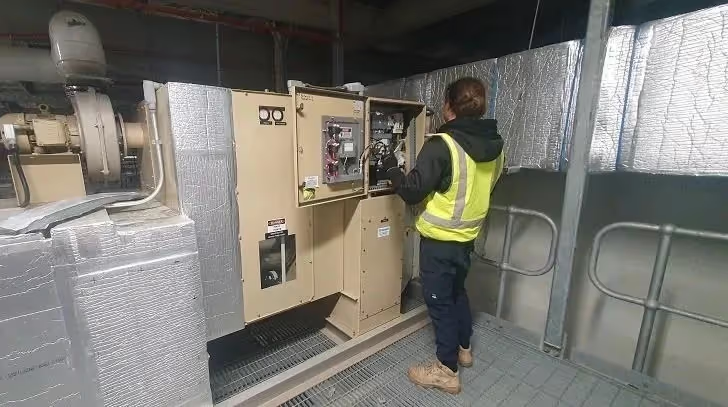
Your Guide to Seamless Dehumidifier Installation
Installing a whole-home dehumidifier is a technical process that requires expertise in airflow dynamics and electrical safety. The installation ensures that dry, filtered air is distributed evenly to every room, rather than creating dry pockets in one area while others remain damp.
Site Assessment and Planning
The process initiates with a thorough evaluation of your mechanical room, crawlspace, or basement. We determine the optimal location for the unit to ensure it remains accessible for maintenance while maximizing efficiency. In many local homes, utilizing the crawlspace or basement is ideal for noise reduction and proximity to the main air handler. We verify that your electrical panel has sufficient capacity and that the existing ductwork can support the additional static pressure.
Mechanical Integration
Once the unit placement is finalized, the physical installation begins. We position the dehumidifier on vibration-absorbing pads or suspend it from joists to minimize operating noise. The most critical step is the ductwork connection. We typically install a "bypass" or "injection" configuration. This involves cutting into the return and supply plenums to create a dedicated loop for the dehumidifier. Damper installation allows for airflow regulation, preventing back-drafting and ensuring the unit pulls air from the house, dries it, and pushes it back into the supply stream.
Drainage and Electrical Configuration
Dehumidifiers extract significant amounts of water—often up to 90 pints or more per day during peak humidity. We plumb a permanent drainage solution using rigid PVC piping. If gravity drainage isn't possible due to the unit's elevation, we install a condensate pump to lift the water to an appropriate exit point. Electrical work involves running a dedicated circuit if necessary and connecting low-voltage control wires to your thermostat or a dedicated humidistat. This ensures the system turns on automatically when humidity sensors detect moisture levels rising above your set point (typically 50%).
Commissioning and Testing
The final phase involves rigorous testing. We verify the static pressure within the ducts to ensure the blower motor is not overworked. We simulate high-humidity conditions to trigger the unit, checking that the compressor engages, the fan operates correctly, and water flows freely through the drainage system. We also calibrate the sensors to ensure the reading on your wall matches the actual relative humidity in the air.
Deciding Between Dehumidifier Repair and Replacement
If you already have a whole-home dehumidifier that is underperforming, you face a decision between repair and replacement. While high-quality units are built for longevity, certain failures render a system obsolete or uneconomical to fix.
Consider replacement if the compressor has failed. The compressor is the heart of the refrigerant cycle. Replacing a compressor is labor-intensive and costly, often approaching the price of a new unit. If your current system utilizes R-22 refrigerant (found in older models), replacement is the only viable option due to the phase-out of this refrigerant type.
Evaluate the age of the unit. Most dehumidifiers have a lifespan of 8 to 12 years. If your unit is approaching this age and requires a major component like a fan motor or control board, investing in a modern, energy-efficient model is usually the smarter financial move. Newer models have higher pint-per-day removal capacities with lower energy consumption.
Check for heat exchanger corrosion. If the coils are corroded or leaking refrigerant, the system cannot effectively remove moisture. Repairing a leak in the coil is often a temporary fix. In these instances, Carter Heating and Cooling recommends a full replacement to restore reliable humidity control and protect your home from moisture damage.
Compliance and Considerations for Your Kentucky Home
Operating in Elkton requires a specific understanding of the local climate and building regulations. Our region falls into a humid subtropical zone, meaning the "latent load" (humidity) is often just as high as the "sensible load" (heat).
Seasonality and Usage
In our area, humidity remains high even when temperatures drop in the evening or during shoulder seasons. Standard air conditioners are designed primarily to lower temperature; humidity removal is just a byproduct of that process. When the thermostat reaches the set temperature, the AC shuts off, often leaving high humidity behind. A dedicated dehumidifier bridges this gap. It allows you to maintain 50% relative humidity even when the AC isn't running, which is crucial for preventing mold growth in basements and crawlspaces during wet Kentucky springs.
Permits and Codes
All installations must comply with local electrical and mechanical codes. This includes proper circuit breaker sizing to prevent fire hazards and adherence to condensate disposal regulations. Drainage lines must be trapped correctly to prevent sewer gases from entering the air stream if tied into the home’s waste system. Furthermore, if the unit is installed in an unconditioned space like a crawlspace, it must be rated for those environmental conditions. We ensure all wiring is shielded and that the installation meets all safety standards required for insurance and resale value.
Energy Efficiency Standards
Modern building codes and energy standards emphasize the "Energy Factor" (EF) of dehumidifiers, which measures liters of water removed per kilowatt-hour of electricity consumed. We prioritize installing Energy Star-rated units that exceed minimum federal standards. This ensures that while you are running an additional appliance, the overall impact on your utility bill is mitigated by the increased efficiency of your HVAC system, as dry air is easier to cool than humid air.
Optimizing Your HVAC System Efficiency
A major benefit of professional dehumidifier installation is the relief it provides to your primary air conditioner. When indoor air is saturated with moisture, it holds more heat energy. Your air conditioner has to work harder and run longer to cool damp air compared to dry air.
By installing a whole-home dehumidifier, you effectively preload the air before it reaches the AC coil. This allows the air conditioner to focus on dropping the temperature rather than wasting energy condensing water vapor. Consequently, many homeowners find they can set their thermostat a few degrees higher while maintaining the same level of comfort. For example, 74 degrees at 50% humidity feels cooler than 72 degrees at 70% humidity.
This synergy extends the lifespan of your cooling equipment. Reduced runtime means less wear and tear on the AC compressor and blower motor. It reduces the frequency of repairs and postpones the need for full HVAC system replacement.
Selecting the Right Dehumidification Technology
Not all dehumidifiers function the same way. Choosing the correct technology for your specific layout is essential for performance.
- Ventilating Dehumidifiers: These units bring in fresh outdoor air, filter it, dry it, and then introduce it to the home. This is ideal for newer, tightly sealed homes in Elkton that require mechanical ventilation to meet fresh air codes without introducing outdoor humidity.
- Dedicated Return to Supply: This is the standard configuration for existing homes. It pulls air from the main return duct, dries it, and pushes it into the supply. It is efficient and effective for basements and main living areas.
- Unducted vs. Ducted: While we specialize in ducted solutions, some applications (like encapsulated crawlspaces) may require a unit that circulates air within that specific zone to keep structural wood dry. We ensure the chosen unit handles the square footage and moisture permeability of the specific zone.
Why Choose Us: Our Commitment to Quality and Community
Controlling indoor humidity is about protecting your largest investment and ensuring the health of your family. It requires a precise balance of equipment sizing, ductwork fabrication, and electrical expertise. We do not offer one-size-fits-all solutions; we offer engineered systems tailored to the specific moisture challenges of your property.
From the initial load calculation to the final sensor calibration, our team handles every aspect of the project with transparency and technical precision. We focus on providing solutions that deliver measurable results—drier air, lower bills, and a healthier home environment. Carter Heating and Cooling is dedicated to ensuring your installation is completed correctly the first time, giving you lasting control over your indoor climate.
Take Control of Humidity—And Comfort—For Good
Don’t let excess moisture compromise your comfort, health, or home value any longer. A professionally installed whole-home dehumidifier delivers cleaner air, improved comfort, and lasting protection against mold and structural damage.
Take control of your indoor air quality today. Schedule your dehumidifier installation assessment now.

Great Service at a Fair Price
Veterans Discount


Senior Discount

Law Enforcement

Fire fighters/ems

Hear From Your Neighbors!
Hear from your neighbors to see how our commitment to dependable service and lasting comfort has made a difference in their homes.