

How can we help today?
Choose an option to see quick actions and get help faster.Whole House Dehumidifier Installation in Elkton, KY
Whole House Dehumidifier Installation in Elkton, KY
Struggling with high humidity in Elkton? Our whole-house dehumidifiers offer effective moisture control. Contact us for a professional installation.
Is High Indoor Humidity Compromising Your Home Comfort?
Do you constantly battle sticky, uncomfortable air inside your house, even when the air conditioner is running? For homeowners in Elkton, KY, high humidity is a persistent issue that leads to sweating windows, musty odors, and a clammy feeling that prevents true relaxation. A dedicated whole-house dehumidifier provides the moisture control necessary to protect your property and improve your indoor air quality. Contact us today to schedule a consultation or inquire about our available financing options.
Standard air conditioners are designed primarily to cool air, with dehumidification being a secondary byproduct. When outdoor humidity levels rise during our wet springs and hot summers, an AC unit alone often cannot remove enough moisture without overcooling the space. This results in a cold but damp environment. Installing a whole-house dehumidification system resolves this imbalance by working independently or in tandem with your central HVAC system to maintain precise relative humidity levels.
- Achieve balanced humidity for enhanced comfort and health: Remove excess moisture to eliminate the sticky feeling on your skin and reduce allergen triggers like dust mites.
- Prevent mold growth and protect your home’s structure: Keep moisture levels below the threshold where mold thrives, protecting drywall, hardwood floors, and furniture from warping or rot.
- Integrate seamlessly with your existing HVAC system for efficient operation: Enjoy automated control that treats the air in every room, not just a single area.
All installations are guided by certified technicians with full compliance to local building codes and manufacturer specifications. Carter Heating and Cooling ensures that your system is sized correctly and installed strictly according to industry standards.
What You Get With Professional Dehumidification
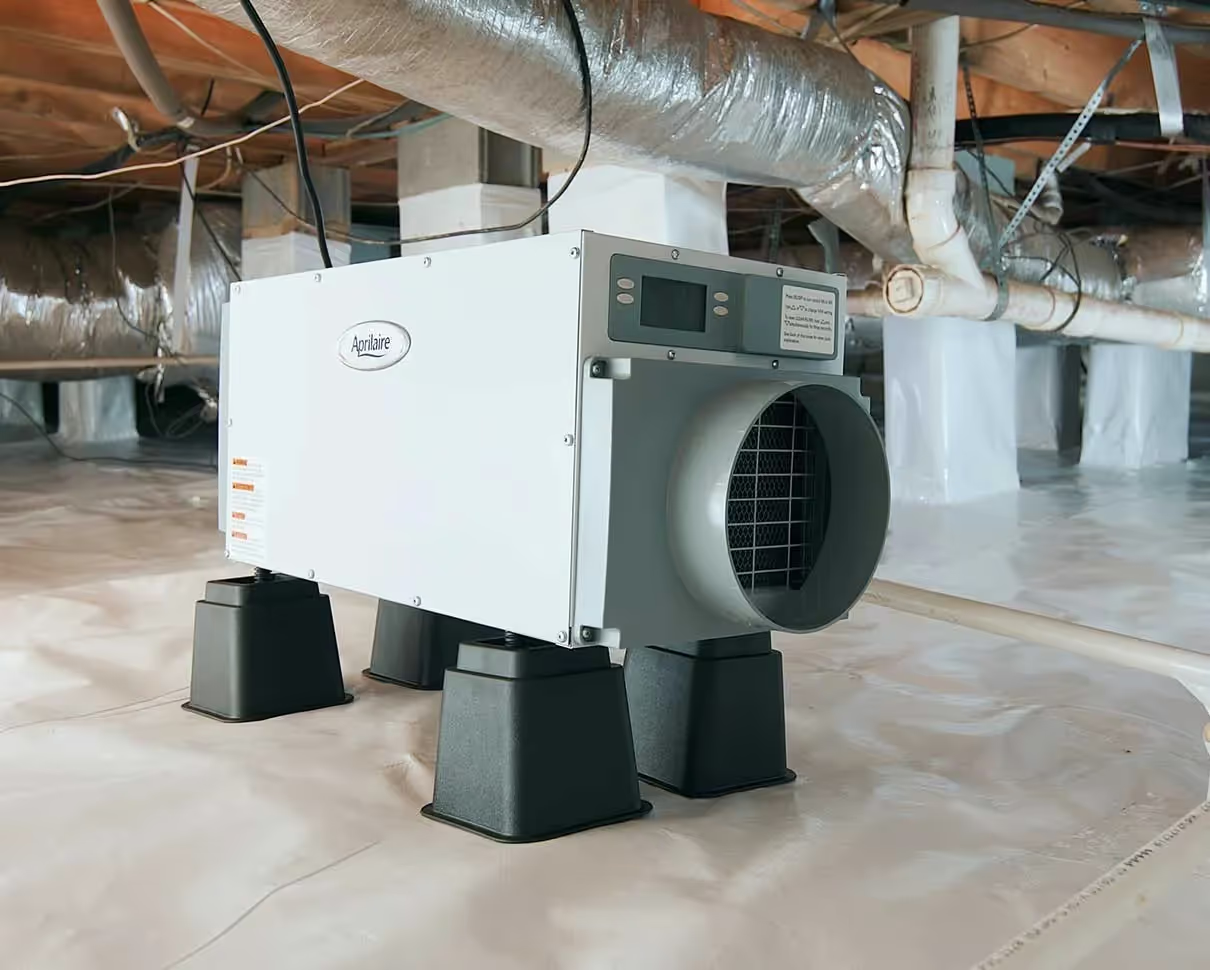
Investing in a whole-house dehumidifier is a permanent infrastructure upgrade for your home. Unlike portable units that require constant emptying and only treat small areas, a whole-house system is integrated directly into your home's central ductwork. This installation provides comprehensive moisture control for the entire building envelope, operating automatically based on the settings you choose.
When you move forward with an installation, the scope of work involves more than simply placing a unit in a crawl space or basement. It requires a strategic integration with your supply and return air ducts. The equipment we install is capable of removing significantly more pints of water per day than consumer-grade models, often ranging from 70 to 130 pints or more depending on the square footage and tightness of the home.
The installation package includes:
- Dedicated Return Ducting: This ensures the dehumidifier pulls air effectively from the most humid parts of the home.
- Drainage Solutions: We install hard-piped drainage lines leading to the exterior or a condensate pump, eliminating the need to ever empty a bucket.
- Filtration Integration: Most whole-house units come with MERV-rated filters that clean the air as it is dehumidified.
- Fresh Air Intake Options: If required for ventilation codes, the unit can be configured to bring in fresh outdoor air, filter it, and dehumidify it before it enters the living space.
- Control System Setup: We install or configure a humidistat or a smart thermostat that allows you to set your desired humidity percentage (typically between 45% and 50%).
How the Installation Process Works
A professional installation follows a strict protocol to ensure the unit functions efficiently and does not disrupt the airflow of your primary heating and cooling system. The process is technical and involves electrical work, duct modification, and condensate management.
- Load Calculation and Sizing: The first step involves calculating the latent load of the home. Technicians assess the square footage, the tightness of the building envelope, and the insulation levels. This data determines the capacity of the dehumidifier required. Undersized units will run continuously without reaching the target humidity, while oversized units may cycle too frequently.
- Site Selection and Preparation: Technicians determine the optimal location for the unit. Common locations include the basement, a sealed crawl space, or the attic, depending on where the central HVAC equipment is located. The area is prepped to ensure a level surface and adequate vibration isolation to prevent noise transfer to the living spaces above.
- Ductwork Integration: This is the most critical phase. Two main configurations are typically used. The unit can be installed with a dedicated return to the house and a supply to the main HVAC supply trunk, or it can be installed in a bypass configuration. The technician cuts into the existing sheet metal plenum, installs starting collars, and runs an insulated flex duct or rigid ducting to connect the dehumidifier to the central system. Dampers may be installed to control airflow direction.
- Electrical and Drainage Connection: A dedicated electrical circuit is often run to power the unit. Simultaneously, the condensate drain line is plumbed. Because these units remove massive amounts of water, the drain line must have the proper pitch and a P-trap to prevent sewer gas backup if connected to a sewer line, or routed to a sump pump or exterior location.
- System Commissioning: Once physically installed, the system is powered on and tested. Technicians verify the static pressure within the ducts to ensure the dehumidifier fan is not fighting the main HVAC fan. The humidistat is calibrated, and the system is run through a full cycle to verify water extraction and drainage.
When to Install a Whole-House System vs. Using Portables
Homeowners often debate whether they need a centralized system or if they can get by with portable units bought from big-box stores. While portable units have their place for spot-treatment in small rooms, they are generally inefficient for maintaining humidity control across an entire residence.
You should consider a whole-house installation if:
- Humidity is a Pervasive Issue: You notice condensation on windows, peeling wallpaper, or cupping wood floors in multiple rooms, not just the basement.
- Allergies and Asthma are worsening: High humidity creates the perfect breeding ground for dust mites and mold spores. If family members suffer from respiratory issues, a whole-house system provides the consistent, filtered air quality required for relief.
- Energy Bills are Rising: When the air is humid, it feels warmer. This leads homeowners to lower the thermostat temperature to compensate. A dehumidifier allows you to feel comfortable at higher temperatures, reducing the workload on your air conditioner.
- Portable Units are Insufficient: If you are running multiple portable units, the noise, energy consumption, and daily chore of emptying water reservoirs become unmanageable. A central unit runs quietly and drains automatically.
If you currently have a whole-house dehumidifier that is failing, repair is sometimes an option. However, if the compressor has failed, the refrigerant coils are corroded, or the unit is over 10 years old, replacement is typically the more distinct financial choice. Modern units are significantly more energy-efficient and quieter than models from a decade ago.
Local Considerations for Humidity Control
Operating an HVAC system in Elkton presents specific challenges due to the regional climate. The humid subtropical environment means that moisture is a year-round concern, not just a summer issue. Spring rains often saturate the ground, driving moisture up through crawl spaces and foundations, while summer brings dew points that make the air heavy and difficult to cool.
- Crawl Space Encapsulation: In this region, many homes are built on crawl spaces. Installing a dehumidifier is often part of a larger strategy that includes encapsulation. Without mechanical dehumidification, a sealed crawl space can still trap moisture, leading to rot in the floor joists.
- Shoulder Season Utility: During spring and fall, temperatures may be mild (70°F), but humidity remains high (80%+). In these "shoulder seasons," your air conditioner will not run enough to remove moisture because the thermostat is satisfied quickly. A whole-house dehumidifier runs independently, keeping the home dry and comfortable without overcooling the space.
- Electrical and Mechanical Codes: Installations must adhere to Kentucky building and electrical codes. This includes requirements for GFCI protection on outlets in crawl spaces and basements, as well as proper condensate disposal methods to prevent water damage or code violations.
The Science of Latent vs. Sensible Cooling
Understanding why your air conditioner struggles with humidity requires looking at the two types of cooling loads: sensible and latent. Sensible cooling refers to lowering the temperature of the air (what the thermostat measures). Latent cooling refers to removing the moisture from the air (the energy required to turn water vapor into liquid).
Standard air conditioners are designed to balance both, but they prioritize temperature. Once the thermostat hits the set temperature (e.g., 72°F), the unit shuts off. If the humidity is still 65%, the AC stops anyway. In high-humidity environments, the "latent load" is often higher than the AC can handle during its normal run cycles.
A whole-house dehumidifier focuses 100% on the latent load. By removing the moisture, it lowers the "heat index" inside your home. Dry air at 75°F feels cooler and more comfortable than humid air at 72°F. This thermodynamic reality is why Carter Heating and Cooling recommends dehumidifiers for energy-conscious homeowners; you can set your AC higher while maintaining superior comfort.
Optimizing Your HVAC System Integration
The effectiveness of a dehumidifier depends heavily on how it is integrated with your existing equipment. Improper integration can lead to pressure imbalances that force conditioned air out of the house or pull unconditioned air in through cracks and crevices.
- Dedicated Returns: We often recommend installing a dedicated return duct for the dehumidifier in a central location. This allows the unit to sample air from the main living space rather than just recirculating air in the basement or utility room.
- Ventilation Mode: Modern airtight homes can suffer from "stale air" syndrome. We can configure your dehumidifier to act as a ventilator. It can open a motorized damper to bring in fresh outdoor air, filter it, remove the moisture, and introduce it to the home. This creates positive pressure, which helps keep dust and allergens out.
- Zoning Capabilities: For larger homes with zoned HVAC systems, the dehumidifier requires specific damper logic to ensure it doesn't push air into zones that are currently closed off. We utilize bypass dampers or specific zoning controls to manage airflow dynamics properly.
Maintenance and Longevity of Your Unit
A whole-house dehumidifier is a robust piece of machinery, but like any HVAC component, it requires maintenance to operate efficiently. Neglecting maintenance can lead to reduced capacity, ice formation on coils, and premature compressor failure.
- Filter Changes: The most critical maintenance task is changing or cleaning the filter. A clogged filter restricts airflow, causing the unit to work harder and potentially overheat. We recommend checking filters every 3 to 6 months depending on usage.
- Coil Cleaning: Over time, the evaporator coils can accumulate dust and debris that bypass the filter. This acts as insulation, preventing the coil from absorbing heat and condensing water. Professional maintenance includes cleaning these coils to restore heat transfer efficiency.
- Drain Line Flushing: The condensate drain is prone to algae and slime buildup, which can cause clogs and water leaks. During scheduled maintenance, the lines are flushed and treated to ensure free flow.
- Sensing Accuracy: The onboard hygrometer (humidity sensor) must be accurate to control the unit properly. Technicians verify this sensor against a calibrated reference tool to ensure your system isn't running unnecessarily or shutting off too early.
Why Professional Sizing is Non-Negotiable
One of the most common errors we see in the field is improperly sized equipment. Sizing is not merely about matching the square footage of the house to the manufacturer's chart. It involves understanding the infiltration rate of the home (how leaky it is), the number of occupants, and the volume of internal moisture generation (cooking, showering, plants).
If a unit is too small, it will run 24/7, driving up your electric bill while failing to lower humidity to a safe level (below 50%). If the unit is too large, it may short-cycle, turning on and off rapidly, which wears out the compressor and fails to circulate air effectively throughout the home.
We perform a thorough assessment to determine the pints-per-day removal requirement for your specific situation. This ensures that when the system runs, it runs for an optimal duration to maximize efficiency and moisture removal.
Protecting Your Investment
Installing a whole-house dehumidifier protects the investment you have made in your home. High humidity is the primary cause of hardwood floor cupping, door frame shifting, and mold growth in sheetrock. By stabilizing the indoor environment, you preserve the materials and finishes of your house.
Furthermore, this addition protects your primary HVAC system. By reducing the moisture load before it reaches the air handler, your air conditioner doesn't have to work as hard to remove latent heat. This can extend the lifespan of your AC unit and reduce the frequency of breakdowns.
For homeowners in Elkton seeking a permanent solution to indoor moisture, a professionally installed dehumidifier offers the most reliable path to comfort. Carter Heating and Cooling provides the expertise needed to integrate these systems seamlessly, ensuring your home remains cool, dry, and healthy regardless of the weather outside.
Take control of your indoor climate today. Contact our team to discuss your dehumidification options.

Great Service at a Fair Price
Veterans Discount


Senior Discount

Law Enforcement

Fire fighters/ems

Hear From Your Neighbors!
Hear from your neighbors to see how our commitment to dependable service and lasting comfort has made a difference in their homes.