

How can we help today?
Choose an option to see quick actions and get help faster.Whole House Dehumidifier Service in Morgantown, KY
Whole House Dehumidifier Service in Morgantown, KY
Combat high humidity with our whole-house dehumidifier services in Morgantown, KY. Ensure comfortable, healthy living spaces today. Contact us for installation options!
Combat High Humidity and Enhance Comfort in Your Home
Facing uncomfortable high humidity levels in your home? Whole house dehumidifiers effectively mitigate moisture, prevent mold, and boost overall air quality. Contact us today to schedule a humidity assessment or discuss available financing options for a new system.
- Achieve noticeable comfort improvement within the first 24 hours.
- Prevent long-term moisture issues like mold and wood rot.
- Enjoy a healthier home environment with reduced allergen levels.
All installations are compliant with state codes, backed by a comprehensive warranty.
The Scope of Whole House Dehumidifier Services
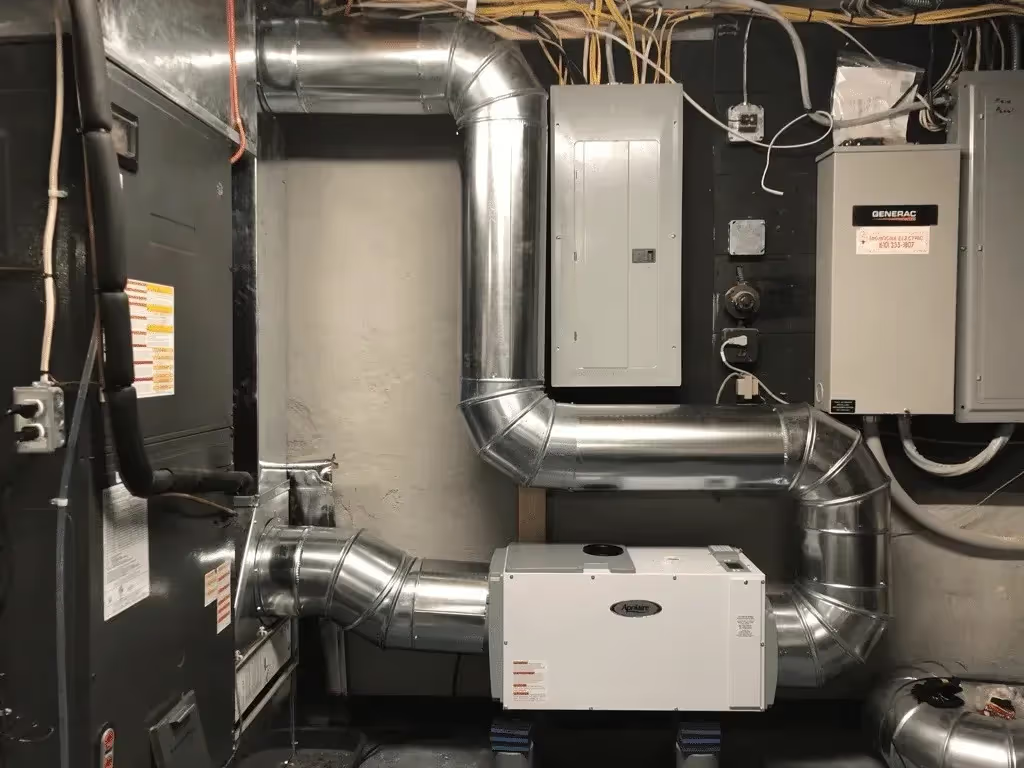
Residents in Morgantown, KY, frequently encounter the challenge of "sticky" heat, where high indoor humidity makes the air feel warmer than the actual thermostat reading. A dedicated whole-house dehumidification system is not a portable unit that sits in a hallway; it is a sophisticated appliance integrated directly into your central HVAC system or installed with dedicated ductwork to treat specific zones like basements and crawl spaces.
When you invest in professional service for these systems, the primary objective is precise moisture control. Unlike standard air conditioners, which remove humidity only as a byproduct of cooling, a dedicated dehumidifier functions independently. This allows homeowners to maintain ideal humidity levels—typically between 30% and 50%—even on days when the temperature is mild but the air is damp. This capability is critical for transition months in the spring and fall when the AC might not run enough to dry out the air.
Service visits focus on the comprehensive functionality of the unit. This includes inspecting the refrigeration circuit, ensuring the humidistat is calibrated correctly, and verifying that the condensate removal system is draining properly. For new installations, the scope involves calculating the exact moisture load of the building envelope. An undersized unit will run continuously without reaching the setpoint, while an oversized unit may short-cycle, leading to premature wear. The goal is to provide a "set it and forget it" solution that operates quietly in the background, protecting the structural integrity of the home and the comfort of its occupants.
Comprehensive Installation and Service Workflow
Installing or servicing a whole-home dehumidifier is a technical process that involves electrical work, duct modification, and drainage planning. Carter Heating and Cooling follows a rigorous protocol to ensure the equipment operates at peak efficiency from day one. The process is designed to minimize disruption while maximizing the performance of the HVAC system.
Assessment and Load Calculation
- Technicians begin by evaluating the total volume of the home and identifying primary moisture sources, such as unsealed crawl spaces or basements.
- Calculations are performed to determine the pint-per-day (PPD) removal capacity required for the specific square footage.
- Existing ductwork is inspected to determine the best integration method, whether supply-side, return-side, or a dedicated return setup.
Physical Installation and Duct Integration
- The unit is positioned on a vibration-absorbing pad or suspended from joists to reduce noise transfer to the living space.
- Metal or flex duct is installed to connect the dehumidifier to the central air system, ensuring airtight seals to prevent pressure loss.
- Dampers may be installed to regulate airflow and prevent back-drafting when the main HVAC blower is active.
Drainage and Electrical Setup
- A dedicated electrical circuit is often run to handle the amperage requirements of the compressor and fan motor.
- Condensate drain lines are routed to a floor drain, sump pump, or condensate pump, ensuring water is moved away from the foundation.
- Safety switches are installed to shut off the unit automatically if a blockage occurs in the drain line, preventing water damage.
System Commissioning
- The system is powered on and tested through a full cycle to verify compressor engagement and fan operation.
- Static pressure is measured to ensure the unit is not restricting airflow within the main HVAC system.
- The humidistat is programmed to the homeowner’s desired preferences, and the system is monitored to confirm it actively reduces relative humidity.
Determining Between Repair and System Replacement
Deciding whether to repair an existing dehumidifier or invest in a new system depends on several technical factors, including the age of the unit, the cost of the repair, and the efficiency of modern alternatives. Dehumidifiers operate under high stress, managing significant moisture loads, which can lead to component wear over time.
Signs That Repair is Viable
- Minor Electrical Issues: If the issue is isolated to a faulty capacitor, relay, or sensor, a repair is usually cost-effective and restores full functionality.
- Drainage Clogs: Water pooling around the unit often indicates a clogged trap or line rather than a system failure, which is a standard maintenance task.
- Recent Installation: Units under 5 years old typically retain warranty coverage for parts, making labor the only potential expense.
Indicators for Replacement
- Compressor Failure: The compressor is the heart of the system. If it seizes or fails, the cost of replacement parts and labor often approaches the price of a brand-new unit with a fresh warranty.
- Refrigerant Leaks: Identifying and fixing a leak in the coil, followed by recharging the system, is expensive and may not guarantee long-term reliability if corrosion is present.
- Age and Efficiency: Systems older than 10 to 12 years are likely using outdated refrigerants and consuming more electricity. Newer models offer higher pint-removal capacities with lower energy usage.
- Recurring Ice Buildup: If the coils repeatedly freeze despite proper airflow and filter changes, it often signals an internal restriction or low refrigerant charge that is difficult to permanently rectify.
Navigating Regional Humidity and Technical Requirements
The climate in this region presents specific challenges that dictate how dehumidification systems must be configured. With hot, humid summers and wet springs, moisture infiltration is a constant threat. High humidity is not just a comfort issue; it poses a risk to hardwood flooring, cabinetry, and drywall. When indoor humidity exceeds 60%, the potential for mold growth on porous surfaces increases significantly.
Local Climate Impact
- The specific dew points encountered in this area mean that opening windows is rarely a viable strategy for ventilation during summer. Mechanical dehumidification is necessary to keep the indoor environment within the safety zone of 30-50% humidity.
- Crawl spaces in this region are particularly susceptible to the "stack effect," where damp air from the ground is drawn up into the living quarters. Encapsulating the crawl space and installing a dedicated dehumidifier is a common and effective remediation strategy here.
Code Compliance and Permits
- Installations involving modifications to the electrical panel require adherence to the National Electrical Code (NEC). This ensures the dedicated circuit is grounded and breaker-sized correctly.
- Ductwork modifications must comply with local mechanical codes to ensure that the static pressure of the existing HVAC system is not compromised. Improper ducting can burn out the blower motor of the central furnace or air handler.
- Condensate disposal must meet local plumbing regulations. Drain lines cannot simply be vented into a crawl space; they must be directed to an approved drainage point to prevent soil erosion or foundation damage.
Technical Advantages of Professional Dehumidification
While portable units are available at retail stores, they lack the capacity and efficiency of a whole-home solution. A professionally installed system treats the air in every room simultaneously by utilizing the central ductwork. This eliminates hot and cold spots and ensures consistent air quality throughout the structure.
Filtration and Air Quality
- Whole-home units often come equipped with superior filtration capabilities compared to portable units. This captures airborne particulates, dust mites, and spores while the air is being dried, providing a dual benefit for indoor air quality.
- By keeping humidity low, these systems make the environment inhospitable for dust mites and other pests that thrive in damp conditions.
Energy Efficiency and Load Reduction
- Dry air feels cooler than humid air. When the humidity is controlled, homeowners can set their thermostat several degrees higher in the summer without sacrificing comfort. This reduces the workload on the central air conditioner, potentially lowering cooling bills and extending the lifespan of the AC unit.
- Dedicated dehumidifiers are designed to remove water more efficiently per kilowatt-hour of electricity than an air conditioner, making them the most economical choice for moisture control.
Why Expert Integration is Essential
The effectiveness of a whole-house dehumidifier relies heavily on how it is integrated into the home’s infrastructure. Simply placing a unit in a basement is insufficient for whole-home comfort. The ducting strategy determines whether the dry air is distributed evenly or if it remains trapped in one area.
Professionals understand the dynamics of airflow and psychrometrics—the study of moist air. They ensure that the supply air from the dehumidifier is mixed properly with the home’s airflow. Furthermore, professional service ensures that warranties remain valid. Most manufacturers require proof of professional installation to honor parts warranties — check our reviews to see our reputation. Neglecting this step can leave a homeowner liable for future replacement costs.
Contact Us Today
Carter Heating and Cooling ensures that every aspect of the dehumidification process, from the initial load calculation to the final drain line connection, is executed with precision. By controlling moisture at the source and distributing dry, filtered air throughout the living space, homeowners protect their property assets and ensure a comfortable indoor climate regardless of the weather outside.
Take control of your indoor climate and protect your home from excess moisture today. Contact us to schedule your whole-house dehumidifier service.

Great Service at a Fair Price
Veterans Discount


Senior Discount

Law Enforcement

Fire fighters/ems

Hear From Your Neighbors!
Hear from your neighbors to see how our commitment to dependable service and lasting comfort has made a difference in their homes.