
How can we help today?
Choose an option to see quick actions and get help faster.Ductless Maintenance in Elkton, KY
Ductless Maintenance in Elkton, KY
Ductless mini split maintenance in Elkton KY by Carter Heating & Cooling. Keep your system efficient reliable and running strong. Schedule today!
Immediate Help for Your Ductless System Troubles
Is your ductless HVAC system failing to heat or cool your space efficiently, leaving you uncomfortable in your own home? Carter Heating and Cooling offers rapid response and expertise to get your system back in top condition. Call us immediately or apply for financing to restore your home's comfort without delay.
Residents in Elkton, KY understand that a malfunctioning mini-split isn't just an inconvenience; it can lead to rapidly rising energy bills and poor indoor air quality. We provide a direct solution to your mechanical issues, focusing on immediate remediation and long-term reliability.
- Restore your comfort quickly with our same-day repair services.
- Ensure long-term performance with our thorough maintenance checks.
- Stay informed with clear, upfront pricing and no hidden fees.
All services are performed by licensed professionals, with extended warranties and flexible financing available.
Rapid and Reliable Ductless Maintenance
Ductless mini-split systems are engineered for high efficiency, but they require precision tuning to maintain their performance ratings. Unlike central air systems, ductless units do not rely on ductwork, which means the air you breathe comes directly from the indoor handling unit. If that unit is clogged or mechanically compromised, the air quality and temperature control in your room suffer immediately.
Our maintenance service is designed to address the specific mechanical needs of inverter-driven compressors and complex electronic control boards found in modern ductless systems. We move beyond simple filter changes to address the root causes of efficiency loss. Over time, dust and debris accumulate on the evaporator coils and the blower wheel. This buildup insulates the coil, preventing it from absorbing or releasing heat effectively, which forces the compressor to work harder and consume more electricity.
We address the critical electrical components that communicate between your indoor and outdoor units. Loose connections or corroded wires can lead to intermittent failures or total system shutdowns. By tightening connections and testing voltage, we prevent sudden electrical failures during peak usage times. We also verify that the condensate drain line is clear. A blocked drain can cause water to back up and leak down your wall, causing significant property damage. Our technicians use specialized tools to flush these lines and ensure proper drainage.
Refrigerant levels are another focal point of our service. Ductless systems require a precise refrigerant charge to operate correctly. A system that is undercharged due to a micro-leak will freeze up in the summer and fail to heat in the winter. We check pressures and inspect line sets for any signs of leakage, ensuring your system holds the correct charge for optimal thermal transfer.
Our Maintenance Process: What to Expect Today
When you schedule service, you are looking for a systematic approach that leaves nothing to chance. We follow a rigorous checklist designed to uncover hidden issues before they become expensive repairs.
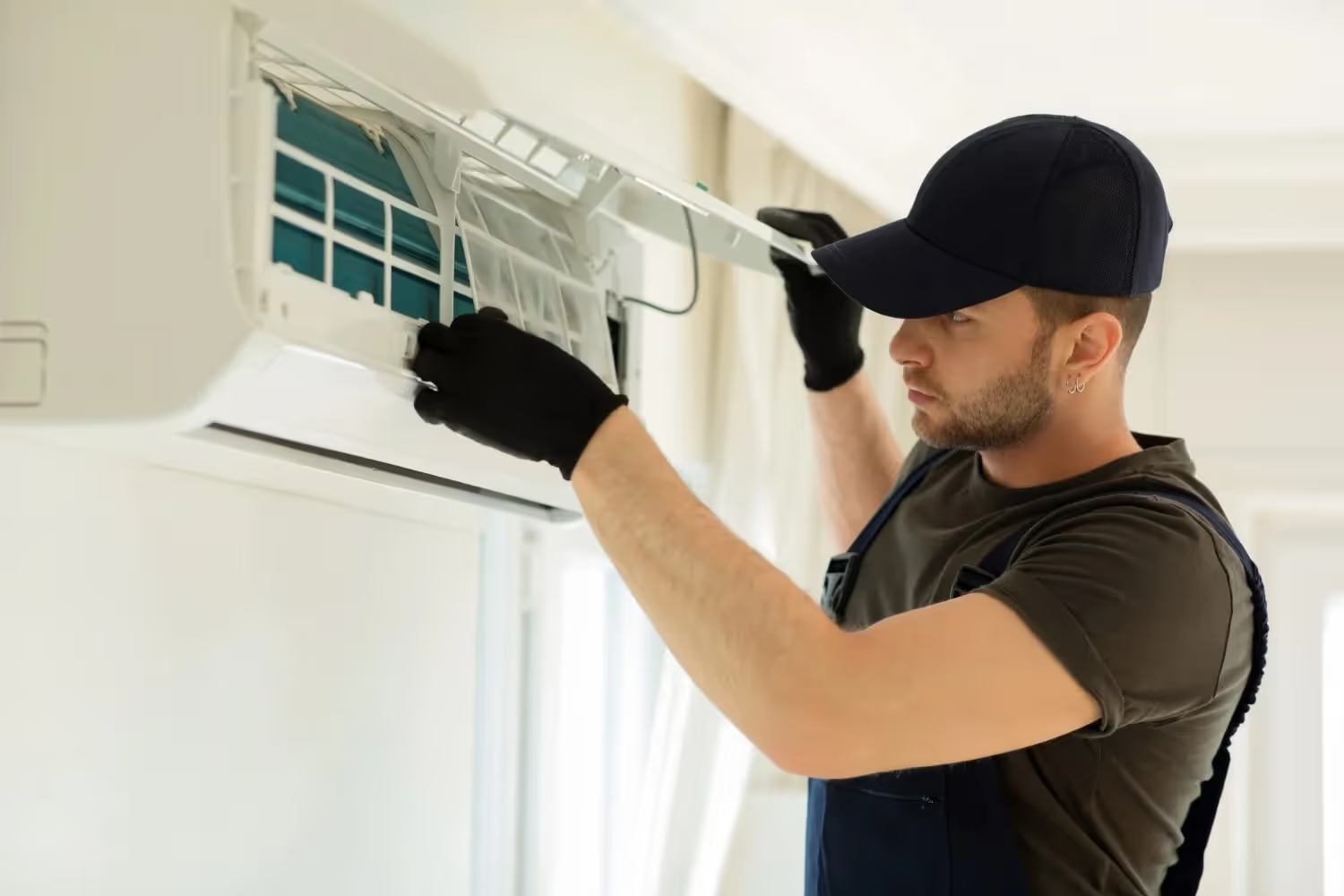
- The technician begins with a comprehensive visual inspection of the indoor unit. This involves removing the cabinet housing to access the interior components.
- We remove and deep clean the reusable air filters. While homeowners can do this, we also inspect the condition of the filter mesh to ensure it hasn't degraded.
- The evaporator coil is chemically cleaned. We apply a non-acidic coil cleaner that penetrates deep between the fins to dissolve dust, grease, and biological growth that restricts airflow.
- The blower wheel is inspected for mold and dust accumulation. An imbalanced blower wheel can cause noise and vibration, eventually wearing out the fan motor bearings. If necessary, we clean each blade of the fan wheel.
- We flush the condensate drain pan and line. This ensures that moisture removed from the air can flow freely outside, preventing overflow switches from tripping and shutting down the unit.
- Moving outside, we inspect the outdoor condenser unit. We remove debris such as leaves, grass clippings, and dirt that may be blocking the outdoor coil.
- The outdoor coil is washed to ensure maximum heat rejection. A dirty outdoor coil drives up head pressure, which shortens the lifespan of the compressor.
- We inspect the refrigerant lines and insulation. Torn or missing insulation on the line set affects efficiency and can cause condensation to drip in unwanted areas.
- Electrical components, including capacitors and the inverter board, are tested for proper operation. We verify that the system is drawing the correct amperage.
- Finally, we run the system in both heating and cooling modes (weather permitting) to verify the temperature differential, ensuring the unit is producing the expected output.
Installing Your Ductless Unit: Step-by-Step
In scenarios where maintenance reveals a system is beyond saving, or if you are looking to expand your comfort system, understanding the installation process is vital. A proper installation dictates the lifespan and efficiency of the equipment.
- The process begins with a load calculation. We measure the square footage, insulation levels, window placement, and sun exposure of the room to determine the exact BTU capacity required. An oversized unit will short-cycle and fail to dehumidify, while an undersized unit will run constantly without reaching the set temperature.
- We select the optimal location for the indoor unit. It must be mounted high on an exterior wall for drainage and airflow, but accessible for future maintenance. We ensure the wall plate is perfectly level.
- A small, three-inch hole is drilled through the wall to route the refrigerant lines, drain tube, and connecting wire. We sleeve this hole to protect the lines and seal it to prevent drafts or pests from entering.
- The refrigerant line set is run from the indoor unit to the outdoor location. We bend the copper tubing carefully to avoid kinks that would restrict refrigerant flow.
- The outdoor unit is positioned on a composite pad or mounted on wall brackets. This keeps the unit off the ground, protecting it from snow accumulation and debris.
- We connect the refrigerant lines using flared connections. These must be torqued to manufacturer specifications to prevent leaks.
- A vacuum pump is used to remove all air and moisture from the lines. This is a critical step; moisture in the system mixes with oil to create acid, which eats away at the compressor windings.
- We release the refrigerant and perform a pressure test.
- Electrical connections are made, ensuring a dedicated circuit is available to handle the load of the system.
- The system is powered on and tested. We demonstrate the remote control functions to ensure you understand how to operate the unit efficiently.
Evaluating Ductless Replacement vs. Repair
Deciding whether to repair an aging unit or invest in a replacement is a financial and operational decision. There is a tipping point where continuing to pour money into an old system yields diminishing returns.
- Consider the age of the equipment. Ductless systems generally have a lifespan of 12 to 15 years. If your unit is over 10 years old and requires a major repair, replacement is often the more prudent financial choice.
- Analyze the repair frequency. If you have required multiple repairs in the last two years, the system is likely entering the end of its failure curve. Continuing to patch it is often more expensive than a new monthly payment.
- Assess the cost of the repair. A general rule of thumb is that if the repair cost equals 50% or more of the value of a new system, you should replace it. Major component failures, such as a compressor or inverter board, usually fall into this category.
- Evaluate the system's efficiency. Older units likely use phased-out refrigerants or lack the high SEER ratings of modern inverter systems. Upgrading can significantly reduce your monthly utility bills, helping to offset the cost of the new unit.
- Look at warranty coverage. A new installation comes with a fresh manufacturer warranty, often lasting 10 to 12 years on parts. An older repaired unit only carries a warranty on the specific part that was changed.
- Check for refrigerant availability. If your system uses R-22 refrigerant, repairs involving leaks are prohibitively expensive due to environmental regulations and scarcity. Modern systems use R-410A or newer alternatives that are more efficient and readily available.
At this crossroad, Carter Heating and Cooling provides honest assessments. We measure the amperage draw of your compressor and the condition of your coils to give you data-driven advice rather than a sales pitch.
Understanding Elkton’s HVAC Needs: Seasonality and Permits
The climate in this region dictates specific maintenance and installation requirements for ductless systems. We experience a wide operational range, with July highs reaching 36°C and January lows dipping to -4°C.
- Humidity management is critical. Our annual rainfall averages around 50 inches, with peaks in spring and late summer. High humidity means your ductless unit must work hard to dehumidify the air. If the condensate drain is not perfectly clear, biological growth (algae and mold) can form rapidly in the drain pan, leading to clogs and water damage. Regular cleaning of the blower wheel is also essential to prevent mold from recirculating in your home.
- Winter performance requires attention. While ductless heat pumps are efficient, they need clear airflow to harvest heat from the cold outdoor air. We ensure that outdoor units are mounted high enough to avoid being buried in snow drifts, and we check the defrost cycle operation to ensure the unit doesn't freeze over during winter storms.
- Electrical storms and tornadoes are a reality here. We recommend and install surge protectors specifically designed for the sensitive electronics in ductless mini-splits. A single voltage spike from a nearby lightning strike can destroy the main control board.
- Local codes and permits are strictly followed. Electrical modifications required for new installations must meet local building codes. We handle the permitting process to ensure your installation is legal and safe. This includes ensuring proper disconnect boxes are installed near the outdoor unit for emergency shut-off.
- Utility rebates may be available. Local utility providers frequently offer rebates for upgrading to high-efficiency heat pump systems. We stay up to date on these programs to help you maximize your savings — browse our HVAC FAQs to learn more.
Why Choose Carter Heating and Cooling: Our Commitments to You
When you require service on your ductless system, you need a partner who understands the specific engineering of brands like Daikin and Trane. General HVAC knowledge is not enough for these complex, computer-controlled systems.
- We employ licensed technicians who undergo specific training on inverter technology. We do not guess; we diagnose using digital tools that read the error codes and operational data directly from your system.
- Our pricing is transparent. You will know the cost of the maintenance or repair before we begin work. There are no surprise fees or hourly overages for standard tasks.
- We carry a stock of common parts. This minimizes downtime, allowing us to complete many repairs on the same day the issue is diagnosed.
- We respect your property. Our technicians use drop cloths and shoe covers to ensure your home is left as clean as we found it.
- We stand behind our work — see our reviews for proof. Our repairs are backed by labor warranties that give you peace of mind.
Your comfort is not optional. If your system is underperforming, making noise, or failing to turn on, do not wait for the weather to get worse. A small issue today can become a catastrophic failure tomorrow.
Restore Confidence in Your Home Comfort Today
When your ductless system shows signs of strain, quick action can prevent higher costs, extended downtime, and unnecessary discomfort. Carter Heating and Cooling delivers precise diagnostics, dependable repairs, and expert maintenance designed specifically for Elkton’s demanding climate—so your system performs efficiently when you need it most.
Take control of your indoor climate now. Contact us to schedule your comprehensive ductless maintenance or repair service.

Great Service at a Fair Price
Veterans Discount


Senior Discount

Law Enforcement

Fire fighters/ems

Hear From Your Neighbors!
Hear from your neighbors to see how our commitment to dependable service and lasting comfort has made a difference in their homes.