

How can we help today?
Choose an option to see quick actions and get help faster.Protection Plan in Plum Springs, KY
Protection Plan in Plum Springs, KY
Discover comprehensive HVAC protection plans in Plum Springs for reliable home comfort. Skip the line with priority service, enjoy financial savings & 24/7 support.
Immediate Protection Plan Relief for Your Home
Feeling overwhelmed by the prospect of unexpected home system failures and costly repairs is a burden no homeowner should carry alone. Our Protection Plans in Plum Springs ensure that your heating and cooling systems are monitored, maintained, and covered when you need reliability the most. Contact us today to secure your home’s comfort and avoid emergency breakdowns:
- Rapid response team available 24/7 for plan members.
- Comprehensive coverage across all major heating and cooling components.
- No unexpected out-of-pocket expenses with transparent, upfront pricing structures.
- All plans are backed with a solid warranty for absolute peace of mind.
What You Get Today With a Protection Plan
Signing up for a protection plan is an investment in the longevity and efficiency of your home’s critical infrastructure. In a climate like Plum Springs, where humidity spikes in the summer and temperatures drop significantly in the winter, your HVAC system works harder than appliances in more temperate zones. A protection plan transforms your approach to home care from reactive to proactive. Instead of waiting for a catastrophic failure during a heatwave or a blizzard, you establish a baseline of continuous care.
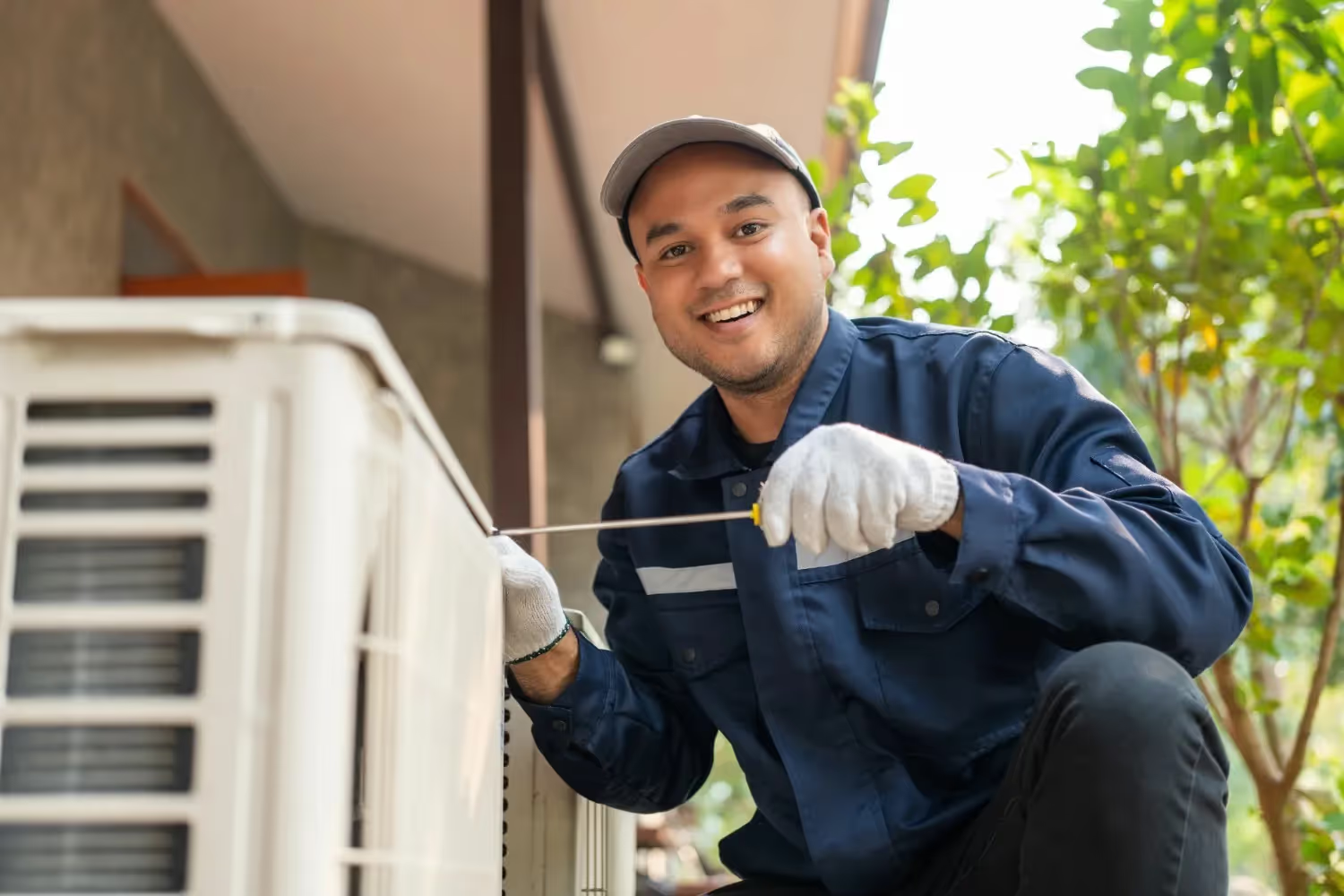
Immediate Priority Status
The most tangible benefit you receive immediately upon enrollment is priority status. When extreme weather hits Kentucky, service lines fill up instantly. Non-plan customers often face wait times of days or even weeks during peak season. As a plan member, you skip the line. Your service request moves to the front of the queue, ensuring that a technician is dispatched to your property as soon as possible. This "front-of-the-line" access applies 24/7, ensuring that you are never left without climate control for extended periods.
Scheduled Precision Maintenance
Your plan includes rigorous, scheduled maintenance visits. These are not simple visual inspections; they are deep-dive audits of your system's performance:
- Cooling Season Tune-Up: Before the summer heat sets in, technicians calibrate your thermostat, check refrigerant levels, clean condenser coils, and flush condensate drains to prevent water damage. This ensures the unit can handle the high humidity typical of the region.
- Heating Season Safety Check: Prior to winter, the focus shifts to the furnace or heat pump. Technicians inspect the heat exchanger for cracks (a critical safety issue regarding carbon monoxide), test ignition systems, and verify proper airflow to ensure efficient heating during freezing nights.
Financial Predictability and Savings
Beyond the physical maintenance, the plan offers financial shielding:
- Repair Discounts: If a component does fail, plan members typically receive significant discounts on parts and labor.
- Reduced Energy Bills: A well-maintained system runs more efficiently. By keeping coils clean and motors lubricated, the system uses less energy to reach the desired temperature, lowering monthly utility costs.
- Extended Equipment Life: Regular maintenance significantly extends the lifespan of your HVAC unit, delaying the expensive capital cost of full system replacement.
How the Enrollment and Maintenance Process Works
The process of securing your home with a protection plan is designed to be seamless and immediate. We remove the administrative burden from the homeowner, automating the care of your heating and cooling systems.
Initial Assessment and Onboarding
- System Audit: Upon joining, a certified technician performs a comprehensive audit of your existing equipment. This establishes a baseline for the health of your system and identifies any pre-existing conditions that may need immediate attention before they are covered under standard maintenance protocols.
- Data Recording: Model numbers, serial numbers, and installation dates are recorded. This allows the service team to arrive at future appointments prepared with the correct parts and filters, minimizing time on site.
Scheduling Routine Service
- Proactive Outreach: You do not need to remember to call for your tune-up. The administrative team tracks your service intervals and contacts you to schedule appointments at your convenience, typically in spring and fall.
- Reminder System: Automated reminders ensure you are aware of upcoming visits, allowing you to plan your day without disruption.
During the Service Visit
- Technician Arrival: A uniformed, background-checked professional arrives within a specified window.
- Multi-Point Inspection: The technician follows a strict checklist, ensuring no component is overlooked. This includes tightening electrical connections, measuring voltage and amperage, and lubricating moving parts.
- Reporting: After the service, you receive a detailed report outlining what was checked, the status of your system, and any recommendations for proactive repairs. This transparency ensures you always know the exact condition of your HVAC system.
Emergency Protocol
- Direct Access: Should a breakdown occur, you utilize a dedicated member line or priority digital booking channel.
- Rapid Dispatch: The dispatch team identifies your membership status immediately and re-routes the nearest available truck to your location.
When Replacement Beats Repair
A major component of a protection plan is having a professional partner to help navigate the difficult decision between repairing an aging unit or investing in a replacement. While maintenance extends the life of a system, there is a point of diminishing returns where replacement becomes the more improved financial decision:
The 50% Rule
A general guideline used in the industry is the 50% rule. If the cost of a necessary repair approaches or exceeds 50% of the value of a new system, replacement is generally the wiser choice. This is particularly true if the equipment is out of its original manufacturer warranty. Carter Heating and Cooling technicians provide honest assessments based on this metric, ensuring you do not throw good money after bad.
Age and Reliability
- System Age: Most air conditioners and heat pumps have a lifespan of 10 to 15 years, while furnaces may last 15 to 20 years. If your system is within this age range and requires a major repair (like a compressor or heat exchanger), replacement is often recommended.
- Frequency of Breakdowns: If you find yourself calling for repairs multiple times a year, the system has likely become unreliable. A protection plan helps mitigate these costs, but chronic failure indicates the unit has reached the end of its useful life.
Efficiency Capabilities
Older units operate with significantly lower SEER (Seasonal Energy Efficiency Ratio) and AFUE (Annual Fuel Utilization Efficiency) ratings compared to modern equipment.
- Technological Gap: A 15-year-old AC unit might be operating at 10 SEER or less. Modern units can exceed 20 SEER. Replacing an old unit can cut cooling costs by 30% to 50%.
- Comfort Features: Newer systems offer variable-speed motors and multi-stage heating/cooling, which provide better humidity control and more consistent temperatures than older, single-stage models.
Plan Member Benefits on Replacement
An often-overlooked benefit of protection plans is that many include accrual systems or exclusive discounts on new equipment installation. If a unit is deemed unrepairable, the loyalty built through the protection plan often translates into a lower purchase price for the replacement system.
Local Notes: Operating in Plum Springs
Servicing homes in Plum Springs requires specific knowledge of local infrastructure, climate patterns, and utility providers. A generic approach does not work when dealing with the specific environmental stressors found in this part of Kentucky:
Climate-Specific Maintenance
- Humidity Management: The summers in this region are notably humid. This puts immense strain on air conditioning condensate systems. Algae and mold growth in drain lines is a common issue that can lead to water damage in ceilings or basements. Plan protocols specifically include aggressive cleaning of these lines to prevent clogs.
- Winter Readiness: While winters are not arctic, they are cold enough to freeze pipes if a furnace fails. The sporadic nature of snowfall and freezing rain means the heating system must be reliable enough to handle rapid temperature drops.
Utility Coordination
- Natural Gas Safety: Many homes in the area rely on natural gas for heating. Working with gas appliances requires strict adherence to safety protocols. Technicians are trained to inspect gas lines and connections for leaks, ensuring compatibility and safety standards that align with providers like Columbia Gas of Kentucky.
- Electrical Grids: Summer thunderstorms often cause power surges or fluctuations. Protection plans often recommend or include checks on surge protectors to ensure the sensitive electronics in modern HVAC boards are not fried during a storm.
Permits and Compliance
- Code Adherence: Any major repair or replacement performed under the plan is done in strict accordance with local building codes. This is crucial for maintaining the resale value of your home and ensuring insurance compliance.
- Refrigerant Regulations: As federal regulations regarding refrigerants (like R-22 vs. R-410A) change, local service providers ensure that your system is serviced with compliant materials and that any phased-out refrigerants are handled and disposed of legally and safely.
Proof and Differentiators
Choosing the right partner for your home protection plan is about trust and technical competence. You are granting a service provider ongoing access to your home and trusting them with the safety of your family’s comfort systems:
Certified Technical Expertise
The technicians performing the work are not general handymen; they are specialists in thermodynamics and electrical systems:
- Continuous Training: Technology in the HVAC industry changes rapidly. Staff undergo regular training on the latest diagnostic tools and high-efficiency equipment.
- Background Checks: Every technician is vetted to ensure safety and professionalism. You can trust the person entering your home.
Transparency and Integrity
Many service agreements are filled with fine print and exclusions. We focus on clarity:
- No Hidden Fees: The terms of the protection plan are laid out clearly. You know exactly what is covered, what the discounts are, and what the priority status entails.
- Honest Diagnostics: Technicians are incentivized to fix problems, not to upsell unnecessary parts. If a part is worn but still functional, you are informed of its status without high-pressure sales tactics.
Commitment to Safety
Beyond comfort, the primary goal of the protection plan is safety.
- Carbon Monoxide Screening: Every heating tune-up includes a check for carbon monoxide leaks, a silent but deadly hazard.
- Fire Prevention: Loose electrical connections and dust buildup in furnaces are fire hazards. Regular maintenance eliminates these risks.
Local Focus
Being a local provider means understanding the specific needs of the community. The service radius is tight enough to ensure that "priority service" genuinely means rapid response. When you call, you are reaching a local team that understands the geography and the urgency of your situation, not a distant call center.
Long-Term Asset Protection
Your HVAC system is likely the most expensive appliance in your home. Neglecting it is akin to driving a car for 100,000 miles without an oil change. A protection plan is the most cost-effective way to protect that asset. It documents the maintenance history of the unit, which can be a valuable selling point if you ever decide to put your home on the market. Buyers look for well-maintained mechanical systems, and a documented history of professional care adds value — apply for financing if an upgrade is needed.
Call Now
Secure your home’s future and eliminate the stress of system management. A protection plan offers the perfect balance of preventive care, emergency assurance, and financial savings. Do not wait for a breakdown to think about the health of your HVAC system.
Join the protection plan today and experience the comfort of total home security — contact us now.

Great Service at a Fair Price
Veterans Discount


Senior Discount

Law Enforcement

Fire fighters/ems

Hear From Your Neighbors!
Hear from your neighbors to see how our commitment to dependable service and lasting comfort has made a difference in their homes.