

How can we help today?
Choose an option to see quick actions and get help faster.Mini Split Inspection in Edmonton, KY
Mini Split Inspection in Edmonton, KY
Experiencing issues with your mini split in Edmonton, KY? Schedule a professional diagnostic to uncover inefficiencies and operational failures. Ensure your comfort with our expert service.
Diagnosing Inefficiencies and Operational Failures in Ductless Systems
Inconsistent temperatures, odd grinding sounds, or a sudden spike in your monthly energy bill often indicate that your ductless system is operating under duress. Homeowners in Edmonton, KY need a reliable climate control system to handle humid summers and freezing winters, and a compromised mini split puts your comfort at risk. Contact us today to schedule a comprehensive diagnostic inspection or inquire about our available financing options for major repairs.
When you book a professional inspection, you move past guessing games and address the mechanical reality of your equipment. A proper evaluation identifies whether a simple cleaning can restore performance or if a component failure is imminent.
- Discover the root cause of airflow restrictions or mechanical noises through a systematic diagnostic process.
- Receive transparent, flat-rate pricing for any recommended repairs with absolutely no hidden service fees.
- Ensure your mini split operates at peak efficiency to handle regional humidity and temperature swings.
- Licensed and insured technicians are ready with same-day service options to restore your home’s comfort — see customer reviews.
Comprehensive Scope of a Professional Mini Split Inspection
A mini split inspection is far more rigorous than a standard filter change. Ductless systems rely on complex inverter technology and precise refrigerant metering to function correctly. When a technician arrives at your property, the goal is to evaluate the system's total health, from the outdoor condenser to the indoor air handling units.
Electrical Component Testing
The inverter board is the brain of your mini split, converting AC power to DC to modulate the compressor speed. This component is sensitive to voltage fluctuations and heat. During an inspection, technicians verify all electrical connections. Loose wiring can cause arcing, burnt terminals, or intermittent power failure. We measure voltage and amperage on the compressor and fan motors to ensure they are drawing power within the manufacturer’s specified range. High amp draws often signal that a motor is struggling and close to burning out.
Refrigerant Charge and Pressure Verification
Mini splits are critically charged systems. This means even a slight variance in refrigerant levels—either too low or too high—can drastically reduce efficiency and damage the compressor. The inspection involves checking operating pressures and, if necessary, weighing the refrigerant charge. Technicians look for signs of leaks, such as oil residue on line sets or flare connections, which are common failure points in ductless setups.
Blower Wheel and Coil Analysis
The indoor blower wheel is responsible for pushing conditioned air into your room. In ductless systems, this wheel is prone to accumulating mold and dust, which adds weight to the fan and unbalances it. This creates vibration and noise while restricting airflow. The inspection includes a visual check of the blower wheel and the evaporator coil. If the coil is impacted with debris, heat transfer cannot occur, causing the system to freeze up in summer or fail to heat in winter.
Condensate Drain System Check
Ductless units remove significant moisture from the air. This moisture travels down a condensate drain line. Over time, algae and sludge can build up, causing blockages. If the system uses a condensate pump, the technician tests its operation to ensure it engages when the water level rises. A failed pump or blocked line can lead to water leaking down your wall or damaging the interior of the unit.
The Step-by-Step Inspection Process
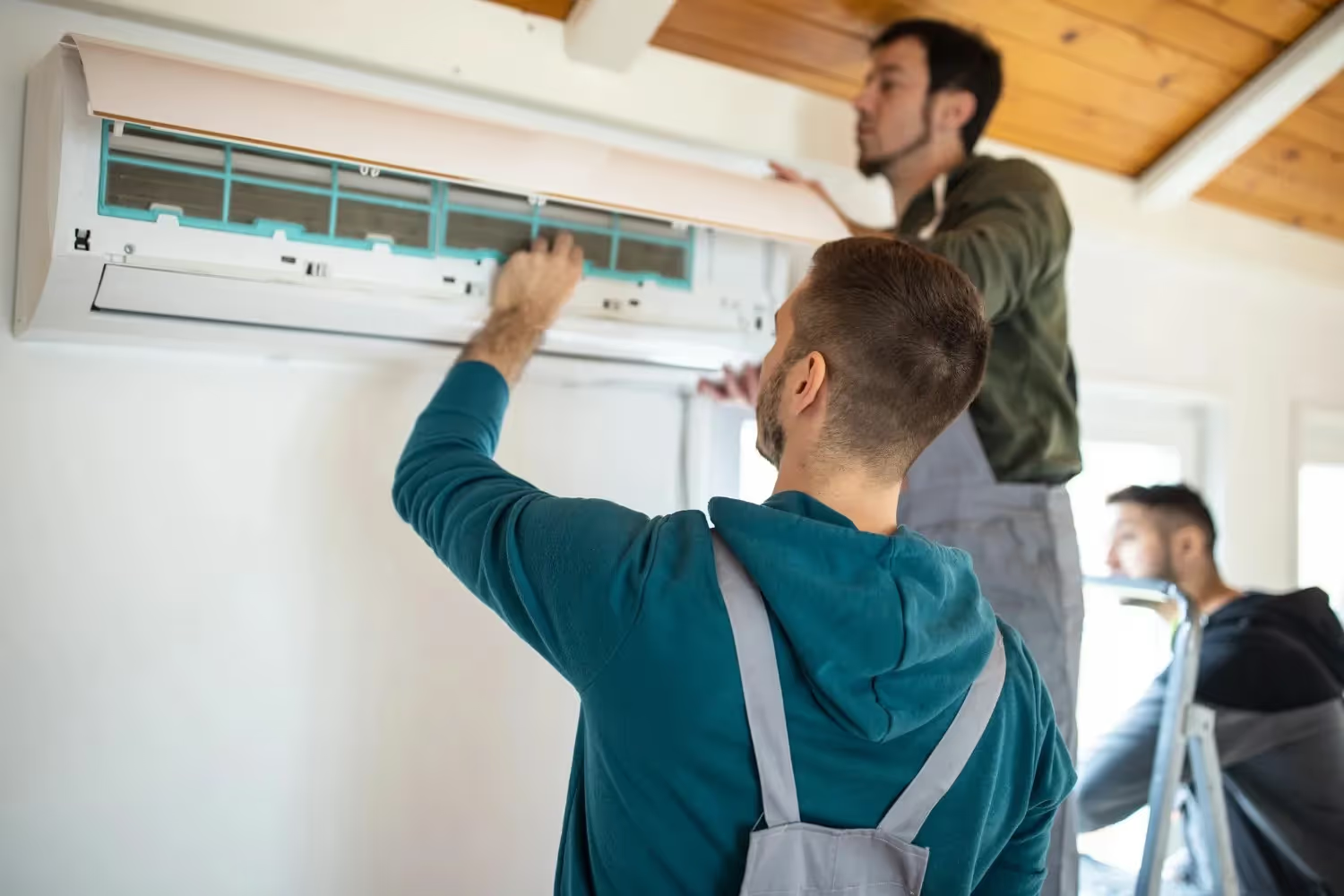
Understanding the sequence of a service visit helps you prepare for the technician's arrival. The process is designed to be efficient, thorough, and non-intrusive, focusing on gathering data to make accurate recommendations.
- Initial Consultation and Symptom Review: The technician begins by asking about specific issues you have noticed, such as specific error codes, noises, or rooms that fail to reach the desired temperature. This history helps narrow down potential focus areas.
- Thermostat and Control Testing: The remote or wall controller is tested to ensure it communicates effectively with the head unit. The technician verifies that the unit responds to mode changes (cool to heat) and fan speed adjustments.
- Outdoor Unit Evaluation: The focus shifts to the exterior condenser. The technician removes service panels to inspect the compressor blanket, reversing valve, and outdoor fan. They ensure the unit is level and that there is adequate clearance for airflow around the coil.
- Indoor Unit Disassembly: The front casing of the indoor head is carefully opened or removed. This allows access to filters, louvers, and the electrical terminal block. This step is crucial for spotting hidden mold growth or sensor issues.
- Performance Testing: With the system running, temperature splits are measured. This involves taking the temperature of the air entering the unit versus the air leaving it. A specific differential is required to confirm the system is cooling or heating effectively.
- Final Report and Recommendations: Once data collection is complete, the technician compiles a report detailing the system's condition. This includes photos of any damaged parts, readings from electrical tests, and a clear verdict on the system's health.
Deciding Between Repair and Replacement
An inspection often leads to a decision point: fix the current issue or invest in a new system. Carter Heating and Cooling provides the objective data needed to make this financial determination based on the remaining lifespan of the unit and the cost of intervention.
The 50% Rule
A general guideline in the HVAC industry is the 50% rule. If the cost of the repair approaches or exceeds 50% of the cost of a new system, replacement is usually the smarter financial move. Major component failures, such as a blown compressor or a failed inverter board out of warranty, often trigger this threshold.
Age and Refrigerant Type
Mini splits typically last between 12 to 15 years with proper maintenance. If your unit is over 10 years old and requires a significant repair, investing that money into a modern, high-efficiency unit is often better than patching an aging system. Additionally, older units may use phased-out refrigerants. If your system relies on R-22, repairs involving refrigerants are prohibitively expensive and environmentally unsound. Newer systems utilize R-410A or other modern refrigerants that are more efficient and available.
Frequency of Breakdowns
One repair is an anomaly; recurring repairs are a pattern. If you have required service calls multiple times in the last two years, the system is likely suffering from systemic failure or installation errors. Continuing to pay for service calls adds up quickly. A new system resets the clock on reliability and comes with a manufacturer’s warranty that covers parts for up to a decade.
Efficiency Degradation
Even if an older unit runs, it may have lost significant efficiency. Wear on the compressor and corrosion on the coils reduce the SEER rating over time. If your energy bills have crept up despite consistent usage habits, the unit is working harder to provide the same amount of comfort. Replacing it with a high-SEER unit can result in immediate monthly savings that help offset the installation cost.
Regional Considerations for System Performance
Operating a mini split in this region presents specific challenges that a generic inspection might miss. The local climate and infrastructure influence how these systems age and fail.
Humidity and Biological Growth
This area experiences high humidity levels for a significant portion of the year. Ductless systems are excellent at dehumidification, but this means the interior components are constantly wet. Without regular inspection and cleaning, the dark, damp environment inside the air handler becomes a breeding ground for mold and mildew. This not only affects the unit's mechanical operation but also degrades indoor air quality. Inspections here place a heavy emphasis on checking the blower wheel and drain pan for biological growth.
Winter Stress on Heat Pumps
Winters bring freezing temperatures that test the limits of heat pump efficiency. Mini splits must enter "defrost mode" to melt ice off the outdoor coil. If the defrost board or sensors are malfunctioning, the unit will freeze over completely, leading to a total loss of heat. Local inspections prior to winter focus heavily on testing the reversing valve and defrost logic to ensure the unit can handle sub-freezing nights.
Voltage Fluctuations and Protection
Rural and semi-rural power grids can experience voltage fluctuations or surges during storms. Mini split inverter boards are extremely sensitive to "dirty power." An inspection often reveals if a surge protector is present and functioning. Installing surge protection is a common recommendation in this area to prevent catastrophic electrical failure during storm season.
Permits and Installation Code
Many ductless systems are installed by general handymen or DIY enthusiasts without proper permits. During an inspection, a professional checks for code compliance. This includes proper wire sizing, disconnect box placement, and line set insulation. Ensuring the installation meets local building codes is essential for safety, insurance claims, and the eventual resale of the home.
Technical Expertise and Specialized Equipment
The difference between a quick look-over and a professional diagnostic lies in the tools and training utilized. Ductless systems require proprietary diagnostic equipment that standard HVAC technicians may not carry.
Inverter Analyzers
Standard multimeters are sometimes insufficient for diagnosing complex communication errors between the indoor and outdoor units. Specialized inverter checkers allow technicians to isolate whether a fault lies in the outdoor board, the indoor board, or the wiring between them. This prevents the expensive mistake of replacing the wrong circuit board.
Digital Manifolds and Micron Gauges
Analog gauges are less precise when dealing with the specific charge requirements of a mini split. Digital manifolds provide real-time calculations of superheat and subcooling, which are vital for verifying system performance. When checking for leaks, a micron gauge is used to measure the vacuum level, detecting even the tiniest breach in the sealed system that a soap bubble test would miss.
Flare Connection Integrity
The vast majority of mini split leaks occur at the flare connections where the copper line set meets the unit. These connections are sensitive to vibration and thermal expansion. Technicians use torque wrenches calibrated to the manufacturer's specifications to check these connections. Overtightening is just as dangerous as undertightening, as it can crack the copper flare. Professional handling ensures these connections remain leak-free.
Cleaning Technology
If the inspection reveals a dirty blower wheel or coil, specialized bib kits and pressurized water systems are required to clean the unit in place without damaging your walls or floors. This equipment funnels water and cleaning agents directly into a bucket, allowing for a deep clean that restores factory-level airflow and efficiency.
Restoring Comfort and Efficiency
A malfunctioning mini split disrupts your daily life and compromises the comfort of your home. Whether the issue is a clogged drain line, a refrigerant leak, or a failing control board, identifying the problem accurately is the first step toward a solution. Professional inspections provide the detailed information required to make smart decisions about the future of your HVAC equipment.
Carter Heating and Cooling focuses on delivering factual, data-driven assessments without sales pressure. The goal is to ensure your system runs safely and efficiently, providing the heating and cooling you rely on. Don't let a small noise turn into a system-wide failure.
Secure your system’s performance and your peace of mind. Schedule your comprehensive mini split inspection now.

Great Service at a Fair Price
Veterans Discount


Senior Discount

Law Enforcement

Fire fighters/ems

Hear From Your Neighbors!
Hear from your neighbors to see how our commitment to dependable service and lasting comfort has made a difference in their homes.