

How can we help today?
Choose an option to see quick actions and get help faster.Mini Split Installation in Edmonton, KY
Mini Split Installation in Edmonton, KY
Experience tailored comfort and lower energy costs in Edmonton, KY with our ductless mini split systems. Learn more about our quick, professional installation.
Inconsistent Temperatures and Rising Energy Bills Signal a Need for Change
Dealing with hot spots in the summer or chilly drafts in the winter creates frustration for homeowners in Edmonton, KY, especially when monthly utility costs continue to climb. Contact us or apply for financing today to upgrade your home comfort. Ductless mini split systems offer a targeted, efficient alternative to central HVAC units that struggle to maintain uniform comfort levels. These systems bypass energy losses associated with ductwork and allow for precise climate control in the rooms where you spend the most time.
- Achieve tailored temperature control with zone-specific settings.
- Reduce your energy costs with highly efficient mini split systems.
- Enjoy quick, non-invasive installation by certified professionals.
Fully licensed installations come with extensive warranties and flexible financing options to ensure your investment is protected.
Why Mini Split Systems Make Sense for Your Home
The climate in this region brings distinct seasonal challenges, ranging from humid, sweltering summers to cold, wet winters. Traditional forced-air systems often struggle to adapt to these extremes, particularly in older homes where ductwork may be leaky or nonexistent. A ductless mini split heat pump solves this issue by delivering conditioned air directly into the living space. This direct approach removes the thermal loss that occurs as air travels through attics or crawlspaces, ensuring that the energy you pay for actually translates into comfort.
Carter Heating and Cooling specializes in configuring these systems to meet the specific load requirements of local homes. Whether you are looking to condition a new home addition, a converted garage, or a master suite that never seems to get cool enough, mini splits provide a versatile solution. They operate without the need for major renovation, making them an ideal choice for historic properties or homes with boiler systems where installing ducts is architecturally impossible.
Furthermore, the technology behind modern mini splits allows them to function efficiently even when outdoor temperatures drop significantly. Unlike older heat pumps that relied on backup resistance heating strips—which are expensive to run—modern inverter-driven compressors modulate their speed to maintain consistent indoor temperatures while consuming minimal electricity. This capability makes them a primary heating and cooling source rather than just a supplemental option.
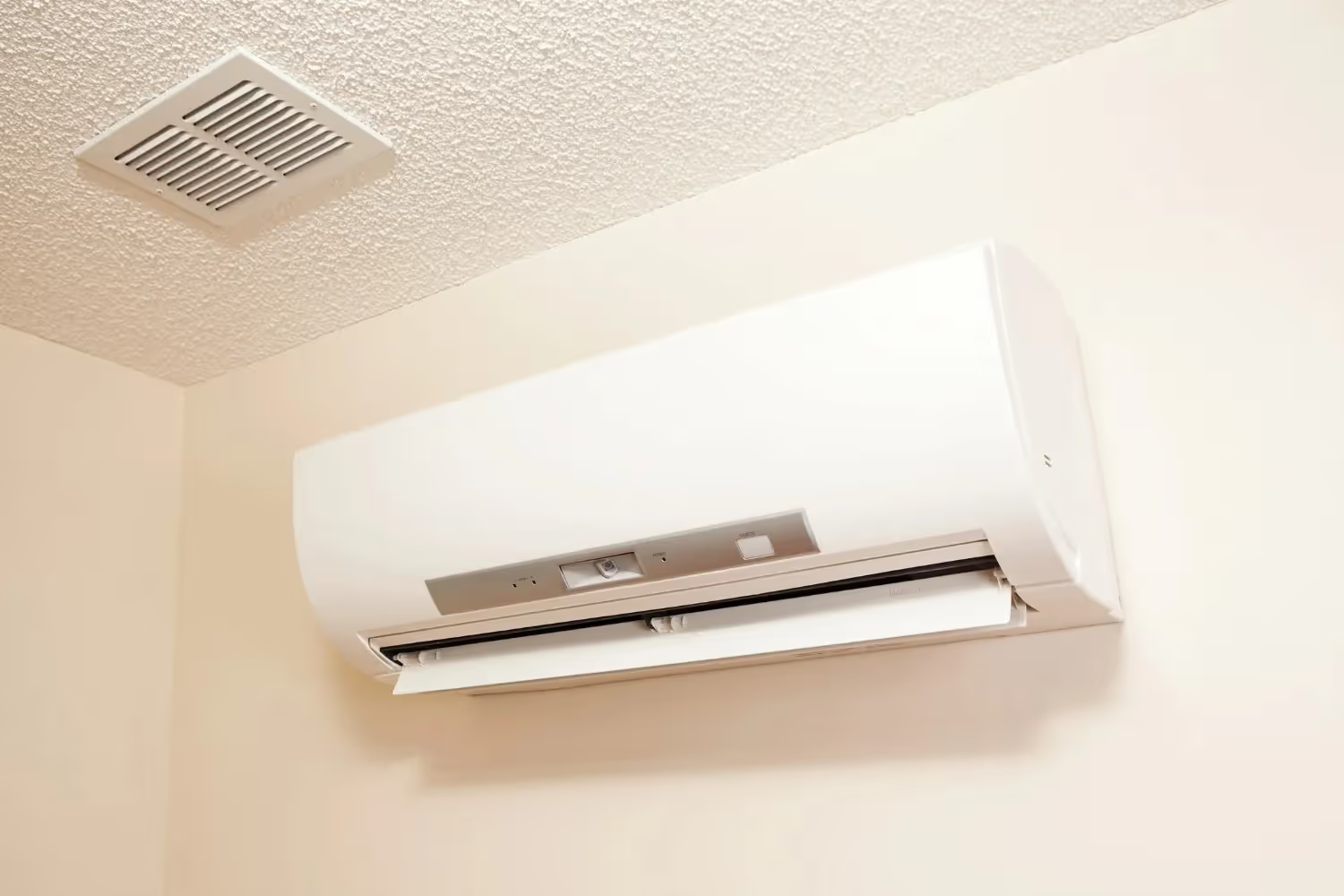
The Benefits of Mini Split Over Traditional HVAC Systems
Homeowners often face a choice between repairing an aging central system or switching to ductless technology. Understanding the distinct advantages of mini splits helps in making an informed decision. The primary benefit lies in energy efficiency. Traditional systems turn on and off completely, causing temperature swings and energy spikes. Mini splits use variable-speed compressors that ramp up or down based on the demand, maintaining a steady temperature with far less energy consumption — read our reviews.
Zoned Comfort Control
Central systems operate on a generic setting for the entire house. This often leads to wasted energy cooling unoccupied rooms or battles over the thermostat setting. Mini splits allow for zoning.
- Each indoor handler operates independently with its own thermostat.
- Occupants can customize the temperature in their specific room without affecting the rest of the house.
- Systems can be turned off in unused areas to maximize energy savings.
Improved Indoor Air Quality
Ductwork is a breeding ground for dust, mold, and allergens, which are then circulated throughout the home every time the blower turns on. Ductless systems utilize multi-stage filtration at each indoor unit.
- Filters are easily accessible and washable, ensuring consistent air purification.
- The lack of ducts eliminates the potential for accumulated debris to enter the airstream.
- Reduced humidity levels during summer months prevent mold growth and improve overall comfort.
Quiet Operation
The noise associated with a central air handler kicking on can be disruptive. Mini split indoor units are engineered for whisper-quiet operation.
- Indoor fans operate at decibel levels often lower than a soft whisper.
- Outdoor compressors are significantly quieter than traditional condensing units, reducing noise pollution for you and your neighbors.
- Vibration dampening technology prevents the mechanical hum often associated with window units.
Custom Solutions for Every Room: How Mini Splits Work
A mini split system consists of two main components: an outdoor compressor/condenser and one or more indoor air-handling units. These components are connected by a conduit housing the power cable, refrigerant tubing, and a condensate drain. This design allows for a high degree of flexibility in installation locations.
Single-Zone Configurations
A single-zone system connects one outdoor unit to one indoor unit. This setup is perfect for addressing a specific problem area in the home.
- Sunrooms and Additions: These spaces often lack connection to the central HVAC system and suffer from extreme temperature fluctuations. A single-zone unit makes them usable year-round.
- Garages and Workshops: Converting a workspace into a conditioned area protects tools and vehicles from humidity and freezing temperatures.
- Server Rooms or Home Offices: Electronics generate heat that can overwhelm central cooling. A dedicated mini split ensures equipment remains at safe operating temperatures.
Multi-Zone Configurations
For whole-home conditioning, a multi-zone system connects a single outdoor compressor to up to eight indoor units. This allows for a comprehensive HVAC solution without any ductwork.
- Mix and Match Styles: Indoor units come in various styles, including wall-mounted, floor-mounted, ceiling cassettes, and concealed duct units. You can choose the unit that best fits the aesthetic and layout of each room.
- Individual Thermostats: Every indoor unit acts as an independent zone, providing granular control over the home's climate.
- Scalability: In some cases, homeowners can install the outdoor unit and a few indoor units initially, with the option to add more indoor heads later as budget or needs change.
What to Expect During Your Mini Split Installation
The installation process for a mini split is significantly less invasive than installing a central air system, but it requires technical expertise to ensure longevity and efficiency. Professional technicians follow a rigorous protocol to ensure the system is mounted, sealed, and charged correctly.
Site Assessment and Mounting
The process begins with determining the optimal location for both the indoor and outdoor units.
- Technicians verify wall strength to support the indoor unit’s weight.
- Clearance distances are measured to ensure proper airflow around the outdoor compressor.
- The indoor mounting plate is leveled and secured to the wall studs.
Drilling and Connections
A small hole, typically three inches in diameter, is drilled through the exterior wall.
- This hole serves as the pathway for the refrigerant lines, control wiring, and drain hose.
- Technicians bundle these lines carefully and pass them through the wall to connect the indoor and outdoor units.
- The penetration is sealed with weatherproof caulk or a sleeve to prevent drafts, moisture, or pests from entering the home.
Electrical and Refrigerant Lines
This is the most critical phase where licensure is essential.
- Refrigerant lines are flared and connected, ensuring a leak-proof seal.
- The system is pressure-tested with nitrogen to verify integrity before being evacuated with a vacuum pump to remove moisture and air.
- Electrical connections are made according to local building codes, often requiring a dedicated circuit for the outdoor unit.
Final Testing and Walkthrough
Once connected, the refrigerant is released into the lines, and the system is powered on.
- Technicians check amperage draw, temperature differentials, and drainage flow.
- Remote control functions are tested to ensure proper communication between the handheld unit and the wall unit.
- The homeowner receives a demonstration on how to operate the remote, clean the filters, and adjust the louvers.
Navigating Permits and Regulations for HVAC Installation
Installing a mini split system involves electrical work and handling pressurized refrigerant, both of which are regulated activities. In Edmonton and the surrounding areas, adhering to local building codes is not optional; it is a requirement for safety and legality. Professional contractors handle the permitting process, ensuring that the installation meets all safety standards.
Electrical Code Compliance
The outdoor unit typically requires a specific voltage and amperage, often necessitating a dedicated disconnect box installed near the unit.
- Licensed electricians or HVAC professionals ensure wire gauges are correct for the distance and load.
- Proper grounding protects the equipment's sensitive electronics from surges and lightning strikes.
- Compliance prevents potential fire hazards and ensures insurance coverage remains valid.
Refrigerant Handling
Federal regulations govern the handling of HVAC refrigerants to protect the environment.
- Technicians must hold EPA Section 608 certification to purchase and handle refrigerants.
- Proper recovery and charging procedures prevent illegal venting of ozone-depleting substances.
- Correct refrigerant charge is vital; an undercharged or overcharged system will fail prematurely and operate inefficiently.
Warranty Validation
Manufacturers of mini split systems include strict clauses in their warranty documentation.
- Most warranties are void if the equipment is purchased online and installed by an unlicensed individual.
- Proof of professional installation is required to file a claim for parts or compressors.
- Professional installation ensures the equipment is registered correctly, securing the full term of the manufacturer's protection.
Why Professional Sizing and Load Calculation Matters
One of the most common errors in HVAC installation is improper sizing. There is a misconception that a bigger unit is always better. However, in the humid climate of Kentucky, an oversized unit will cool the room too quickly. It will shut off before it has had a chance to remove humidity, leaving the room feeling cold and clammy.
Conversely, an undersized unit will run continuously, struggling to reach the set temperature on the hottest days of the year or failing to provide adequate heat during a freeze. Carter Heating and Cooling performs Manual J load calculations to determine exactly how many BTUs are required for each specific zone. Factors influencing this calculation include:
- Square footage of the room.
- Quality and amount of insulation in walls and ceilings.
- Number and type of windows, as well as their solar orientation.
- Ceiling height and airflow patterns.
- Internal heat gains from appliances, lighting, and occupants.
By scientifically determining the load, the installed system will run long enough to dehumidify effectively while maintaining a stable temperature, maximizing both comfort and equipment lifespan.
Maintaining Your System for Long-Term Performance
While mini splits are durable, they require specific maintenance to operate at peak efficiency. Neglecting maintenance is the leading cause of system failure and efficiency loss.
Filter Maintenance
The filters in a ductless head are smaller than central furnace filters and require more frequent attention.
- Filters should be removed and rinsed every two to four weeks depending on usage and the presence of pets.
- Clogged filters restrict airflow, forcing the blower to work harder and reducing cooling capacity.
Coil and Blower Wheel Cleaning
Over time, the indoor blower wheel can accumulate dust and mold, which unbalances the fan and causes noise.
- Deep cleaning of the blower wheel and evaporator coil requires disassembly and specialized cleaning bags to protect walls and floors.
- The outdoor condenser coil must be kept clear of grass clippings, leaves, and debris to ensure proper heat exchange.
Professional Tune-Ups
Annual professional maintenance goes beyond cleaning.
- Technicians check refrigerant levels and search for micro-leaks.
- Electrical connections are tightened to prevent overheating.
- Drain lines are flushed to prevent water backups that can damage interior walls.
Take Control of Your Home Comfort Today
Investing in a mini split system transforms the comfort profile of a home, offering precision control and significant energy savings. Whether updating an older farmhouse or outfitting a modern addition, the key to success lies in proper sizing and expert installation.
Ready to take control of your home comfort? Contact us today to schedule your consultation and mini split installation.

Great Service at a Fair Price
Veterans Discount


Senior Discount

Law Enforcement

Fire fighters/ems

Hear From Your Neighbors!
Hear from your neighbors to see how our commitment to dependable service and lasting comfort has made a difference in their homes.