

How can we help today?
Choose an option to see quick actions and get help faster.Smart Thermostat Installation in Edmonton, KY
Smart Thermostat Installation in Edmonton, KY
Discover professional smart thermostat installation services in Edmonton, KY to achieve consistent home temperatures and lower energy costs. Schedule now for enhanced climate control.
Eliminate Inconsistent Indoor Climate Control with Professional Smart Thermostat Installation
Managing erratic temperature shifts and rising energy costs often indicates that your current HVAC control system is outdated or calibrated incorrectly. For homeowners in Edmonton, KY, upgrading to a connected control system offers a precise solution to stabilize home comfort and reduce utility waste. Contact us to schedule an installation or inquire about financing options to modernize your home's climate management today.
- Achieve consistent indoor temperatures effortlessly: Eliminate hot and cold spots through advanced sensor technology.
- Lower energy costs with high-efficiency programming: Utilize learning algorithms that adapt to your schedule to reduce runtime when the house is empty.
- Quick installation turnaround: Most professional change-outs are completed and configured within a few hours.
All installations are compliant with local building codes, fully warrantied, and performed by certified technicians to ensure system safety.
Scope of Installation and System Integration
Upgrading to a smart thermostat is not merely replacing a dial on the wall; it is integrating a sophisticated computer into your home’s central heating and cooling infrastructure. A professional installation ensures that this new interface communicates correctly with your furnace, air conditioner, or heat pump. When you choose professional service, the focus is on compatibility, electrical integrity, and advanced configuration that generic instruction manuals often overlook.
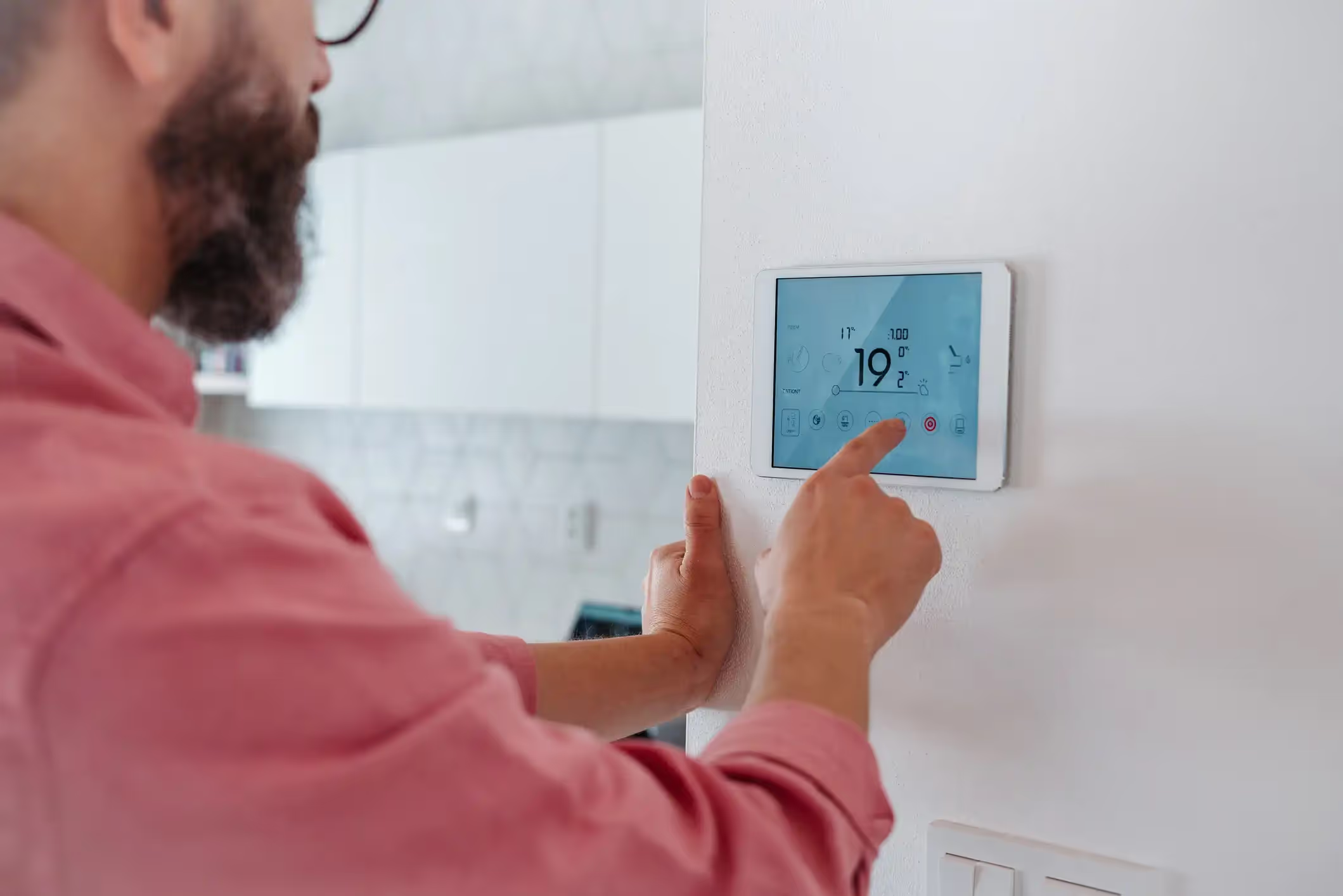
The scope of a standard installation includes a comprehensive assessment of your existing wiring. Many older homes lack a Common Wire (C-wire), which provides the continuous 24-volt power required for Wi-Fi-enabled thermostats to operate without draining batteries or stealing power from the HVAC unit. If a C-wire is missing, technicians install the necessary adapters or run new wiring to ensure the device has a stable power source. This prevents common issues such as the thermostat screen flickering or the Wi-Fi radio disconnecting intermittently.
Technicians also verify the voltage compatibility of your current system. While most residential systems operate on low voltage (24V), some older radiant or baseboard heat systems utilize line voltage (110V/240V). connecting a smart thermostat directly to high voltage without the proper relay triggers immediate equipment failure. Professional installers identify these parameters immediately, ensuring the correct hardware is selected for your specific equipment.
Included in the service is the full configuration of system parameters. A smart thermostat must be told exactly what equipment it is controlling. This includes defining the type of heating fuel (gas, electric, oil), the number of heating and cooling stages, and the logic for auxiliary heat engagement. Incorrect settings here can lead to the system running the AC and the Furnace simultaneously or engaging expensive emergency heat when it isn't needed.
The Professional Installation Process
A systematic approach ensures that the transition to a smart control system is seamless and safe for your HVAC equipment. The process is designed to protect the integrity of your heating and cooling units while maximizing the features of the new thermostat.
- System Audit and Shutdown: Technicians begin by testing the current system to ensure the HVAC unit is operational before making changes. Following this, power is cut at the breaker panel to the furnace and air handler to prevent accidental short circuits that could blow the system’s transformer or fuse board.
- Wiring Mapping and Labeling: The existing thermostat is removed, and the wires are inspected. Professionals do not rely on color coding alone, as wire colors can vary or be inconsistent in older installations. Each wire is traced to its function—heat, cool, fan, common, and reversing valve—and labeled accordingly to match the terminal designations of the new device.
- Backplate Mounting and sealing: The new backplate is leveled and mounted securely to the wall. If the previous thermostat left unpainted areas or large holes, a trim plate is often installed for a clean aesthetic. Technicians also seal the hole behind the thermostat where wires enter the wall. This step is critical; drafts from inside the wall cavity can fool the thermostat’s temperature sensors, causing it to read the wall temperature rather than the room temperature, leading to inaccurate cycling.
- Wiring Connection and C-Wire Adaptation: Wires are inserted into the terminal blocks of the new unit. If a C-wire adapter kit is required, it is installed at the furnace control board. This establishes a reliable power path for the smart features. Carter Heating and Cooling ensures that all connections are tight and that no bare copper is exposed that could cause a short.
- System Start-Up and Configuration: Power is restored, and the device goes through its initial boot sequence. The technician accesses the installer setup menu (ISU) to program the equipment type. This is where the reversing valve logic (O/B setting) is determined for heat pumps, which is essential for ensuring the system heats when asked to heat and cools when asked to cool.
- Wi-Fi Integration and App Setup: The final step involves connecting the device to the home network and assisting the homeowner with downloading the companion app. This enables remote access features, geofencing capabilities, and software updates.
Decision Guide: When to Replace vs. Repair
Homeowners often debate whether to keep their existing thermostat or invest in a smart upgrade. Understanding the lifecycle of temperature control devices helps in making an informed decision.
When to Repair or Retain:
- Simple Mechanical Systems: If the home utilizes a very basic heating system and the current mechanical thermostat holds temperature accurately, immediate replacement may not be urgent.
- Rental Properties: In temporary living situations where Wi-Fi access may not be consistent or controlled by the tenant, a standard programmable thermostat might be sufficient.
When to Replace with Smart Technology:
- Drifting Temperatures: If the set temperature and the actual room temperature vary by more than a few degrees, the old thermostat’s sensors have likely failed.
- High Energy Bills: A lack of scheduling or the inability to remotely adjust settings leads to heating or cooling an empty house. Smart thermostats correct this through presence detection.
- Short Cycling: If the HVAC system turns on and off rapidly, it causes excessive wear on the compressor and blower motor. Smart thermostats have adjustable "swing" or "differential" settings to smooth out cycles.
- Zoning Issues: For homes with uneven heating, smart thermostats that pair with remote room sensors can prioritize occupied rooms rather than just the hallway where the main unit sits.
- System Upgrades: If you are installing a new high-efficiency furnace or heat pump, an older thermostat will likely not support the multi-stage functionality required to get the efficiency you paid for.
Navigating Local Climate Factors
The climate in Edmonton, KY, presents specific challenges that make smart thermostats particularly valuable. The region experiences distinct seasonality, with hot, humid summers reaching into the 90s and winters that drop near freezing. This fluctuation demands an HVAC system that is responsive and efficient.
- Humidity Management: Kentucky summers bring high humidity. Standard thermostats only measure temperature. Advanced smart thermostats monitor indoor humidity levels. During periods of high humidity, the thermostat can be programmed to "overcool" the space by a degree or two to extract more moisture, or run the fan at a lower speed to increase dehumidification, significantly improving comfort without drastically lowering the temperature setpoint.
- Heat Pump Optimization: Many homes in the region rely on heat pumps. In winter, as temperatures approach freezing, heat pumps lose efficiency and may trigger expensive electric resistance strips (auxiliary heat). Smart thermostats monitor outdoor weather data. They can be programmed with a "compressor lockout" or "auxiliary heat lockout" temperature, preventing the expensive backup heat from engaging unless absolutely necessary. This intelligence saves significant money during the transition months of spring and fall.
- Freeze Protection: For residents who travel during the winter, smart thermostats offer peace of mind. If the furnace fails and the interior temperature drops dangerously low, the app sends an alert to the homeowner's phone, allowing them to arrange for service before pipes freeze.
Why Professional Execution Outperforms DIY
While retail packaging suggests that installation is a simple project, the reality involves handling electrical circuits and complex logic boards. The risks associated with incorrect installation often outweigh the perceived savings of a DIY approach.
- Voltage Risks: Mistaking a high-voltage line for a low-voltage line can result in injury or the immediate destruction of the thermostat unit. Even within low-voltage systems, accidentally touching the red (power) wire to the common (ground) wire can blow the fuse on the HVAC control board, rendering the entire heating and cooling system inoperable until a professional repair is made.
- Dual-Fuel Complexity: For homes utilizing a "dual-fuel" system (e.g., an electric heat pump paired with a gas furnace), the control logic is complex. The thermostat acts as the brain that decides when to switch from the electric heat pump to the gas furnace based on outdoor temperatures (the balance point). Incorrect wiring or programming here can cause both systems to run simultaneously, which can damage the equipment and create dangerous overheating situations.
- Warranty Preservation: Many HVAC manufacturers stipulate that equipment must be serviced and controlled by approved devices installed by professionals. Improper installation that leads to short cycling or equipment damage can void the warranty on the furnace or air conditioner. Furthermore, professional grade smart thermostats often come with longer warranties than their retail counterparts when installed by a licensed contractor.
- Advanced Sensor Placement: A professional evaluates the location of the thermostat. If it is located near a kitchen, in direct sunlight, or near a drafty window, it will never read the true home temperature. Installers can relocate the unit or set up remote sensors to average the temperature across the home, ensuring the system responds to the actual comfort needs of the living spaces.
By utilizing Carter Heating and Cooling for the installation, homeowners ensure that their investment translates into tangible comfort and efficiency gains immediately. The combination of correct physical installation, precise software configuration, and integration with the specific requirements of the local climate creates a system that runs smoother and costs less to operate.
Maximize Comfort and Energy Efficiency Year-Round
Investing in professional installation safeguards the equipment and maximizes the return on investment through optimized energy savings. Ensure your home remains comfortable through every season with a system designed to work for you, not against you.
Take control of your home’s climate and efficiency today. Schedule your smart thermostat installation now to start saving on energy costs immediately.

Great Service at a Fair Price
Veterans Discount


Senior Discount

Law Enforcement

Fire fighters/ems

Hear From Your Neighbors!
Hear from your neighbors to see how our commitment to dependable service and lasting comfort has made a difference in their homes.