The Hidden Costs of Delaying Furnace Repairs Until the First Winter Freeze
The Hidden Costs of Delaying Furnace Repairs Until the First Winter Freeze
That intermittent click from your furnace this fall isn't just a harmless quirk. Ignoring a delayed ignition now guarantees a total mechanical lockout once the November freeze hits.
Why That Minor Furnace Hiccup in Fall Means Trouble Later
You walk past the thermostat on a brisk autumn evening, bump the temperature up a few degrees, and listen. You hear the familiar click, the whir of the inducer motor, and then... silence. Several seconds pass before a sudden whoosh of burners finally igniting echoes through the ductwork. You might brush this off as your heating equipment simply warming up for the season, but the hidden costs of delaying furnace repairs until the first winter freeze can be substantial.
Homeowners often dismiss a furnace that takes a few extra tries to start as a harmless quirk of an aging unit. However, an intermittent ignition delay is actually a clear mechanical warning sign. Your system is not supposed to struggle to light. When gas flows but the ignition is delayed, you are witnessing a symptom that will only degrade further as the weather gets colder and the equipment works harder.
Delaying a professional inspection forces you into a difficult corner. You are essentially choosing between a planned, minor adjustment now or an emergency breakdown on a freezing night. By addressing the root cause early, you ensure your heating systems are reliable when temperatures inevitably plummet. The window of opportunity to fix these small hiccups closes rapidly once the November first hard freeze arrives, transforming a quick tune-up into a frantic call for emergency service.
How Mild Autumn Weather Masks Underlying Heating Issues
The transition from summer to winter in Bowling Green is rarely a smooth, predictable decline in temperature. Our late fall climate volatility often brings mild, sunny afternoons followed by sharp, chilly nights. This weather pattern dictates exactly how your heating equipment operates, and it perfectly masks underlying mechanical flaws.
During early fall, furnaces run in short, infrequent cycles just to take the edge off the evening chill. These short cycles allow a struggling ignition system to rest and reset. If the furnace fails to light on the first attempt, it shuts down, waits, and tries again a few minutes later. Because the house eventually reaches the desired temperature on the thermostat, you remain completely unaware that the system had to fight to get there.
The problem with mild weather operation:
• Hidden inefficiencies: Because your home still feels comfortable, the underlying mechanical struggle goes completely unnoticed.
• False resets: Long pauses between heating cycles give failing sensors time to cool down and temporarily reset, hiding their impending failure.
• Minimal stress: The equipment is not running long enough to trigger internal safety limits, meaning the system won't shut itself down to warn you of a problem.
This is why a routine maintenance plan is absolutely critical during this autumn window. A professional technician can read the fault codes stored in the system's control board and observe the ignition sequence before continuous, heavy demand begins. Catching these hidden faults now prevents them from surfacing when you need your heat the most.
The Mechanical Reality of a Delayed Ignition Sequence
To understand why a delayed start is so concerning, you have to look at the mechanical sequence happening inside the cabinet. A delayed ignition occurs when gas builds up in the combustion chamber before the igniter successfully lights the burners. This is not a harmless delay; it is a fundamental breakdown of the system's most critical sequence.
This issue is frequently caused by dirty burners, misaligned components, or a failing flame sensor. When the gas valve opens, fuel begins to flow. If the igniter is weak or the burners are clogged with off-season dust, the gas does not ignite immediately. It continues to pool inside the chamber. When the gas finally does catch a spark, it ignites all at once, creating a small "boom" or rattling noise that you can often hear through the floorboards. This small explosion stresses the internal components and is a significant safety hazard that can lead to fall furnace smells and breakdowns.
Continuous failure to ignite properly will eventually force the system to protect itself. Modern furnaces are equipped with strict safety protocols designed to prevent unburned gas from flooding your home. If the system detects a failure, it will initiate a delayed ignition sequence and flame sensor lockout, effectively shutting down the entire unit until a professional intervenes.
Understanding the Flame Sensor's Role
The flame sensor is a small, vital safety rod located directly in the path of the burner flames. Its only job is to detect whether a fire is actually present when the gas valve opens. As the flames wash over the metal rod, it sends a microamp electrical current back to the control board, confirming that combustion is happening safely.
Over time, this sensor can become coated in a thin layer of carbon buildup or oxidation. If the sensor is dirty or failing, it cannot detect the flame—even if the burners have successfully lit. The control board assumes the fire has gone out while the gas is still running, causing the system to immediately abort the heating cycle and shut the gas valve as a protective measure.
From Minor Delay to Full System Lockout During a Freeze
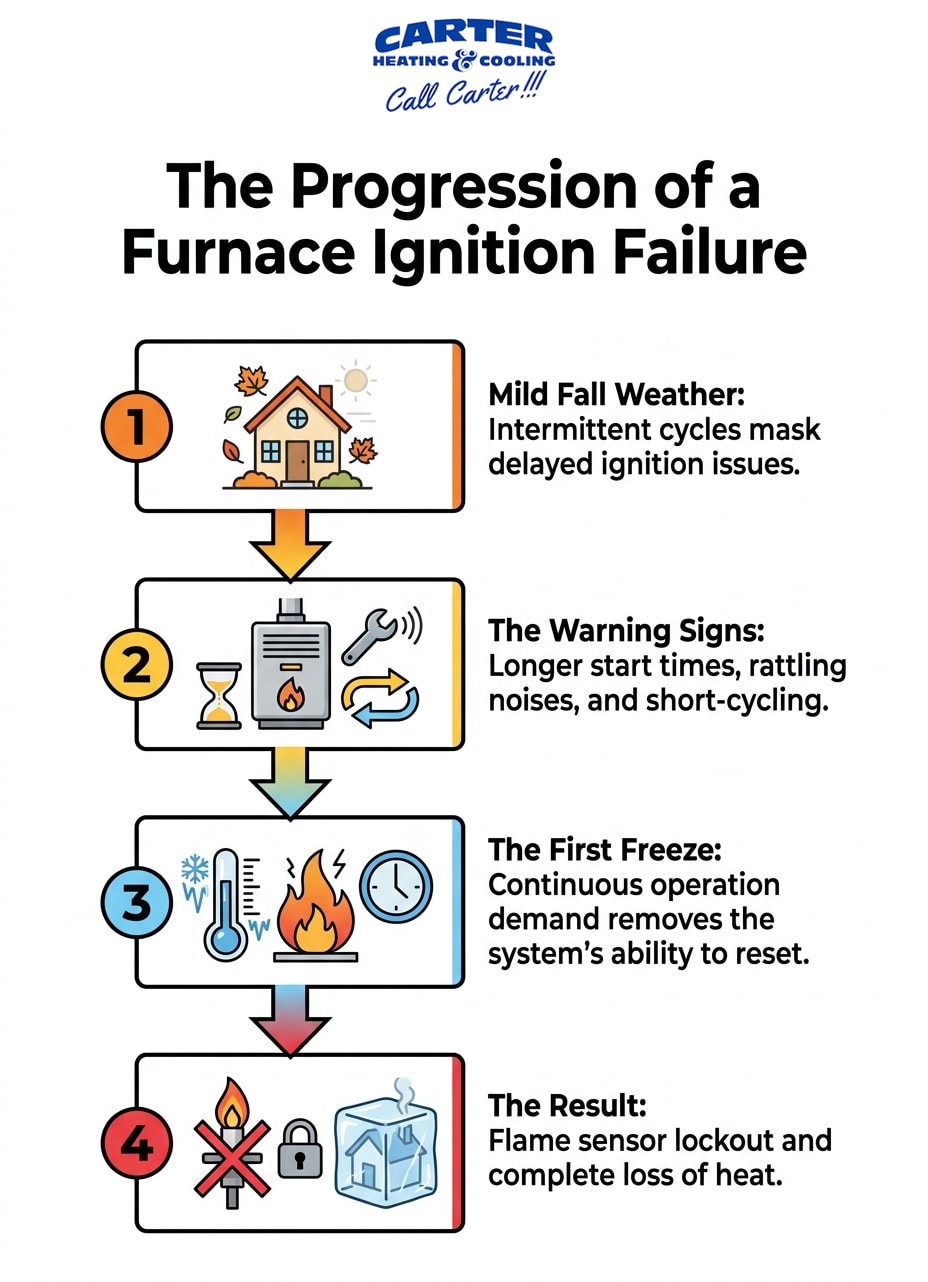
The true danger of an ignored ignition issue reveals itself when the weather abruptly changes. When the November first hard freeze hits the Bowling Green region, the furnace's operational environment changes overnight. It goes from running in short, intermittent bursts to running continuously to keep out the bitter cold.
This continuous demand removes the system's ability to rest. Every time the thermostat calls for heat, the system must perform flawlessly. Here is exactly how a minor delay transitions into a complete breakdown:
1. Continuous Demand: The thermostat registers a rapid drop in indoor temperature and signals the furnace to run continuously.
2. Repeated Ignition Attempts: The weakened igniter or dirty flame sensor struggles to establish or verify the flame on the first, second, and third tries.
3. Safety Trigger: The control board registers multiple consecutive ignition failures within a short time frame.
4. Hard Lockout: To prevent a dangerous buildup of unburned gas, the control board initiates a hard safety lockout. The blower fan may continue to run, blowing cold air, but the gas valve is electronically disabled.
This lockout is a necessary protective measure, but it leaves the home completely without heat during the most critical times. One local homeowner experienced this exact scenario when their furnace went out in the middle of a cold winter night, leaving the house freezing. Fortunately, a technician was dispatched quickly, diagnosed the lockout, picked up the necessary part, and had the heat running again within an hour. However, relying on emergency availability during a regional freeze is a stressful gamble.
The Progression of a Furnace Ignition Failure
The Domino Effect on Other HVAC Components
Ignoring an ignition issue does more than just threaten your comfort; it puts undue stress on the rest of your heating system, accelerating wear and tear across multiple expensive components. A furnace is an interconnected machine, and when the combustion process struggles, every other part has to work overtime to compensate.
Short-cycling—where the furnace turns on, fails to verify the flame, shuts down, and tries again—forces the blower motor to start and stop excessively. The start-up phase draws the most electrical current and puts the most torque on the motor bearings. Repeated starts lead to premature motor wear. Additionally, the heat exchanger experiences abnormal temperature fluctuations during delayed ignitions, increasing the risk of structural stress cracks over time.
• Flame Sensor — Resulting System Stress: Rapid short-cycling and continuous resets — Long-Term Mechanical Risk: Premature blower motor failure
• Dirty Burners — Resulting System Stress: Delayed ignition "boom" and gas pooling — Long-Term Mechanical Risk: Stress cracks in the heat exchanger
• Weak Igniter — Resulting System Stress: Extended run times with no heat output — Long-Term Mechanical Risk: Increased energy consumption and safety lockouts
Increased energy consumption also occurs as the system works harder and longer to achieve baseline heating. For homes utilizing dual-fuel systems, ensuring the primary gas furnace is operational is vital before relying on a heat pump during extreme cold. If the backup gas furnace is locked out due to a dirty sensor, the heat pump will struggle to maintain indoor temperatures alone when the thermometer drops below freezing.
Making the Call Before Emergency Wait Times Peak
Beyond the mechanical risks, there are practical and logistical consequences to waiting until a total breakdown occurs. The first hard freeze triggers a massive surge in emergency service calls across the region. Every homeowner who ignored a minor hiccup in October suddenly finds themselves with a freezing house in November.
Based on observations from real emergency call patterns, wait times for diagnostics and part replacements increase significantly during these peak demand periods. Supply houses get busy, technicians are routed from one emergency to the next, and finding a same-day appointment becomes incredibly difficult. A minor, ignored fall symptom almost always results in a total winter failure precisely when every other neglected system in the city is failing too.
Scheduling a proactive inspection when symptoms first appear ensures faster service and a controlled repair environment. You aren't shivering in your living room while waiting for a part. Another homeowner avoided the winter rush entirely by scheduling a routine checkup during milder weather; the technician performed a regular maintenance check, answered all their operational questions, and ensured the system was ready for continuous demand. Homeowners can often resolve minor sensor or burner issues swiftly and stress-free. If your system is hesitating, now is the time to request a free estimate and get it checked.
Frequently Asked Questions About Furnace Lockouts and Ignition
Why does my furnace take a long time to ignite?
A delayed ignition typically means gas is flowing but the igniter or burners are struggling to light it immediately. This is commonly caused by a weak igniter, dirty burners that disrupt gas flow, or a failing flame sensor. When the gas finally catches, it can create a small burst or rattling noise. A professional technician must clean the components and verify the ignition sequence to correct the delay.
What causes a furnace to lock out during cold weather?
A lockout occurs when the furnace's control board detects a recurring safety issue, such as failing to verify a flame after multiple attempts. During cold weather, the continuous demand prevents the system from resting, which exposes weak sensors or dirty burners on every cycle. To prevent unburned gas from accumulating, the system shuts down the gas valve entirely until the fault is cleared.
Is it safe to run a furnace that struggles to start?
No, it is not safe to ignore a furnace that struggles to start. A delayed ignition means gas is pooling in the combustion chamber before igniting, which creates a small explosion that stresses the heat exchanger. Over time, this can lead to cracks in the metal, posing a serious safety risk to the household. The unit should be inspected by a professional before continuous use continues.
What happens if a furnace goes into lockout?
When a furnace enters a hard lockout, the control board disables the ignition sequence and the gas valve. The blower fan may continue to run, circulating cold air through your vents, but the system will not produce heat. The lockout will remain active until the underlying safety fault is diagnosed, repaired, and properly reset by a qualified technician.
How do I know if my furnace needs an immediate professional inspection?
You should call for an inspection if you notice a distinct delay between hearing the furnace click on and hearing the burners ignite, especially if it is accompanied by a loud whoosh or rattling sound. Frequent short-cycling, where the furnace turns off after only a few minutes without heating the home, is another major warning sign. Catching these symptoms early prevents total failure during a freeze.
Can a dirty flame sensor cause a furnace to stop working completely?
Yes, a dirty flame sensor is one of the most common causes of a complete furnace shutdown. If the sensor is coated in carbon buildup, it cannot detect the burner flames, causing the control board to shut off the gas valve as a safety precaution. After a few failed attempts, the system will lock out completely and stop working until the sensor is serviced.
Secure Your Peace of Mind Before the Freeze
A minor ignition delay today is the clearest predictor of a total breakdown tomorrow. Homeowners often hope that a struggling furnace will simply correct itself, but mechanical issues only compound under the heavy stress of winter weather. Taking action now ensures your system is mechanically sound for the continuous demands of the season. Don't wait until the first hard freeze leaves you shivering; reach out to a professional to resolve those early warning signs, and ensure your home stays consistently warm all season long.
Contact Us
Thank you! Your submission has been received!
Oops! Something went wrong while submitting the form.
The Hidden Costs of Delaying Furnace Repairs Until the First Winter Freeze
That intermittent click from your furnace this fall isn't just a harmless quirk. Ignoring a delayed ignition now guarantees a total mechanical lockout once the November freeze hits.
Choosing Between a Whole-House Humidifier and Portable Units for Kentucky Winters
When the November freeze hits, fighting dry air shouldn't mean endless water refills. Explore the hidden time costs of portable humidifiers and see if a whole-home system is right for you.
Why Your Two-Story Home in Bowling Green Is Freezing Downstairs But Roasting Upstairs
Wearing a sweater downstairs while your upstairs feels like a sauna? We explain the physics behind this temperature imbalance and the airflow solutions that safely restore comfort.