

How can we help today?
Choose an option to see quick actions and get help faster.Heat Pump Maintenance in Morgantown, KY
Heat Pump Maintenance in Morgantown, KY
Tailored heat pump maintenance in Morgantown ensures optimal efficiency and prevents system failures. Learn more about our services to enhance your comfort.
Eliminate Heat Pump Inefficiency During Seasonal Extremes
Coping with the high humidity of Morgantown's summers or the chilly snaps of winter can challenge any heat pump system, causing energy bills to spike just when you need comfort the most. Regular maintenance is not just a necessity—it's a way to guarantee comfort year-round and protect your investment from premature failure. Contact us today to schedule your seasonal tune-up or ask about available financing options.
Carter Heating and Cooling provides comprehensive inspections that address the specific wear and tear caused by local weather patterns.
- Ensure optimal performance and energy efficiency with comprehensive biannual servicing.
- Reduce unexpected breakdowns with proactive inspections and precision tune-ups.
- Enhance system longevity and performance through meticulous upkeep and cleaning.
All services are fully licensed, insured, and uphold local building standards.
Comprehensive Diagnostics and System Tuning
A heat pump operates differently than a standard furnace or air conditioner because it handles both heating and cooling duties. This dual functionality means the system runs nearly year-round, accumulating twice the wear and tear of standalone units. Professional maintenance goes far beyond a simple filter change. It involves a deep analysis of the thermodynamic and electrical capabilities of the unit to ensure it meets the manufacturer’s specifications.
Effective maintenance targets the core components that dictate efficiency. Over time, vibration can loosen electrical connections, and environmental debris can clog heat transfer surfaces. Without intervention, these minor issues compound into catastrophic component failures, such as compressor burnout or fan motor seizure. The goal of a tune-up is to reset the system to its factory-level performance baseline.
Electrical Component Analysis
The electrical system is the brain and nervous system of your heat pump. Technicians meticulously inspect the control box and wiring. Loose connections are a primary cause of system failure; they create resistance, which generates heat and can melt wires or damage the compressor.
- Technicians tighten all electrical connections to prevent voltage drops and overheating.
- Capacitors are tested for proper microfarad ratings; weak capacitors strain the compressor and fan motors.
- Contactors are inspected for pitting or burning, which can lead to arcing or the system failing to engage.
- Safety controls and limit switches are tested to ensure the unit shuts down properly if a fault occurs.
Airflow and Heat Exchange Optimization
For a heat pump to transfer heat effectively, air must move freely over clean coils. In Morgantown, where humidity is high, the evaporator coil can become damp and sticky, attracting dust and mold. This creates an insulating layer that prevents the refrigerant from absorbing heat from your home in the summer or releasing it in the winter.
- Evaporator and condenser coils are chemically cleaned to remove debris, pollen, and biological growth.
- Blower motor components are cleaned and lubricated to reduce friction and amp draw.
- Ductwork connections at the unit are inspected for air leaks that compromise static pressure.
- Refrigerant levels are measured precisely; even a 10% undercharge can increase operating costs significantly.
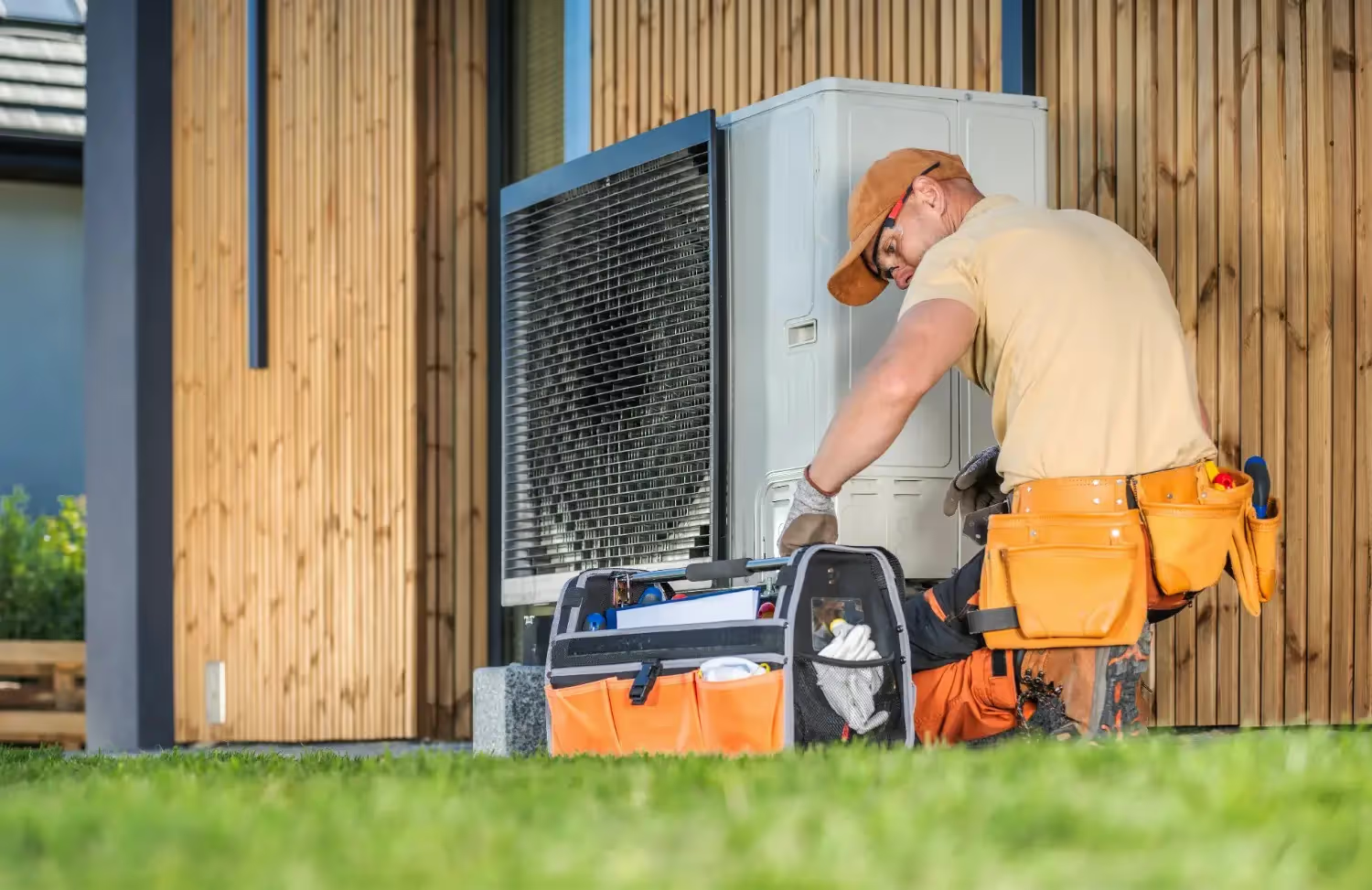
The Maintenance Execution Process
A structured approach to maintenance ensures that no component is overlooked. The process is designed to be systematic, moving from the thermostat controls down to the internal mechanics of the outdoor unit. This logical flow allows technicians to identify discrepancies in performance data that might indicate a hidden issue — read our customer reviews for confirmation.
Initial Assessment and Control Check
The service begins with an operational test. The technician adjusts the thermostat to call for heating or cooling, verifying that the system responds immediately without strange noises or delays. This baseline test reveals how the system is currently communicating with the indoor sensors.
- The thermostat is calibrated to ensure the temperature reading on the wall matches the actual room temperature.
- Batteries in the thermostat are checked or replaced to prevent signal interruption.
- Zone control dampers (if applicable) are tested to ensure they open and close fully.
Outdoor Unit and Reversing Valve Inspection
The outdoor unit contains the reversing valve, the critical component that switches the flow of refrigerant to toggle between heating and cooling modes. If this valve sticks, the system will blow cold air when you need heat, or vice versa.
- The reversing valve is energized and de-energized to confirm a distinct, clean "swoosh" sound indicating a full shift.
- The defrost control board is tested to ensure the unit can melt ice accumulation during freezing winter nights.
- Debris such as leaves, grass clippings, and twigs are cleared from the base of the unit to allow for proper drainage and airflow.
- The fan blade is inspected for cracks or balance issues that could cause vibration damage.
Condensate Drain Management
Humidity management is a major function of your heat pump during the summer. The moisture removed from the air must drain away from the unit. A clogged drain line can cause water damage to your home or trigger safety switches that shut off the system.
- The condensate drain line is flushed with a cleaning solution to remove algae, mold, and sediment buildup.
- The drain pan is inspected for rust or cracks that could lead to leaks.
- Condensate pumps are tested to ensure they effectively push water out of the basin and away from the foundation.
Determining When to Repair vs. Replace
Deciding between continuing to maintain an aging system and investing in a new one is a financial calculation based on efficiency, age, and reliability. While maintenance extends life, there is a point of diminishing returns where a new system becomes the more improved financial choice.
The 50% Rule and Repair Frequency
A common industry standard for making this decision is the 50% rule. If the cost of a necessary repair approaches 50% of the value of the system, replacement is generally the wiser option. Additionally, if you find yourself calling for repairs multiple times a year, those costs—combined with the inconvenience—signal a unit at the end of its useful life.
- Consider replacement if the heat pump is over 10 to 12 years old and requires a major component like a compressor or reversing valve.
- Evaluate the frequency of refrigerant leaks; older systems often develop micro-leaks in the coils that are expensive and difficult to locate.
- Analyze recent energy bills; a steady increase in usage despite consistent weather suggests the unit is losing its efficiency rating.
Technological Advancements
Modern heat pumps offer features that were unavailable or rare a decade ago. Variable-speed compressors, for instance, can ramp up and down in small increments rather than running at 100% capacity all the time. This technology maintains temperature more precisely and uses significantly less electricity — visit our blog for more updates.
- Upgrade if you want better humidity control; variable speed units run longer cycles at lower speeds, removing more moisture from the air.
- Consider new units for improved heating performance in lower temperatures, reducing reliance on expensive auxiliary heat strips.
- New systems utilize environmentally friendly refrigerants, whereas older units may use phased-out types that are becoming prohibitively expensive to restock.
Adapting to Local Climate and Infrastructure
The climate in this region dictates specific maintenance priorities. In Morgantown, the combination of high annual precipitation and significant temperature swings creates a unique environment for HVAC equipment. The average rainfall of 50 inches means moisture management is critical to preventing rust and biological growth within the system.
Managing High Humidity and Defrost Cycles
Summer humidity requires the system to act as a powerful dehumidifier. If the drain lines are not clear, the excess water can back up. Conversely, during winter, the moisture in the air freezes onto the outdoor coil. The heat pump’s defrost cycle must work perfectly to melt this ice. If the defrost cycle fails during a cold snap in the low 20s, the unit can freeze into a block of ice, halting all heating capability.
- Technicians verify the defrost timer and sensors are calibrated to the specific humidity levels of the region.
- Drainage systems are checked to ensure melting ice flows away from the unit and does not re-freeze on the pad, which can tip the unit.
- Checking refrigerant pressure is vital in winter; low levels prevent the coil from getting hot enough to melt the ice during the defrost cycle.
Electrical and Code Compliance
Local utilities and building codes influence how systems should be maintained and grounded. Proper grounding is essential to protect the sensitive electronics in modern heat pumps from lightning strikes or grid surges, which can occur during regional storms.
- Technicians ensure that the disconnect box mounted near the outdoor unit is accessible and weather-tight, meeting local safety codes.
- Wire sizing is verified to ensure it can handle the amp draw of the unit, especially during peak load times when the auxiliary heat strips engage.
- Clearance distances around the outdoor unit are checked to ensure compliance with local ordinances regarding noise and property line setbacks.
The Value of Professional System Care
There is a distinct difference between a quick visual check and a professional diagnostic service. A true maintenance provider uses calibrated tools to measure static pressure, superheat, and subcooling—metrics that reveal the exact health of the refrigeration cycle. This data-driven approach allows for adjustments that restore the system to peak efficiency, rather than just keeping it running.
Carter Heating and Cooling focuses on preventative strategies that secure the long-term functionality of the equipment. By identifying parts that are trending toward failure, homeowners avoid the stress of emergency outages during extreme weather.
Safety and Air Quality
A neglected heat pump can become a source of indoor air quality issues. Dirty coils and filters circulate dust and allergens throughout the home. Furthermore, loose electrical connections pose a fire hazard. Professional maintenance addresses these safety concerns directly.
- Technicians inspect the backup heat strips to ensure they are free of dust, which can cause a burning smell when engaged.
- Blower compartments are cleaned to prevent the circulation of mold spores or accumulated dust.
- Carbon monoxide checks are performed if the system is a dual-fuel unit utilizing a gas furnace as the auxiliary heat source.
Long-Term Warranty Protection
Most manufacturer warranties require proof of regular maintenance to remain valid. If a major component fails and there is no record of annual servicing, the manufacturer may deny the claim, leaving the homeowner responsible for the full cost of the part. Professional documentation provides the necessary paper trail to protect this coverage.
- Service records are maintained to demonstrate compliance with warranty terms.
- OEM parts are prioritized to ensure compatibility and maintain warranty status.
- Professional advice is provided on how to operate the system to maximize lifespan and minimize wear.
Taking action now prevents the inconvenience of system failure later. A well-maintained heat pump delivers consistent temperature control, lower energy costs, and peace of mind regardless of the forecast.
Secure your home comfort today—book your heat pump maintenance.
Protect Your Comfort and Maximize Heat Pump Performance Year-Round
Seasonal extremes place constant demand on your heat pump, and without professional maintenance, efficiency losses and unexpected breakdowns become inevitable. Carter Heating and Cooling delivers thorough, data-driven heat pump maintenance designed to handle Morgantown’s humidity, winter freezes, and year-round operation demands. Our licensed technicians focus on preventative care that lowers energy costs, extends system lifespan, and preserves manufacturer warranties. Don’t wait for comfort issues to escalate—contact us today to schedule your heat pump maintenance and enjoy reliable, efficient performance in every season.

Great Service at a Fair Price
Veterans Discount


Senior Discount

Law Enforcement

Fire fighters/ems

Hear From Your Neighbors!
Hear from your neighbors to see how our commitment to dependable service and lasting comfort has made a difference in their homes.