
How can we help today?
Choose an option to see quick actions and get help faster.Heating Maintenance in Morgantown, KY
Heating Maintenance in Morgantown, KY
Heating Maintenance in Morgantown, KY
Is Your Heating System Ready for the Season?
As Morgantown, KY faces another chilly winter with its characteristic humid subtropical climate, ensuring your heating system is in top shape is crucial to your home’s safety and comfort. Don't let a broken heater catch you off guard when temperatures drop significantly; contact us to schedule your comprehensive heating tune-up today. A neglected system often leads to higher utility bills, uneven heating, and the risk of a complete breakdown during the coldest night of the year.
Our approach focuses on preventative care that delivers tangible results for homeowners:
- Annual maintenance services designed to enhance the efficiency and longevity of your heating system.
- Reduced risk of breakdown, minimizing the need for immediate assistance or 24/7 emergency repair services later in the season.
- Expert advice on managing your heating needs effectively to combat local humidity and temperature fluctuations.
Certified, licensed professionals ensure peace of mind with every service, following all local safety protocols.
Ensuring Your Comfort Through Expert Heating Maintenance
The primary goal of professional heating maintenance is to transition your system from a state of uncertainty to one of reliability. In regions where winter temperatures can fluctuate wildly, your furnace or heat pump undergoes significant stress. A system that runs smoothly during a mild afternoon may struggle to keep up when a sudden freeze hits overnight. Carter Heating and Cooling focuses on identifying the silent issues that compromise performance before they evolve into costly repairs.
Maintenance is not merely about dusting off components; it is a rigorous inspection of the system's mechanical and electrical integrity. Over time, vibration loosens electrical connections, friction wears down belts, and combustion byproducts accumulate in critical areas. Without intervention, these minor degradations compound, forcing the unit to work harder to produce the same amount of heat. This not only spikes energy consumption but also shortens the total lifespan of the equipment.
Homeowners in Morgantown often discover that a well-maintained system provides consistent warmth without the "cold spots" or drafts common in neglected homes. Furthermore, safety is a paramount concern. Gas furnaces, in particular, require precise calibration to ensure proper combustion and ventilation. Our technicians prioritize the inspection of heat exchangers and safety switches to prevent carbon monoxide leaks or fire hazards. By investing in routine care, you are securing not just comfort, but the safety of the household structure and its occupants.
Comprehensive Service Plans: What We Offer
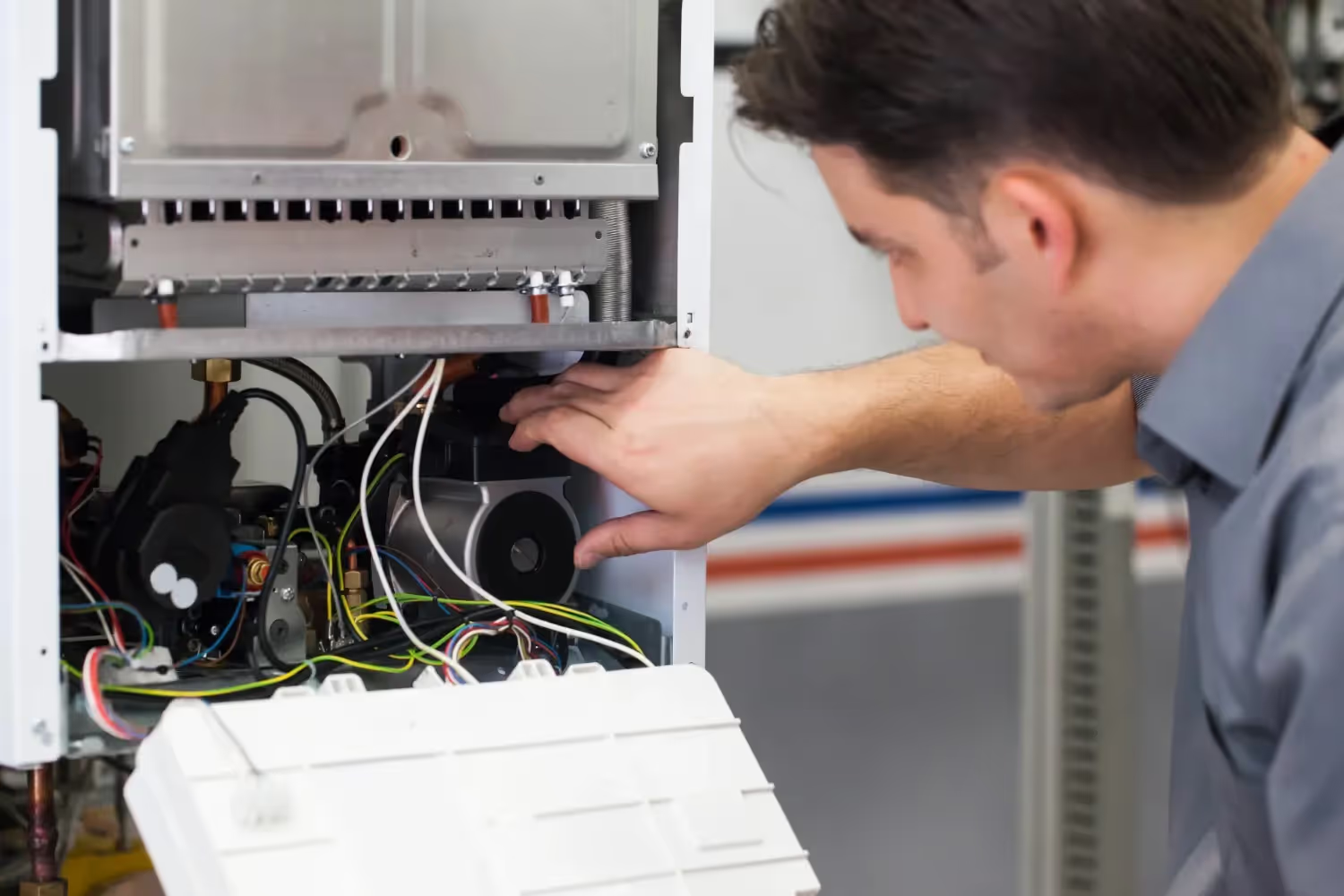
A professional tune-up involves a detailed checklist that covers every aspect of your heating unit's operation. We do not believe in a quick visual scan; we perform hands-on testing and cleaning to return the unit to factory specifications whenever possible. The scope of work is designed to address the specific wear and tear associated with local weather patterns and usage habits.
When our technicians arrive, they execute a multi-point inspection that typically includes the following critical tasks:
- Thermostat Calibration: We verify that your thermostat reads the ambient temperature accurately and communicates effectively with the heating unit. A miscalibrated thermostat can cause the system to short-cycle, wasting energy and increasing wear on the compressor or burners.
- Airflow and Filter Analysis: Restricted airflow is a leading cause of system failure. We inspect the air filter and the blower motor to ensure air moves freely through the ducts. If the blower wheel is dirty, it is cleaned to restore efficiency.
- Electrical Connection Tightening: Loose connections create resistance, which generates heat and can lead to voltage imbalances or burnt wires. We examine and tighten all electrical contacts, measure voltage, and check the amperage draw of the blower motor.
- Heat Exchanger Inspection: For gas furnaces, the heat exchanger is the most critical component. We inspect it for cracks or corrosion. A compromised heat exchanger is a severe safety hazard that requires immediate attention.
- Burner and Ignition Assembly Cleaning: We clean the burners to ensure an even, blue flame. A yellow or flickering flame indicates incomplete combustion. We also test the ignition system for reliable starting.
- Safety Control Testing: Limit switches and safety sensors are tested to ensure they shut the system down in the event of overheating or other malfunctions.
- Lubrication of Moving Parts: Bearings and motors are lubricated to reduce friction, which lowers electricity usage and prevents overheating of mechanical components.
- Condensate Drain Clearing: For high-efficiency furnaces and heat pumps, we check the condensate drain line for blockages to prevent water backup and potential water damage to the home.
Your Heating Maintenance Journey: From Inspection to Optimization
Understanding the process helps homeowners prepare for the service visit and clarifies exactly what is being done to the property. We aim to make the experience seamless, transparent, and educational. You remain informed about the health of your HVAC system at every stage.
- Scheduling and Arrival: The process begins with a scheduled appointment that fits your timeline. Technicians arrive fully equipped with diagnostic tools and common replacement parts. We respect your property by using shoe covers and laying down drop cloths where necessary to keep the work area clean.
- Initial Assessment and Operation Test: Before opening the unit, the technician runs the system to listen for unusual noises like rattling, squealing, or grinding. We check the temperature rise—the difference in temperature between the air entering the return and the air leaving the supply—to gauge current performance levels.
- The Deep Clean and Tune-Up: Once the baseline is established, power is cut to the unit for safety, and the internal work begins. This is where the cleaning, tightening, and lubricating steps occur. Sensors are wiped down, and electrical readings are taken with multimeters.
- System Re-calibration: After the physical maintenance is complete, the system is powered back on. Gas pressure is adjusted if necessary to match the manufacturer's specifications. Refrigerant levels in heat pumps are checked and adjusted to ensure the correct subcooling or superheating values.
- Final Report and Recommendations: The service concludes with a detailed report. We explain what was done, highlight any parts that are showing signs of wear, and provide a forecast for the system’s health. If a component is near the end of its life, we provide options so you can plan for a repair rather than facing an emergency failure.
Deciding Between Repair and Replacement: A Cost-Benefit Analysis
During a maintenance visit, technicians may uncover issues that go beyond simple wear and tear. At this stage, homeowners must decide whether to invest in repairs or consider replacing the unit entirely. This decision involves comparing the immediate cost of repair against the long-term efficiency and reliability of a new system. Carter Heating and Cooling helps you navigate this complex decision with data, not sales pressure — apply for financing today.
Consider the following factors when weighing your options:
- The Age of the System: The average lifespan of a furnace or heat pump is typically between 15 and 20 years. If your system is nearing or past this range, major repairs are often throwing good money after bad. Parts become harder to source, and efficiency levels of older units cannot compete with modern standards.
- The 50% Rule: A general industry guideline suggests that if the cost of the repair equals or exceeds 50% of the value of a new system, replacement is the wiser financial choice.
- Frequency of Breakdowns: If you find yourself calling for service multiple times in a single winter, the system has likely become unreliable. The cumulative cost of frequent service calls often outweighs the monthly payment on a new, high-efficiency unit.
- Energy Efficiency Ratings: Older units may operate at 60-70% AFUE (Annual Fuel Utilization Efficiency), meaning 30-40 cents of every dollar spent on fuel is wasted. Upgrading to a modern unit with 95% AFUE or higher can result in significant monthly savings, effectively helping the new system pay for itself over time.
- Comfort Consistency: If your current unit causes humidity issues, excessive dust, or loud noises despite maintenance, newer technology with variable-speed blowers and two-stage heating can solve these comfort complaints permanently.
Understanding Morgantown's HVAC Requirements
Operating a heating system in Morgantown requires specific attention to local conditions. The humid subtropical climate means that moisture control is not just a summer issue; it affects how systems perform year-round. Additionally, local infrastructure and regulations play a role in how maintenance and repairs should be conducted.
- Humidity and Equipment Longevity: High ambient humidity can accelerate corrosion on electrical contacts and metal components within the outdoor units of heat pumps. Maintenance in this region places extra emphasis on inspecting these elements for rust and oxidation.
- Permitting and Code Compliance: While standard maintenance generally does not require a permit, significant repairs or component replacements discovered during the inspection must adhere to Kentucky building codes. Professional technicians ensure that any flue piping modifications or gas line adjustments meet current safety standards to avoid fines or complications during a future home sale.
- Utility Specifics: Understanding whether your home relies on natural gas, propane, or electric heat pumps changes the maintenance protocol. For example, homes in rural areas surrounding the city may rely on propane, which burns differently than natural gas and requires specific nozzle adjustments and soot cleaning during maintenance.
- Ventilation Requirements: Modern building codes in the area focus heavily on proper ventilation to prevent back-drafting. In older homes that have been retrofitted with new windows or insulation, the house may be "too tight," affecting how the furnace draws air for combustion. A maintenance visit includes checking that the makeup air intake is unobstructed.
Trusted by Local Residents: Why Choose Us
Selecting a service provider is about finding a partner who values transparency and technical excellence. Homeowners require a team that treats the equipment as if it were their own, ensuring that every wire is tight and every sensor is accurate. We differentiate ourselves through a commitment to technical precision and straightforward communication — read our customer reviews online.
- Technical Expertise: Our team undergoes continuous training to stay updated on the latest HVAC technologies, from smart thermostats to variable refrigerant flow systems. We troubleshoot based on building science, not guesswork.
- Transparent Communication: You will never see hidden fees on your invoice. We explain the condition of your system in plain language, providing evidence of any issues found.
- Respect for Property: We treat your home with care. From wearing protective gear to cleaning up the workspace, we ensure the only evidence of our visit is a perfectly running heating system.
- Local Experience: We understand the specific challenges posed by the local climate and housing stock. Whether you own a historic property or a new build, we tailor our maintenance approach to the specific needs of your infrastructure.
Prevent Breakdowns and Lower Energy Costs: Book Heating Service Today
Maintaining a heating system is the most effective way to ensure comfort, safety, and financial efficiency throughout the winter months. A well-tuned unit runs quietly, uses less energy, and provides reliable warmth regardless of the weather outside. Don't wait for the first freeze to discover a problem. Take control of your home comfort today.
Schedule your professional heating maintenance now and ensure your home stays warm all winter long.

Great Service at a Fair Price
Veterans Discount


Senior Discount

Law Enforcement

Fire fighters/ems

Hear From Your Neighbors!
Hear from your neighbors to see how our commitment to dependable service and lasting comfort has made a difference in their homes.