

How can we help today?
Choose an option to see quick actions and get help faster.Heat Pump Replacement in Morgantown, KY
Heat Pump Replacement in Morgantown, KY
Experiencing constant heat pump failures in Morgantown, KY? Contact us for expert replacement services and financing options to restore your home's comfort promptly.
Heat Pump Running Constantly Without Delivering Comfort?
Is your home feeling too cold in the winter or humid in the summer, despite your heat pump running non-stop? You might be facing critical system failures that require immediate professional attention in Morgantown, KY; contact us today to discuss financing options or schedule an assessment. A failing system not only compromises your safety during extreme weather but also drives up utility costs significantly.
- Restore your comfort quickly with prioritized heat pump replacement services.
- Enjoy peace of mind with our comprehensive labor warranties and manufacturer guarantees.
- Utilize flexible financing options to manage the initial investment of a new installation.
All installations are fully licensed, insured, and performed strictly up-to-code.
Immediate Solutions for Heat Pump Failures
When a heat pump fails, it rarely happens at a convenient time. In the distinct climate of this region, where winters drop to freezing temperatures and summers bring intense humidity, a working HVAC system is a necessity, not a luxury. Homeowners often ignore early warning signs, leading to total system collapse during peak usage times.
Recognizing the symptoms of a dying unit is the first step toward resolution. If you notice ice accumulating on the outdoor unit during the winter that the defrost cycle cannot clear, this indicates a refrigerant leak or a reversing valve failure. In the summer, short-cycling—where the unit turns on and off rapidly without cooling the space—signals a compressor struggling to maintain pressure. Perhaps the most obvious sign is a sudden spike in energy bills. As internal components wear out, the system must work twice as hard to transfer heat, drawing excessive electricity.
Addressing these issues immediately prevents secondary damage to your home, such as frozen pipes during a winter blackout or mold growth from unchecked humidity in the summer. We provide direct replacement services that remove the failing hardware and install high-efficiency units designed to handle local weather patterns.
Our Service Commitment: Today's Installation, Tomorrow's Comfort
Replacing a heat pump is a significant investment in your property’s infrastructure. The goal is to transition from a broken, inefficient unit to a modern, high-performance system with minimal disruption to your daily life. Carter Heating and Cooling focuses on technical precision and logistical efficiency to ensure your home returns to a comfortable temperature as soon as possible.
Modern heat pump technology has advanced significantly over the last decade. We install variable-speed units that adjust their output in small increments, rather than blasting at 100% capacity and then shutting off. This results in consistent indoor temperatures, better humidity control, and lower decibel levels during operation. When you choose a replacement service, you are not just buying a metal box; you are purchasing a comprehensive installation package.
Our replacement service includes:
- Complete System Evaluation: We verify that your existing ductwork and electrical infrastructure can support modern equipment.
- Safe Removal and Disposal: We handle the reclamation of old refrigerant and the environmentally safe disposal of your old unit.
- Pro Installation: Our technicians install the outdoor condenser, indoor air handler, and new thermostat, ensuring all connections are brazed and sealed correctly.
- Post-Install Audit: We do not leave until we measure static pressure and airflow to verify the system is operating at manufacturer specifications.
From Consultation to Completion: Your Installation Journey
A successful heat pump replacement relies on a structured process. We do not guess at equipment sizes or cut corners on installation materials. Every step is calculated to ensure the longevity of the system and the safety of your home.
Load Calculation and Sizing
The process begins with a Manual J load calculation. Many older homes in Morgantown have oversized or undersized units. An oversized unit will short-cycle, failing to dehumidify the home, while an undersized unit will run perpetually without reaching the set temperature. We measure square footage, insulation levels, window efficiency, and orientation to determine the exact BTU capacity your home requires.
Site Preparation and Protection
Before moving equipment, we prepare the workspace. This involves laying down drop cloths to protect flooring and ensuring a clear path to the utility closet or attic. We disconnect the high-voltage electrical lines and the low-voltage control wires safely. The refrigerant is pumped down or recovered according to EPA regulations to prevent atmospheric venting.
Ductwork and Air Handler Installation
The indoor unit, or air handler, is the lungs of your system. We inspect the plenum and transition ductwork. If the new unit is a different physical size than the old one, custom sheet metal transitions are fabricated to ensure airtight connections. Leaky ductwork can reduce system efficiency by up to 30%, so sealing these connections is a priority.
Outdoor Unit and Line Set Connection
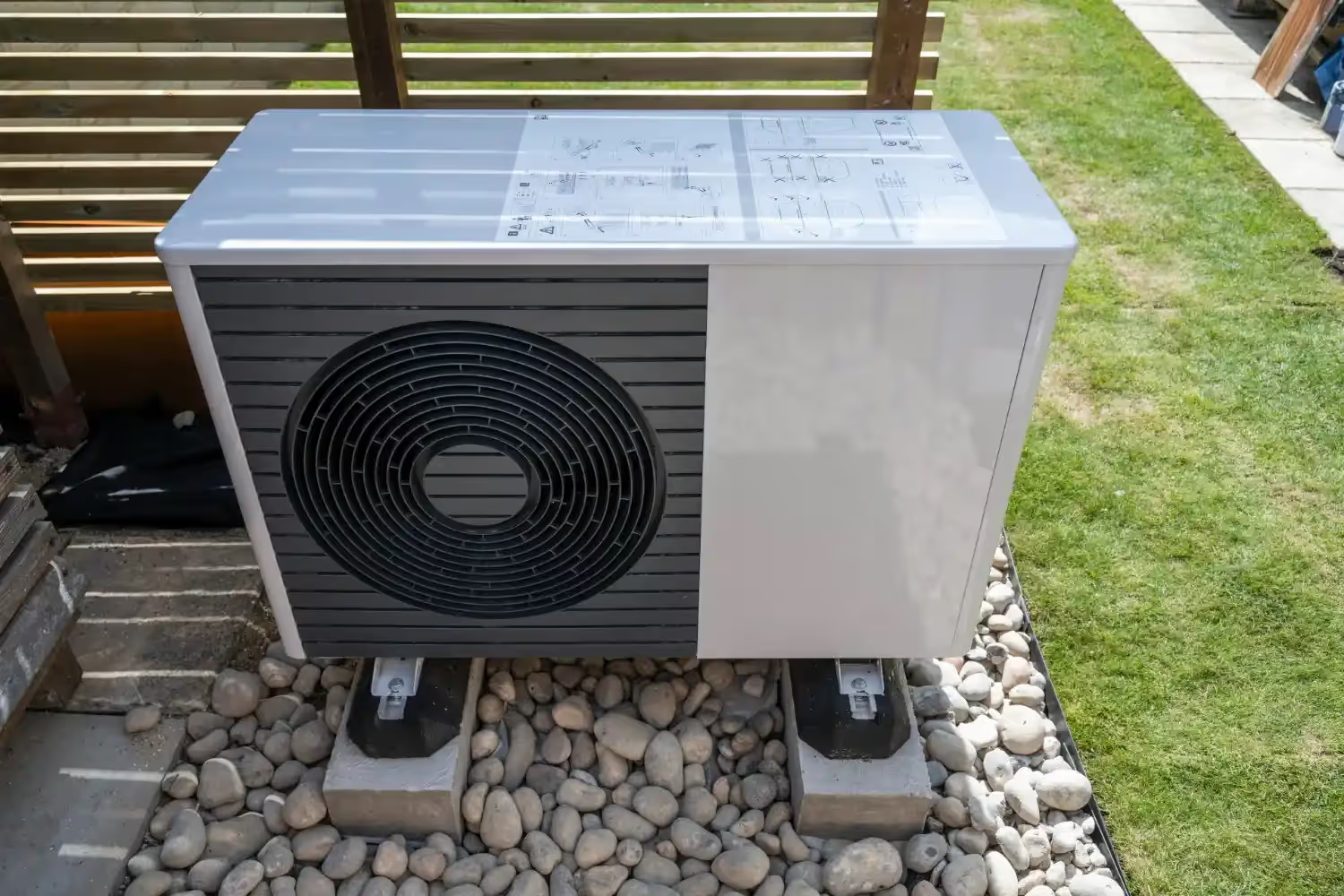
The outdoor unit is leveled on a composite pad to prevent vibration and sinking into the soil. We connect the copper line set—the tubes that carry refrigerant between the indoor and outdoor units. We use nitrogen purging during brazing to prevent oxidation inside the pipes, which safeguards the compressor valves from debris.
Evacuation and Charging
Once the physical installation is complete, we use a vacuum pump to remove moisture and air from the lines, measuring the vacuum in microns. This is a critical step; moisture left in the lines reacts with oil to create acid, which burns out compressors. After verifying a tight vacuum, we release the factory refrigerant charge and fine-tune it based on the length of the line set and outdoor temperatures.
Final Calibration
The final step involves configuring the thermostat and testing the system in both heating and cooling modes. We verify the temperature split (the difference between air entering and leaving the vents) and check the defrost cycle operation.
Deciding Between Repair and Replacement: What You Need to Know
Homeowners often struggle with the decision to repair an aging unit or invest in a full replacement. While repairs can be cheaper upfront, they are often a "band-aid" solution for a system nearing the end of its useful life. Making the right financial decision requires looking at the age of the unit, the cost of the repair, and future energy savings.
Use the following criteria to make an informed decision:
The 50% Rule
If the cost of the repair approaches or exceeds 50% of the value of a new system, replacement is the smarter financial move. Major component failures, such as a blown compressor or a cracked heat exchanger (in dual-fuel systems), are expensive repairs that often signal other parts are likely to fail soon.
System Age
Heat pumps generally last between 10 and 15 years. If your unit is over 12 years old and facing a significant repair, putting money into it is likely diminishing returns. Newer systems are far more efficient, meaning the monthly savings on your electric bill can help offset the cost of the new unit over time.
Refrigerant Type
Older systems use R-22 refrigerant (Freon), which has been phased out and is incredibly expensive to source. If your R-22 system has a leak, topping it off is cost-prohibitive. Modern systems use R-410A or newer, eco-friendly refrigerants that are more efficient and widely available.
Frequency of Breakdowns
If you have called for repairs more than twice in the last year, the system is unreliable. The cumulative cost of service calls, parts, and the inconvenience of downtime often outweighs the monthly financing cost of a new, warrantied system.
Comfort Issues
If some rooms are always hot while others are cold, or if the humidity inside your home feels clammy, your current unit may have lost compression or airflow capacity. A new system corrects these airflow imbalances.
Local Expertise: Complying with Morgantown's Standards
Operating in Kentucky requires specific HVAC knowledge regarding climate and local building codes. Our region experiences a mixed humid climate. This means your heat pump must be excellent at dehumidification in the summer but powerful enough to extract heat from the air when temperatures dip to 20°F in the winter.
Code Compliance and Permitting
Every replacement we perform adheres to local safety codes. This includes ensuring the electrical circuit breaker is sized correctly for the new unit and that a disconnect box is installed within sight of the outdoor unit for safety. We handle the necessary paperwork to ensure the installation is documented and legal.
Climate-Specific Equipment Selection
Standard heat pumps lose efficiency as the temperature drops below freezing. For our area, we often recommend systems with high HSPF (Heating Seasonal Performance Factor) ratings or "cold climate" heat pumps that maintain capacity even at lower temperatures. In some cases, a dual-fuel system (heat pump paired with a gas furnace) is the best option for maximum efficiency during January and February.
Humidity Control
Morgantown summers are humid. An oversized unit cools the air too quickly and shuts off before it can remove moisture, leading to mold risks. We prioritize "Manual J" sizing to ensure the unit runs long enough to pull humidity out of the air, keeping your indoor environment crisp and comfortable.
Why Choose Us? Trusted Expertise and Proven Results
Selecting the right contractor is just as important as selecting the right equipment brand. A top-tier Carrier or Trane unit will fail prematurely if installed poorly. We focus on the technical details that others overlook, such as nitrogen purging, micron vacuum validation, and proper airflow balancing.
We do not employ high-pressure sales tactics. Our technicians function as consultants, assessing your specific home layout and heating needs to recommend the best solution. We provide transparent, flat-rate pricing so you know exactly what the investment entails before work begins.
Our team respects your property. We use shoe covers and drop cloths to protect your floors and clean up the workspace thoroughly after the installation. When we leave, the only evidence of our presence is a perfectly comfortable home and a silent, efficient new heat pump. Selecting the right contractor is a critical first step in this process.
Stop Rising Energy Bills and Inconsistent Comfort: Upgrade Your Heat Pump Now
If your system is making strange noises, failing to maintain temperature, or driving up your utility bills, do not wait for a total breakdown.
Secure your home's comfort and efficiency today. Contact Carter Heating and Cooling to schedule your heat pump replacement consultation.

Great Service at a Fair Price
Veterans Discount


Senior Discount

Law Enforcement

Fire fighters/ems

Hear From Your Neighbors!
Hear from your neighbors to see how our commitment to dependable service and lasting comfort has made a difference in their homes.