
How can we help today?
Choose an option to see quick actions and get help faster.Spot Cooling for Emergencies in Park City, KY
Spot Cooling for Emergencies in Park City, KY
Encounter a cooling crisis in Park City, KY? Secure immediate emergency spot cooling services from Carter Heating and Cooling. Contact us for rapid response!
Immediate Cooling Relief for Emergency Situations
Equipment failure or unexpected heat waves can compromise your business operations, data integrity, and comfort in minutes. When your primary HVAC system goes down or supplemental cooling is required immediately in Park City, KY, Carter Heating and Cooling provides fast, reliable spot cooling solutions. Call us or use our financing application to secure a unit now:
- Get emergency cooling equipment deployed to your specific location within hours, minimizing downtime.
- Access 24/7 availability to address critical temperature spikes whenever they occur.
- Rely on top-rated professionals who size and install portable units for maximum efficiency.
Fully licensed and insured for your peace of mind, with transparent pricing and rapid dispatch protocols.
Rapid Deployment of Spot Cooling Units
When a cooling emergency strikes, the priority is stabilization. Waiting days for a part to arrive for a main chiller or rooftop unit is often not an option for businesses dealing with heat-sensitive inventory, server rooms, or medical patients. Spot cooling serves as the immediate bridge between system failure and permanent repair.
We maintain a fleet of commercial-grade portable air conditioners ready for dispatch across Park City. These are not standard residential window units; they are high-capacity, ruggedized systems designed to drop temperatures rapidly in demanding environments. Upon contact, the focus is on logistics: determining the necessary tonnage, the available electrical configuration, and the method of heat rejection.
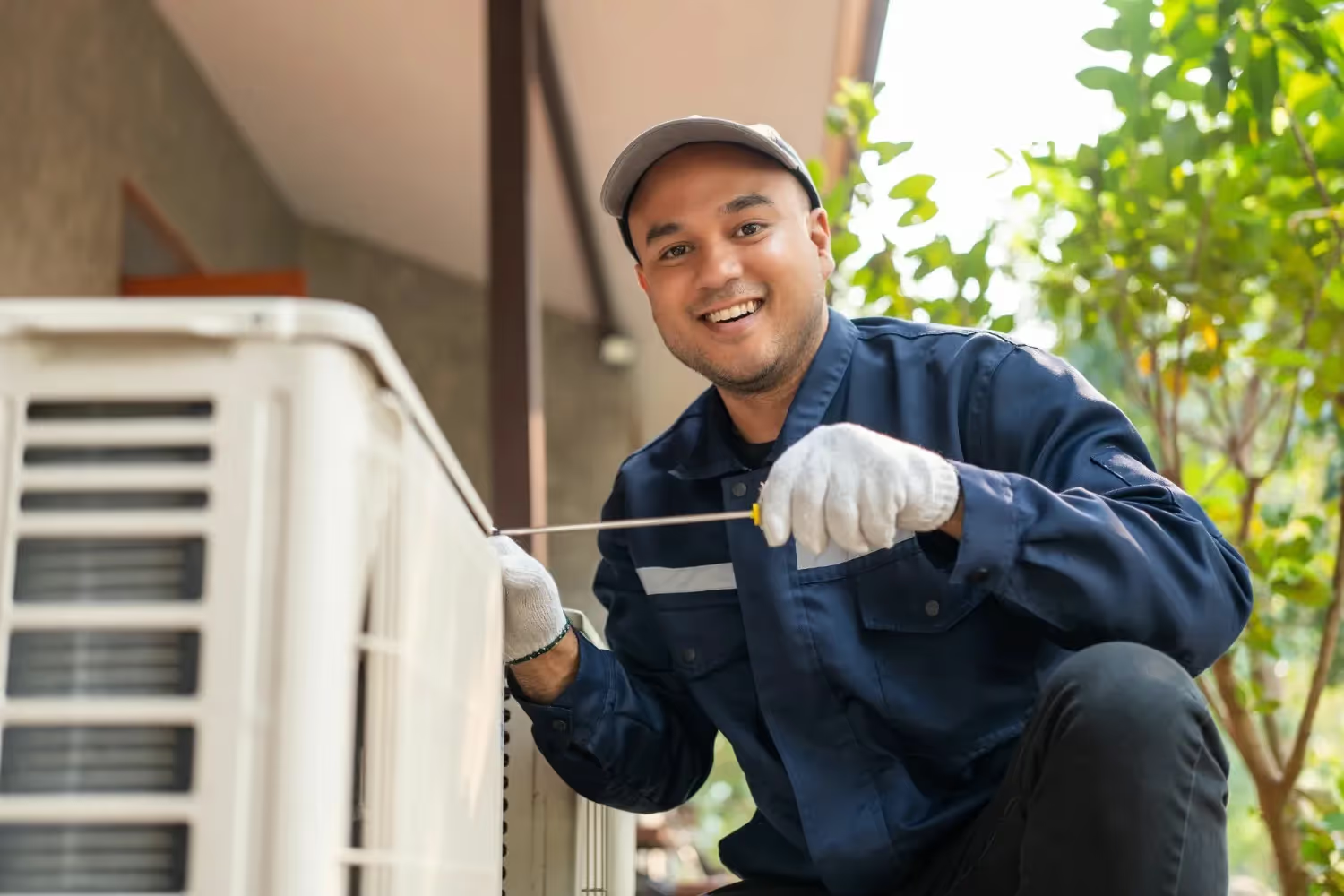
Our service includes the delivery, setup, and initialization of the equipment. We do not simply drop a box at your loading dock. Technicians ensure the units are positioned to provide optimal airflow to the hot spots—whether that is a specific server rack, a crowded conference room, or a production line. This service mitigates the risk of revenue loss caused by shutting down operations due to heat.
The Process: From Call to Cooling
Securing emergency cooling is a logistical operation that requires precision to ensure the temporary solution works effectively without tripping breakers or creating negative pressure issues. We handle the entire sequence to ensure your facility remains operational.
Initial Assessment and Sizing
The first step involves a rapid calculation of the heat load. We evaluate the size of the space, the heat generated by equipment (such as computers, MRI machines, or ovens), and the ambient temperature. Undersized units will run continuously without lowering the temperature, while oversized units may short-cycle and fail to dehumidify. We determine the exact BTU requirement to stabilize the environment.
Electrical Verification
Commercial spot coolers require specific power inputs. We verify your available voltage and amperage—whether you have standard 115V outlets or require 208V/230V single-phase or three-phase power. If specific NEMA plugs are required, our technicians identify the correct interface to match your facility's receptacles.
Exhaust Management
Portable air conditioners capture heat and must reject it elsewhere. We set up the necessary ducting to vent this hot air outside or into a plenum space. This often involves routing flexible ductwork through drop ceilings, out of windows, or into hallways, ensuring the rejected heat does not recirculate back into the cooled zone.
Condensate Handling
Cooling generates water. We establish the most practical method for managing condensate based on the duration of the rental. This may involve setting up internal tanks that require manual emptying or rigging continuous gravity drains or condensate pumps to route water to a nearby sink or floor drain for maintenance-free operation.
Critical Applications for Emergency Cooling
Spot cooling is versatile, but in an emergency context, it usually addresses specific, high-stakes scenarios. Understanding where these units are most effective helps in making quick decisions during a crisis.
Server Rooms and Data Centers
IT infrastructure is highly sensitive to heat. If the dedicated CRAC unit fails, temperatures in a server room can rise to critical levels in minutes, leading to hardware failure and data corruption. Spot coolers are deployed to blast cold air directly into the server intake, preserving uptime while the main system is repaired.
Healthcare and Laboratories
Medical facilities in Park City require strict temperature control for patient comfort and the preservation of pharmaceuticals. MRI and CT scan rooms also generate massive amounts of heat. Emergency spot cooling ensures these essential services continue without interruption, maintaining compliance with health standards.
Industrial and Manufacturing
Production lines often rely on machinery that will overheat and shut down without adequate ambient cooling. In summer months, high warehouse temperatures can also pose safety risks to workers. Spot cooling creates safety zones or "cool down" areas and keeps hydraulic and electrical control panels within operating temperature ranges.
Office and Retail Contingency
When a rooftop unit fails in a retail store or office building, the environment can quickly become uninhabitable for customers and staff. Portable units allow businesses to remain open, preserving revenue and customer experience while waiting for main system components.
Determining When Emergency Cooling is Necessary
Deciding to bring in temporary cooling is a financial and operational calculation. It is rarely a question of comfort alone; it is a question of asset protection and business continuity.
Asset Value vs. Rental Cost
Compare the cost of the emergency cooling service against the potential loss of assets. If a server rack worth $50,000 is at risk, or if perishable inventory will spoil within four hours, the investment in spot cooling is immediate insurance.
Repair Timeline
If the repair for your main system involves a lead time for parts—common with older compressors or specialized commercial motors—spot cooling is mandatory. It bridges the gap between the breakdown and the arrival of components, which could take days or weeks.
Occupancy Requirements
For tenant-occupied buildings, lease agreements often stipulate reliable HVAC service. Failure to provide cooling can lead to legal liabilities or rent abatement. Deploying spot coolers demonstrates due diligence and keeps the space habitable, fulfilling contractual obligations.
Navigating Park City Heat and Infrastructure
Operating in Park City, KY, presents specific challenges regarding climate and infrastructure that impact how emergency cooling is deployed. The region experiences a humid subtropical climate, meaning that during summer, the air is heavy with moisture.
Humidity Control
In our region, cooling is as much about dehumidification as it is about temperature drop. High humidity can cause condensation on electronics and discomfort for occupants. Our spot cooling units are designed to remove significant moisture from the air. We ensure that the condensate management strategy accounts for the high water volume generated during humid Kentucky summer days.
Local Infrastructure Compatibility
Park City has a mix of modern commercial facilities and older structures. Older buildings may have limited electrical capacity or non-standard outlet configurations. We are familiar with these local constraints and carry the necessary adapters and transformers to ensure our equipment can interface with your building’s power supply without requiring major electrical work.
Access and Seasonality
Heat waves here often arrive suddenly, causing a spike in demand for HVAC services across the region. Carter Heating and Cooling anticipates these seasonal surges. We stage equipment strategically to ensure that even during peak demand, we can navigate local roads and access points efficiently to deliver relief.
Technical Specifications and Performance
The effectiveness of spot cooling relies on the technical capability of the hardware. We utilize industrial-grade equipment distinct from consumer products found at big-box stores.
Air-Cooled vs. Water-Cooled Units
Most emergency deployments utilize air-cooled units, which vent heat through a duct. However, for facilities where ducting is impossible (such as interior rooms in high-rise buildings with no ceiling plenum), we can provide water-cooled units. These systems use the building’s existing water source to reject heat, offering a solution for enclosed spaces.
High Static Pressure Fans
Our units are equipped with high-static blowers. This allows for longer runs of exhaust ducting without a loss in performance. If the only window or discharge point is 50 feet away, standard units will fail to push the hot air out. Our equipment is rated to handle the back pressure required for difficult installation scenarios.
Thermostatic Control
Precision is key. The units feature digital thermostats that maintain a specific set point. This is crucial for environments like wine cellars or server rooms where temperature fluctuation can be just as damaging as high heat. The equipment modulates to hold the target temperature steady.
Why Professional Setup Matters
It is tempting to attempt a DIY solution using residential fans or purchasing undersized portable ACs, but in a commercial emergency, these stopgaps frequently fail.
Avoiding Circuit Overloads
Plugging multiple high-amp units into a single power strip or shared circuit is a fire hazard and will trip breakers, compounding the emergency. We distribute the electrical load correctly across available circuits to ensure safe, continuous operation.
Proper Negative Pressure Management
Improperly venting hot air can create negative pressure in a room, sucking in hot, humid air from outside or pulling sewer gases from floor drains. We balance the airflow to ensure the space is cooled without creating pressure imbalances that compromise air quality.
Security of Installation
When venting through windows or doors, security can be compromised. We utilize custom inserts and security clamps to ensure that while the ducting exits the building, your facility remains locked and secure against unauthorized entry.
Call Us Now
Heat emergencies do not adhere to business hours, and the window to prevent damage to equipment or loss of revenue is often narrow. Whether you are managing a data center, a manufacturing floor, or a retail space in Park City, KY, immediate action is required to stabilize the environment. We provide the hardware, the technical expertise, and the rapid response logistics to turn a potential disaster into a managed situation.
Trust the team that understands the urgency of commercial cooling failures. For immediate dispatch of spot cooling units and professional installation, contact Carter Heating and Cooling today.
Contact Us Now for Emergency Spot Cooling Services

Great Service at a Fair Price
Veterans Discount


Senior Discount

Law Enforcement

Fire fighters/ems

Hear From Your Neighbors!
Hear from your neighbors to see how our commitment to dependable service and lasting comfort has made a difference in their homes.