
How can we help today?
Choose an option to see quick actions and get help faster.Heating Inspection in Park City, KY
Heating Inspection in Park City, KY
Heating Inspection in Park City, KY
Need Quick and Reliable Heating Inspection?
Struggling with unpredictable heating issues as the winter sets in? Ensure your comfort and safety with our comprehensive heating inspection services; contact us today to schedule your assessment. Homeowners in Park City rely on Carter Heating and Cooling to identify potential system failures before they turn into costly mid-winter breakdowns.
- Expert diagnostics and immediate repair options.
- Prevention of future issues with thorough inspection protocols.
- Tailored solutions that fit your schedule and budget.
All services are backed by a full warranty and competitive financing options.
Detailed Scope of Our Heating Inspection Services
A heating inspection is not merely a cursory glance at your furnace or heat pump. It is a rigorous, multi-point examination designed to uncover hidden inefficiencies, safety hazards, and mechanical wear that an untrained eye would miss. When we arrive at your home, we perform a systematic analysis of the entire heating envelope.
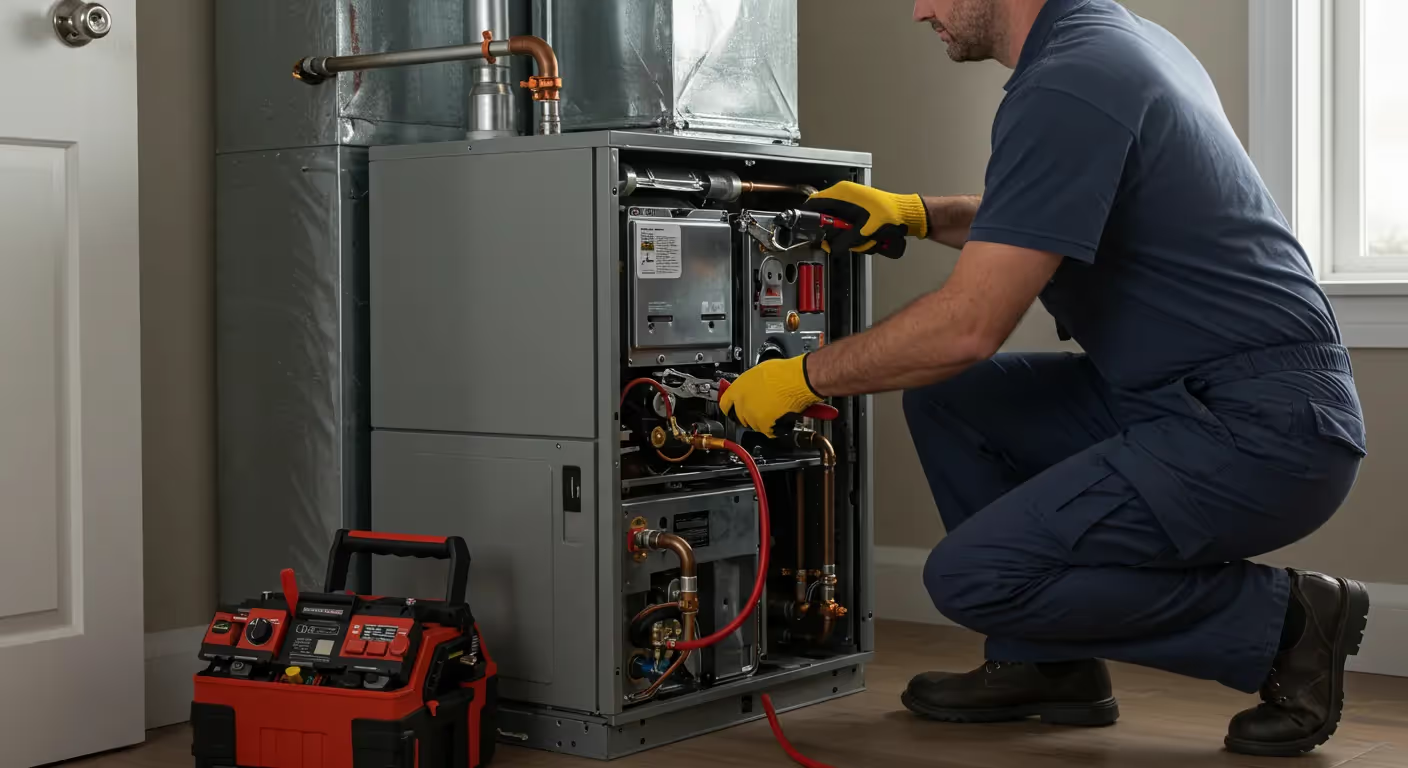
Combustion and Safety Analysis
For homes utilizing gas or oil furnaces, safety is the primary concern. Our technicians focus heavily on the combustion process to ensure that fuel is burning efficiently and that dangerous byproducts are venting correctly.
- Heat Exchanger Examination: We inspect the heat exchanger for cracks, corrosion, or separations. A compromised heat exchanger is a critical safety issue that can allow carbon monoxide to leak into the living space.
- Carbon Monoxide Testing: We perform calibrated testing to detect any presence of CO gas around the unit and in the airflow.
- Flue and Venting Inspection: We verify that the draft is sufficient to pull exhaust gases out of the home and check for blockages, rust, or disconnection in the vent pipes.
- Flame Sensor and Igniter Check: We clean the flame sensor to prevent short-cycling and test the igniter for proper resistance to ensure reliable startup.
Electrical Component Testing
Electrical failures are a leading cause of heating system breakdowns. We use specialized multimeters to test the integrity of the electrical system within your heating unit.
- Amp Draw Measurement: We measure the amperage draw on the blower motor and inducer motor to ensure they are operating within manufacturer specifications. High amp draw often indicates a failing motor.
- Capacitor Testing: We test start and run capacitors. A weak capacitor is a cheap part to replace, but if left alone, it can cause a compressor or motor to fail, leading to expensive repairs.
- Wiring Tightening: Vibration can loosen electrical connections over time. We inspect and tighten all wiring connections to prevent arcing and overheating.
- Thermostat Calibration: We verify that the thermostat is reading the indoor temperature accurately and communicating correctly with the heating unit.
Airflow and Mechanical Systems
Proper airflow is essential for efficiency and comfort. Restricted airflow can overheat the heat exchanger or cause the evaporator coil to freeze on heat pumps.
- Blower Wheel Inspection: We check the blower wheel for dust buildup and balance. A dirty wheel reduces air volume and stresses the motor.
- Static Pressure Testing: We measure the static pressure in the return and supply ducts to identify blockages or undersized ductwork that restricts system performance.
- Filter Assessment: We evaluate the condition of the air filter and the filter housing, recommending replacements or upgrades if the current filtration is restricting flow.
- Belt Tension: For older units with belt-driven motors, we check for wear, cracks, and proper tension, adjusting or replacing the belt as needed.
The Inspection Process: What to Expect
We have refined our inspection workflow to be as non-intrusive and efficient as possible while maintaining the highest standards of technical thoroughness. We understand that inviting a technician into your home requires trust, and we respect your time and property throughout the process.
- Arrival and Initial Consultation: The process begins with the technician arriving on time, equipped with the necessary diagnostic tools. We start by asking you about any specific oddities you have noticed, such as strange noises, cold spots in the house, or rising utility bills. This context helps us zero in on potential problem areas immediately.
- System Shutdown and Safety Lockout: To ensure safety, we turn off the power to the heating unit at the disconnect box. This allows us to safely open the cabinet panels and access the internal components without risk of electrical shock or moving parts causing injury.
- The Component-by-Component Review: We systematically move through the checklist detailed in the scope above. We remove panels to access the blower, burners, and controls. We use cameras and mirrors to see into hard-to-reach areas of the heat exchanger and duct connections.
- Operational Testing: Once the visual and static tests are complete, we power the system back up. We observe the startup sequence, ensuring the inducer motor starts, the pressure switch closes, the igniter glows, and the gas valve opens. We then run the system for a sustained period to measure temperature rise—the difference in temperature between the air entering the return and the air leaving the supply. This metric confirms the unit is generating the correct amount of heat.
- Reporting and Recommendations: After the inspection is complete, we do not just hand you a bill. We provide a detailed report of our findings. If everything is in working order, we certify the system for the season. If we find issues, we explain them clearly, differentiating between "urgent safety repairs," "recommended maintenance," and "monitoring for future replacement." You receive a clear explanation of options without pressure.
Deciding Between Repair and Replacement
During an inspection, we may uncover significant issues. A common dilemma for homeowners is determining whether to invest in repairs or replace the system entirely. We help you make this decision based on data, not guesswork.
- The 50% Rule: Generally, if the cost of the repair approaches 50% of the value of the system (or the cost of a new unit), replacement is often the more financially sound choice. Investing heavy capital into a degrading asset rarely yields a return.
- Age of the Equipment: Furnaces typically last 15–20 years, while heat pumps have a lifespan of 10–15 years. If your unit is approaching or has surpassed this age range, and requires a major repair like a compressor or heat exchanger, replacement is usually recommended. New units offer significantly higher efficiency, which can offset the monthly cost of a new system installation.
- Frequency of Breakdowns: If you have required repairs in two consecutive seasons, the system has likely entered the end-of-life failure curve. Continuing to patch the system is often referred to as "throwing good money after bad."
- Safety Concerns: If we detect a cracked heat exchanger or significant electrical hazards that cannot be permanently resolved with a simple repair, immediate replacement is necessary to protect the safety of the household. We never compromise on safety recommendations.
Local Considerations for Heating Systems
Operating a heating system in Park City requires specific attention to regional climate factors. The humid subtropical climate means distinct seasons with moderate to significant snowfall in winter and high humidity in the summer. This fluctuation impacts how your heating system ages and operates.
- Humidity and Corrosion: The high humidity levels experienced in Kentucky during the warmer months can accelerate corrosion on metal components within your heating system, particularly if the unit is located in a basement or crawlspace. During our inspection, we look specifically for rust on the burners, pilot assembly, and electrical contacts caused by summer moisture settling in the unit.
- The Freeze-Thaw Cycle: Winters here bring freezing temperatures that can strain heat pumps. Heat pumps lose efficiency as the temperature drops below freezing. We verify that your backup heat source (emergency heat strips or a dual-fuel gas furnace) is fully operational. Without this backup, your heat pump may run continuously without satisfying the thermostat, driving up electric bills and causing excessive wear.
- Permits and Local Codes: If an inspection reveals that a component violates local building codes—common in older homes or DIY installations—we identify these issues. Whether it is improper venting distances or lack of a dedicated electrical circuit, Carter Heating and Cooling ensures your system remains compliant with current local safety standards.
- Seasonal Timing: The ideal time for inspection is early autumn, before the first hard freeze. This ensures that if parts need to be ordered, there is ample time before the heavy heating load begins. However, late-season inspections are also valuable to catch any wear that occurred during the peak winter months.
Why Professional Certification Matters
While some homeowners may attempt to troubleshoot their heating systems, professional inspection provides a level of depth and security that DIY checks cannot match. Modern high-efficiency furnaces and heat pumps utilize complex circuit boards, variable-speed motors, and precise sensors that require specialized diagnostic equipment.
- Warranty Preservation: Most manufacturer warranties require proof of annual professional maintenance. Skipping this step can void the warranty, leaving you responsible for the full cost of parts that should have been covered. Our documentation serves as proof of maintenance compliance.
- Advanced Tools: We utilize combustion analyzers, digital manometers, and refrigerant gauges that provide precise readings. These tools allow us to tune the system to factory specifications, maximizing energy efficiency. A system that is even slightly out of tune can consume 10-15% more energy.
- Safety Training: Our technicians are trained to handle high-voltage electricity and combustible gases. We identify subtle signs of gas leaks or electrical shorts that do not trigger immediate failure but pose latent risks.
Ensuring Long-Term Performance
A heating system is a significant investment in your home. Neglecting it leads to premature failure, higher energy costs, and reduced comfort. By engaging in proactive inspection, you shift from a reactive state—waiting for a breakdown—to a proactive state where you control the climate of your home.
We focus on transparency and technical excellence. Our goal is to extend the life of your existing equipment whenever possible and to provide clear, honest advice when upgrades are necessary. We do not incentivize our team to upsell unnecessary parts; our priority is the reliability of your heat when you need it most.
Secure your home’s warmth and safety this season. Don't wait for the temperature to drop and the system to fail. Schedule your comprehensive heating inspection with us today.

Great Service at a Fair Price
Veterans Discount


Senior Discount

Law Enforcement

Fire fighters/ems

Hear From Your Neighbors!
Hear from your neighbors to see how our commitment to dependable service and lasting comfort has made a difference in their homes.