
How can we help today?
Choose an option to see quick actions and get help faster.Air Conditioning Inspection in Park City, KY
Air Conditioning Inspection in Park City, KY
Ensuring uninterrupted comfort in Park City with professional AC inspections, 24/7 emergency services, and transparent pricing. Schedule your system evaluation today!
Need Fast and Reliable AC Inspection? We’ve Got You Covered!
Battling the swelter of a humid Kentucky summer without a reliable AC can be grueling, especially when equipment failure strikes unexpectedly in Park City. Our certified technicians are here to provide thorough inspections and timely repairs, ensuring your comfort remains uninterrupted during the peak heat of the season. Contact us today to schedule your comprehensive system evaluation or to discuss financing options for necessary repairs.
A professional inspection is the only way to determine exactly why your cooling system is underperforming or making strange noises. We move quickly to diagnose the root cause, ensuring you aren't left waiting in the heat.
- Receive a comprehensive diagnostic report of your AC’s health.
- Benefit from 24/7 emergency service for those unexpected breakdowns.
- Enjoy transparent pricing with no hidden fees regarding your service options.
All services are performed by licensed professionals, with satisfaction guaranteed on every diagnostic and repair.
What a Comprehensive AC Inspection Includes
When you schedule a service visit, you are paying for technical expertise and a forensic approach to your HVAC system’s performance. A proper inspection goes far beyond simply changing a filter or hosing down the outdoor unit. It involves a systematic analysis of the mechanical, electrical, and airflow components that keep your home in Park City cool.
We examine the system’s ability to remove heat and humidity efficiently. In this region, where humidity levels can remain high even when temperatures drop slightly, the dehumidification capacity of your unit is just as important as its cooling power. Our technicians use calibrated tools to measure performance against manufacturer specifications.
The Mechanical Assessment
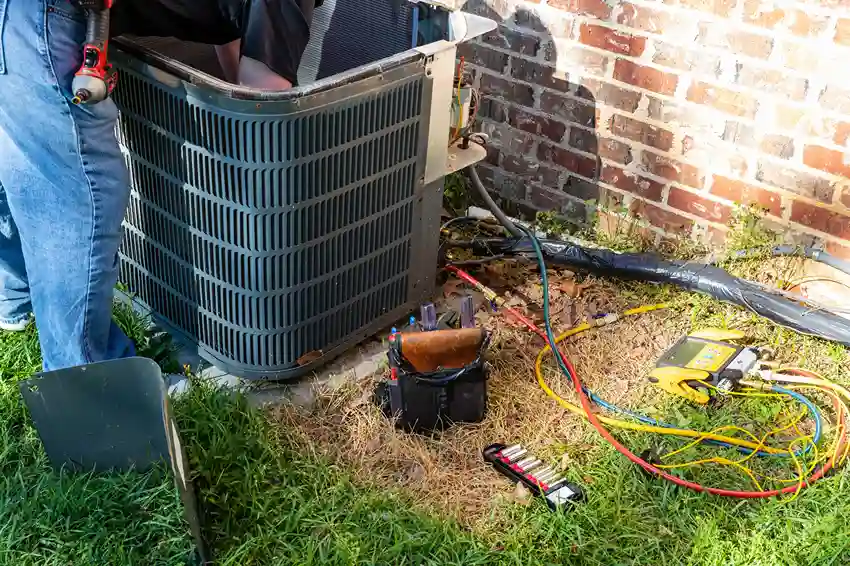
- Refrigerant Charge Measurement: We check for the correct level of refrigerant. Low levels often indicate a leak that must be located and repaired, while overcharged systems can damage the compressor.
- Compressor Analysis: The compressor is the heart of the system. We measure its amperage and voltage to ensure it is not drawing too much power, which is a sign of impending failure or internal wear.
- Fan Motor Operation: Both the blower motor inside and the condenser fan outside are checked for bearing wear, proper speed, and vibration.
- Coil Condition: We inspect the evaporator and condenser coils for dirt, debris, and corrosion. Dirty coils drastically reduce efficiency and can lead to frozen components.
Electrical and Safety Checks
- Capacitor Testing: Capacitors start the motors. If these are weak, your motors strain to start, leading to overheating and burnout.
- Wiring and Connections: Vibration can loosen electrical connections over time. We tighten all connections and inspect wiring for signs of heat damage or fraying to prevent fire hazards.
- Thermostat Calibration: We verify that your thermostat is reading indoor temperatures accurately and communicating correctly with the AC unit.
- Safety Controls: All limit switches and safety cut-offs are tested to ensure the unit shuts down properly if a dangerous condition arises.
Airflow and Drainage Review
- Condensate Drain Line: We clear the condensate drain to prevent water backups that can trigger overflow switches or cause water damage to your home.
- Ductwork Inspection: Visible ductwork is checked for major leaks or disconnections that could be dumping conditioned air into your attic or crawlspace.
- Static Pressure Reading: We measure the resistance of air moving through the system to ensure your blower motor isn't being overworked.
How the Inspection Process Works
Understanding the sequence of events helps you prepare for our visit. We value your time and aim to make the process as unobtrusive and efficient as possible. From the moment our technician arrives at your property, the focus is on data collection and problem-solving. Carter Heating and Cooling follows a strict protocol to ensure no component is overlooked.
Arrival and Initial Assessment
- First, the technician will arrive within the scheduled window, fully equipped with diagnostic tools and standard parts. They will respect your property by using shoe covers and protective mats where necessary.
- Next, we discuss any specific symptoms you have noticed, such as strange noises, warm spots in the house, or rising energy bills. This user feedback helps guide the diagnostic process.
- Then, we locate the thermostat, indoor air handler, and outdoor condenser unit to verify access and check for immediate visual red flags.
System Testing and Data Collection
- The technician cycles the system on to observe the startup sequence. They listen for irregular sounds like grinding, hissing, or banging.
- While the system runs, we attach gauges to measure pressures and temperatures. This data tells us exactly how the refrigeration cycle is performing in real-time.
- We proceed to the electrical panel within the unit to take amperage readings. This ensures components are operating within safe electrical parameters.
Reporting and Recommendations
- Once the physical inspection is complete, the technician compiles the findings into a clear, jargon-free report.
- We present the current status of your system, categorizing findings by urgency. Immediate safety hazards are prioritized, followed by performance issues and recommended preventative maintenance.
- Finally, if repairs are needed, we provide a clear explanation of the work required and the associated costs before any further work begins. You are in control of the decision to proceed.
Deciding Between Repair and Replacement
During an inspection, a critical decision point often arises: is it better to repair the existing unit or invest in a replacement? This decision is rarely black and white, but specific technical criteria can guide you toward the most financially sound choice.
The 50% Rule
A common industry standard suggests that if the cost of the repair approaches 50% of the value of a new system, replacement is generally the wiser investment. This is particularly true if the unit is out of warranty, as you would be investing significant capital into a depreciating asset.
Age of the Equipment
Air conditioners typically last between 10 and 15 years. If your unit is over 10 years old and requires a major repair—such as a compressor replacement or a new coil—it is often more cost-effective to replace it. Older units rely on outdated refrigerants like R-22 (Freon), which are becoming prohibitively expensive and difficult to source.
Frequency of Breakdowns
If you find yourself calling for service multiple times a year, the cumulative cost of these minor repairs often exceeds the monthly payment of a new, high-efficiency system. A system that breaks down frequently is signaling the end of its reliable service life.
Efficiency Ratings (SEER)
Older units often have SEER (Seasonal Energy Efficiency Ratio) ratings of 10 or 12. Modern standards require higher efficiency, often 14 SEER2 or higher. Upgrading to a modern system can lower monthly energy bills significantly, which helps offset the installation cost over time. If your current unit causes your energy bills to spike disproportionately during the Park City summer, efficiency loss is likely the culprit.
Local Considerations for Park City Homeowners
Operating an air conditioner in south-central Kentucky presents specific challenges that generic maintenance advice may not cover. The local climate and infrastructure influence how your system performs and what inspectors specifically look for.
Combating High Humidity
Kentucky’s humid subtropical climate means your AC has a heavy latent load (moisture removal) in addition to the sensible load (temperature reduction). An inspection here must verify that the evaporator coil is getting cold enough to condense water vapor effectively. If the system is short-cycling (turning on and off too quickly), it won't run long enough to dehumidify the home, leading to a clammy indoor environment and potential mold growth.
Biological Growth Risks
Because of the moisture levels, drain lines in this area are prone to clogging with algae and "slime" faster than in drier climates. Our inspection prioritizes clearing and treating the condensate line to prevent blockages that occur frequently during the dog days of summer.
Permitting and Code Compliance
If an inspection reveals that a major component or full system needs replacement, local building codes dictate how that work must be done. This includes requirements for breaker sizing, disconnect box placement, and refrigerant line insulation. We ensure that any recommended work adheres strictly to local regulations to ensure safety and preserve your home’s resale value.
Vegetation and Debris
The lush environment in Park City often means outdoor units are subjected to cottonwood, grass clippings, and pollen. These organic materials mat onto the condenser coil, acting like a blanket that traps heat. Local inspections always focus heavily on the cleanliness of the outdoor coil to ensure the unit can breathe.
Why Professional Inspection Matters
Choosing the right team for your AC inspection ensures that you receive accurate information rather than a sales pitch. The goal of a service visit is to extend the life of your equipment and ensure your safety, not to upsell unnecessary accessories.
Technical Competence
Modern HVAC systems are complex machines involving circuit boards, variable-speed motors, and advanced refrigerants. Diagnosing them requires NATE-certified technicians who undergo continuous training. We utilize advanced diagnostic equipment that eliminates guesswork, allowing us to pinpoint issues that less experienced eyes might miss.
Detailed Documentation
We believe in transparency. You should see what we see. Our inspection reports often include photographic evidence of worn parts, burnt wiring, or dirty coils. This documentation validates our recommendations and helps you maintain a service history for your unit, which is valuable for warranty claims and future real estate transactions.
Protecting Your Warranty
Most manufacturer warranties require proof of annual maintenance by a licensed professional to remain valid. Skipping professional inspections can inadvertently void the warranty on your expensive equipment. We provide the necessary documentation to keep your warranty active and your investment protected.
Safety Assurance
While cooling is the primary goal, safety is the priority. Electrical failures in AC units can pose fire risks. We inspect the high-voltage connections and safety limits to ensure the system operates safely within your home. This peace of mind is the most valuable outcome of our service.
Protect Your Comfort With a Professional AC Inspection
Don’t wait for a total system failure on the hottest day of the year. Secure your comfort and protect your home’s cooling system with a professional inspection that prioritizes reliability and transparency. Take control of your indoor climate today—contact us now to schedule your AC inspection.

Great Service at a Fair Price
Veterans Discount


Senior Discount

Law Enforcement

Fire fighters/ems

Hear From Your Neighbors!
Hear from your neighbors to see how our commitment to dependable service and lasting comfort has made a difference in their homes.