
How can we help today?
Choose an option to see quick actions and get help faster.AC Repair in Park City, KY
AC Repair in Park City, KY
Struggling with a malfunctioning AC in Park City? Contact our expert technicians for rapid, reliable air conditioning repair services. Schedule your appointment today!
Restore Cool Air to Your Home Immediately
Is your air conditioner malfunctioning or blowing warm air right in the middle of a humid heatwave? You deserve a quick, reliable service that restores comfort to your Park City home without unnecessary delays. Contact us today or inquire about our financing options to get your system running again.
When the temperature inside rises, you need a solution that prioritizes speed and technical accuracy.
- Same-day repair services to ensure minimal discomfort for your family.
- Expert technicians available 24/7, ready to resolve any cooling issue.
- Clear, upfront pricing with no hidden charges or surprise fees.
All services come with a full warranty and are performed by licensed professionals adhering to state codes.
Immediate Diagnostics and Repair Scope
When an air conditioning system fails in the humid subtropical climate of Kentucky, the priority is accurate identification of the fault followed by a rapid fix. Homeowners often face the frustration of technicians who guess at the problem, leading to repeated visits and mounting costs. A professional approach begins with a comprehensive system evaluation that isolates the root cause of the breakdown, whether it is an electrical failure, a refrigerant leak, or a mechanical obstruction.
Modern cooling systems are complex machines that rely on the perfect synchronization of airflow, pressure, and voltage. A disruption in any one of these areas can cause the entire system to freeze up or shut down. You receive a thorough inspection of the thermostat, the electrical connections, the condensate drain line, and the refrigerant levels.
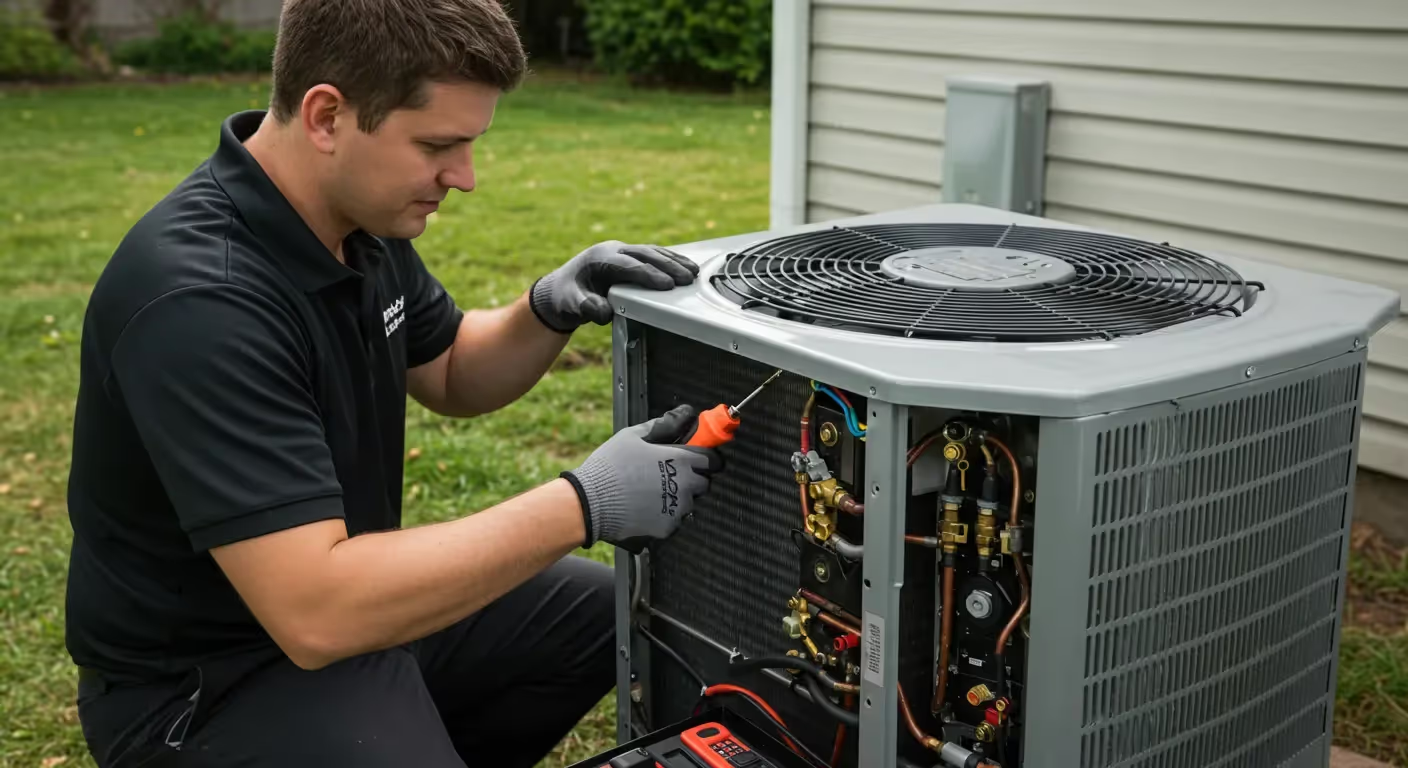
The scope of repair covers every component necessary to restore the unit to manufacturer specifications. This includes handling high-voltage electrical components, brazing copper lines for leak repairs, and cleaning fouled coils that restrict heat transfer. The goal is not just to get the unit running for the day, but to ensure it can handle the load for the rest of the season.
Comprehensive Air Conditioning Repair Process
Understanding what happens once a technician arrives can alleviate the stress of a breakdown. The repair process is structured to be efficient, transparent, and respectful of your property. There is no guesswork involved; the focus is on data-driven diagnostics and industry-standard repair protocols.
- Initial Assessment and Safety Check: The technician arrives with a fully stocked truck and begins by securing the electrical safety of the unit. They listen to the system’s operation, checking for unusual noises like grinding or hissing, which often indicate compressor or refrigerant issues.
- System Diagnostics: Using advanced gauges and multimeters, the technician tests the capacitor, contactor, and compressor amp draw. They measure the static pressure in the ductwork and check the temperature differential between the supply and return air. This data pinpoints exactly where the efficiency loss or failure is occurring.
- Clear Explanation and Quote: Before any wrench is turned, you receive a detailed explanation of the failure. You are presented with a flat-rate quote for the repair. This ensures you know the exact cost before work begins, eliminating the uncertainty of hourly billing.
- Execution of Repairs: Once approved, the repair is performed immediately. This may involve replacing a blown capacitor, clearing a clogged condensate drain that has triggered a safety switch, or recharging refrigerant after fixing a leak. Carter Heating and Cooling technicians are trained to handle these specific repairs efficiently.
- Performance Testing: The job is not complete when the part is replaced. The system is cycled through a full operational test. The technician verifies that the thermostat is satisfying the set temperature and that humidity is being actively removed from the air.
- Cleanup and Final Report: The work area is cleaned, and all debris is removed. You receive a final report detailing what was done, the health of your system, and any recommendations for maintaining efficiency during the peak summer months.
Determining When to Repair vs. Replace
One of the most difficult decisions a homeowner faces is whether to pour more money into an aging unit or invest in a new system. This decision should be based on mathematical logic and the long-term condition of the equipment, not high-pressure sales tactics. There are clear indicators that help define which path is most improved for your specific situation.
The Age and Frequency Factor
Air conditioners generally last between 10 and 15 years. If your unit is under ten years old and has been well-maintained, a repair is usually the most cost-effective option. However, if the unit is approaching or has surpassed the 15-year mark, parts may be becoming obsolete, and the efficiency of the unit has likely degraded significantly. If you find yourself calling for repairs multiple times in a single season, the cumulative cost of these fixes often outweighs the monthly cost of a new, high-efficiency system.
The Cost of Repair Rule
Industry experts often use the "$5,000 Rule" to aid in this decision. Multiply the age of the equipment by the estimated cost of the repair. If the total exceeds $5,000, replacement is generally the smarter financial move. For example, if a 12-year-old unit requires a $500 repair, the score is 6,000, suggesting replacement is prudent. Conversely, a $300 repair on a 5-year-old unit yields a score of 1,500, making repair the clear winner.
Refrigerant Considerations
Older systems utilize R-22 refrigerant (Freon), which has been phased out due to environmental regulations. As supply dwindles, the cost of R-22 has skyrocketed. If your older unit has a refrigerant leak, the cost to recharge it can be exorbitant. Modern systems use R-410A or newer, eco-friendly refrigerants which are more efficient and affordable. If your repair involves a major refrigerant component on an R-22 system, replacement is almost always the recommended path to avoid sinking money into a "dead" technology.
Energy Efficiency Ratings (SEER)
Older units often have SEER (Seasonal Energy Efficiency Ratio) ratings of 10 or less. Modern standards require higher efficiency, often 14 SEER or above. Upgrading to a new unit can reduce energy bills by 20% to 40%. When facing a major repair, calculating the potential energy savings of a new unit over five years can sometimes justify the immediate cost of replacement over a repair.
Common Components That Require Attention
AC units are composed of several critical parts that work in unison. Understanding these can help you better communicate with technicians and understand the work being performed — read our FAQs today.
- Capacitors: These are small electrical components that store energy to start the compressor and fan motors. They are the most common point of failure. Heat and voltage fluctuations can cause them to swell and fail, preventing the unit from starting.
- Compressor: Often called the heart of the system, the compressor pumps refrigerant through the coils. If this fails, it is a major repair. Hard starting (struggling to turn on) is a sign the compressor is under stress.
- Evaporator and Condenser Coils: The evaporator coil is located inside and absorbs heat, while the condenser coil is outside and releases it. If these coils become dirty or damaged, heat transfer is blocked, causing the system to run constantly without cooling the house. Frozen evaporator coils are a common sign of airflow restriction or low refrigerant.
- Fan Motors: There are two fans: the blower motor inside and the condenser fan outside. If the outdoor fan fails, the compressor can overheat and seize. If the indoor blower fails, the coil will freeze. Squealing or grinding noises usually indicate bearing failure in these motors.
Local Climate Factors and Technical Requirements
Operating an air conditioning system in Park City requires specific attention to the local environment. The humid subtropical climate means that your AC has two jobs: cooling the air and removing moisture. In the peak of summer, high temperatures combined with high dew points create a heavy latent heat load on your equipment.
Humidity Control
When humidity is high, 80 degrees feels significantly hotter. If an AC unit is short-cycling (turning on and off too quickly), it cools the air but fails to remove humidity. This leaves the home feeling clammy and can lead to mold growth in ductwork. Proper repair often involves adjusting blower speeds or ensuring the refrigerant charge is exact to maximize the system's dehumidification capabilities.
Electrical and Safety Codes
Kentucky has specific building and safety codes regarding HVAC equipment. Repairs involving electrical components must meet these standards to ensure the safety of the home. This includes proper wire sizing, disconnect box accessibility, and breaker compatibility. Licensed technicians ensure that all repairs keep your home compliant with local regulations, which is vital for insurance purposes and future home sales.
Seasonality and Maintenance
The transition from cool springs to sudden heat spikes puts immense stress on AC components. Rubber seals expand and contract, and electrical connections can loosen. Repairs in this region often focus on mitigating the wear and tear caused by these drastic temperature shifts. Ensuring the condensate drain is clear is particularly important here, as high humidity produces gallons of condensate water daily that must be drained away from the home’s foundation.
Why Professional Troubleshooting Matters
Attempting DIY repairs on central air conditioning systems can be dangerous and costly. Modern HVAC equipment involves high-voltage electricity, high-pressure gases, and complex electronics.
- Safety Hazards: AC units run on 220-240 volts of electricity. mishandling capacitors or wiring can result in severe shock or electrocution. Additionally, refrigerant causes instant frostbite if it contacts skin and is hazardous to inhale.
- Warranty Preservation: Most manufacturer warranties require that repairs be performed by a licensed professional. DIY attempts or using unlicensed handymen can void the warranty, leaving you responsible for the full cost of future major component failures.
- Proper Tooling: Diagnosing a system requires more than a screwdriver. Technicians utilize digital manifolds, psychrometers, micron gauges, and leak detectors. These tools allow for precision that guesswork cannot match. For example, overcharging a system with refrigerant by just a few ounces can destroy the compressor.
Warning Signs That Demand Immediate Service
Waiting until the system completely fails is not always necessary. Your air conditioner will often give you warning signs that a component is degrading. Catching these early can turn a potentially expensive breakdown into a minor repair.
- Weak Airflow: If you feel air coming from the vents but it is weak, the blower motor may be failing, or the belt may be slipping. It could also indicate a frozen coil blocking the ductwork.
- Warm Air: If the thermostat is set to cool but the air coming out is warm, the compressor may not be engaging, or the system may be low on refrigerant.
- Strange Odors: Musty smells often indicate mold or mildew in the unit or ductwork, often caused by drainage issues. Burning smells indicate electrical overheating and require immediate system shutdown.
- Loud Noises: While a low hum is normal, banging, clanking, or high-pitched squealing is not. These sounds usually indicate loose parts or motor bearings that are about to fail.
- Thermostat Inaccuracy: If one room is freezing while another is hot, or if the house never reaches the set temperature despite the unit running constantly, the system is struggling to keep up with the load.
Ensuring Long-Term System Health
Once a repair is completed, the focus shifts to longevity. The goal of any service call is to leave the unit in a better condition than it was found. This involves more than just swapping a part; it involves checking the entire ecosystem of the HVAC unit.
Technicians will verify that the outdoor unit is free of debris like grass clippings and leaves which choke off airflow. They will check the integrity of the insulation on the refrigerant lines to prevent energy loss. By taking a holistic view of the system, future breakdowns can be minimized.
Choosing a service provider who understands the nuances of the local weather patterns and the specific needs of homes in this area ensures that your investment is protected. Reliable cooling is not a luxury; it is a necessity for health and comfort during the summer months.
Professional AC Restoration
A broken air conditioner interrupts your life and compromises your comfort. You need a solution that is fast, effective, and performed by experts who stand behind their work. Whether it is a minor electrical fix or a major component replacement, the objective remains the same: delivering cool, conditioned air to every room in your house.
Don’t let the heat compromise your home environment. Trust the team at Carter Heating and Cooling to diagnose the issue accurately and provide a lasting repair. Call us now to schedule your repair service and restore comfort to your home today.

Great Service at a Fair Price
Veterans Discount


Senior Discount

Law Enforcement

Fire fighters/ems

Hear From Your Neighbors!
Hear from your neighbors to see how our commitment to dependable service and lasting comfort has made a difference in their homes.