
How can we help today?
Choose an option to see quick actions and get help faster.Furnace Repair in Park City, KY
Furnace Repair in Park City, KY
Furnace Repair in Park City, KY
Is Your Furnace Failing to Heat Your Home Efficiently?
Is your furnace failing to keep up with the chilly winter nights or humid seasonal transitions in Park City? You are not alone in facing heating interruptions, and immediate help is available to restore your indoor temperature today. Contact us or apply for financing to schedule your repair immediately.
When your heating system falters, waiting is rarely an option. A functional furnace is essential for safety and comfort, particularly when outdoor temperatures drop unexpectedly. Our approach focuses on rapid deployment and technical precision to minimize downtime.
- Quick diagnosis and repair by certified technicians.
- Same-day service available to ensure your comfort is restored fast.
- Comprehensive service covering all furnace models and makes.
All services are fully licensed, with extended warranties and flexible financing options available to homeowners. Carter Heating and Cooling ensures that your system returns to peak performance without unnecessary delays or hidden costs.
Immediate Furnace Repair Services for Consistent Warmth
A broken furnace disrupts your daily life and can pose safety risks to your property. Professional repair services focus on identifying the root cause of the failure rather than simply patching the symptom. In Park City, where humidity levels fluctuate alongside temperatures, a furnace must handle more than just heat generation; it often plays a role in air circulation and humidity control.
Modern heating systems are complex assemblies of electrical, mechanical, and gas components. A failure in one area, such as a faulty limit switch or a compromised flame sensor, can shut down the entire unit to prevent overheating or gas leaks. Technicians arrive equipped to handle these specific failures on the spot. The goal is to restore the flow of warm air immediately while ensuring the unit operates within manufacturer safety specifications.
Common issues addressed during a service call include:
- Ignition Failure: If the furnace clicks but does not fire, the issue often lies with the igniter, pilot light, or flame sensor. These components are sensitive to wear and dirt accumulation.
- Airflow Restrictions: A running motor with no air coming from the vents often indicates a belt failure or a seized blower motor. This can also result from long-term neglect of filtration systems.
- Thermostat Disconnects: Sometimes the furnace is functional, but the signal from the control unit is lost. Recalibrating or replacing the thermostat restores the communication loop.
- Noisy Operation: Squealing, banging, or rattling sounds suggest mechanical looseness or bearing failure. Addressing this early prevents catastrophic motor failure.
- Short Cycling: When a furnace turns on and off frequently without reaching the set temperature, it indicates overheating, a clogged filter, or an oversized unit.
The Repair Process: Diagnosing and Fixing the Issue
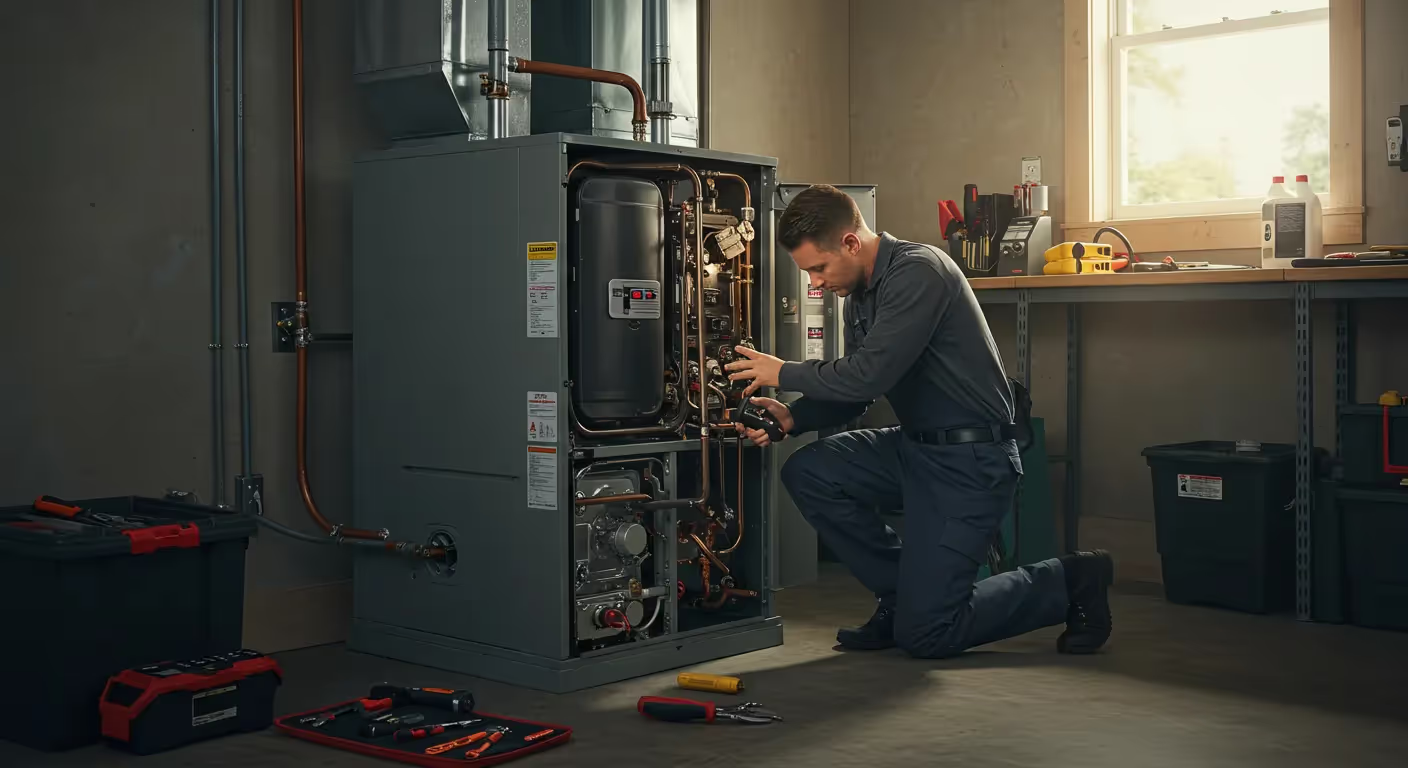
Professional repair follows a strict protocol to ensure nothing is overlooked. The process begins with a comprehensive assessment of the system's current state. This is not a guessing game; it involves using multimeters to check electrical voltage, manometers to check gas pressure, and combustion analyzers to ensure safety.
The service workflow typically proceeds as follows:
- System Inspection: The technician evaluates the thermostat settings, electrical connections, and the physical condition of the furnace. This includes checking the heat exchanger for cracks, which is a critical safety step regarding carbon monoxide.
- Error Code Analysis: Modern furnaces utilize control boards that flash LED error codes. Interpreting these codes provides an immediate direction for troubleshooting, whether it is a pressure switch failure or a limit circuit lockout.
- Component Testing: Individual parts are tested for resistance and continuity. A capacitor that is bulging or reading below its microfarad rating will be identified for replacement.
- Quotation and Approval: Once the issue is isolated, you receive a clear explanation of the failure and a flat-rate quote for the repair. No work begins without explicit approval.
- Repair and Replacement: The faulty component is removed and replaced with an OEM or high-quality equivalent part. This ensures the repair lasts and maintains the system's warranty status.
- Performance Testing: After the repair, the system is run through a full heating cycle. The technician measures the temperature rise (the difference between return air and supply air) to ensure it falls within the manufacturer's specified range.
- Safety Verification: A final check for gas leaks and carbon monoxide ensures the home is safe for occupancy.
Deciding Between a Furnace Repair and a System Replacement
Homeowners often face the difficult decision of whether to invest in another repair or opt for a full system replacement. This decision relies on data, specifically the age of the unit, the cost of the repair, and the frequency of breakdowns. While a repair is often the most cost-effective short-term solution, there comes a point where sinking money into an aging asset yields diminishing returns.
Industry standards suggest a few key indicators for when replacement becomes the smarter financial move:
- The 50% Rule: If the cost of the repair approaches 50% of the value of a new system, replacement is generally recommended.
- System Age: Furnaces typically last 15 to 20 years. If a unit in Park City is nearing the two-decade mark and requires a major component like a heat exchanger or blower motor, replacement offers better long-term value.
- Rising Energy Bills: As furnaces age, their AFUE (Annual Fuel Utilization Efficiency) rating drops. An older unit might be operating at 60-70% efficiency, meaning 30-40 cents of every dollar spent on fuel is wasted. New models often operate at 95% efficiency or higher.
- Uneven Heating: If certain rooms remain cold while others are hot, the furnace may no longer have the compression or blower power to distribute air effectively through the ductwork.
- Frequent Repairs: If you have required service calls multiple times in the last two years, the system has likely entered its end-of-life failure phase.
Understanding Local Heating Requirements in Kentucky
The climate in this region dictates specific HVAC requirements. While winters are generally mild compared to northern states, temperatures can still drop significantly, requiring a heating system that can ramp up performance quickly. Furthermore, the humid subtropical climate means that moisture control is a year-round concern.
In the cooler months, a furnace must be able to combat the damp cold that seeps into homes. This requires a system with sealed ductwork and adequate insulation. Carter Heating and Cooling technicians are familiar with the specific load calculations required for homes in this area. We understand that an undersized unit will run constantly, driving up bills, while an oversized unit will short-cycle, leading to humidity issues and premature wear.
Local regulations and codes also play a vital role in furnace repair and installation.
- Permit Compliance: Major repairs and replacements must adhere to local building codes to ensure safety. This includes proper venting of exhaust gases and adherence to gas piping regulations.
- Ventilation Standards: Adequate combustion air is necessary for gas furnaces. In tightly sealed modern homes, specific intake solutions may be required to prevent back-drafting.
- Ductwork Integrity: Because of the humidity, ductwork in unconditioned spaces (like crawl spaces or attics) must be properly insulated to prevent condensation and mold growth, which can impact the furnace's ability to deliver clean air.
Why Homeowners Choose Professional Diagnostics
Attempting DIY repairs on a furnace is dangerous and often void's manufacturer warranties. Professional diagnostics provide peace of mind that the system is operating safely and efficiently. The distinction between a professional repair and a temporary fix lies in the depth of the analysis — read our reviews to see the difference.
Certified professionals utilize advanced diagnostic tools that are not available to the average homeowner.
- Combustion Analyzers: These tools measure the oxygen, carbon dioxide, and carbon monoxide levels in the flue gas. This data allows technicians to fine-tune the fuel-air mixture for maximum efficiency and safety.
- Static Pressure Testers: Measuring the airflow resistance within the ductwork helps identify blockages or design flaws that are strangling the furnace's performance.
- Thermal Imaging: Infrared cameras can detect heat loss in the furnace cabinet or ductwork, pinpointing areas where energy is escaping.
Furthermore, professional service trucks are stocked with a wide inventory of universal and brand-specific parts. This "warehouse on wheels" concept allows for most repairs to be completed in a single visit, reducing the time your home is without heat. From control boards to igniters and pressure switches, having the right part immediately available is a key component of professional service.
Maintaining Efficiency After the Repair
Once a furnace is repaired, maintaining that level of efficiency requires diligence. A repaired system is given a new lease on life, but external factors can quickly degrade its performance again if ignored — join our maintenance plan for protection. The most critical task for a homeowner is the management of airflow.
- Filter Discipline: The number one cause of furnace failure is a dirty air filter. A clogged filter restricts airflow, causing the heat exchanger to overheat and the limit switch to trip. Changing the filter every 1-3 months is non-negotiable for system health.
- Vent Clearance: Ensure that supply and return vents are not blocked by furniture, rugs, or curtains. Blocked vents increase the static pressure in the system, forcing the blower motor to work harder than necessary.
- Duct Inspection: Periodically check visible ductwork for disconnections or crushed sections. Leaky ducts can lose up to 30% of the heated air before it reaches your living space.
- Programmable Thermostats: Utilizing a modern thermostat ensures the furnace runs only when needed, reducing wear on the components.
Secure Your Comfort and Safety Today
A malfunctioning furnace is more than an inconvenience; it is a disruption to your home’s security and comfort. Whether you are dealing with a complete system breakdown, strange noises, or lukewarm airflow, professional intervention ensures the problem is resolved at the source.
Reliable heating is a necessity, not a luxury. By choosing certified experts, you ensure that your heating system is safe, efficient, and ready to handle the demands of the season. Do not let a minor issue escalate into a major replacement. Carter Heating and Cooling is ready to diagnose your system and provide the necessary repairs to keep your home warm.
Restore your home's warmth now. Schedule your furnace repair service immediately.

Great Service at a Fair Price
Veterans Discount


Senior Discount

Law Enforcement

Fire fighters/ems

Hear From Your Neighbors!
Hear from your neighbors to see how our commitment to dependable service and lasting comfort has made a difference in their homes.