

How can we help today?
Choose an option to see quick actions and get help faster.Ductless Installation in Alvaton, KY
Ductless Installation in Alvaton, KY
Upgrade your Alvaton home's comfort with our efficient ductless systems. Secure your consultation today for rapid installation and enjoy energy savings.
Facing the brunt of Alvaton's extreme weather without a reliable system can make your home unbearable. Our ductless systems offer a rapid, efficient solution tailored for you to combat the humidity of summer and the freezing dips of winter. Schedule your consultation today to secure your new system or inquire about our flexible financing options.
We understand that when your comfort is compromised, you need a solution immediately, not weeks from now.
- Installations completed as quickly as the next day to restore your comfort immediately.
- High-efficiency units that drastically reduce your monthly utility bills compared to window units or older central systems.
- 24/7 availability for both initial consultation and emergency services to fit your schedule.
Enjoy added peace of mind with comprehensive warranties and easy financing options that make upgrading your home simple and stress-free. Carter Heating and Cooling provides the expertise required to ensure your new mini-split system performs perfectly from day one — read our reviews.
What You Can Expect From a Modern Ductless Installation
When you invest in a ductless mini-split system, you are purchasing one of the most versatile and energy-efficient climate control technologies available on the market today. Unlike traditional forced-air systems that rely on bulky, invasive ductwork, a ductless system delivers air directly into specific zones. This approach eliminates energy loss associated with duct leakage, which can account for up to 30% of energy consumption in standard HVAC setups.
In Alvaton, where the weather fluctuates drastically, a ductless system provides both heating and cooling from a single piece of hardware. The scope of your installation typically includes an outdoor condenser unit and one or more indoor air-handling units. These indoor units can be mounted high on walls, flush in ceilings, or near the floor, depending on your aesthetic preference and airflow requirements.
The timeline for these projects is significantly shorter than a central air overhaul. Because there is no need to fabricate or route sheet metal through attics and crawlspaces, a single-zone installation can often be completed in less than a day. Multi-zone systems, which allow you to control the temperature in different rooms independently, may take slightly longer but rarely disrupt your daily routine.
Included in a standard installation package:
- Site Evaluation and Load Calculation: A precise measurement of your room’s square footage, insulation levels, and window orientation to ensure the unit is neither undersized (running constantly) nor oversized (short-cycling and failing to dehumidify).
- Equipment Setup: Professional mounting of the outdoor compressor on a concrete pad or wall bracket to protect it from ground-level debris and snow.
- Line Set Concealment: The refrigerant lines and electrical wiring connecting the indoor and outdoor units are encased in durable, weather-resistant covers that blend with your home’s exterior.
- Electrical Integration: Safe connection to your home's electrical panel, adhering to all safety standards.
- System Commissioning: A rigorous testing phase where technicians verify refrigerant pressure, airflow velocity, and drainage to guarantee peak efficiency.
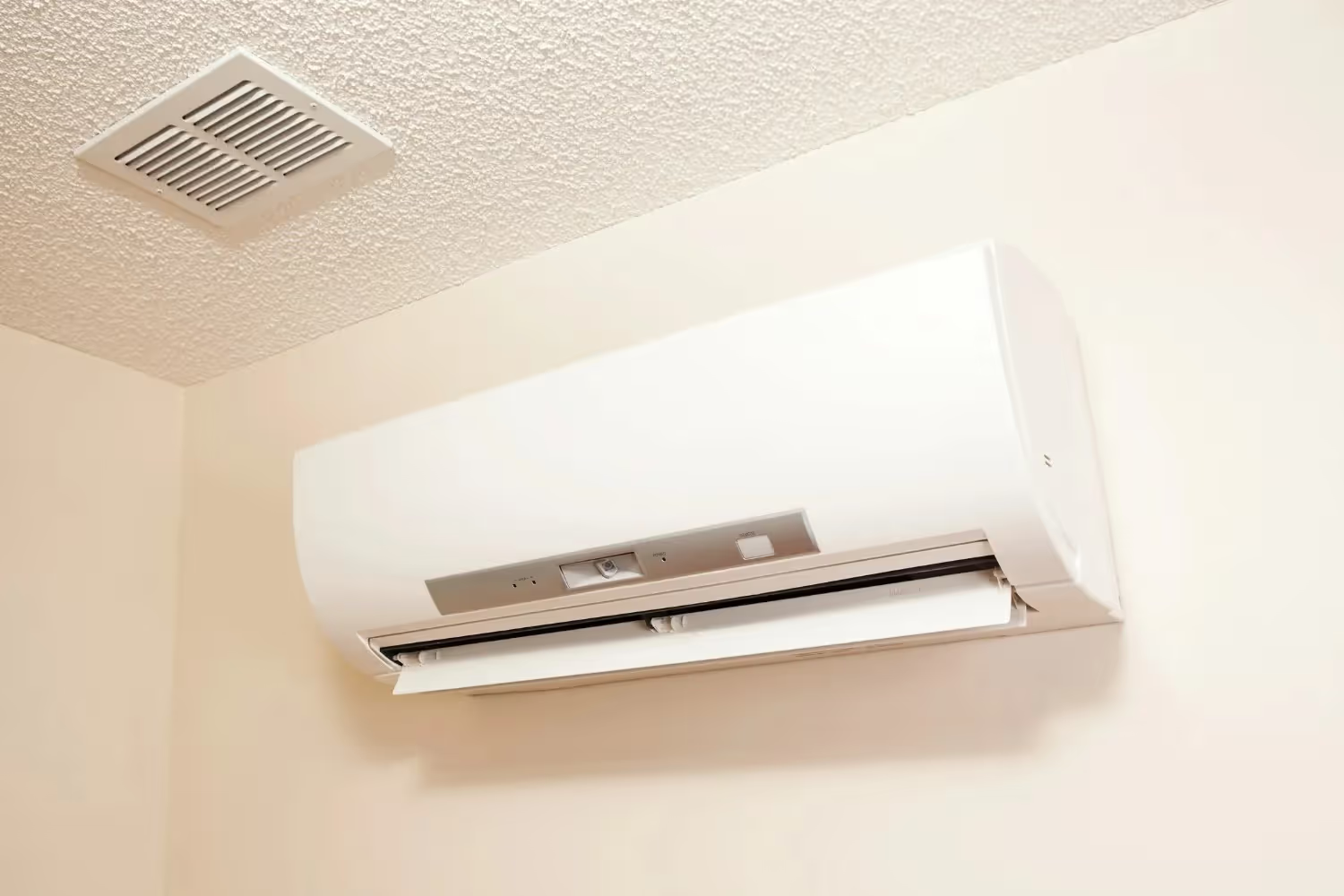
The Step-by-Step Installation Process
Understanding how the installation works helps alleviate anxiety about construction or mess in your home. The process is minimally invasive, requiring only a small three-inch hole through an exterior wall. This preserves the structural integrity of your home and maintains security, unlike window units that leave your home vulnerable to intruders and air leaks.
The workflow generally follows this sequence:
- Assessment and Marking:
- Technicians arrive to confirm the optimal location for the indoor unit. This spot must distribute air evenly throughout the room while remaining accessible for future filter cleaning.
- The team locates the structural studs to ensure secure mounting and checks the exterior wall for obstructions like plumbing or electrical wires.
- Drilling and Preparation:
- A small, three-inch hole is drilled through the wall to accommodate the refrigerant lines, drainage tubing, and control wiring.
- The hole is drilled at a slight downward angle to the exterior to facilitate proper gravity drainage for condensation, preventing leaks inside the home.
- Mounting the Indoor Unit:
- A metal mounting plate is secured to the interior wall studs.
- The indoor unit is carefully lifted and snapped onto the plate.
- Connections are fed through the wall to the exterior.
- Setting the Outdoor Unit:
- The outdoor condenser is positioned on a composite pad or mounted on brackets to keep it level and stable.
- Vibration pads are often used to isolate the unit, ensuring quiet operation that won't disturb you or your neighbors.
- Connecting the System:
- Copper refrigerant lines are flared and connected to both units. This requires a high degree of precision to prevent refrigerant leaks.
- The system is pressure-tested with nitrogen to ensure the circuit is sealed tight.
- A vacuum pump removes all moisture and air from the lines before the refrigerant is released.
- Final Walkthrough:
- The system is powered on, and the remote control functions are demonstrated.
- You will learn how to operate the various modes, including cooling, heating, dehumidification, and fan-only settings.
- The technician will explain filter maintenance, which typically involves a simple rinse every few weeks.
Deciding Between Repair and Replacement
Homeowners often struggle with the decision to repair an existing HVAC system or switch to a ductless solution. While repairs might seem cheaper upfront, they are often a temporary fix for a dying system. In many scenarios, investing in a new ductless installation is the more financially sound decision.
Consider replacement if you are facing the following issues:
- Frequent Breakdowns: If you are calling for repairs more than once a season, the cost of parts and labor will quickly eclipse the monthly payments of a new, warrantied system.
- Inconsistent Temperatures: If your current central system leaves upstairs bedrooms hot in the summer or certain corners of the house freezing in the winter, a ductless unit solves this "zoning" problem permanently.
- Age of Equipment: Heat pumps and air conditioners over 10 to 15 years old operate at significantly lower efficiency levels than modern units. Swapping an old 10 SEER unit for a new 20+ SEER ductless system can cut cooling costs by nearly half.
- Lack of Ductwork: For older homes, room additions, or converted garages in Alvaton, installing new ductwork is prohibitively expensive and messy. Ductless systems bypass this requirement entirely.
- Noise Levels: Older systems and window units can be incredibly loud. Modern ductless inverters operate at decibel levels quieter than a whisper, improving your quality of life and sleep.
A clear indicator that replacement is necessary is the "5,000 Rule." Multiply the age of your equipment by the estimated repair cost. If the total exceeds $5,000, replacement is generally the better investment. For example, a $600 repair on a 10-year-old system ($600 x 10 = $6,000) suggests you should stop throwing money at the old unit and upgrade.
Local Considerations: Permits, Utilities, and Weather
Installing HVAC equipment involves more than just buying a box; it requires adherence to local regulations and an understanding of the regional environment.
- Permits and Codes:
- In the Alvaton area, HVAC installations must comply with local building codes to ensure safety and energy efficiency. Licensed professionals handle the permitting process, ensuring that the electrical connections meet the National Electrical Code (NEC) and that the unit placement complies with local setback requirements.
- Unpermitted work can lead to complications when selling your home or denied insurance claims in the event of an accident.
- Regional Seasonality:
- The local climate features high humidity in the summer. Ductless systems are exceptional dehumidifiers. In "Dry Mode," these units remove moisture from the air without over-cooling the room, making the indoor environment comfortable without the clammy feeling often associated with oversized central ACs.
- Winters can bring freezing rain and snow. It is vital that the outdoor unit is mounted above the average snow line. Heat pumps lose efficiency as temperatures drop, but modern "hyper-heating" ductless models are designed to maintain 100% heating capacity even when outdoor temperatures drop well below freezing, ensuring you stay warm during cold snaps.
- Utility Incentives:
- Local utility providers often offer rebates for homeowners who switch to high-efficiency electric heat pumps. These incentives are designed to reduce the load on the electrical grid.
- Because ductless systems are among the most efficient heating and cooling methods available, they frequently qualify for federal tax credits and local energy rebates, lowering the net cost of installation.
Why a Ductless System is the Superior Choice
Choosing the right system comes down to control, efficiency, and air quality. Carter Heating and Cooling specializes in configuring these systems to maximize these benefits for your specific home layout.
- Unmatched Energy Efficiency: Traditional systems operate on an all-or-nothing basis. To cool one bedroom, you have to cool the entire house. Ductless systems utilize inverter-driven compressors that speed up or slow down based on the exact needs of the room. This modulation prevents the energy-intensive on/off cycling of standard units, resulting in smoother temperature maintenance and lower bills.
- Improved Indoor Air Quality: Ductwork is a breeding ground for dust, mold, pollen, and pet dander. Every time the central fan kicks on, these particulates are blasted throughout the house. Ductless systems have multi-stage filtration built directly into the indoor unit. Because there are no ducts to collect dust, the air you breathe is cleaner. This is particularly beneficial for families with allergies or asthma.
- Zoned Comfort Control: The primary advantage of going ductless is the ability to create comfort zones. In a typical two-story home, the second floor is often significantly hotter than the ground floor. A multi-zone ductless setup allows you to set the upstairs units to a cooler temperature while keeping the downstairs moderate. Every member of the household can control the climate in their own space, ending the "thermostat wars."
- Versatile Application: These systems are not just for whole-home replacements. They are the ideal solution for specific problem areas:
- Sunrooms: Glass-enclosed rooms are notoriously difficult to heat and cool. A mini-split handles the solar gain in summer and heat loss in winter effortlessly.
- Home Offices: With more people working from home, having a dedicated, quiet climate control system in the office ensures productivity without heating the rest of the empty house.
- Garages and Workshops: A ductless unit can transform a garage into a usable workspace year-round, protecting tools and projects from humidity and temperature extremes.
Secure Your Comfort Today
The decision to upgrade your heating and cooling system is an investment in your property value and your daily comfort. Waiting until your current system fails completely often leads to rushed decisions and uncomfortable days spent waiting for service. By acting now, you take control of your home’s climate, ensuring that your living space remains a sanctuary regardless of what the weather brings.
Whether you are looking to condition a new room addition, fix a hot spot in your master bedroom, or replace an inefficient central system, the technology exists to do it efficiently and affordably. Expert installation ensures that your warranty is protected and your system operates at peak performance for years to come.
Don't let another season pass with uncomfortable temperatures or skyrocketing energy bills. Carter Heating and Cooling is ready to help you design the perfect ductless solution for your home.
Schedule your professional estimate and take the first step toward total home comfort.

Great Service at a Fair Price
Veterans Discount


Senior Discount

Law Enforcement

Fire fighters/ems

Hear From Your Neighbors!
Hear from your neighbors to see how our commitment to dependable service and lasting comfort has made a difference in their homes.