
How can we help today?
Choose an option to see quick actions and get help faster.Furnace Installation in Alvaton, KY
Furnace Installation in Alvaton, KY
Furnace Installation in Alvaton, KY
Facing the cold becomes a daunting challenge when your furnace breaks down in Alvaton, turning your comfortable home into an icebox. Don't shiver through the night—contact us immediately to let Carter Heating and Cooling restore your home's warmth quickly and efficiently.
When the temperature drops, you need a solution that goes beyond a temporary patch. A failing heating unit puts your plumbing at risk of freezing and disrupts your daily life. We provide a streamlined path to restoring your indoor climate with equipment tailored to your specific heating load requirements.
- Get same-day installation services to enjoy uninterrupted comfort even on the coldest days.
- Expert installations backed by comprehensive warranties ensure your long-term peace of mind.
- Flexible financing options allow you to manage the cost of your new furnace without financial stress.
All installations meet local building codes, with full warranties and flexible financing available to suit your budget.
What Is Included in a Comprehensive Furnace Installation
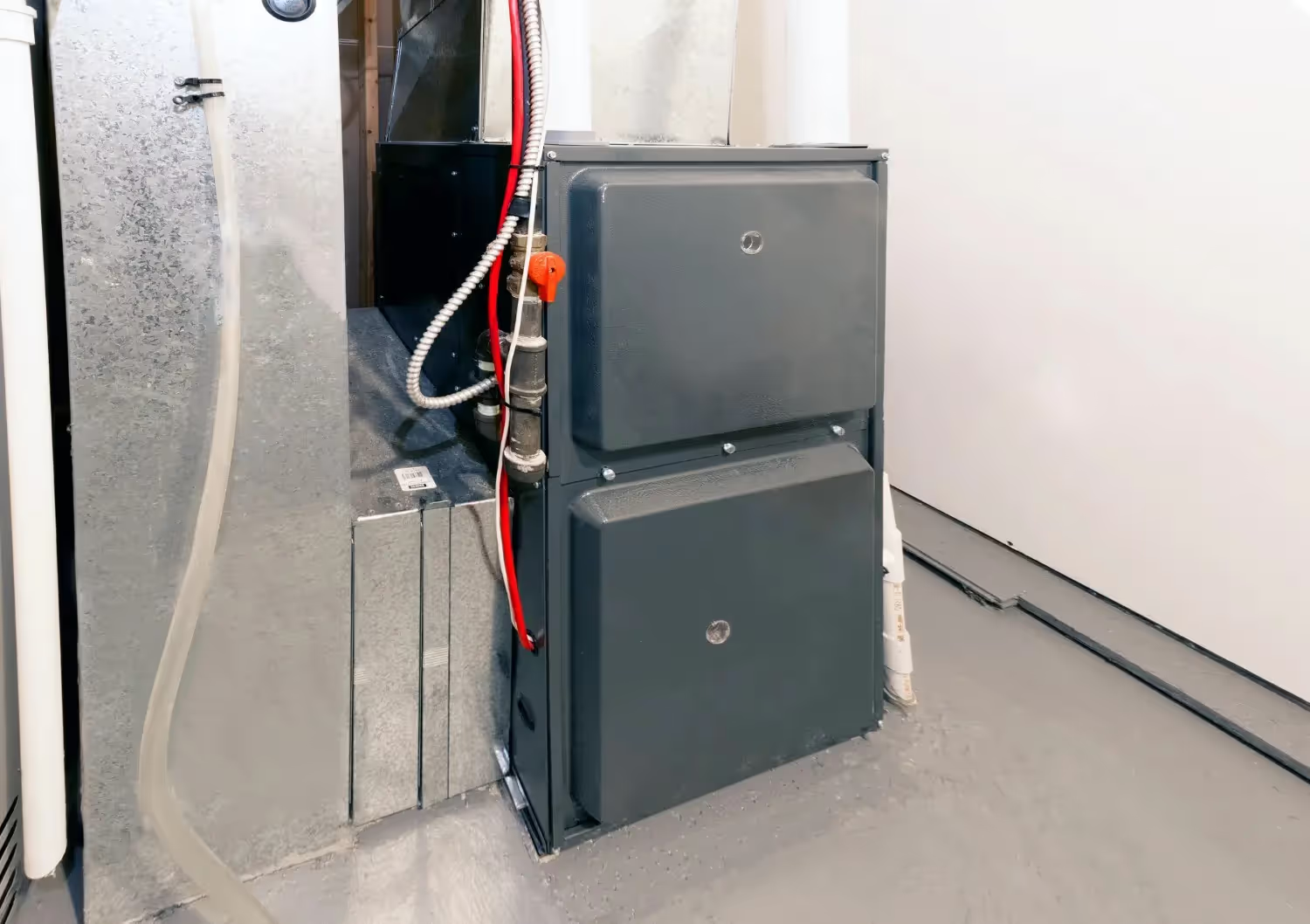
Replacing a heating system involves much more than simply swapping out a metal box. A professional installation ensures that the entire system functions as a cohesive unit, delivering consistent heat while maintaining safety standards. When you schedule a replacement, the service encompasses the removal of the old unit, site preparation, and the precise calibration of the new equipment.
The scope of work begins with protecting your property. Technicians lay down drop cloths and wear protective gear to ensure your home remains clean throughout the process. The existing unit is disconnected from the gas lines, electrical supply, and ductwork with care to avoid damaging surrounding infrastructure. Once the old furnace is removed, the team inspects the plenum and immediate ductwork for air leaks or damage that could compromise the efficiency of the new system.
Modern furnaces are physically different from older models, often requiring modifications to the sheet metal or gas piping. The installation service includes these necessary fabrications to ensure a sealed, airtight fit. Furthermore, the venting system is assessed and upgraded if necessary. High-efficiency units often require PVC venting rather than traditional metal flues, and this transition is handled during the install. Finally, the service concludes with a complete startup sequence, where gas pressure is adjusted, temperature rise is measured, and the thermostat is calibrated to communicate correctly with the new hardware.
How the Replacement and Installation Process Works
Understanding the steps involved in a furnace replacement helps you plan your day and ensures you know exactly what is happening in your home. The process is designed to be efficient, minimizing downtime so you can return to a warm environment as soon as possible.
- Assessment and Sizing: The process starts with a technical evaluation of your home. Technicians perform a load calculation (Manual J) to determine the exact BTU output required. This takes into account the square footage, insulation levels, window quality, and the local Alvaton climate. This step ensures the unit is neither undersized (leaving you cold) nor oversized (causing short cycling).
- Selection of Equipment: Based on the assessment, you select a unit that fits your budget and efficiency goals. Options range from standard efficiency models to high-efficiency variable-speed units that offer precise temperature control and lower utility bills.
- Site Preparation and Safety Checks: Before the new unit arrives, the installation area is prepped. The gas line is shut off and tested for integrity. If the placement is in an attic or crawlspace, technicians ensure there is adequate lighting and flooring to work safely.
- Physical Installation: The new furnace is positioned and leveled. Vibration pads are often installed to reduce noise. The team connects the flue pipe, condensate drain (for high-efficiency models), gas line, and high-voltage electrical wiring. Low-voltage wiring is connected to the thermostat and control board.
- Commissioning the System: Once physically installed, the system is turned on. Technicians test the ignition sequence, safety limit switches, and blower motor operation. They measure the temperature difference between the supply and return air to verify the unit is transferring heat effectively.
- Final Walkthrough: The technician walks you through the operation of the new system, explains filter maintenance, and reviews the warranty details.
Signs It Is Time to Replace Instead of Repair
Deciding between another repair bill and a full replacement is a common dilemma for homeowners. While some issues are minor, certain indicators suggest that investing in a new system is the more financially sound decision. Continuing to patch a dying unit can cost more in the long run due to inefficiency and repeated service calls.
- Age of the Unit: Most furnaces have a lifespan of 15 to 20 years. If your unit is approaching or exceeding this age range, parts begin to fail in succession. Even if it is currently running, the efficiency has likely degraded significantly compared to modern standards.
- Cracked Heat Exchanger: This is a critical safety failure. The heat exchanger separates the combustion gases (including carbon monoxide) from the breathable air in your home. If this component cracks, it cannot be repaired safely; the furnace must be replaced immediately to prevent carbon monoxide poisoning.
- Rising Energy Bills: As internal components wear out, the furnace must work harder and run longer to maintain the set temperature. If you notice a steady increase in your heating costs despite normal usage, the system is losing efficiency.
- The 50% Rule: A general guideline used in the industry is the cost of repair versus the value of the unit. If a repair costs 50% or more of the price of a new system, replacement is the smarter investment. This is especially true if you are frequently calling for repairs.
- Uneven Heating: If some rooms in your house are boiling while others are freezing, the furnace may be losing compression or blower power. If ductwork issues are ruled out, this points to a failing furnace that can no longer distribute air effectively.
- Excessive Noise or Dust: Rattling, banging, or squealing noises indicate severe mechanical wear. Additionally, if the furnace is circulating excessive dust or soot despite regular filter changes, the internal capacity to filter and move air is compromised.
Local Climate Considerations and Installation Requirements
In the Alvaton area, the climate plays a significant role in how a furnace must be installed and maintained. The region experiences a humid subtropical climate, meaning winters can be mild but also subject to sharp drops in temperature, with lows reaching around 25°F. This variability requires a heating system that is responsive and capable of handling rapid temperature shifts.
- Humidity Management: Because the region sees high precipitation throughout the year, indoor humidity control is vital. A properly installed furnace works in tandem with your AC to manage moisture. During installation, technicians ensure that condensate drains are properly trapped and routed to prevent water damage or mold growth, which is a common risk in humid environments.
- Permitting and Codes: Installation must adhere to local Kentucky building codes and safety regulations. This includes specific requirements for gas piping, venting clearances, and electrical connections. Professional installers handle the permitting process, ensuring that the work passes all municipal inspections. This is crucial not only for safety but also for maintaining the validity of your home insurance.
- Venting for High Efficiency: Many homeowners in the area are upgrading to high-efficiency furnaces (90% AFUE or higher). These units produce condensation as a byproduct of combustion and require specific PVC venting that must be sloped correctly to drain water away from the unit. Local installers understand the specific geometry required to route these vents through sidewalls or roofs without compromising structural integrity.
- Gas Line Sizing: When upgrading to a larger or more powerful unit, existing gas lines must be evaluated. If the diameter of the pipe is too small, the furnace will be "starved" of fuel, leading to poor performance and soot buildup. Local technicians calculate the gas load for the entire home to ensure the supply is adequate.
Why Proper Sizing Matters More Than Brand
One of the most overlooked aspects of furnace installation is correct sizing. Many homeowners assume that "bigger is better," but an oversized furnace is detrimental to comfort and equipment longevity. Carter Heating and Cooling prioritizes precise load calculations to ensure the equipment matches the home's thermal profile.
If a furnace is too large for the space, it will heat the house too quickly and shut off, a process known as short cycling. This constant on-off cycle puts immense stress on the heat exchanger and blower motor, leading to premature failure. It also prevents the system from running long enough to cycle the air through the filter, resulting in poor indoor air quality and uneven temperatures.
Conversely, an undersized furnace will run continuously in an attempt to reach the thermostat setting. This leads to excessive wear on the components and astronomical energy bills. On the coldest winter nights, an undersized unit may fail to reach the desired temperature at all. Correct sizing involves analyzing insulation values, window exposure, and air leakage rates to find the perfect balance for efficiency and comfort.
Energy Efficiency Ratings and Long-Term Savings
Modern heating technology has advanced significantly, offering homeowners the opportunity to reduce their carbon footprint and their monthly expenses. Understanding efficiency ratings helps you make an informed purchasing decision.
- AFUE Ratings Explained: The Annual Fuel Utilization Efficiency (AFUE) measures how much fuel is converted into usable heat. An 80% AFUE furnace converts 80% of the gas to heat, while 20% is lost up the flue. High-efficiency models can reach up to 98% AFUE, meaning almost all the fuel is utilized.
- Variable Speed Blowers: Standard furnaces operate at one speed: 100% capacity. Variable speed blowers can adjust the airflow in small increments. This allows the furnace to run at lower speeds for longer periods, maintaining a more consistent temperature and using significantly less electricity.
- Two-Stage Heating: Unlike single-stage furnaces that blast heat at full capacity, two-stage units can operate at a lower setting (usually around 60-70%) for mild days and kick into high gear only when the temperature drops significantly. This results in quieter operation and fewer temperature swings.
- Smart Thermostat Integration: New installations often include the option to upgrade to smart thermostats. These devices learn your schedule and adjust heating automatically, ensuring you aren't heating an empty house. They also provide maintenance alerts and usage reports.
Secure Reliable Heating for Your Home Today
Waiting until your furnace completely fails puts your home and family at risk during the winter months. Proactive replacement ensures you have a reliable, efficient, and safe heating system ready to handle whatever the weather brings. A modern installation provides consistent warmth, lower energy bills, and the assurance that your heating infrastructure is up to code.
Investing in a professional installation guarantees that every component, from the gas lines to the thermostat, functions in harmony. Do not let a breakdown dictate your schedule or comfort. Reach out to Carter Heating and Cooling to schedule your consultation and secure a warm, comfortable environment for your home.

Great Service at a Fair Price
Veterans Discount


Senior Discount

Law Enforcement

Fire fighters/ems

Hear From Your Neighbors!
Hear from your neighbors to see how our commitment to dependable service and lasting comfort has made a difference in their homes.