
How can we help today?
Choose an option to see quick actions and get help faster.Furnace Maintenance in Alvaton, KY
Furnace Maintenance in Alvaton, KY
Furnace Maintenance in Alvaton, KY
Facing unexpected heating troubles as the cold snaps hit? Alvaton’s unpredictable winter temps demand a quick, reliable furnace tune-up. Contact us to schedule your comprehensive system inspection and restore heat to your home.
- Experienced technicians available 24/7 for same-day service.
- Comprehensive maintenance covering all models and makes of furnaces.
- Transparent pricing and no hidden fees.
All services backed by a satisfaction guarantee to ensure your peace of mind.
What You Get with a Professional System Tune-Up
When your heating system begins to struggle or simply needs its annual check, the goal is not just a cursory glance at the equipment. A professional tune-up is a rigorous, multi-point inspection designed to identify potential failure points before they leave you without heat in the middle of January. Residents in Alvaton rely on their furnaces to handle temperature swings that drop into the 40s and below, making system reliability non-negotiable.
Carter Heating and Cooling approaches maintenance as a preventative engineering task. The focus is on restoring the unit to manufacturer specifications regarding safety, efficiency, and performance. This service is essential for gas furnaces, electric air handlers, and heat pumps alike. The primary objective is to lower the risk of breakdown while ensuring the unit runs at peak efficiency, which directly impacts monthly utility expenses.
A standard maintenance visit addresses the core mechanics of the furnace. Over time, vibration loosens electrical connections, burners become fouled with carbon buildup, and sensors lose their calibration. These small issues compound into major failures if left unaddressed. By tightening, cleaning, and calibrating these components, the lifespan of the equipment is extended significantly.
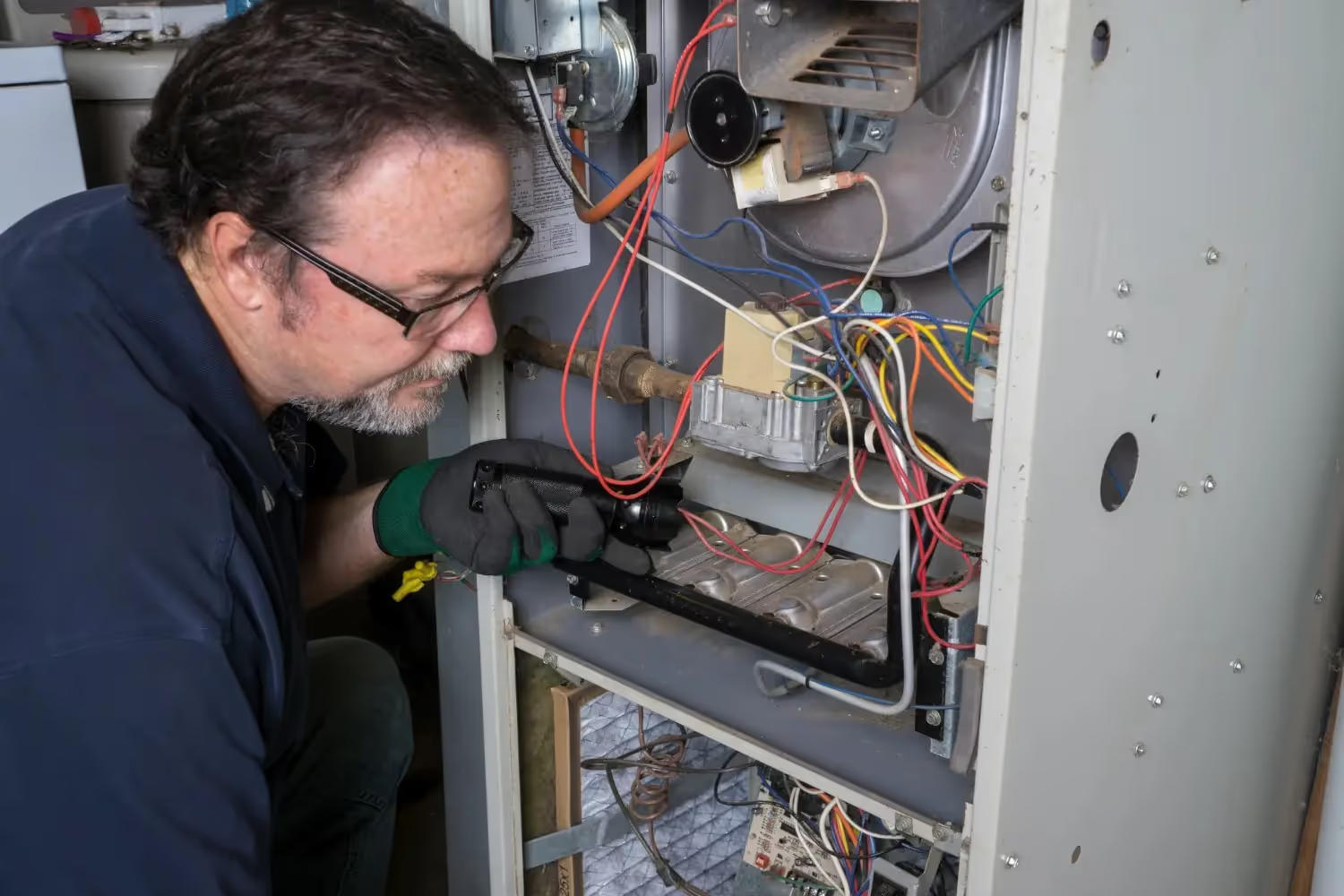
Component-Level Inspection Checklist
The scope of work performed during a maintenance visit covers several critical systems within the furnace.
- Heat Exchanger Inspection: The heat exchanger is the critical component that separates breathing air from combustion gases. Technicians inspect this for cracks or corrosion. A compromised heat exchanger can leak carbon monoxide into the living space, creating an immediate safety hazard.
- Burner Assembly Cleaning: Gas jets and burners accumulate dust and soot, which alters the air-to-fuel ratio. This results in inefficient combustion and wasted fuel. Cleaning these components ensures a proper flame profile and optimal heat generation.
- Ignition System Testing: Whether the system uses a standing pilot, hot surface igniter, or spark ignition, the start-up sequence is tested for reliability. Weak igniters are the most common cause of sudden furnace failure.
- Blower Motor and Capacitor Check: The blower moves air through the home. Technicians measure the amperage and voltage of the motor to ensure it is not straining. The capacitor, which helps the motor start, is tested for microfarad rating compliance.
- Flame Sensor Calibration: The flame sensor is a safety device that shuts off gas flow if no fire is detected. Over time, these become coated in oxidation. Cleaning the sensor prevents nuisance tripping where the furnace turns on and immediately shuts off.
- Safety Control Verification: Limit switches, rollout switches, and pressure switches are tested to verify they will successfully shut down the unit in the event of overheating or blocked venting.
The Maintenance Execution Process
Understanding the workflow of a maintenance appointment helps homeowners prepare for the visit. The process is streamlined to be thorough yet efficient, typically taking between 60 to 90 minutes depending on the condition of the unit and accessibility.
- Initial System Assessment: The technician begins by operating the thermostat to observe the startup cycle. This reveals immediate issues with ignition, airflow, or strange noises that indicate mechanical wear.
- Power and Fuel Shut-Off: For safety, gas and electricity to the unit are disconnected before internal work begins. This allows for safe handling of high-voltage components and moving parts.
- Internal Cleaning and adjustment: The cabinet is opened, and debris is removed. The blower wheel is inspected for dust buildup, which can reduce airflow by up to 30%. Electrical connections are tightened to prevent arcing or overheating wires.
- Combustion Analysis: For gas units, a combustion analyzer is often used to measure the efficiency of the burn and the content of the exhaust gases. This ensures the unit is venting properly and not producing excess carbon monoxide.
- Final Operation Test: Once the unit is reassembled, power is restored. The technician runs the system through a full heating cycle to measure temperature rise—the difference in temperature between the air entering the return and the air leaving the supply. This metric confirms the furnace is producing the correct amount of heat.
Why Professional Service Outperforms DIY Attempts
There is a significant difference between changing a filter and performing a furnace tune-up. While homeowners are encouraged to change filters monthly, the internal mechanisms of a modern furnace require specialized tools and training to service safely. The "DIY" approach often overlooks critical safety checks that only a certified professional can perform.
Modern high-efficiency furnaces involve complex circuit boards and pressure-sensitive switches. Without a multimeter and the knowledge of how to read wiring diagrams, a homeowner risks shorting out expensive control boards. Furthermore, handling gas lines and combustion chambers carries inherent risks of gas leaks or fire hazards if connections are not properly sealed and tested.
Warranty and Insurance Implications
Most furnace manufacturers include specific language in their warranty documentation requiring proof of annual maintenance by a licensed HVAC professional. If a major component like a compressor or heat exchanger fails, the manufacturer may void the parts warranty if the homeowner cannot provide records of professional upkeep. DIY maintenance rarely satisfies these requirements, potentially leaving the homeowner liable for thousands of dollars in repair costs.
Additionally, professional technicians utilize tools such as manometers to measure gas pressure and static air pressure. These specific measurements dictate how the system operates. A system running with gas pressure that is too high can overheat and crack the heat exchanger. A system with static pressure that is too high will burn out the blower motor. These are variables that cannot be assessed without professional diagnostic equipment.
When Maintenance Is No Longer Enough
While regular tune-ups extend the life of a heating system, there comes a point where repair or replacement becomes the more improved financial decision. Maintenance keeps a runnable system efficient, but it cannot reverse severe mechanical decay or obsolescence.
If a furnace is over 15 years old, it is approaching the end of its expected service life. Heat exchangers undergo thermal expansion and contraction thousands of times over a decade, eventually leading to metal fatigue. Once the heat exchanger is breached, the unit is unsafe and must be replaced; maintenance cannot fix a cracked heat exchanger.
Homeowners should monitor the frequency of repairs. If a system requires multiple service calls in a single season, or if the cost of a required repair approaches 50% of the cost of a new unit, investment in a new system is often more prudent. Additionally, if energy bills continue to rise despite regular maintenance and filter changes, the unit’s internal efficiency has likely degraded beyond the point of return.
Local Climate Factors Affecting Your Furnace
Alvaton experiences a climate that puts specific stressors on heating equipment. While winters are generally mild with highs in the mid-40s, the region is subject to cold snaps where temperatures drop significantly. This variability means a furnace must be able to modulate effectively, handling both light heating loads and heavy demands during freezing nights.
The area also receives significant annual precipitation, around 50 inches, with a wet late spring and early summer. High humidity levels can impact furnaces, particularly those located in crawl spaces or unconditioned basements. Excess moisture can lead to rust on burners and switch contacts. It can also promote mold growth within the ductwork if the system is not inspected regularly.
Permitting and Utility Considerations
Local building codes and utility requirements also influence how maintenance and repairs are handled. Any work involving gas line modification or major component replacement typically requires adherence to specific safety standards. Professional technicians are well-versed in local codes regarding venting distances, fresh air intake requirements, and electrical disconnect accessibility. Ensuring your system complies with these local regulations is vital for both safety and the resale value of the home.
Operational Standards and Technical Precision
Selecting a service provider for furnace maintenance is a decision based on trust and technical capability. The technician entering the home must be background-checked, drug-tested, and fully certified to handle refrigerants and fuel gas. The focus must be on precision—ensuring that every switch, sensor, and motor is operating within the tight tolerances set by the manufacturer.
A high-quality service provider does not just look for broken parts; they look for the root causes of potential future failures. This involves checking ductwork for leaks that depressurize the home, ensuring the thermostat is reading accurately, and verifying that the venting system is free of obstructions like bird nests or debris, which are common in the region.
When Carter Heating and Cooling performs a maintenance visit, the truck is stocked with universal parts to resolve common issues immediately. The goal is to avoid a second trip whenever possible. By verifying the integrity of the ignition system, the cleanliness of the blower, and the safety of the combustion process, the system is primed to deliver consistent, safe heat throughout the winter season.
Secure Your Heating Efficiency Today
Don't wait for the first freezing night to discover your furnace isn't working. Proactive maintenance is the only way to ensure reliability, safety, and efficiency when you need it most. A tuned-up system runs quieter, uses less energy, and provides consistent comfort across every room in the house.
Take control of your home comfort before the season changes — schedule service today.

Great Service at a Fair Price
Veterans Discount


Senior Discount

Law Enforcement

Fire fighters/ems

Hear From Your Neighbors!
Hear from your neighbors to see how our commitment to dependable service and lasting comfort has made a difference in their homes.