

How can we help today?
Choose an option to see quick actions and get help faster.Heating Replacement in Alvaton, KY
Heating Replacement in Alvaton, KY
Heating Replacement in Alvaton, KY
Your comfort should never be compromised by an unreliable heating system, especially when the temperature drops during Alvaton’s winter months. If your current unit requires constant adjustments or fails to heat your home evenly, contact us immediately to discuss financing options and schedule a consultation. With our rapid response team, you can transition from a failing unit to a high-efficiency system quickly and efficiently.
Carter Heating and Cooling understands that a breakdown is more than an inconvenience; it is a disruption to your daily life. We prioritize getting your home back to a comfortable temperature without unnecessary delays.
- Ensure your comfort is restored with same-day assessments and prompt installation scheduling.
- Partner with top-rated local experts dedicated to technical precision and installation quality.
- Benefit from transparent, flat-rate pricing with absolutely no hidden fees or surprise charges.
All installations are fully code-compliant with local regulations, backed by extended warranties and flexible financing options to fit your budget.
What You Get Today With Professional Replacement
When you decide to move forward with a heating replacement, you are investing in the long-term comfort and safety of your property. The service extends far beyond simply swapping one metal box for another. It involves a comprehensive approach to home climate control that addresses efficiency, air quality, and consistent performance.
Residents in Alvaton, KY, need heating solutions that can handle the specific atmospheric changes of the region. A modern replacement service provides immediate clarity on your options. You receive a thorough evaluation of your current ductwork, insulation, and home layout to ensure the new unit performs optimally.
We provide a seamless transition from your old unit to the new one. This includes handling all logistics, from safely disconnecting gas or electrical lines to the environmentally responsible disposal of the old equipment. You gain peace of mind knowing that the system installed is sized correctly for your specific square footage, eliminating issues like short-cycling or energy waste.
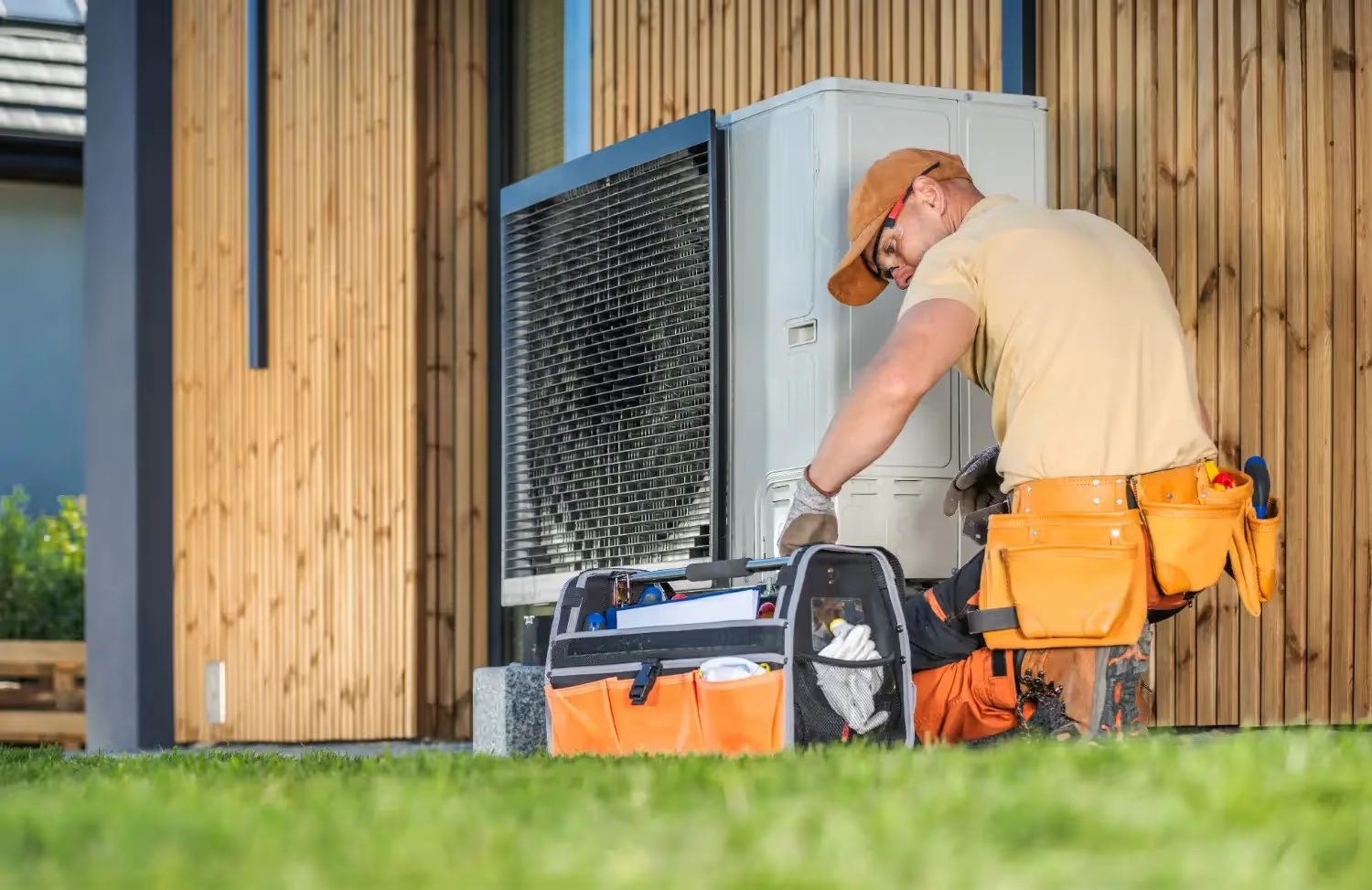
The Heating Installation and Replacement Process
A high-quality installation is the most critical factor in the lifespan of your heating system. Even the most expensive furnace or heat pump will fail prematurely if it is not installed according to manufacturer specifications and industry best practices. Our process is designed to be rigorous and methodical.
System Sizing and Load Calculation
The process begins with accurate sizing. Many older homes have units that were oversized, leading to inefficiency, or undersized, leading to inadequate heating.
- Technicians perform a Manual J load calculation to determine the exact heating requirements of your home.
- Factors such as window placement, insulation levels, and total square footage are analyzed.
- We recommend equipment capacity that matches your specific thermal needs to maximize energy efficiency.
Site Preparation and Safety Checks
Before the new unit arrives, the installation area is prepped to ensure safety and accessibility.
- Technicians lay down drop cloths and protective gear to keep your home clean.
- Existing gas lines, electrical connections, and flue pipes are inspected for wear or code violations.
- Any necessary upgrades to the immediate infrastructure are identified before installation begins to prevent future hazards.
Removal of Existing Equipment
Removing an old furnace or heat pump requires care to avoid damaging the surrounding property.
- The power and fuel sources are disconnected following strict safety protocols.
- The old unit is carefully disconnected from the ductwork and plenum.
- We remove the unit from the premises and handle all recycling or disposal procedures, so you are not left with debris.
Installation and Connection
This is the phase where technical expertise matters most. The new system is positioned and connected.
- The unit is leveled to ensure proper drainage and operation.
- The plenum and ductwork are sealed to the new unit to prevent air leakage.
- Gas lines or electrical wiring are reconnected and tested for voltage stability or leaks.
- Venting systems are installed to ensure carbon monoxide and exhaust gases are safely directed outside.
Final Commissioning and Testing
The job is not complete until the system is running at peak performance.
- Technicians fire up the system and monitor the startup cycle.
- Static pressure tests are conducted to ensure airflow is balanced throughout the house.
- Temperature rise is measured to verify the system is heating the air to the manufacturer’s specified range.
- The thermostat is calibrated or replaced to ensure accurate communication with the heating unit.
Signs It Is Time to Replace vs. Repair
Deciding between another repair bill and a full system replacement is a common dilemma for homeowners. While repairs can solve immediate issues, there is a tipping point where replacement becomes the more financially sound decision. Understanding the metrics of this decision helps you avoid throwing money at a dying system.
The Age of the System
Heating systems have a finite lifespan.
- Gas furnaces typically last between 15 and 20 years.
- Heat pumps usually have a service life of 10 to 15 years.
- If your system is approaching or has exceeded these age benchmarks, components will begin to fail in rapid succession. Investing in a new system eliminates the unpredictability of an aging unit.
The Cost of Repairs
Financial efficiency is a key driver for replacement.
- Utilize the "50% Rule": If the cost of the repair is 50% or more of the cost of a new system, replacement is the smarter choice.
- Consider the frequency of repairs. If you have called for service more than twice in the last two years, the system is likely unreliable.
- Major component failures, such as a cracked heat exchanger or a blown compressor, often necessitate replacement due to the high cost of parts and labor.
Rising Energy Bills
As systems age, they lose efficiency. Parts wear down, friction increases, and the unit has to work harder to produce the same amount of heat.
- Compare your energy bills from previous winters to the current season. A steady increase in usage without a change in weather severity indicates lost efficiency.
- Modern systems have higher AFUE (Annual Fuel Utilization Efficiency) ratings. Upgrading from an 80% AFUE furnace to a 95% AFUE model can result in significant monthly savings.
Comfort and Safety Issues
Your heating system should provide consistent warmth and safe operation.
- Uneven heating, where some rooms are cold while others are hot, indicates failing components or ductwork issues often best solved by a full system overhaul.
- operational noises, such as banging, screeching, or rattling, suggest internal mechanical failure.
- Visible rust, soot around the furnace, or yellow burner flames (instead of blue) can indicate incomplete combustion, which poses a carbon monoxide risk.
Navigating Local Requirements
Operating in South Central Kentucky requires adherence to specific codes and an understanding of the local climate. Alvaton experiences a varied four-season climate. While summers are hot, the winters bring lows that dip into the 40s and 30s, with occasional snowfall and freezing temperatures. Your heating system must be robust enough to handle these shifts without faltering.
Climate-Specific Equipment Selection
The local weather patterns influence the type of heating system that works best.
- Heat pumps are highly effective for the moderate cool days often found in Kentucky autumns and early winters.
- Dual-fuel systems or gas furnaces are often recommended for the deep winter freezes to ensure your home maintains temperature when the thermometer drops below freezing.
- Humidity control is also vital. We ensure systems are calibrated to handle the moisture variance common in the region.
Permits and Building Codes
Heating replacement is major construction work that falls under regulatory oversight.
- All installations must comply with Kentucky building codes and local ordinances.
- Permits are often required to ensure that gas piping, electrical wiring, and venting meet safety standards.
- A professional installation includes handling the permitting process. We ensure that your installation passes all necessary municipal inspections, protecting your home’s value and insurance validity.
Why Professional Installation Matters
Choosing the right contractor is just as important as choosing the brand of the heater. The HVAC industry is technical, and the quality of the labor dictates the efficiency of the machine. A poor installation can reduce a unit's efficiency by up to 30%, negating the benefits of buying high-efficiency equipment.
Technical Certification and Training
Modern heating systems rely on complex electronics and variable-speed motors.
- Technicians undergo continuous training to stay updated on the latest technology from major manufacturers.
- Proficiency in handling refrigerants, high-voltage electricity, and combustible gases is non-negotiable for safety.
- Proper tooling, from digital manifolds to combustion analyzers, ensures that the system is tuned to laboratory precision in your home.
Warranty Protection
Manufacturers protect their equipment with warranties, but these warranties are often contingent on professional installation.
- Equipment warranties cover the cost of parts if a defect occurs within a set timeframe (often 10 years).
- Improper installation by unlicensed individuals can void these manufacturer warranties immediately.
- We provide documentation and registration assistance to ensure your coverage is active and valid from day one.
Long-Term Support
A dedicated service provider considers the installation the beginning of the relationship, not the end.
- Carter Heating and Cooling provides ongoing support for maintenance and seasonal tune-ups.
- Access to emergency services means you have a partner to call if issues arise during a holiday cold snap.
- We maintain detailed service records of your installation, making future maintenance more efficient and accurate.
Types of Heating Systems Available
We supply and install a variety of heating technologies to suit the diverse housing stock found in the Alvaton area. Whether you have a modern home requiring a high-velocity system or a traditional property needing a standard furnace, we have the capabilities to execute the replacement.
Gas Furnaces
The most common heating source for many homes, gas furnaces offer powerful heating capabilities.
- Modern units operate with modulating gas valves that adjust the flame size in small increments for precise temperature control.
- Variable-speed blowers reduce noise and electrical consumption while improving air filtration.
- High-efficiency condensing furnaces capture escaping heat from exhaust gases, utilizing over 90% of the fuel energy.
Electric Heat Pumps
Heat pumps are efficient alternatives that move heat rather than generating it.
- In the winter, they extract latent heat from the outdoor air and transfer it inside.
- They serve double duty by reversing the cycle to provide air conditioning in the summer.
- Advanced scroll compressors allow heat pumps to operate effectively even as outdoor temperatures drop significantly.
Ductless Mini-Splits
For room additions, garages, or homes without ductwork, ductless systems provide targeted heating.
- These systems allow for zoning, meaning you only heat the rooms you are occupying.
- Installation is minimally invasive, requiring only a small hole in the wall for the conduit.
- They offer some of the highest efficiency ratings available on the market today.
Secure Your Heating Solution Today
Waiting until your heater fails completely can leave you scrambling during the coldest days of the year. Proactive replacement gives you control over the schedule, the budget, and the equipment choice. Do not let an inefficient system drain your wallet or compromise your indoor comfort any longer.
If your system is showing signs of age or failure, take action now. Contact Carter Heating and Cooling today to schedule your heating replacement consultation.

Great Service at a Fair Price
Veterans Discount


Senior Discount

Law Enforcement

Fire fighters/ems

Hear From Your Neighbors!
Hear from your neighbors to see how our commitment to dependable service and lasting comfort has made a difference in their homes.