
How can we help today?
Choose an option to see quick actions and get help faster.Is your furnace making strange noises, or failing to heat your home properly? You're not alone, and help is just a phone call away—contact us today or inquire about our available financing options to restore your heat immediately. Residents in Alvaton rely on functioning heating systems when the temperature drops, and ignoring these signs can lead to complete system failure.
- Get immediate, same-day service to restore your comfort.
- Trust certified expert technicians for high-quality and lasting repairs.
- Benefit from 24/7 emergency support for those unexpected breakdowns.
Backed by a full warranty and available financing options to make your life easier.
Quick and Efficient Furnace Repair When You Need It Most
When your heating system fails during a cold snap, time is the most critical factor. A malfunctioning furnace does more than just lower the temperature in your living space; it can jeopardize the safety of your plumbing pipes and compromise indoor air quality. Carter Heating and Cooling understands that heating issues rarely happen at convenient times. The goal is to diagnose the root cause of the failure accurately and implement a fix that holds up against the winter chill.
Heating systems often give warning signs before they shut down completely. Recognizing these symptoms early allows for repairs that are less invasive and less expensive than a full component replacement.
- Short Cycling: If the furnace turns on and off frequently without reaching the set temperature on the thermostat, it indicates a potential issue with the flame sensor, a clogged filter, or an oversized unit.
- Uneven Heating: Cold spots in specific rooms while others are too hot often point to ductwork issues or a failing blower motor that cannot circulate air effectively.
- Unusual Sounds: While a low hum is normal, banging, screeching, or rattling noises suggest loose mechanical parts or a belt that is about to snap.
- Yellow Pilot Light: A healthy furnace flame should be blue. A yellow or flickering flame can indicate a carbon monoxide leak, which requires immediate professional attention.
- Rising Energy Bills: If usage habits haven't changed but utility costs are spiking, the system is likely working overtime to compensate for a failing part.
Addressing these issues immediately prevents the compounding damage that turns a minor repair into a major overhaul.
Our Furnace Services – Comprehensive, Timely, and Reliable
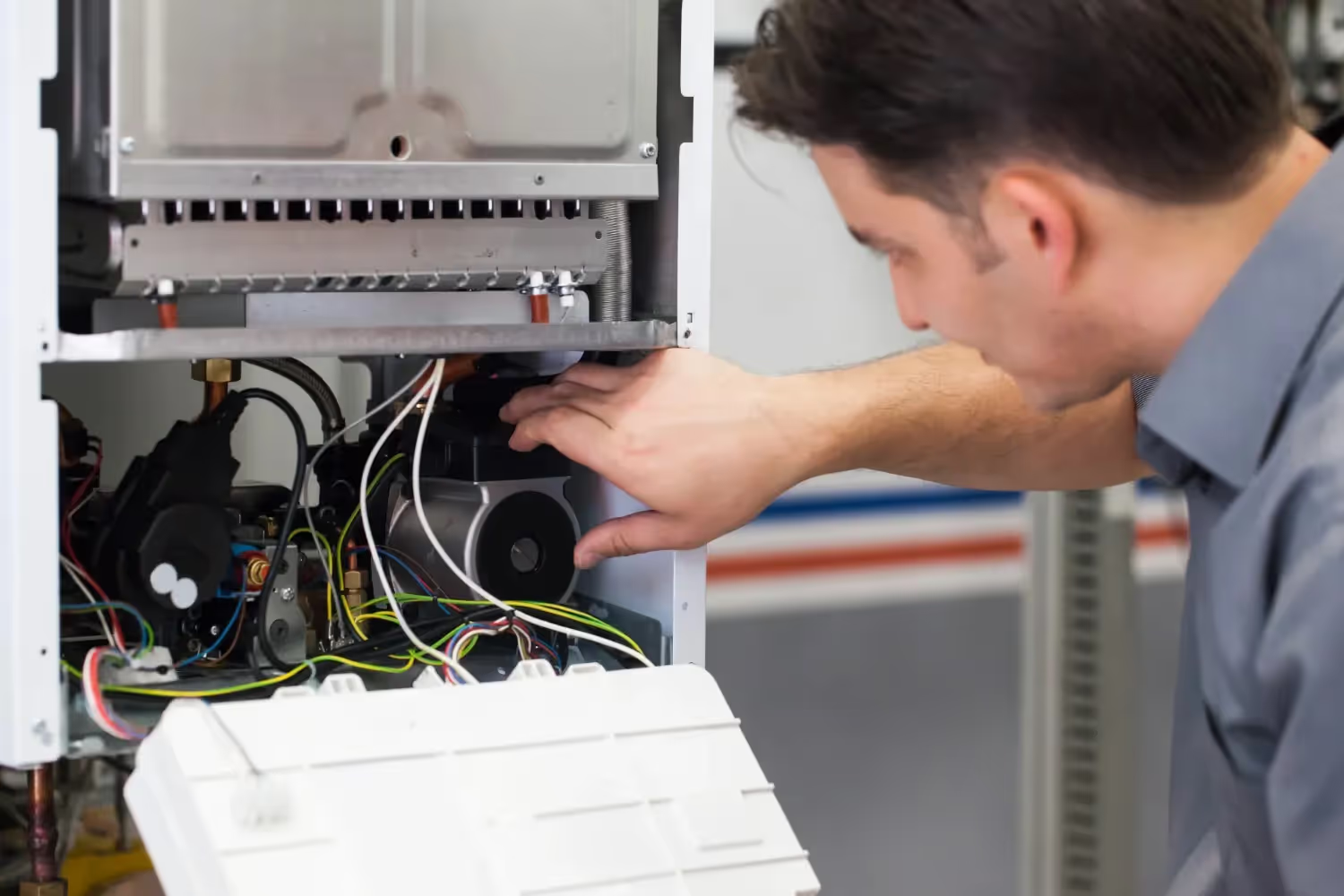
Professional furnace repair involves more than just swapping out a broken part. It requires a systemic approach to ensure the entire heating unit functions efficiently and safely. A comprehensive service call evaluates the airflow, the combustion process, and the electrical controls to ensure total system integrity.
When a technician arrives at your property, the focus is on pinpointing the failure point and checking all associated systems. This holistic approach ensures that a repaired furnace operates at peak efficiency, keeping energy costs manageable.
- Ignition System Repair: Modern furnaces rely on hot surface ignitors or intermittent pilots. If these fail, the furnace will not start. Technicians test voltage and resistance to determine if the ignitor needs replacement.
- Blower Motor Service: The blower is responsible for pushing warm air through the ducts. Issues here often involve failed capacitors or worn-out bearings. Repairs involve replacing these components to restore proper airflow.
- Heat Exchanger Inspection: This is the most critical safety check. A cracked heat exchanger can leak carbon monoxide into the home. Technicians use specialized cameras and combustion analyzers to verify the integrity of this component.
- Thermostat Calibration: Sometimes the issue isn't the furnace but the control center. Calibrating or replacing the thermostat ensures accurate communication between the user’s settings and the heating unit.
- Gas Valve and Line Check: For gas furnaces, ensuring proper pressure and checking for leaks in the supply line is standard procedure to guarantee safe operation.
- Sensor Cleaning and Replacement: Flame sensors often become coated in carbon buildup, causing the furnace to shut down as a safety precaution. Cleaning or replacing this sensor resolves many "no heat" calls.
How We Fix Your Furnace: A Step-by-Step Guide
Understanding the repair process eliminates the stress of the unknown. Professional repair services follow a structured workflow to ensure nothing is missed and the repair is executed correctly the first time. This standardized process protects the homeowner and ensures consistency in repair quality.
- First, Comprehensive Diagnostics: The technician begins by listening to the homeowner’s description of the problem. Following this, diagnostic tools are used to test electrical circuits, gas pressure, and airflow. This step isolates the exact component causing the failure.
- Next, Clear Explanation and Quote: Once the issue is identified, the technician provides a detailed explanation of what is wrong and presents a clear, flat-rate quote for the repair. No work begins until the scope and cost are approved.
- Then, Execution of Repairs: The technician proceeds with the repair using OEM (Original Equipment Manufacturer) or high-quality equivalent parts. This may involve draining the system, disassembling the burner assembly, or rewiring control boards.
- After, System Testing: Installing the part is not the final step. The system is run through a full heating cycle to ensure the new part functions correctly and that no other issues are present. This includes checking the temperature rise—the difference in temperature between the air entering and leaving the furnace.
- Finally, Safety and Cleanup: A final combustion analysis is performed to ensure safe gas levels. The work area is cleaned, and the technician reviews the repair with the homeowner, offering advice on how to maintain the system moving forward.
Deciding Between Repair and Replacement: What You Need to Know
Homeowners often face the difficult decision of whether to invest in another repair or to replace the heating unit entirely. While Carter Heating and Cooling aims to repair systems whenever feasible, there are mathematical and practical tipping points where replacement becomes the more improved financial decision.
Making this choice requires analyzing the age of the system, the frequency of recent repairs, and the cost of the current breakdown.
- The 50% Rule: If the cost of the repair approaches 50% of the value of a new system, replacement is generally the wiser investment. A simplified version of this is the "5000 Rule"—multiply the age of the furnace by the repair cost. If the number exceeds 5,000, replacement is recommended.
- Age of the Unit: Most gas furnaces have a lifespan of 15 to 20 years. If a unit is over 15 years old and requires a significant repair (like a blower motor or control board), the likelihood of another component failing soon is high.
- Efficiency Ratings (AFUE): Older furnaces often operate at 60% to 70% AFUE (Annual Fuel Utilization Efficiency). Modern units can reach up to 98%. Upgrading can result in significant monthly savings on energy bills, effectively offsetting the monthly cost of a new installation.
- Safety Concerns: If the heat exchanger is cracked, repair is rarely a safe option. In almost all cases involving a compromised heat exchanger in an older unit, replacement is the only responsible choice to ensure the safety of the household.
- Parts Availability: As units age, sourcing parts becomes more difficult and expensive. If a technician has to order a hard-to-find part that takes weeks to arrive, the downtime might not be worth the wait compared to a same-day installation of a modern unit.
Alvaton-Specific Heating Advice – Local Climate Considerations
Operating a furnace in Alvaton requires understanding the specific demands of the local climate. The region experiences a transition from mild springs to hot, humid summers, and eventually to winters where temperatures can drop to around 41°F or lower. This specific weather pattern impacts how heating systems degrade and how they should be maintained.
The transition from a humid summer to a cold winter is particularly hard on HVAC equipment. High humidity levels during the summer can lead to rust and corrosion on the furnace’s internal components, specifically the heat exchanger and burners, even when the furnace is not in use. When winter arrives and the furnace is fired up for the first time, these corroded parts can fail.
- Humidity Management: Because of the regional humidity, ensuring the furnace is paired with a clean, functioning drainage system (for high-efficiency condensing furnaces) is vital to prevent water damage and mold growth within the unit.
- Insulation and Ductwork: Many local homes, depending on their age, may have varying levels of insulation. A furnace must work harder in a poorly insulated home. Checking ductwork for leaks is essential in this region to prevent heating the crawlspace or attic instead of the living area.
- Gas vs. Electric: The region supports both fuel types, but gas furnaces are prevalent. For gas units, the fluctuation in barometric pressure and temperature requires precise calibration of the gas valve to ensure efficient combustion during the peak of winter.
- Seasonal Tune-Ups: Given the distinct seasons, the "shoulder seasons" of spring and fall are the ideal times for maintenance. Waiting until the first freeze often results in finding out the system has seized up during the idle summer months.
Why Choose Us? Certified Expertise and Trusted Service
Selecting a service provider for furnace repair is a decision that affects the safety and comfort of your home — see our reviews to see why neighbors trust us. The difference between a temporary patch and a long-term solution lies in the technical training and diagnostic capabilities of the team performing the work.
Technical expertise ensures that the root cause is addressed, not just the symptom. If a fuse blows, a basic repair replaces the fuse. An expert repair finds the short circuit or the overloaded motor that caused the fuse to blow in the first place.
- Certified Technicians: Technical staff undergo rigorous training and certification processes. This ensures familiarity with all major brands and models, from vintage units to modern, high-efficiency systems.
- Transparent Pricing: Diagnostic fees and repair costs are presented upfront. There are no hidden fees or hourly rate surprises. The focus is on value and transparency.
- Fully Stocked Trucks: Service vehicles carry a wide inventory of common parts. This minimizes the need for second visits and ensures that heat is restored as quickly as possible.
- Respect for Property: Technicians use shoe covers and drop cloths to protect flooring and maintain a clean workspace. The home is left in the same condition it was found, with the only difference being a working furnace.
- Warranty on Workmanship: Repairs are backed by guarantees on both parts and labor. This demonstrates confidence in the quality of the repair and provides peace of mind that the solution will last.
When the temperature drops and your system fails, you need a partner who prioritizes speed, accuracy, and safety. Carter Heating and Cooling provides the expertise required to navigate repair decisions and restore warmth to your home efficiently.
Don't let a broken furnace leave you in the cold—contact us now to schedule your repair service.
Fast, Reliable Furnace Repair You Can Trust
A furnace that’s making noise, short-cycling, or failing to heat properly is more than an inconvenience—it’s a warning sign that your home’s comfort and safety may be at risk. Acting quickly can prevent minor issues from escalating into costly breakdowns during the coldest days of the year. With expert diagnostics, upfront pricing, and dependable repairs, Carter Heating and Cooling is committed to restoring reliable heat to your Alvaton home without delay. Don’t wait until a small problem turns into a no-heat emergency—contact us today to schedule your furnace repair or ask about flexible financing options and get your comfort back fast.

Great Service at a Fair Price
Veterans Discount


Senior Discount

Law Enforcement

Fire fighters/ems
Hear From Your Neighbors!
Hear from your neighbors to see how our commitment to dependable service and lasting comfort has made a difference in their homes.