
How can we help today?
Choose an option to see quick actions and get help faster.Emergency Heating in Alvaton, KY
Emergency Heating in Alvaton, KY
Facing a heating emergency in Alvaton? Contact us for immediate, effective repair services to restore your comfort. No hidden fees, 24/7 availability.
Experiencing Heating Problems Right Now?
When your heating fails, every minute counts—especially during Alvaton's cold snaps or summer humid peaks. A malfunctioning system puts your property at risk of freezing pipes and leaves your household in uncomfortable, potentially dangerous conditions. Contact us immediately for emergency dispatch or apply for financing to resolve the issue without delay.
Carter Heating and Cooling is here to restore your comfort quickly and efficiently. We understand that heating emergencies rarely happen during convenient business hours, which is why our response protocol is designed for speed and accuracy:
- Immediate response and 24/7 service availability for critical failures.
- Expert technicians on-call to fix any heating issues right where you are.
- Clear, upfront pricing with no hidden fees before work begins.
- Licensed and insured for peace of mind, with options for every budget.
Immediate Action Plan for System Failures
When a heating system goes down in the middle of a freeze, the priority is minimizing downtime and preventing secondary damage to the home. An emergency service call differs from a standard tune-up; the focus is entirely on diagnostics and rapid resolution to restore heat.
Homeowners in Alvaton often face distinct challenges when heat fails. If the indoor temperature drops significantly, it can stress plumbing lines and impact the structural integrity of interior finishes. The immediate goal is to identify the root cause—whether it is an ignition failure, a cracked heat exchanger, or a blower motor burnout—and implement a lasting fix.
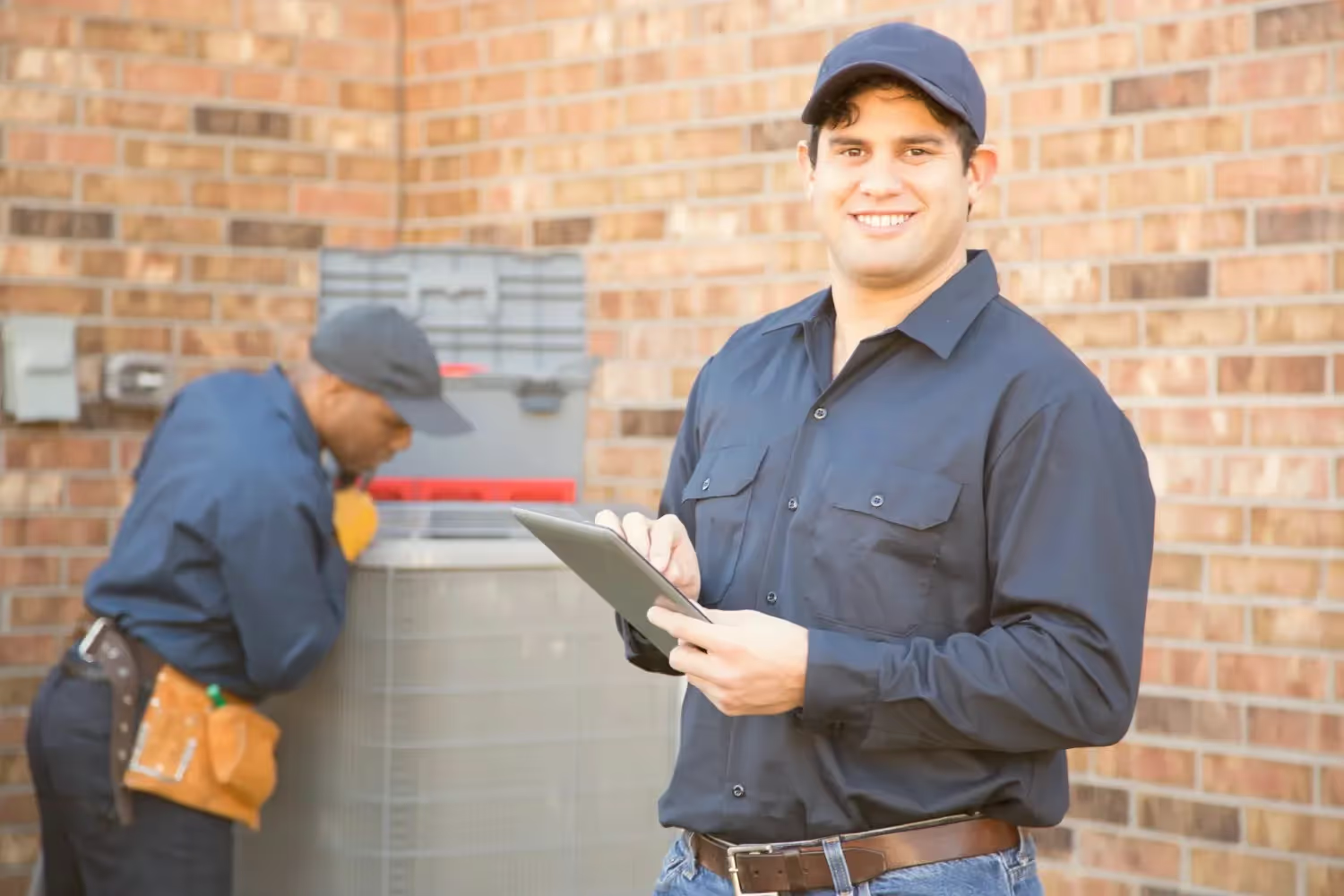
Upon arrival, the technician performs a safety inspection first. This ensures that the failure has not resulted in carbon monoxide leaks or electrical hazards. Once safety is confirmed, the diagnostic phase uses advanced multimeter testing and pressure gauges to pinpoint exactly why the system is not generating or distributing heat. This data-driven approach removes guesswork, allowing for a precise repair plan that addresses the mechanical failure rather than just treating the symptoms.
Scope of Emergency Repair Services
Emergency service covers a wide array of mechanical and electrical failures that stop a furnace or heat pump from functioning. It is not limited to simple fixes; it encompasses complex troubleshooting of modern HVAC technology.
Ignition and Pilot Control
Modern furnaces rely on electronic ignition systems or hot surface igniters. When these components fail, the system cannot burn fuel to create heat. Issues here often stem from dirty flame sensors, faulty control boards, or worn-out igniters. Technicians carry specific replacement parts to bypass these failures and re-establish the burn cycle.
Airflow and Blower Motor Restoration
If the furnace runs but air does not move, the issue likely lies with the blower motor or the run capacitor. A seized motor or a snapped belt (in older units) halts air circulation, causing the heat exchanger to overheat and trigger a safety limit switch. Restoring the blower operation is critical to moving warm air through the ductwork.
Thermostat and Control Board Logic
Sometimes the mechanical components are functional, but the "brain" of the system is not sending the correct signals. Loose wiring, blown fuses, or a fried circuit board can sever the communication between the thermostat and the furnace. Emergency repair involves tracing these electrical paths to locate the break and repair the connection.
Heat Pump Reversing Valves
For homes utilizing heat pumps, a stuck reversing valve can leave the system locked in cooling mode or defrost mode. This effectively pumps cold air into the house during winter. Technicians manually verify the valve's operation and replace solenoids or the valve assembly to ensure the unit generates heat.
How the Repair Process Works
Restoring heat requires a systematic workflow to ensure nothing is missed. The process is designed to be transparent, ensuring you understand exactly what is broken and what is required to fix it:
- Dispatch and Arrival: Once a call is logged, a fully stocked truck is dispatched to the location. The technician arrives equipped with universal parts and diagnostic tools to handle the majority of furnace and heat pump brands found in Kentucky.
- Comprehensive Assessment: The technician isolates the system and tests individual components. This involves checking gas pressure, voltage readings, and airflow static pressure.
- Review of Findings: You receive a detailed explanation of the failure. The technician presents the condition of the failed part, the cost to replace it, and any other worn components that might cause future issues.
- Execution of Repair: With approval, the repair is performed immediately. This involves removing the faulty component, installing the new part, and testing the system through a full heating cycle to verify performance.
- Safety Validation: Before leaving, the technician checks for gas leaks, carbon monoxide presence, and proper exhaust venting to ensure the system is safe for continuous operation.
When to Repair vs. Replace
During an emergency call, a decision often must be made regarding the viability of the current system. While the immediate goal is to get the heat back on, there are scenarios where a repair is financially imprudent or safety-compromised.
The 50% Investment Rule
Industry standards suggest that if the cost of the repair approaches 50% of the value of a new system, replacement is the smarter financial move. This is particularly true if the system is out of warranty. Putting a significant amount of money into an aging unit often leads to "throwing good money after bad" as other components begin to fail shortly after.
Safety Violations
If the diagnosis reveals a cracked heat exchanger, repair is rarely an option. A cracked exchanger allows deadly carbon monoxide to mix with the indoor air supply. In these instances, the system must be red-tagged and shut down immediately for the safety of the occupants. Replacement is the only safe path forward.
Age and Frequency of Breakdown
Furnaces generally last 15 to 20 years, while heat pumps last 10 to 15 years. If a system is nearing the end of this lifespan and has required multiple emergency repairs in the last two years, reliability is gone. Continuing to repair an end-of-life system increases the risk of a catastrophic failure during the coldest night of the year.
Technician Recommendation
Carter Heating and Cooling technicians provide honest assessments based on the physical condition of the unit, not sales quotas. If the metal is rusting through, the wiring is brittle, and efficiency has dropped significantly, the recommendation will reflect the long-term reality of the equipment.
Local Factors Impacting Heating Performance
Operating a heating system in Alvaton requires attention to specific regional environmental factors. The local climate places unique stresses on HVAC equipment that differ from other parts of the country.
High Humidity and Component Corrosion
Kentucky experiences high humidity from spring through fall. While the heating system is dormant during these months, moisture can accumulate on the heat exchanger and inside the cabinet. This accelerates rust and corrosion. When the system is fired up for the first time in late autumn, this rust can lead to clogged burners or compromised structural integrity. Emergency repairs often stem from this off-season deterioration.
Variable Winter Temperatures
The region sees temperature swings where highs can reach the 50s and lows dip into the 20s within the same week. This forces heating systems to cycle on and off frequently, rather than running at a steady state. Frequent cycling places higher stress on ignition systems and start capacitors, making them the most common failure points in this area.
Utility Infrastructure and Electrical Surges
Rural and semi-rural areas can experience power fluctuations during storms. Sensitive modern furnace control boards are susceptible to voltage spikes. Without proper surge protection, a winter storm can fry the electronics of a heating system, requiring an emergency board replacement.
Permitting and Code Compliance
If an emergency repair turns into a system replacement, local building codes must be followed. This includes requirements for flue sizing, gas line pressure testing, and electrical disconnects. Professional service ensures that any major work performed complies with local regulations, preventing issues during future home sales or inspections.
Why Professional Execution Matters
Attempting DIY repairs on a heating system is dangerous and often ineffective. Modern systems involve high-voltage electricity, combustible gases, and pressurized refrigerants. Professional technicians possess the certifications and specialized tooling to handle these elements safely:
- Accurate Diagnostics: Without the right tools, it is easy to misdiagnose a problem. Replacing a thermostat when the issue is actually a bad transformer wastes time and money. Professionals trace the root cause instantly.
- Truck Stock Inventory: A professional service vehicle acts as a mobile warehouse. This minimizes the need to wait for supply houses to open, ensuring that heat is restored during the initial visit in most cases.
- Warranty Protection: Most manufacturer warranties require proof of professional maintenance and repair. Unauthorized tampering can void these warranties, leaving the homeowner liable for expensive parts.
- Long-Term Reliability: A professional repair includes checking the surrounding components. This holistic approach prevents "fix-one-thing, break-another" scenarios, ensuring the system runs reliably for the remainder of the season.
Restoring Comfort to Your Home
Heating emergencies disrupt life and pose genuine risks to your property. Waiting is not a strategy. You need a team that understands the urgency of the situation and possesses the technical capability to resolve it immediately. From diagnosing complex electrical faults to replacing critical mechanical components, the goal is always the same: safety, warmth, and reliability.
When the temperature drops and the system fails, secure a solution that lasts. Trust the team that prioritizes technical excellence and rapid response.
Contact Carter Heating and Cooling now to dispatch an emergency technician to your home.

Great Service at a Fair Price
Veterans Discount


Senior Discount

Law Enforcement
Fire fighters/ems
Hear From Your Neighbors!
Hear from your neighbors to see how our commitment to dependable service and lasting comfort has made a difference in their homes.