
How can we help today?
Choose an option to see quick actions and get help faster.UV Coil Purifier Replacement in Woodburn, KY
UV Coil Purifier Replacement in Woodburn, KY
Boost your home's air quality with our professional UV coil purifier replacement service in Woodburn. Contact us today for safe, effective, and quick installation options!
Is Your Air as Safe as It Could Be? Replace Your UV Coil Purifier Now
Don't wait for the allergy season to find out your air isn't as clean as it should be. Make sure your home is safe and comfortable with a new UV coil purifier by contacting our team for service or applying for financing options today. Neglecting this vital component of your HVAC system can lead to rapid microbial growth inside your air handler, circulating spores and bacteria throughout your Woodburn home. Carter Heating and Cooling provides precise replacement services that restore the sanitation barrier in your ventilation system, ensuring your indoor environment remains healthy.
- Experience immediate improvement in air quality.
- Reduce common allergens and pathogens from your indoor air.
- Extend the lifespan of your HVAC system with optimal purifier performance.
All installations are backed by a full warranty and flexible financing options.
What is Included in Your UV Coil Purifier Replacement
When you schedule a replacement service, you are paying for more than just a new bulb. You are investing in the continued efficiency and sanitation of your central heating and cooling system. The service is designed to be comprehensive, ensuring that the new unit functions correctly with your specific HVAC make and model.
A professional replacement appointment covers a complete inspection of the existing UV housing and ballast. Over time, the electrical components powering the UV lamp can degrade, leading to flickering or inconsistent output even with a fresh bulb. Technicians verify the voltage and electrical connections to prevent premature failure of the new unit.
The service also includes the careful handling and disposal of the old mercury-vapor lamps. UV bulbs often contain materials that require specific disposal methods to remain environmentally compliant. Following the removal, the evaporator coil is inspected. If the previous bulb failed months ago, biofilm may have already begun to accumulate. The service ensures the area is prepped so the new UV-C light can effectively sterilize the surfaces immediately upon activation.
Most replacements are completed in a single visit. Inventory is stocked to match common plenum sizes and voltage requirements found in local residential systems. The goal is to minimize downtime so that your air quality is restored the same day.
How the UV Coil Purifier Replacement Process Works
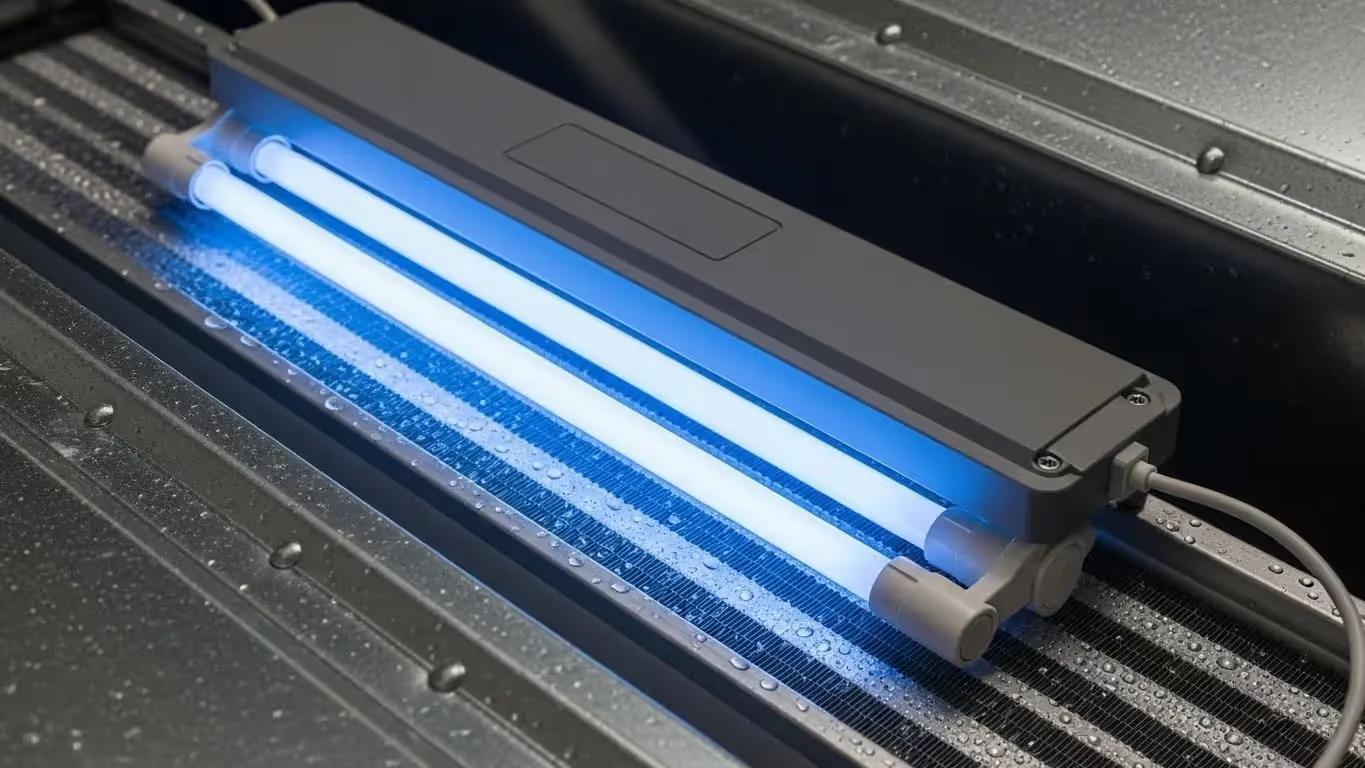
Replacing a UV coil purifier is a technical procedure that involves working with high-voltage electricity and fragile components within the tight confines of your HVAC plenum. This process is executed methodically to ensure safety and maximum irradiation of the cooling coils.
- System Assessment and Safety Disconnect: The process begins by cutting power to the HVAC system to prevent electrical shock or accidental exposure to UV radiation, which can be harmful to skin and eyes. Technicians assess the current placement of the unit to ensure it is positioned for maximum exposure to the evaporator coil and drain pan.
- Removal of Defective Components: The old lamp is carefully unclipped and removed. If the ballast or mounting bracket shows signs of heat damage or corrosion, these components are also uninstalled. Great care is taken not to break the glass, as this would release contaminants into the air stream.
- Surface Preparation and Cleaning: Before the new light is installed, the mounting surface and the coil itself are inspected. Dust or debris on the coil can shadow microorganisms, protecting them from the UV light. While a full coil cleaning is a separate service, the immediate area is prepped to ensure the light has a clear path to the target surfaces.
- Installation of New Hardware: The new UV assembly is mounted. If upgrading to a more powerful unit, this may involve modifying the plenum slightly to accept a larger mounting bracket. The bulb is handled with specialized gloves to prevent skin oils from creating hot spots that shorten the lamp's life.
- Electrical Connection and Testing: The unit is hardwired into the HVAC system’s power supply or a dedicated transformer. Once connected, the system is powered on, and the UV light is tested. Viewing ports are used to visually confirm the light is operational without exposing the technician to direct rays.
- Performance Verification: Finally, the system is checked to ensure the light activates in sync with the blower motor (if configured that way) or remains on continuously for constant sterilization.
When to Replace Your UV System Instead of Repairing
Homeowners often ask if they can simply change the bulb or if the entire UV system needs to be swapped out. While bulbs are consumables, the electronic ballast that powers them is not. Understanding the difference between routine maintenance and a necessary replacement is key to budget management.
- Bulb Lifespan Exceeded: Most UV-C lamps have an effective lifespan of 9,000 to 12,000 hours, roughly one to two years depending on usage. Even if the bulb still lights up blue, the germicidal UV-C output degrades significantly after this period. If your bulb is over two years old, it is generating light but likely not killing bacteria.
- Ballast Failure: If a new bulb fails to light up, or if the system creates a buzzing noise, the ballast is likely the culprit. In many modern units, the cost of a standalone ballast approaches the cost of a completely new, more efficient system. In these cases, full replacement is the more economic choice.
- Visible Mold on the Coil: If you inspect your HVAC filter or coil and see visible mold growth despite having a UV light, the current system is ineffective. It may be underpowered for the size of your ductwork or positioned incorrectly. Replacing it with a higher-output dual-lamp system or a stick light better suited for your specific coil geometry is necessary to regain control of indoor air quality.
- Physical Damage and Corrosion: High humidity environments can cause corrosion on the electrical contacts of the UV system. If the socket is corroded, it creates resistance that generates heat and burns out bulbs prematurely. Replacing the entire fixture eliminates this fire hazard and reliability issue.
Local Climate Factors Impacting UV Performance
In Woodburn, KY, the climate plays a significant role in how your HVAC system and its accessories function. The region experiences a humid subtropical climate, characterized by hot, muggy summers and generally mild winters. This specific weather profile makes the UV coil purifier an essential, not optional, component for indoor air quality.
- High Humidity and Biofilm Growth: The primary function of the evaporator coil is to remove heat and moisture from the air. In humid climates, this coil stays wet for long periods. This moisture creates the perfect breeding ground for mold and biofilm. Without a functioning UV light, this slime builds up quickly, insulating the coil and reducing its ability to transfer heat. This forces your AC to run longer to reach the thermostat setting.
- Allergen Load: Spring and fall in this area bring high pollen counts. While filters catch solid particulates, the biological matter that passes through can settle in the HVAC system. A functioning UV replacement ensures that any biological allergens that adhere to the moist coil are neutralized before they can multiply and become airborne again.
- Permitting and Electrical Safety: HVAC modifications involving electrical work must adhere to local building codes. Improperly installed UV lights can damage the air handler’s wiring or void manufacturer warranties. Professional replacement ensures that the voltage draw is calculated correctly so that the addition of the purifier does not overload the system’s transformer or control board.
The Science of UV-C and Coil Efficiency
Understanding the mechanism behind the equipment reinforces why timely replacement is non-negotiable. UV-C light works by penetrating the cell walls of microorganisms—bacteria, viruses, mold spores—and scrambling their DNA. This prevents them from reproducing.
When a UV coil purifier is operating correctly, it keeps the coil "factory clean." This has a direct impact on energy bills. A coil covered in even a thin layer of biofilm (0.002 inches) can reduce heat transfer efficiency by nearly 40%. By replacing your UV unit before it fails completely, you maintain the energy efficiency of your air conditioner.
Furthermore, a clean coil improves airflow. Biofilm narrows the spaces between the delicate aluminum fins of the coil, increasing static pressure. This forces the blower motor to work harder to push air through the system. Replacing the UV purifier protects the expensive blower motor from strain-related failure.
Types of UV Coil Purifiers Available for Replacement
Not all UV lights are created equal, and the technology changes rapidly. During a replacement service, you may have the option to upgrade to a different style of purifier that better suits your home's needs.
- Single vs. Dual Lamp Systems: For larger "A-frame" or "N-coil" evaporators often found in larger homes, a single lamp may not provide enough coverage to irradiate both sides of the coil. Dual lamp systems can be installed to ensure no dark spots remain where mold can hide.
- Low-Voltage vs. Line-Voltage: Some older units are powered by the 24-volt control circuit of the thermostat. This can sometimes tax the transformer. Newer line-voltage models (120v or 240v) draw power directly from the main supply, offering more consistent intensity without risking the control board components.
- Ozone-Free Options: Some older models of air purifiers produced ozone as a byproduct. While ozone can eliminate odors, it can be an irritant to those with asthma. Modern replacement units focus strictly on germicidal UV-C wavelengths (254 nm) that do not produce ozone, ensuring the air is clean without adding respiratory irritants.
Why Professional Installation Matters
While it may seem like a simple bulb change, the environment inside an HVAC plenum is hostile. It is dark, windy, and filled with sharp metal edges. Professional technicians are equipped to handle these challenges safely.
- Proper Placement: The distance between the lamp and the coil follows the inverse square law of light intensity. If the lamp is mounted two inches too far away, its effectiveness drops dramatically. Technicians calculate the optimal mounting distance to ensure the coil receives a lethal dose of UV radiation for microbes.
- Material Safety: UV-C light degrades plastics and organic materials. If a lamp is installed near plastic drain pans or wiring without proper shielding, it can cause water leaks or electrical shorts over time. Carter Heating and Cooling technicians install metal shielding or UV-resistant tape to protect sensitive internal components from UV damage.
- Warranty Preservation: Many HVAC manufacturers require proof of professional maintenance to keep the warranty on the compressor and coil valid. A DIY installation that accidentally drills into the coil or damages the wiring can void the warranty on your entire heating and cooling system.
Ensuring Long-Term Indoor Air Quality
Replacing your UV coil purifier is a proactive step toward a healthier home environment. It moves beyond simple temperature control to address the biological quality of the air your family breathes. With the unit functioning correctly, the HVAC system circulates air that has been scrubbed of the mold and bacteria that typically thrive in dark, damp environments.
Consistent replacement schedules also prevent the "dirty sock syndrome" often reported in heat pumps and AC units, where bacterial growth on the coil creates a musty odor whenever the system kicks on. By maintaining a sterile coil, the air remains fresh and odorless.
Take control of your indoor environment. Ensure your system is running efficiently and your air is free from unseen contaminants. Contact us today to schedule your UV coil purifier replacement and breathe easier tomorrow.

Great Service at a Fair Price
Veterans Discount


Senior Discount

Law Enforcement

Fire fighters/ems

Hear From Your Neighbors!
Hear from your neighbors to see how our commitment to dependable service and lasting comfort has made a difference in their homes.