
How can we help today?
Choose an option to see quick actions and get help faster.Furnace Tune-Up in Woodburn, KY
Furnace Tune-Up in Woodburn, KY
Furnace Tune-Up in Woodburn, KY
Restore Consistent Heat and Efficiency to Your Home
Is your furnace not performing at its peak? Ensure your home stays warm this winter with a professional furnace tune-up. Contact us immediately to schedule your service or inquire about available financing options for system upgrades.
Heating systems often give subtle warning signs before they fail completely, ranging from uneven heating in different rooms to unexplained spikes in utility costs. In Woodburn, KY, where winter lows frequently drop into the 20s and 30s, relying on an unmaintained system is a risk to both your comfort and your home’s plumbing infrastructure. Carter Heating and Cooling provides comprehensive maintenance designed to catch small issues before they evolve into expensive emergency repairs. A proactive approach to heating maintenance restores system reliability and ensures your equipment operates according to manufacturer specifications.
- Enhance your furnace's efficiency and lifespan through calibrated adjustments.
- Reduce your energy bills with optimized performance and improved airflow.
- Quick appointments available, often same-day, to fit your schedule.
All services come with a satisfaction guarantee and adhere strictly to local codes and safety standards.
Comprehensive Furnace Maintenance: What Is Included
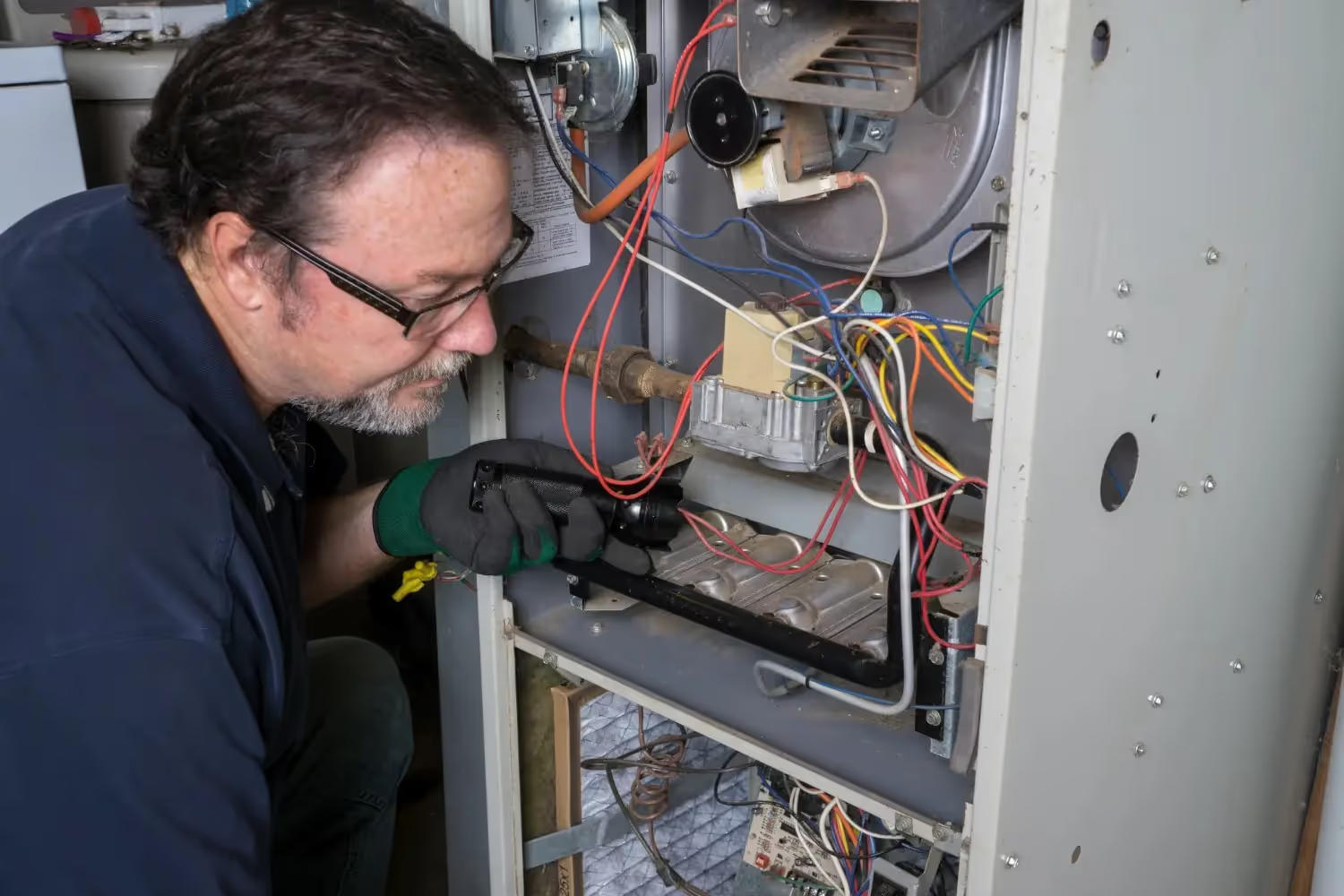
A professional tune-up is far more than a simple filter change. It is a rigorous, multi-point inspection and adjustment process designed to bring your heating unit back to factory specifications. Over time, vibration loosens electrical connections, dust coats sensitive sensors, and friction wears down moving parts. Our technicians meticulously go through the system to address these wear-and-tear factors.
Residents in Woodburn rely on their furnaces for months at a time, which places significant strain on internal components. Our maintenance service covers the entire anatomy of your heating system, ensuring every cycle is safe and efficient.
- Safety and Gas Valve Inspection: We test the ignition system for safe operation and inspect the gas piping for leaks. Technicians analyze the burner flame to ensure proper combustion; a blue flame indicates efficient burning, while a yellow flame can signal dangerous carbon monoxide production.
- Heat Exchanger Analysis: The heat exchanger is critical for separating breathing air from combustion gases. We inspect this component for cracks, corrosion, or separation, which are vital safety checks to prevent carbon monoxide leaks into your living space.
- Blower Motor and Airflow Optimization: Dust buildup on the blower wheel acts as weight, causing the motor to work harder and draw more amperage. We clean the blower compartment and check the capacitor to ensure the motor starts and runs smoothly, preventing premature burnout.
- Electrical Connection Tightening: Loose wires cause resistance, leading to heat buildup and potential electrical failure. We tighten all voltage connections and measure voltage and amperage against the manufacturer’s data plate.
- Thermostat Calibration: We verify that your thermostat reads the ambient temperature accurately and communicates effectively with the furnace, ensuring the cycle starts and stops exactly when it should.
- Flue Draft Testing: We inspect the flue pipe to ensure exhaust gases are venting properly out of your home and that there are no blockages from debris or animal nests.
- Sensor Cleaning: The flame sensor is a safety device that confirms a fire is present. If it gets dirty, it shuts the furnace down unnecessarily. We clean this sensor to prevent nuisance lockouts.
The Operational Process: How Your Tune-Up Works
Understanding the workflow of a maintenance visit helps homeowners prepare and know what to expect. The goal is to minimize disruption to your day while maximizing the performance of your HVAC equipment. From the moment a technician arrives at your property, the focus is on respect, cleanliness, and technical precision.
- Arrival and Site Protection: The technician arrives within the scheduled window, parking in a designated area. Before entering, shoe covers are applied, and drop cloths are used around the work area to protect flooring and surrounding property.
- Initial System Test: The system is run through a standard heating cycle to listen for unusual noises, such as rattling, squealing, or banging, which often point to loose parts or bearing issues.
- Power Down and Disassembly: Electrical power and gas supply to the unit are turned off for safety. The service panels are removed to access the internal blower, burners, and controls.
- Deep Clean and Adjustment: This is the core phase where vacuuming, brushing, and chemical cleaning (if necessary) occur. Lubrication is applied to motors and bearings if the specific model requires it.
- Reassembly and Testing: Once cleaning and adjustments are complete, the unit is reassembled. Power is restored, and the system is run for roughly 15 to 20 minutes to verify that temperature rise (the difference between return air and supply air temperature) falls within the recommended range.
- Reporting and Recommendations: You receive a detailed report of the findings. If a part is near failure or efficiency is significantly degraded, the technician provides clear, non-pressured options for repair or future planning.
When to Repair vs. When to Replace
Deciding between continuing to maintain an aging unit or investing in a replacement is a common dilemma. While a tune-up extends the life of a furnace, there are thresholds where maintenance is no longer the most improved financial decision. This evaluation often happens during the maintenance visit when the internal condition of the unit is fully visible.
Carter Heating and Cooling technicians help you navigate this decision based on data, safety, and cost-efficiency.
Stick with Repair and Maintenance When:
- The Unit is Under 10-12 Years Old: Most modern furnaces are designed to last 15 to 20 years. If the unit is relatively young, a tune-up or minor repair is usually the correct path.
- Repair Costs are Low: If the cost to fix a specific issue is less than 50% of the value of the equipment, repair is generally recommended.
- Performance is Consistent: If the unit keeps the house warm but is just making a noise or has a minor electrical issue, maintenance will likely resolve the problem.
- Warranty is Active: Many manufacturer warranties require proof of annual maintenance to remain valid. Keeping up with tune-ups ensures you remain covered for major part failures.
Consider Replacement When:
- Cracked Heat Exchanger: This is a "red tag" failure due to safety risks. In almost all cases involving older units, a cracked heat exchanger necessitates system replacement.
- Rising Energy Bills: If your utility costs are climbing despite consistent usage and maintenance, the unit’s efficiency rating (AFUE) may have degraded beyond recovery.
- Frequent Breakdowns: If you are calling for repairs multiple times in a single winter, the cumulative cost of service calls often outweighs the monthly investment in a new, high-efficiency system.
- Parts Obsolescence: For very old units, sourcing replacement parts can become difficult or prohibitively expensive.
Local Climate Factors Impacting Your Furnace
Operating a heating system in Woodburn, KY requires specific attention to regional environmental factors. The humid subtropical climate brings hot summers and mild to cool winters, but the transition periods and specific weather patterns affect how furnaces age and operate.
- Freeze-Thaw Cycles: With winter lows dropping to 20-30°F, your furnace works hard during the night and cycles off during warmer afternoons. This constant expansion and contraction of metal components places stress on the heat exchanger. Regular inspections are vital to catch stress fractures caused by thermal fatigue.
- Humidity and Corrosion: Woodburn sees significant annual precipitation, averaging around 50 inches. High humidity levels, even in cooler months, can lead to oxidation and rust on electrical contacts and the burner assembly. A tune-up includes cleaning these contacts to ensure reliable ignition.
- Filter Load: In this region, pollen and agricultural dust can be prevalent. This debris infiltrates the home and clogs filters faster than in other areas. A restricted filter suffocates the furnace, causing it to overheat. During maintenance, we evaluate if your current filtration setup is adequate for the local air quality load.
- Local Utility Requirements: Natural gas and electric setups must adhere to specific local utility codes regarding venting and clearances. Professional technicians ensure your system remains code-compliant, which is essential for insurance purposes and future property sales.
Why Technical Expertise Matters
Furnace maintenance is a technical discipline that involves high-voltage electricity and combustible gases. The difference between a cursory check and a professional tune-up lies in the depth of the diagnostic testing. A proper tune-up is proactive, looking for the "silent" failures that don't yet stop the heat but are actively reducing efficiency or safety.
We prioritize the technical integrity of the system. This means using advanced diagnostic tools to measure static pressure within the ductwork, analyzing the micro-amps of the flame sensor, and testing the capacitance of the start components. These are not things that can be checked visually; they require calibrated equipment and trained interpretation.
- Certified Technicians: The team consists of trained professionals who understand the thermodynamics of heating systems and the specific models installed in this area.
- Transparent Communication: You receive clear explanations of what was done and why. If a capacitor is weak, we explain what that means for your motor, rather than just saying "it's bad."
- Respect for Property: We treat your home with care, using protective gear to ensure no mess is left behind.
- Inventory Readiness: Service trucks are stocked with common universal parts, meaning that if a small repair is identified during the tune-up, it can often be resolved immediately without a second trip.
Ensuring Winter Comfort Through Prevention
The best time to address heating issues is before the first freeze settles in. Waiting until the system fails on the coldest night of the year leads to discomfort, potential frozen pipes, and higher emergency service costs. A scheduled tune-up provides peace of mind, knowing that a professional has verified every safety switch, gas valve, and electrical connection in your system.
Your heating system is a significant investment in your home. Protecting that investment requires regular, professional attention. By optimizing airflow, ensuring safe combustion, and tightening electrical components, you reduce the risk of unexpected breakdowns and keep your monthly energy costs in check.
Do not wait for a breakdown to think about your heating system. Secure your comfort and safety now. Contact Carter Heating and Cooling today to schedule your comprehensive furnace tune-up.

Great Service at a Fair Price
Veterans Discount


Senior Discount

Law Enforcement

Fire fighters/ems

Hear From Your Neighbors!
Hear from your neighbors to see how our commitment to dependable service and lasting comfort has made a difference in their homes.