
How can we help today?
Choose an option to see quick actions and get help faster.Experiencing Heater Issues? Get Fast, Reliable Repair Today
Is your home suddenly chilly despite the heater running? You might need a quick, professional repair to bring back the comfort, so contact us immediately to schedule a diagnostic visit or to ask about financing options. Homeowners in Woodburn, KY know that when the temperature drops, a malfunctioning furnace turns from a minor annoyance into an urgent priority.
We provide the rapid response and technical expertise required to restore your heating system efficiently.
- Receive same-day service to ensure maximum comfort.
- Work with certified technicians skilled in handling all heating models.
- Benefit from transparent pricing with no hidden fees.
All repairs comply with Kentucky HVAC standards, ensuring your peace of mind and long-term system safety.
Quick Fixes for Common Heater Problems
Heating systems are complex machines that rely on a sequence of electrical signals, fuel combustion, and airflow to function correctly. When one component fails, the entire system can shut down or operate inefficiently. Identifying the root cause is the first step toward a solution. Many issues stem from wear and tear, lack of maintenance, or component fatigue.
The Furnace Is Blowing Cold Air
If your vents are pushing out air that matches the room temperature rather than warming it, the issue often lies with the heat source or the fan limit switch.
- Pilot Light or Ignition Failure: On older gas units, the pilot light may have gone out. On modern units, the electronic ignition or intermittent pilot might be failing to ignite the burners.
- Limit Switch Malfunction: If the system overheats, the limit switch shuts off the burners while the blower fan continues to run to cool the unit down. This results in cold air circulating through the home.
- Thermostat Settings: Sometimes the fan is set to "ON" instead of "AUTO," causing the fan to run continuously even when the heating cycle is off.
Short Cycling
When a furnace turns on and off rapidly without reaching the set temperature, it is called short cycling. This puts immense stress on the heat exchanger and increases energy bills.
- Restricted Airflow: A clogged filter is the most common culprit. It causes heat to build up inside the plenum, triggering safety switches to shut the unit down.
- Flame Sensor Issues: If the flame sensor is dirty or corroded, it cannot detect the burner flame, causing the gas valve to close prematurely as a safety precaution.
- Oversized Unit: If a heating unit is too large for the square footage of the home, it will heat the space too quickly and shut off, leading to humidity issues and wear on the motor.
Unusual Noises During Operation
Heaters should operate with a consistent hum. Rattling, banging, or squealing indicates mechanical failure.
- Squealing: This usually points to a slipped or frayed blower belt, or dry bearings in the blower motor that require lubrication.
- Scraping: Metal-on-metal sounds suggest the blower wheel has come loose and is hitting the housing, which requires immediate shutdown to prevent total destruction of the blower assembly.
- Rattling: Loose panels, unsecured ductwork, or a cracked heat exchanger can cause rattling sounds. A cracked heat exchanger is a serious safety hazard requiring immediate professional attention.
Comprehensive Repair Services — What to Expect
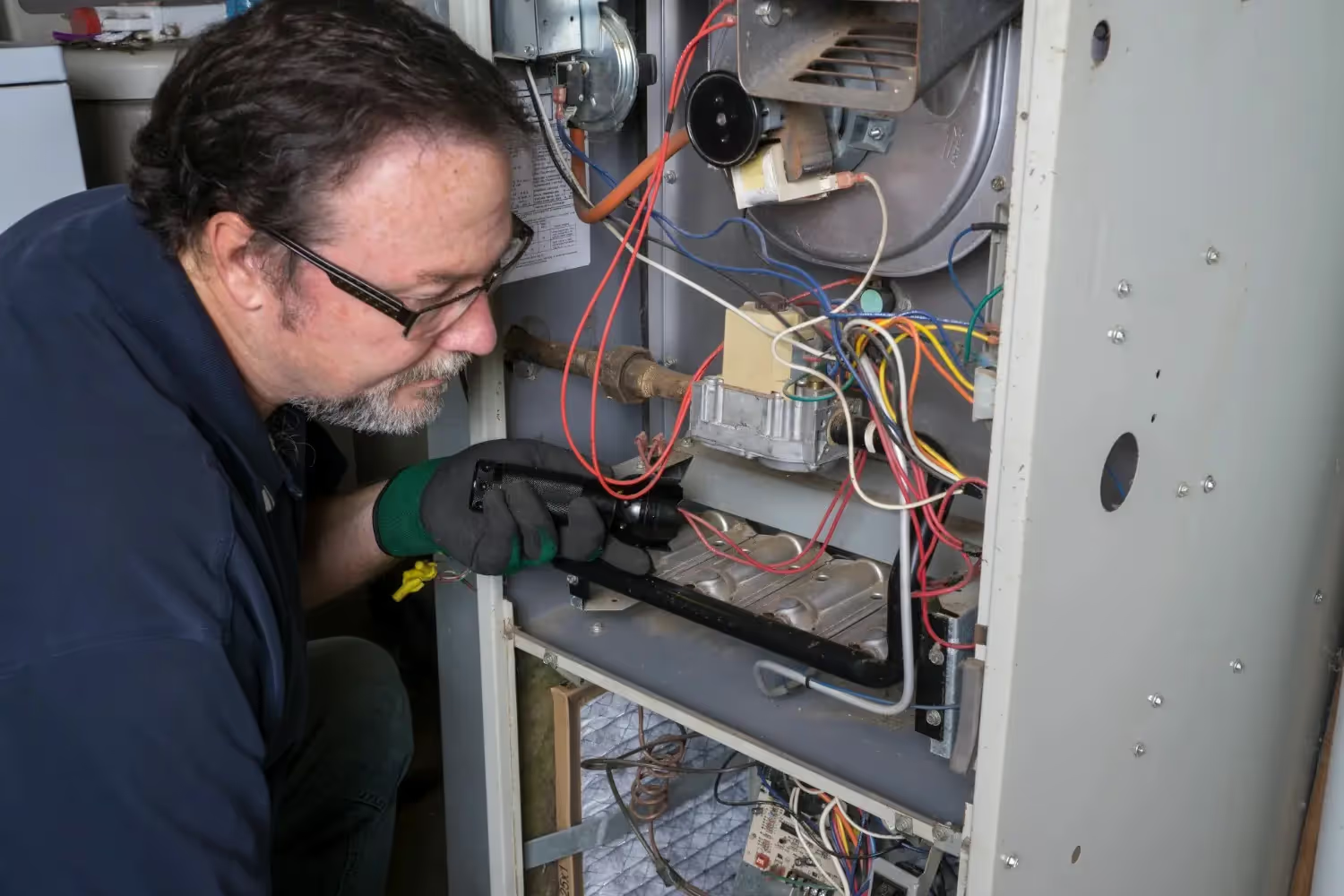
When you request service, the goal is to minimize downtime and ensure the repair lasts. Professional intervention goes beyond swapping out a broken part; it involves a holistic inspection of the heating ecosystem to prevent future breakdowns.
Diagnostic Assessment
The service begins with a thorough evaluation using advanced diagnostic tools. Technicians measure voltage, amperage, gas pressure, and temperature differentials.
- Combustion Analysis: For gas furnaces, ensuring the fuel is burning efficiently is critical. Technicians check oxygen and carbon dioxide levels in the flue gas to verify safe operation.
- Safety Loop Checks: Every safety switch, including the high-limit switch, rollout switch, and pressure switch, is tested to ensure they engage correctly during an emergency.
- Electrical Testing: Loose connections and fluctuating voltages can destroy control boards. All wiring is inspected and tightened.
Component Repair and Replacement
Once the issue is isolated, the repair involves precise removal and installation of components. Carter Heating and Cooling technicians carry a wide inventory of parts to facilitate same-day repairs whenever possible.
- Igniters and Flame Sensors: These are high-wear items often replaced to restore consistent starting.
- Blower Motors and Capacitors: Failing motors are often caused by bad start capacitors. Replacing the capacitor can sometimes save the motor.
- Inducer Draft Motors: This component clears the heat exchanger of exhaust gases. If it fails, the furnace will not start for safety reasons.
- Control Boards: The "brain" of the furnace manages the timing of the cycle. If circuits on the board are fried, the entire board is replaced.
System Types Serviced
Residents in Woodburn rely on various heating technologies depending on the age and construction of their homes.
- Gas Furnaces: The most common heating source, requiring careful attention to gas valves, burners, and venting.
- Electric Furnaces: These rely on heating elements and sequencers. Issues often involve burnt-out elements or stuck relays.
- Heat Pumps: These systems provide both heating and cooling. Winter repairs often involve the reversing valve or defrost control board, which allows the unit to switch modes and manage ice buildup.
The Repair Process: Steps for Restoring Your Heater
Professional repair follows a structured workflow to ensure safety, accuracy, and transparency. This systematic approach ensures that no detail is overlooked and that the heating system is returned to manufacturer specifications.
- Initial Site Inspection: Upon arrival, the technician assesses the thermostat location, the condition of the ductwork, and the physical state of the furnace or heat pump.
- System Diagnosis: Utilizing multimeters and manometers, the technician identifies the specific point of failure. This removes guesswork and identifies whether the issue is electrical, mechanical, or airflow-related.
- Proposal and Approval: You receive a clear explanation of the problem and a written quote for the repair. No work begins without your explicit approval of the scope and cost.
- Execution of Repair: The power and gas supplies are shut off for safety. The faulty component is removed, and the new OEM (Original Equipment Manufacturer) or equivalent part is installed.
- Testing and Calibration: After the part is installed, the system is not just turned on; it is calibrated. Gas pressure is adjusted to the manifold specifications, and temperature rise is measured to ensure it falls within the rated range.
- Cleanup and Reporting: The work area is cleaned, and a detailed service report is provided, outlining what was done and any recommendations for future maintenance.
Deciding Between Repair and Replacement
Homeowners often face the difficult choice of sinking money into an old unit or investing in a new system. Making the right financial decision requires analyzing the age of the unit, the cost of the repair, and future efficiency gains.
The 50% Rule
A general guideline used in the industry is the 50% rule. If the cost of the repair approaches 50% of the value of a new system, replacement is usually the smarter financial move. This is particularly true if the unit is out of warranty.
Age of the Equipment
Heating systems have a finite lifespan.
- Furnaces: typically last 15 to 20 years. If your unit is over 15 years old and requires a major component like a heat exchanger or blower motor, repair may be throwing good money after bad.
- Heat Pumps: typically last 10 to 15 years. Because they run year-round for both heating and cooling, they wear out faster than dedicated furnaces.
Frequency of Breakdowns
If you have required repairs more than twice in the last two years, the system is likely entering the end-of-life phase. Frequent breakdowns indicate that internal components are failing in succession. Continuing to repair such a unit often costs more annually than the monthly financing payments on a new, high-efficiency system.
Energy Efficiency Considerations
Older units often operate at 80% AFUE (Annual Fuel Utilization Efficiency) or lower. This means 20 cents of every dollar spent on gas goes up the flue pipe. Modern high-efficiency units operate at 95% AFUE or higher. Replacing a failing unit can significantly lower monthly utility bills, helping to offset the installation cost over time.
Understanding Local HVAC Regulations and Seasonality
Operating a heating system in Woodburn, KY, requires understanding specific regional challenges — view our FAQs. The local climate and regulatory environment dictate how repairs should be handled to ensure safety and compliance.
Climate Impact on Heating Systems
Woodburn experiences a humid subtropical climate. While winters are generally mild, cold snaps can drop temperatures significantly, putting a sudden, heavy load on heating systems.
- Humidity Control: Even in winter, humidity levels can affect indoor comfort. Heat pumps, in particular, must effectively manage defrost cycles to operate in high-humidity cold weather without freezing up.
- Transition Seasons: The frequent switching between heating and cooling during the erratic spring and fall weather can strain the reversing valves on heat pumps and the control boards on furnaces.
Permits and Codes
The Kentucky Department of Housing, Buildings and Construction sets strict standards for HVAC work to ensure public safety.
- Gas Line Safety: Any repair involving gas piping or the replacement of gas-fired equipment must comply with local fuel gas codes. Improper handling of gas lines poses severe fire and explosion risks.
- Electrical Standards: Wiring for heating systems must meet the National Electrical Code (NEC) as adopted by the state. This includes proper grounding and disconnects to protect technicians and homeowners.
- Venting Requirements: Changes to the venting system, often necessary during repairs of the heat exchanger or inducer motor, must adhere to code to prevent carbon monoxide from entering the living space.
Safety Protocols
Professional repair services prioritize safety above all else.
- Carbon Monoxide Testing: After any repair on a gas furnace, a combustion analysis is performed to ensure carbon monoxide levels are zero or within safe trace limits in the exhaust.
- Ventilation checks: Ensuring that flue pipes are not blocked by bird nests or debris is a standard part of the service, preventing hazardous back-drafting.
Why Choose Us: Our Commitment to Excellence in Heating Services
Selecting a service provider is about trust, technical ability, and reliability. We understand that a broken heater affects your family’s safety and comfort, and we approach every service call with the urgency it deserves — see our reviews.
Technical Expertise
Our team consists of technicians who undergo rigorous training on the latest HVAC technologies. Whether you have an aging gas furnace or a modern variable-speed heat pump, our staff has the diagnostic tools and knowledge to fix it right the first time. We do not guess; we diagnose based on data and industry standards.
Local Availability
We are deeply integrated into the local community. Being local means we can respond faster when emergency strikes. We know the specific housing styles and common HVAC configurations found in the area, allowing us to bring the right parts and tools for the job.
Transparent Service
You will never be surprised by the bill. We operate on a flat-rate pricing model for repairs, meaning you pay for the job, not the hour. This aligns our interests with yours: efficient, effective repair work without unnecessary delays. We explain the "why" behind every repair, empowering you to make informed decisions about your home’s infrastructure.
Warranty and Quality Assurance
We stand behind our work. Repairs are backed by labor and parts warranties, ensuring that if a replaced component fails prematurely, you are covered. Carter Heating and Cooling is dedicated to building long-term relationships with homeowners through honest work and dependable results.
Reliable Heating Repair Starts Here
Don't let a cold house disrupt your life or endanger your plumbing. Call us now to schedule your heating repair service and restore warmth to your home today.

Great Service at a Fair Price
Veterans Discount


Senior Discount

Law Enforcement
Fire fighters/ems
Hear From Your Neighbors!
Hear from your neighbors to see how our commitment to dependable service and lasting comfort has made a difference in their homes.