

How can we help today?
Choose an option to see quick actions and get help faster.Heating Replacement in Woodburn, KY
Heating Replacement in Woodburn, KY
Heating Replacement in Woodburn, KY
Eliminate Cold Drafts and Unreliable Heating Performance
Facing cold nights with an unreliable heater? It is time to consider a professional, efficient heating replacement in Woodburn to secure your home’s comfort. Contact us to schedule a comprehensive assessment or apply for our flexible financing options to get your system installed immediately.
When your furnace or heat pump fails to maintain a consistent temperature, it affects more than just your comfort; it impacts your energy bills and peace of mind. Carter Heating and Cooling specializes in transitioning homes from outdated, inefficient units to modern, high-performance heating systems. We understand that homeowners in Woodburn require robust solutions that can handle the specific humidity and temperature fluctuations of the region.
By choosing a professional replacement service, you secure the following outcomes:
- Experience quick installation with certified technicians who respect your time and property — read our reviews.
- Enjoy a warmer home with energy-efficient solutions that drastically reduce monthly utility expenses.
- Benefit from upfront pricing with no hidden costs, ensuring you know exactly what the investment entails.
- Receive proper system sizing to prevent short-cycling and uneven heating.
All installations are compliant with local codes, with flexible financing available to fit your budget.
Your Comprehensive Service Package: Features & Timelines
Investing in a new heating system is a significant decision, and clarity regarding what is included is essential. A full-service replacement goes beyond simply swapping out the main unit. It involves a holistic approach to ensure the new equipment integrates perfectly with your home's existing infrastructure.
When you authorize a replacement, the service includes the safe disconnection and removal of your old unit. This process must be handled carefully to avoid damage to gas lines, electrical connections, or surrounding property. Environmental disposal of the old equipment, including the recapture of any existing refrigerant in the case of heat pumps, is a standard part of the procedure.
The package includes the installation of the new furnace or heat pump, but also extends to the peripheral components that ensure efficiency. This typically involves inspecting and sealing the plenum (the box connecting the unit to the ductwork), updating the thermostat to a compatible smart or programmable model, and replacing the filter system. If the existing flue pipe or electrical disconnect box does not meet current safety standards, these are updated as part of the installation scope to ensure code compliance.
Timeline is a critical factor for homeowners, especially during the colder months. Most standard replacements are completed within a single day. The process generally begins early in the morning with the removal of the old system, followed by the positioning and connection of the new unit by mid-day. The final hours are dedicated to testing, calibration, and a walkthrough of the new system’s operation. While complex jobs involving ductwork modification may extend into a second day, the goal is always to restore heat to the home before evening.
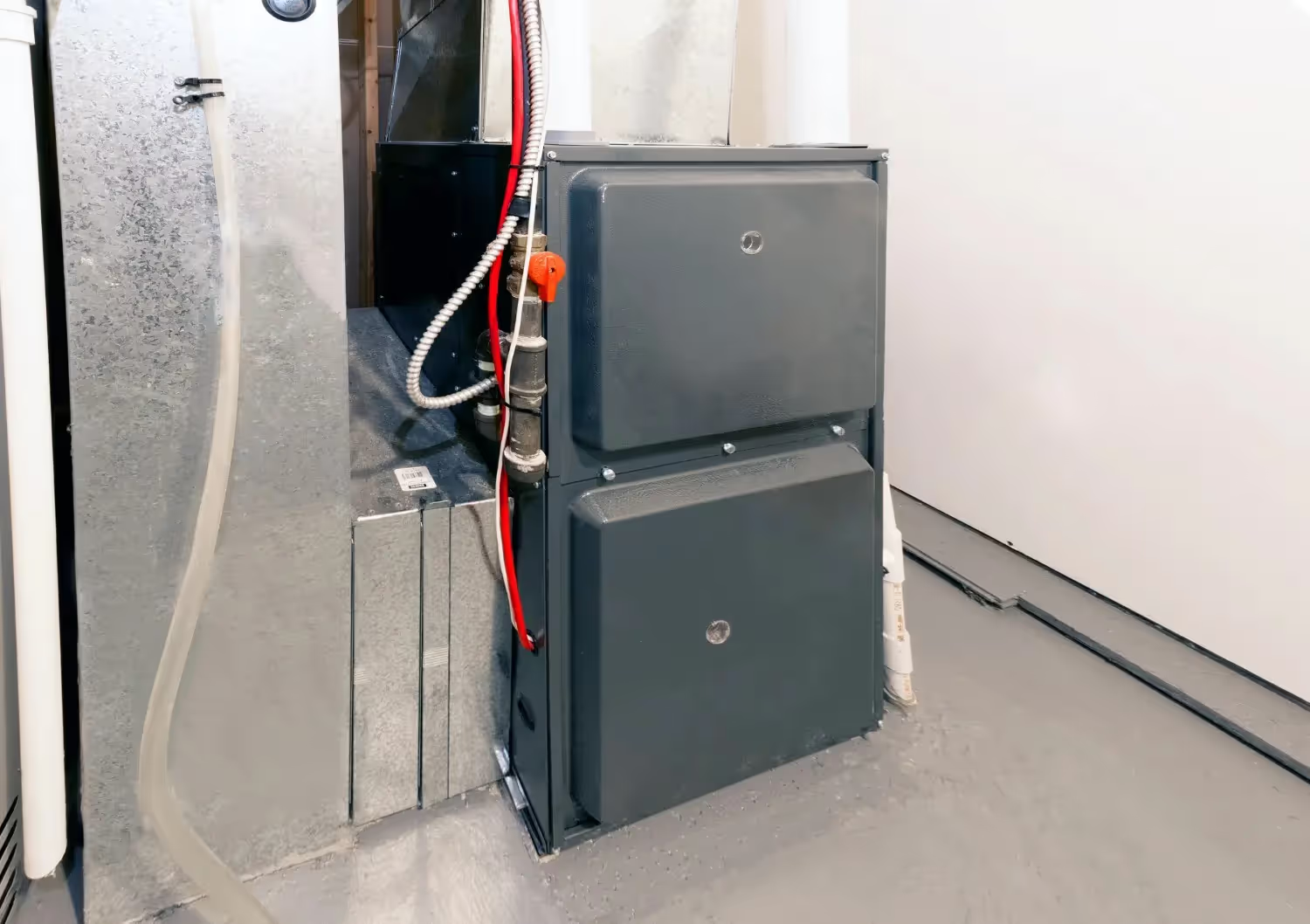
Evaluating Modern Heating Technologies
Understanding the hardware is vital for making an informed purchase. The market offers several options, and selecting the right one depends heavily on the energy sources available at your property and your efficiency goals.
Gas Furnaces
For homes with natural gas access, a modern furnace offers powerful, rapid heating. Older furnaces typically operate at 70% to 80% AFUE (Annual Fuel Utilization Efficiency). Modern replacements start at 80% and can reach up to 98% efficiency. This means that for every dollar spent on gas, 98 cents goes directly into heating the home, with only 2 cents lost in the combustion process. High-efficiency models often utilize a secondary heat exchanger to capture energy from exhaust gases, maximizing heat output.
Electric Heat Pumps
Heat pumps are increasingly popular in Kentucky due to their versatility. These systems move heat rather than generating it, making them incredibly efficient in moderate climates. During the winter, they extract latent heat from the outdoor air and transfer it inside. In the summer, the process reverses to provide air conditioning. Modern heat pumps are rated by HSPF2 (Heating Seasonal Performance Factor), and higher ratings correlate to lower electricity usage. They are an excellent choice for homes without gas lines or for homeowners looking to reduce their carbon footprint.
Dual Fuel Systems
A dual fuel system combines the electric efficiency of a heat pump with the raw power of a gas furnace. In this setup, the heat pump handles the heating load during moderately cold days (typically above 35 degrees Fahrenheit), which is the most efficient method. When temperatures drop significantly, the system automatically switches to the gas furnace to provide the high-heat output needed to maintain comfort during a freeze. This hybrid approach optimizes energy costs across the entire winter season.
From Consultation to Comfort: Your Installation Journey
A successful heating replacement is defined by a rigorous process. Shortcuts during installation are the leading cause of premature system failure and inefficiency. Carter Heating and Cooling adheres to a strict protocol to ensure every unit performs to the manufacturer's specifications.
Assessment and Load Calculation
The process begins with a technical assessment. It is not enough to simply check the size of the old unit; the previous installer may have sized it incorrectly. Technicians perform a load calculation (Manual J) that accounts for the home’s square footage, insulation levels, window types, and orientation. This calculation determines exactly how many BTUs are required to heat the space efficiently. An oversized unit will short-cycle, turning on and off too frequently, which wears out components. An undersized unit will run continuously without ever reaching the set temperature.
Ductwork and Airflow Analysis
Before the new unit is installed, the existing ductwork is evaluated. Leaky ducts can result in energy losses of up to 30%. Technicians check for disconnects, crushed sections, or major leaks that could hinder the performance of the new high-efficiency system. Static pressure tests are conducted to ensure the ductwork can handle the airflow requirements of the new equipment. If airflow is restricted, the blower motor in the new unit will work harder than necessary, reducing its lifespan.
Precision Installation and Commissioning
Once the old unit is removed, the new system is leveled and secured. Connections to gas lines, electrical circuits, and condensate drains are made using high-quality materials. After physical installation, the system undergoes a commissioning process. This involves measuring gas pressure (for furnaces) or refrigerant charge (for heat pumps) to hit exact manufacturer targets. Technicians also test the temperature rise—the difference in temperature between the air entering the return vent and the air exiting the supply vents—to verify the system is generating heat correctly.
Deciding on Replacement vs. Repair: A Quick Guide
Homeowners often struggle with the decision to repair a breakdown or invest in a full replacement. While repairs can be cheaper in the short term, they are not always the most improved financial decision. There are specific indicators that suggest replacement is the more prudent path.
- The 50% Rule: If the cost of the repair approaches 50% of the value of the system, replacement is generally recommended. Dumping money into a depreciating asset rarely yields a return on investment.
- System Age: Furnaces generally last 15-20 years, while heat pumps have a lifespan of 10-15 years. If your unit is within this age range and requires a significant repair (like a compressor or heat exchanger), it is usually time to replace it.
- Rising Energy Bills: If your usage habits haven't changed but your utility bills are climbing, the system is losing efficiency. A new system can lower monthly costs immediately, helping to offset the installation price.
- Uneven Heating: If some rooms are freezing while others are hot, the system may be losing compression or the blower motor may be failing. If ductwork modifications doesn't fix this, the unit itself is likely the culprit.
- Safety Concerns: For gas furnaces, a cracked heat exchanger is a critical safety hazard that can leak carbon monoxide into the home. This issue requires immediate replacement of the heat exchanger or the entire furnace. Given the cost of a heat exchanger, replacing the full unit is standard.
Local Guidelines and Seasonal Considerations in Woodburn
Operating a heating system in Woodburn requires attention to specific regional factors. The local climate is classified as humid subtropical, but winters bring distinct challenges. While average temperatures are moderate, the area experiences sharp cold snaps and significant precipitation, averaging 5-10 inches of snowfall annually.
Humidity Control
Winter in this region is not just cold; it can be damp. A heating system must do more than raise the temperature; it must also help manage indoor humidity levels. High-efficiency furnaces and variable-speed heat pumps are excellent at dehumidification, which makes the air feel warmer even at lower thermostat settings. This capability is crucial for preventing mold growth and maintaining structural integrity during the damp winter months.
Permits and Regulations
Replacement projects in the Woodburn area must adhere to local building codes. This often involves obtaining a mechanical permit before work begins. These regulations ensure that gas piping is pressure-tested, electrical connections meet fire safety standards, and venting is properly routed to prevent exhaust back-drafting. Professional installers handle the permitting process on behalf of the homeowner, ensuring that the installation passes any necessary municipal inspections.
Insulation and Winterization
The efficiency of a new heater is heavily influenced by the home’s envelope. In this region, attic insulation is critical for retaining the heat generated by the system. During the replacement consultation, it is common to discuss insulation levels. Upgrading attic insulation in conjunction with a heating replacement can allow for a smaller, less expensive heating unit to be installed, as the home retains heat more effectively.
The Financial Impact of High-Efficiency Upgrades
Moving from a standard efficiency unit to a high-efficiency system changes the financial dynamic of homeownership. While the upfront cost is higher, the total cost of ownership is often lower due to operational savings.
SEER2 and AFUE Impact
Regulatory changes have introduced new standards for testing and rating equipment, known as SEER2 (for heat pumps/AC) and updated AFUE standards. These stricter ratings ensure that the efficiency numbers on the label reflect real-world performance. Upgrading from a 10-SEER heat pump to a 15-SEER2 model can reduce electricity consumption for heating by roughly 30%. Over the lifespan of the unit, this translates to thousands of dollars in savings.
Rebates and Incentives
Various programs exist to encourage the adoption of high-efficiency heating. Federal tax credits are available for specific heat pump and high-efficiency furnace models. Additionally, local utility providers frequently offer rebates for homeowners who upgrade to energy-saving equipment. These financial incentives can significantly offset the initial purchase price. A professional installation team will assist in identifying which equipment qualifies for these savings and provide the necessary documentation to claim them.
Home Value Appreciation
A new heating system is a major selling point. Prospective buyers view a modern, under-warranty HVAC system as a significant asset, reducing their perceived risk of future repair costs. Documentation of a professional installation serves as proof of value, often simplifying the negotiation process during a home sale.
Why Choose Us: Licensed Experts Committed to Quality
The quality of the installation is the single most important factor in the longevity of your heating system. Equipment from top-tier manufacturers will fail prematurely if installed incorrectly. We prioritize technical excellence and customer transparency in every project.
Our team consists of fully licensed and insured professionals who undergo continuous training on the latest HVAC technologies. We do not rely on guesswork. Every recommendation is backed by data, from load calculations to efficiency projections. We respect your home by using drop cloths, wearing shoe covers, and ensuring the workspace is cleaner than we found it upon completion.
We also stand behind our work with robust labor warranties. While manufacturers cover the parts, we cover the craftsmanship. This ensures that if an issue arises due to installation, you are not liable for the repair costs. Our focus is on building long-term relationships with homeowners, providing not just a one-time service but ongoing support for the life of your system.
Carter Heating and Cooling is dedicated to restoring warmth and reliability to your home. Don't let a failing system compromise your comfort or safety this winter. Secure your home's comfort and efficiency today—contact us to schedule your heating replacement estimate.

Great Service at a Fair Price
Veterans Discount


Senior Discount

Law Enforcement

Fire fighters/ems

Hear From Your Neighbors!
Hear from your neighbors to see how our commitment to dependable service and lasting comfort has made a difference in their homes.