
How can we help today?
Choose an option to see quick actions and get help faster.Air Conditioning Maintenance in Woodburn, KY
Air Conditioning Maintenance in Woodburn, KY
Struggling with heat in Woodburn? Optimize your AC efficiency with Carter Heating's professional maintenance. Ensure a cooler home and lower bills. Schedule now!
Is Your Air Conditioner Failing to Combat the Summer Humidity?
Battling the Woodburn summer can be tough when your AC isn't performing at its best, especially when indoor humidity levels begin to creep up alongside the temperature. If you are currently dealing with frequent system breakdowns, uneven cooling in different rooms, or rising energy bills despite normal usage, it is time for a thorough maintenance check. Contact us today to schedule your seasonal tune-up and restore comfort to your home.
Carter Heating and Cooling provides comprehensive maintenance designed to catch small issues before they become expensive repairs.
- Restore your AC to peak efficiency with our expert tuning and cleaning.
- Experience quicker cooling cycles and significantly reduced operational costs.
- Extend the lifetime of your unit with preventive maintenance that adheres to manufacturer standards.
Licensed and insured technicians are ready to serve 24/7, with flexible financing available for major system needs.
Comprehensive AC Tune-Up Scope and Inclusions
A professional tune-up goes far beyond simply changing a filter. It involves a systematic examination and calibration of the entire cooling system to ensure it operates within the manufacturer's specified parameters. When a system runs inefficiently, it works harder to produce the same amount of cooling, which accelerates wear and tear on critical components.
Our maintenance service addresses the mechanical, electrical, and airflow aspects of your air conditioning unit. By isolating each function of the system, technicians can identify potential failure points that a standard visual inspection might miss.
- Condenser and Evaporator Coil Cleaning: The coils are responsible for heat transfer. When the condenser coil (outside) or evaporator coil (inside) becomes coated with dirt, dust, or debris, the system cannot release or absorb heat effectively. This forces the compressor to run longer and hotter, which is a leading cause of system failure. Cleaning these coils restores the unit's ability to exchange heat efficiently.
- Refrigerant Level Inspection: Incorrect refrigerant levels, whether too low due to a leak or too high due to improper charging, severely impact cooling capacity. Low refrigerant causes the evaporator coil to freeze, blocking airflow and potentially damaging the compressor. Technicians check superheat and subcooling levels to ensure the charge is exact.
- Electrical Component Testing: Loose connections, pitted contactors, and weak capacitors are common electrical issues that lead to sudden breakdowns. Technicians tighten all electrical connections, measure voltage and amperage on motors, and test capacitors to ensure they can provide the necessary starting torque for the compressor and fans.
- Thermostat Calibration: If the thermostat reads the temperature incorrectly, the system may run too long or not long enough. Calibration ensures that the temperature set on the interface matches the actual temperature in the room, preventing energy waste.
- Condensate Drain Line Cleaning: The AC removes moisture from the air, which collects in a drain pan and exits through a line. Algae and mold can clog this line, leading to water backups that can damage your home’s infrastructure or trigger safety float switches that shut the system down. Flushing this line is a critical maintenance step.
- Lubrication of Moving Parts: Friction is the enemy of mechanical efficiency. Motors and fans require proper lubrication to operate smoothly. Lack of lubrication causes overheating and increases electricity consumption.
The Maintenance Process: From Inspection to Optimization
Understanding the workflow of a professional maintenance visit helps homeowners prepare and know exactly what is being done to their property. The goal is to provide a transparent, thorough service that results in a documented improvement in system performance.
- First, the technician arrives and performs a preliminary assessment of the system’s operation. This involves turning the thermostat down to call for cooling and listening for any unusual noises, such as grinding, rattling, or hissing, which can indicate mechanical looseness or refrigerant leaks.
- Next, the power is safely disconnected to the unit to allow for internal inspection. The technician removes service panels to access the interior components. At this stage, the debris is cleared from the base of the outdoor unit to ensure proper airflow around the compressor.
- Following the safety check, the cleaning phase begins. Specialized coil cleaners are applied to break down grime on the condenser coils. While the chemicals work, the technician inspects the fan blades for cracks or balance issues and checks the condition of the motor bearings.
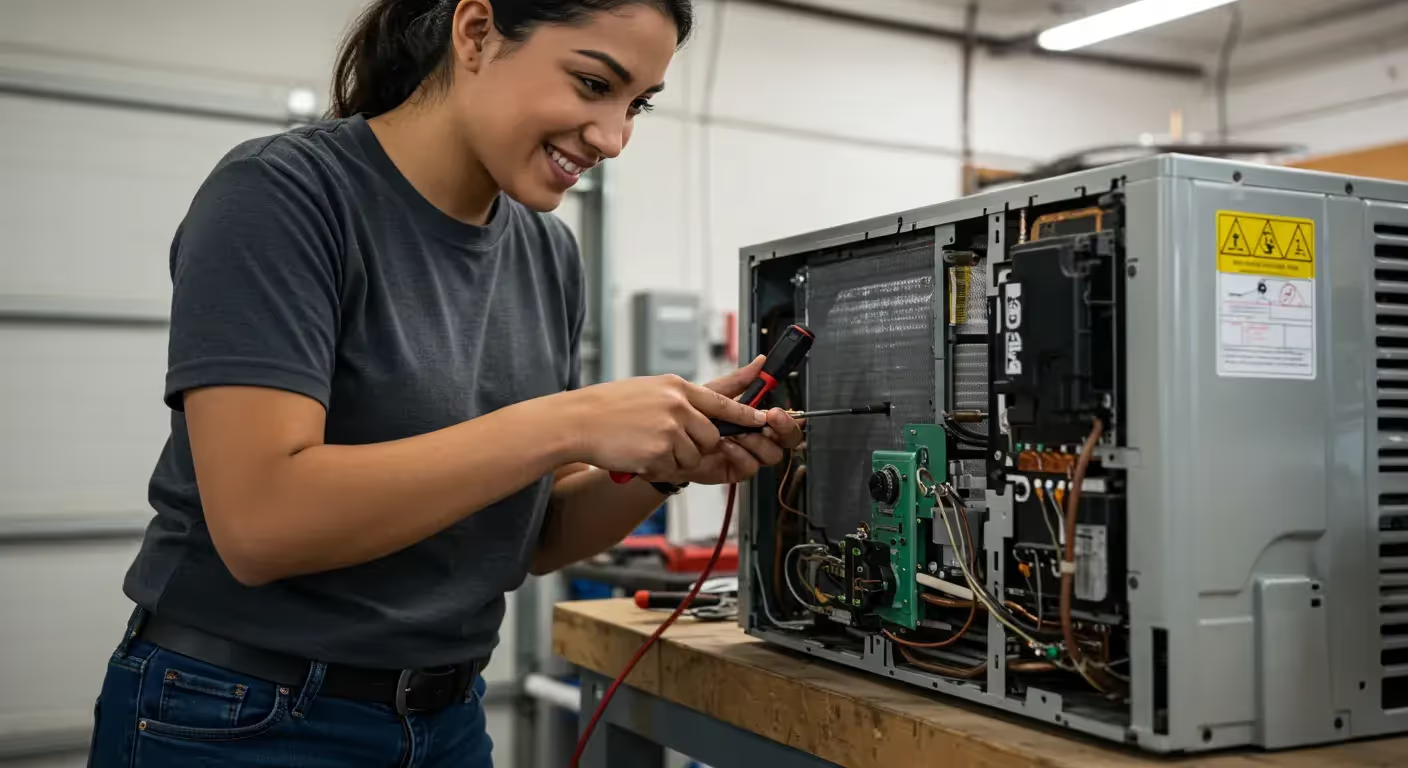
- Then, the electrical analysis is conducted. Carter Heating and Cooling technicians use multimeters to check the resistance and continuity of the electrical circuit. This step is vital for predicting future failures; for example, a capacitor that is testing outside of its microfarad rating is a part that is likely to fail during the next heatwave and should be noted.
- After the physical work is complete, the system is powered back on for the performance test. Gauges are attached to monitor pressures and temperatures. The temperature drop across the evaporator coil (the difference between the air entering the return and the air leaving the supply) is measured to verify the cooling capacity.
- Finally, a detailed report is generated. This document outlines exactly what was checked, cleaned, and adjusted. If any components are showing signs of wear or require immediate attention, recommendations are provided with clear explanations of urgency and cost.
Deciding Between Routine Maintenance, Repair, or Replacement
While maintenance is designed to prevent repairs, the inspection process often reveals the true health of an aging system. Homeowners frequently face the decision of whether to invest in a repair discovered during maintenance or to consider a system replacement. Making this decision requires analyzing the age of the unit, the cost of the repair, and the system's overall efficiency.
- The 50% Rule: A common industry standard is the 50% rule. If the cost of the necessary repair approaches or exceeds 50% of the value of the system (or the cost of a new unit), replacement is generally the smarter financial move. Investing heavy capital into an old asset often leads to diminishing returns.
- Frequency of Breakdowns: If a unit requires repairs every season despite regular maintenance, it has likely reached the end of its reliable service life. Continuous repairs add up quickly, often exceeding the monthly cost of financing a modern, high-efficiency system.
- Refrigerant Type: Older systems utilizing R-22 refrigerant are becoming increasingly expensive to service due to the phase-out of this chemical. If a system requires a refrigerant recharge and uses R-22, the cost may be prohibitive, making replacement the only logical option.
- Efficiency Ratings (SEER): Air conditioners are rated by Seasonal Energy Efficiency Ratio (SEER). Older units may operate at 10 SEER or lower, while modern units can exceed 20 SEER. Replacing a 10 SEER unit with a 16 SEER unit can result in substantial energy savings, which helps offset the installation cost over time.
Managing Humidity and Local Climate Factors
The climate in Woodburn, KY, presents specific challenges for air conditioning systems. The combination of high temperatures in the mid-80s to low 90s°F and significant humidity levels means that an AC unit must do more than just lower the temperature; it must effectively dehumidify the air.
When an air conditioner runs, it pulls moisture out of the air as it passes over the cold evaporator coil. If the system is short-cycling (turning on and off too frequently) due to a lack of maintenance or dirty filters, it will cool the air but fail to remove the humidity. This results in a "clammy" feeling indoors, promoting mold growth and reducing comfort.
- Airflow is Critical: Restricted airflow prevents the system from running long enough to dehumidify. Regular filter changes and professional coil cleaning ensure the system maintains the necessary airflow to manage Kentucky's humidity.
- Drainage Management: High humidity means the system produces more condensate water. During the peak of summer, an AC unit can produce gallons of water a day. Ensuring the drainage system is clear and the condensate pump (if applicable) is functioning is vital to prevent water damage in attics or basements.
- Seasonal Timing: The ideal time for maintenance is early spring, before the heavy heat sets in. This ensures the unit is ready to handle the initial workload when temperatures spike. However, if maintenance was missed in the spring, a mid-season tune-up is safer than running a dirty system through the hottest months of the year.
Compliance, Warranties, and Manufacturer Standards
Maintaining an air conditioning system is not just about comfort; it is also a matter of compliance and asset protection. Most AC manufacturers include specific clauses in their warranty documentation requiring regular professional maintenance.
- Warranty Validity: If a compressor or other major component fails within the warranty period, the manufacturer may request proof of maintenance history. If the homeowner cannot demonstrate that the unit was cleaned and serviced by a licensed professional, the warranty claim may be denied, leaving the homeowner responsible for the full cost of parts and labor.
- Building Codes and Safety: HVAC systems involve high-voltage electricity and pressurized refrigerants. Local regulations in Kentucky dictate who can handle these components to ensure safety. Professional technicians adhere to all local building codes and environmental regulations regarding refrigerant handling and disposal.
- Lease and Landlord Obligations: For landlords, maintaining the HVAC system is often a legal requirement to provide a habitable living space. Regular documentation of maintenance protects property owners against disputes regarding the condition of the rental unit.
The Value of Licensed Professional Care
Attempting DIY maintenance on a central air conditioning system carries significant risks. While homeowners can and should change their own air filters, the internal components require specialized tools and training to service safely.
Professionals utilize manifold gauges to read refrigerant pressures accurately without venting gas into the atmosphere. They use amp clamps to measure electrical draw on motors, identifying potential shorts before they trip breakers. They also have access to industrial-strength coil cleaners that are not available to the general public, ensuring a deeper clean that restores factory-level performance.
Furthermore, a licensed technician brings an experienced eye to the inspection. They can distinguish between a normal operating sound and a noise that indicates a bearing is about to seize. This diagnostic capability is the primary value of a service call—paying for the expertise to prevent a catastrophe rather than just reacting to one.
Secure Your Comfort and System Longevity
Neglecting air conditioning maintenance inevitably leads to reduced efficiency, higher power bills, and premature system failure. The cost of a seasonal tune-up is a fraction of the cost of an emergency repair or a full system replacement. By investing in regular care, you ensure that your home remains a cool, comfortable sanctuary against the heat and humidity, regardless of the temperature outside.
Don't wait for your system to fail during a heatwave. Carter Heating and Cooling is available to perform the comprehensive maintenance your system needs to operate reliably for years to come — contact us today.
Protect your investment and guarantee your comfort by scheduling your AC maintenance service today.

Great Service at a Fair Price
Veterans Discount


Senior Discount

Law Enforcement

Fire fighters/ems

Hear From Your Neighbors!
Hear from your neighbors to see how our commitment to dependable service and lasting comfort has made a difference in their homes.