

How can we help today?
Choose an option to see quick actions and get help faster.HEPA Air Cleaner Installation in Woodburn, KY
HEPA Air Cleaner Installation in Woodburn, KY
HEPA air cleaner installation in Woodburn KY by Carter Heating & Cooling. Remove allergens and breathe cleaner indoor air. Schedule today!
Breathe Easier with Professional HEPA Air Cleaner Installation
Struggling with allergies, dust, or poor indoor air quality in your home? Our HEPA air cleaner installation services provide a proven solution to enhance the air you breathe indoors, and you can contact us today to discuss financing options or schedule a consultation. Residents in Woodburn, KY, face distinct seasonal challenges, from high pollen counts in spring to humidity-driven mold spores in summer, making a whole-home filtration system an essential upgrade for health and comfort.
- Certified technicians ensure a seamless installation process that integrates with your existing HVAC equipment.
- Experience immediate improvement in air quality with advanced HEPA filters capable of capturing microscopic irritants.
- Custom solutions tailored to meet the unique needs of your home or office, ensuring proper airflow and filtration efficiency.
Backed by a comprehensive warranty and flexible financing options, we ensure your investment in clean air is protected.
Comprehensive High-Efficiency Air Filtration Solutions
Installing a whole-home HEPA (High-Efficiency Particulate Air) system is fundamentally different from buying a portable unit from a big-box store. A portable unit only cleans the air in its immediate vicinity, often struggling to circulate clean air across a single room. In contrast, our installation service integrates medical-grade filtration directly into your central heating and cooling system. This turns your entire ductwork network into a powerful air sanitization loop, treating 100% of the air that flows through your home.
When you choose a professional installation, you are investing in a system designed to capture 99.97% of particles as small as 0.3 microns. This includes invisible threats such as smoke, bacteria, virus carriers, and fine dust that standard fiberglass filters miss completely. The equipment we install typically involves a bypass system or a specialized media cabinet that works in tandem with your furnace or air handler. This setup ensures that while the air is scrubbed to a high degree of purity, the static pressure within your HVAC system remains balanced, preventing strain on your blower motor.
Current HVAC systems in Woodburn are often fitted with standard one-inch filters. These are designed primarily to protect the equipment from large debris, not to protect your lungs. By upgrading to a professionally installed HEPA system, you transition from simple equipment protection to active indoor air quality management. Carter Heating and Cooling ensures that the specific unit selected matches the cubic feet per minute (CFM) requirements of your home, guaranteeing that filtration does not come at the expense of temperature control or airflow.
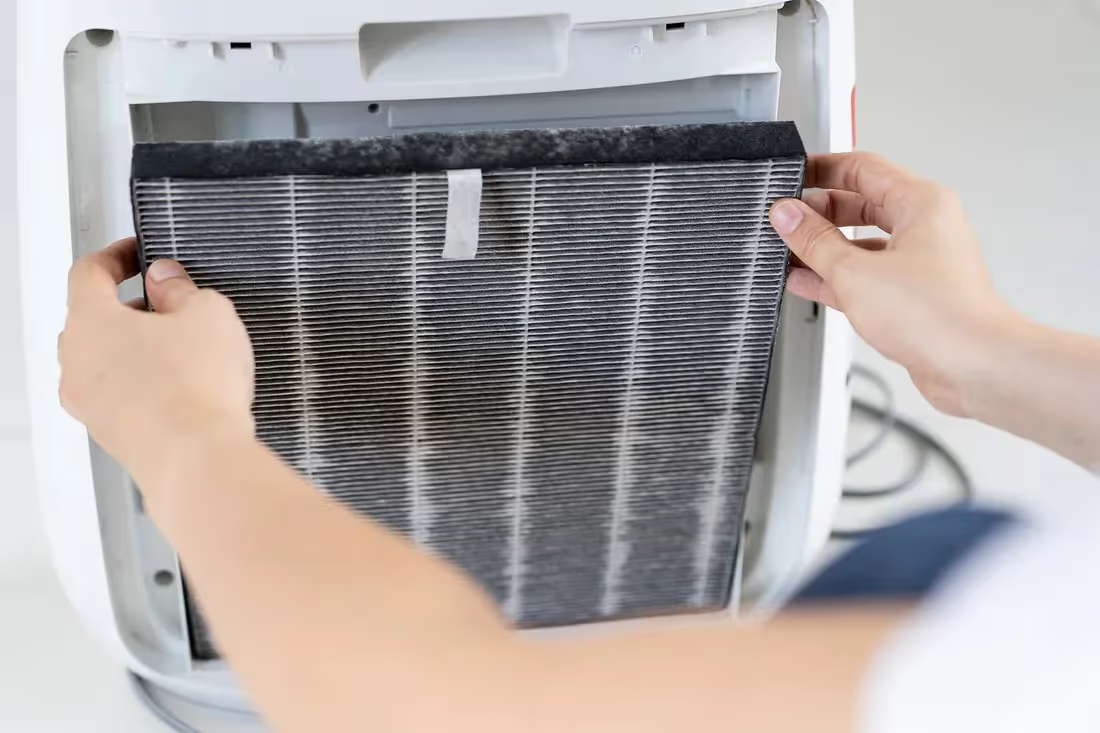
The Installation Process: From Assessment to Airflow
Integrating a HEPA system into central HVAC requires precise technical skill. It is not a plug-and-play appliance; it involves sheet metal fabrication, electrical integration, and airflow calibration. Our process is designed to result in a system that operates silently and efficiently in the background.
Site Assessment and Load Calculation:
The process begins with an evaluation of your current HVAC system’s static pressure and the physical space available in the utility room. Technicians measure the return air drop and supply plenum to determine the optimal location for the HEPA unit. This step is critical because HEPA filters differ significantly in density compared to standard filters; they create resistance. If installed incorrectly without proper airflow calculations, this resistance can suffocate the furnace, leading to frozen coils or overheated heat exchangers.
System Selection and Configuration:
Based on the assessment, the correct bypass or inline HEPA system is selected. A bypass configuration is most common for residential retrofits. This method pulls a portion of the air from the return duct, scrubs it through the HEPA media, and re-introduces it to the supply side. This allows for intense filtration without restricting the total volume of air required to heat or cool the house.
Physical Installation and Duct Modification:
Technicians cut into the existing ductwork to create the intake and exhaust ports for the air cleaner. This involves precise sheet metal work to ensure airtight seals. Leaks in the ductwork at this stage would allow unfiltered air to bypass the system, rendering the HEPA filter useless. All connections are sealed with mastic or foil tape to ensure a closed loop. The unit is then mounted securely to the floor or wall to minimize vibration.
Electrical Integration:
The HEPA system requires its own power source and is often interlocked with the HVAC system’s fan. This ensures the air cleaner runs whenever the furnace blower is active, or it can be wired to run independently for continuous air polishing even when heating or cooling is off.
Final Testing and Verification:
Once the unit is mechanically and electrically sound, technicians perform a static pressure test. This verifies that the new component has not negatively impacted the total external static pressure of the HVAC system. The system is cycled through various modes to ensure quiet operation and verified airflow.
When to Upgrade to Whole-Home HEPA Filtration
Deciding between a standard media filter upgrade and a full HEPA installation often comes down to the specific health needs of the household and the environmental factors surrounding the property. While standard filters (MERV 8-11) are sufficient for basic dust control, they fail to stop the microscopic particulates that trigger severe respiratory issues.
You should consider a complete HEPA installation if the following conditions apply:
- Chronic Respiratory Issues: For household members suffering from asthma, severe seasonal allergies, or COPD, standard filtration is often inadequate. HEPA filtration removes the lung-penetrating particles that standard filters let pass.
- Immunocompromised Residents: In homes requiring a near-sterile environment due to medical conditions, HEPA is the industry standard for removing airborne pathogens and bacteria.
- High Pollution or Dust Load: Homes located near busy roadways, agricultural fields, or industrial zones in the Woodburn area often experience higher infiltration of fine particulate matter. Standard filters clog quickly and pass fine soot; HEPA systems hold more dirt and stop finer particles.
- Pet Dander Sensitivity: While pets are beloved family members, their dander is a potent allergen. HEPA filters are dense enough to trap microscopic dander flakes that stay suspended in the air for hours.
- Recent Renovations or New Construction: New homes or recently renovated spaces often suffer from "tight home syndrome," where volatile organic compounds (VOCs) and construction dust are trapped inside. A HEPA system with an added carbon stage can help mitigate both particulates and odors.
If your current approach involves constantly buying portable air purifiers for individual rooms, a whole-home installation is often more cost-effective and significantly more efficient in the long run.
Technical Considerations for the Local Climate
Operating an HVAC system in Woodburn, KY, presents specific challenges that influence how air cleaners should be installed and maintained. The region features a humid subtropical climate, meaning summers are hot and muggy while winters are moderately cold. This fluctuation impacts indoor air quality (IAQ) strategies.
Humidity and Mold Control:
High humidity levels in the summer create an ideal environment for mold growth within ductwork and on evaporator coils. A HEPA filter captures mold spores before they can settle and reproduce. However, the installation must account for condensation management. Technicians must ensure the air cleaner is not installed in a location where condensation from the cooling coil can drain into the filter media, which would ruin the filter and potentially cause mold growth within the cleaner itself.
Pollen Seasonality:
Spring in this region brings heavy pollen loads. Standard filters often allow fragmented pollen particles to pass through. A HEPA installation provides a barrier that traps virtually all pollen entering the return ducts. During installation, checking the integrity of the return duct sealing is vital. If the return ducts in the attic or crawlspace are leaky, the system will suck in dusty, pollen-laden air from unconditioned spaces. Sealing these leaks is a prerequisite for the HEPA filter to do its job.
Static Pressure and Equipment Longevity:
The most critical technical factor in this region is the preservation of the blower motor. Local heating loads in winter and cooling loads in summer mean HVAC systems run for long cycles. Adding a high-restriction filter like a HEPA unit incorrectly can shorten the life of the HVAC unit. Professional installation focuses on creating a "bypass" loop that allows the HEPA filter to scrub the air repeatedly without forcing the main blower to push 100% of the airflow through the dense media at once. This protects the expensive components of the furnace and air conditioner.
The Role of Bypass vs. Inline Systems
Understanding the hardware is essential for making an informed decision. Most residential whole-home HEPA systems utilize a "bypass" design. This is distinct from "inline" systems seen in hospitals or clean rooms, which require massive, industrial-grade blowers.
- Bypass Configuration: In a bypass setup, the HEPA unit has its own small motor. It pulls about 30% to 50% of the air from the return duct, scrubs it, and injects it back into the supply. Because the air in your home circulates through the HVAC system multiple times an hour, the cumulative effect is that all the air in the house is passed through the HEPA filter many times a day. This achieves "clean room" quality air over time without choking the main HVAC system.
- Inline Configuration: True inline HEPA filters are rare in residential settings because they restrict airflow too much for a standard residential furnace to handle. Installing a true HEPA filter directly across the full airstream of a standard 3-ton or 4-ton unit would likely cause the evaporator coil to freeze due to lack of airflow. Therefore, when we propose a solution, it is almost always a bypass system or a specialized high-flow media cabinet that approaches HEPA performance (MERV 16) without the need for a secondary motor.
- Maintenance Implications: Bypass systems are generally easier to maintain. The pre-filters (usually carbon-based to stop odors) need replacement every 3 to 6 months, while the main HEPA core typically lasts 2 to 3 years, depending on the pollutant load in the home. The design allows for easy access without needing to dismantle the main plenum — keeping your system generally easier to maintain.
Why Professional Installation Beats DIY Solutions
The efficacy of a HEPA air cleaner relies entirely on the quality of the installation — see our customer reviews. Air acts like water; it follows the path of least resistance. If a system is installed with gaps, poor taping, or loose fittings, air will simply flow around the filter rather than through it. This phenomenon, known as "bypass air" (not to be confused with the bypass system design), renders the filtration investment worthless.
- Airtight Integrity: Professionals use mastic sealant and industrial-grade aluminum tape to ensure that the connection between the HEPA unit and the ductwork is 100% airtight. Even a gap of a few millimeters is enough to significantly reduce the overall efficiency of the system.
- Electrical Safety and Code Compliance: Hardwiring the unit into the HVAC system requires knowledge of high-voltage electrical circuits. Incorrect wiring can blow fuses, damage the circuit board of the furnace, or create a fire hazard. Professional installation ensures that all wiring complies with local building codes and safety standards.
- Warranty Preservation: Most HVAC equipment manufacturers state that warranties are void if the equipment is damaged due to improper modification or airflow restriction. By having Carter Heating and Cooling perform the installation, you ensure that the static pressure remains within manufacturer specifications, keeping your furnace and AC warranties intact.
- Proper Sizing: An undersized air cleaner will not turn over the volume of air in the house fast enough to make a difference. An oversized unit may be too noisy or draw unnecessary power. Professionals calculate the exact CFM requirements based on the square footage and volume of the home to select the appropriate unit.
Secure Your Indoor Air Quality
Indoor air quality is a critical component of a healthy home infrastructure. With modern homes being built tighter to conserve energy, pollutants are trapped inside at higher concentrations than ever before. A professionally installed HEPA air cleaner is the most effective method to break this cycle, removing particulates that settle in your lungs and on your furniture.
Rather than relying on temporary fixes or inefficient portable units, a whole-home integration provides a permanent, silent, and automated solution. By addressing the filtration needs at the source—your central ductwork—you ensure that every room in your home benefits from purified air. From reducing asthma triggers to eliminating dust buildup, the operational benefits are immediate. Take the step toward a cleaner, healthier living environment. Our team is ready to assess your current system and design a filtration setup that meets your specific health requirements and technical constraints. Contact us today to schedule your air quality assessment and HEPA installation.

Great Service at a Fair Price
Veterans Discount


Senior Discount

Law Enforcement

Fire fighters/ems

Hear From Your Neighbors!
Hear from your neighbors to see how our commitment to dependable service and lasting comfort has made a difference in their homes.