

How can we help today?
Choose an option to see quick actions and get help faster.Mini Split Inspection in Munfordville, KY
Mini Split Inspection in Munfordville, KY
Facing issues with your mini split system in Munfordville, KY? Schedule a detailed inspection today to prevent costly failures. Ensure your ductless unit runs efficiently.
Experiencing Mini Split Performance Issues?
Are your energy bills climbing without explanation, or is your ductless system failing to maintain a consistent temperature in your home? It could be time to inspect your mini split system to prevent minor inefficiencies from turning into complete system failures. Contact us today to schedule a comprehensive diagnostic check or discuss financing options for necessary repairs.
Homeowners in Munfordville, KY rely on mini split systems for targeted comfort, but these complex units require specific technical attention to operate correctly. Ignoring strange noises, reduced airflow, or water leaks often leads to accelerated wear on the inverter compressor. Carter Heating and Cooling provides detailed inspections designed to uncover the root cause of performance dips, ensuring your zoned comfort system lasts for years to come.
- Identify efficiency problems fast with same-day inspection services.
- Reduce costs with maintenance that prevents more expensive repairs.
- Peace of mind with service warranties and professional certifications.
All services adhere to Kentucky building codes, ensuring your system’s compliance and safety.
Comprehensive System Diagnostics and Efficiency Analysis
A mini split inspection goes far beyond a simple visual check. These systems utilize sophisticated inverter technology and complex electronic communication between indoor and outdoor units. When a technician evaluates your system, the goal is to verify that the equipment is consuming energy efficiently and delivering the precise heating or cooling load required for the space.
The inspection process involves a deep dive into the mechanical and electrical components of the ductless unit. Unlike standard central air systems, mini splits have unique vulnerability points, such as flare connections and condensate drainage systems, which are prone to specific types of failure. A professional assessment isolates these components to test their integrity.
Key Inspection Checkpoints Include:
- Refrigerant Charge Verification: Ductless systems are critically sensitive to refrigerant levels. Even a minor discrepancy can cause the compressor to overwork, leading to high bills and potential burnout. Technicians measure superheat and subcooling to ensure the charge meets manufacturer specifications.
- Flare Connection Tightness: The copper lines connecting the indoor head to the outdoor condenser use flare nuts. Vibration can loosen these over time, creating slow leaks. These connections are torque-checked to prevent refrigerant loss.
- Blower Wheel cleanliness: The barrel fan inside the wall unit spins rapidly to distribute air. If dust or mold accumulates on the blades, it throws the fan off balance, creates noise, and drastically reduces airflow.
- Inverter Compressor Testing: The heart of the mini split is the inverter, which modulates speed to save energy. Electrical testing ensures the ramp-up and ramp-down sequences are functioning without electrical resistance or overheating.
- Communication Wire Integrity: Data flows constantly between the indoor and outdoor units. Technicians inspect the wiring for corrosion, loose terminals, or damage that could cause communication errors and system shutdowns.
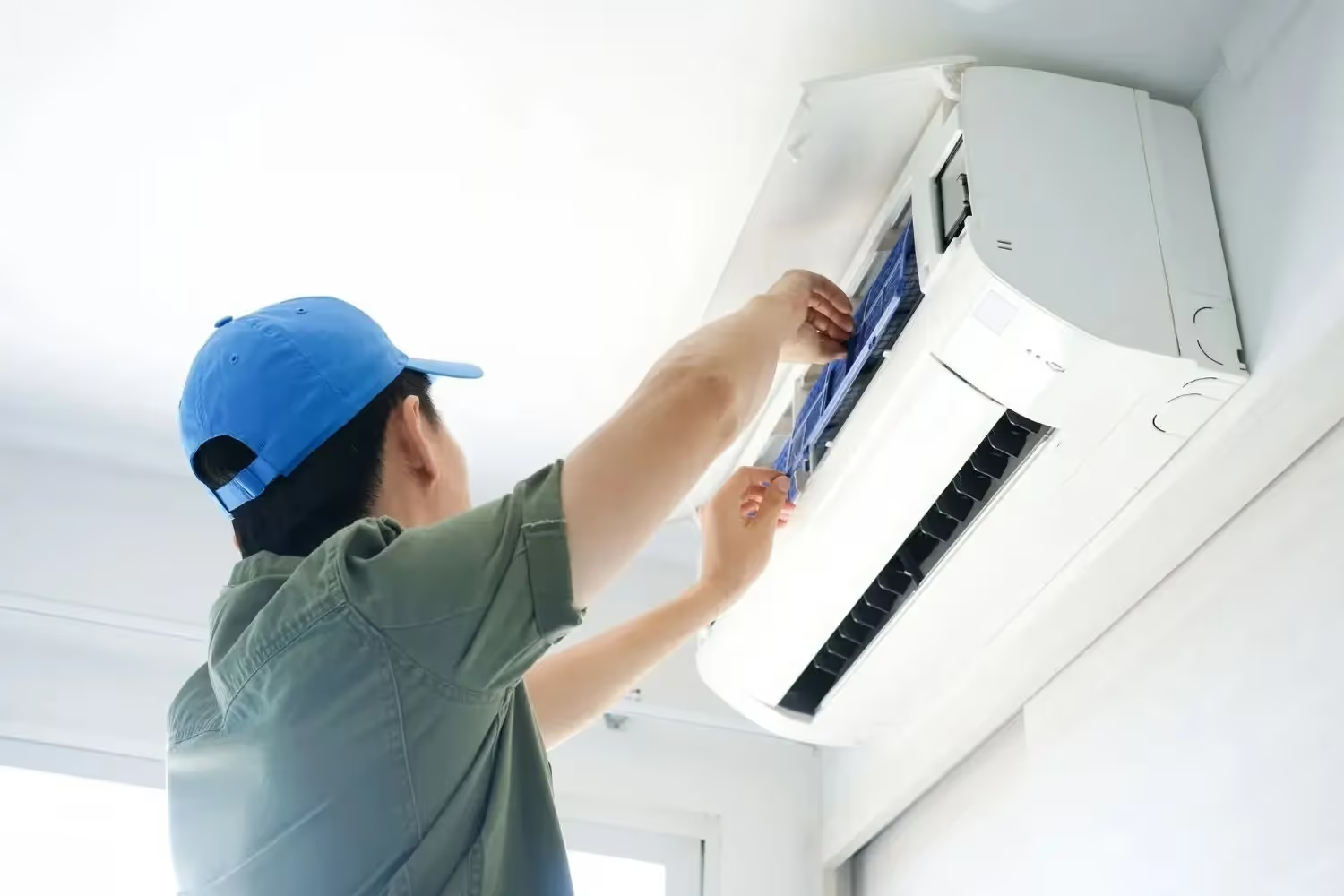
The Inspection Process: From Scheduling to System Optimization
Understanding what happens during a service visit helps homeowners prepare and ensures transparency. The objective is to move from a state of uncertainty regarding the system's health to a clear understanding of its condition and performance capabilities. This systematic approach ensures no component is overlooked.
Step-by-Step Assessment Protocol:
- Initial Performance Run: The technician operates the system in both cooling and heating modes (season permitting) to observe the initial behavior, listen for irregular sounds, and check the responsiveness of the remote control or wall thermostat.
- Electrical Safety Check: Power is disconnected to safely inspect the disconnect box, fuses, and internal wiring. Loose electrical connections are a fire hazard and a leading cause of intermittent failures.
- Condensate Drain Testing: Water removal is vital for mini splits. The technician pours water through the system to ensure the gravity drain or condensate pump is evacuating water correctly, preventing wall damage or mold growth inside the unit.
- Filter and Coil Inspection: The filters and evaporator coils are examined for blockage. While homeowners clean filters, technicians look for deep-seated debris in the coil fins that restricts heat transfer.
- Final Reporting: You receive a detailed status report outlining the current efficiency of the unit, any immediate repairs needed, and the projected lifespan of the equipment based on its current condition.
Determining Whether to Repair or Replace Your Ductless Unit
One of the primary goals of an inspection is to provide the data necessary to make financial decisions regarding the HVAC equipment. There comes a point where pouring money into an aging system is less economical than investing in a modern, high-efficiency unit. This decision often hinges on the availability of parts, the type of refrigerant used, and the severity of the failure.
Technicians provide an honest assessment based on the "50% Rule" and the age of the equipment. If the cost of the repair approaches half the value of a new system, and the unit is out of warranty, replacement is usually the recommended path.
Factors Influencing the Decision:
- Compressor Failure: If the inverter compressor fails and the unit is out of warranty, the cost of the part and labor is significant. In most cases, a total system replacement is more cost-effective.
- Refrigerant Type: Older units using R-22 refrigerant are obsolete. If such a unit develops a leak, the cost and scarcity of R-22 make repair unfeasible. Newer R-410A systems are generally worth repairing unless other major components are compromised.
- Control Board Issues: Mini splits rely heavily on printed circuit boards (PCBs). If multiple boards fail simultaneously (e.g., due to a power surge), the repair cost can escalate quickly.
- System Age: Most ductless systems have a lifespan of 15 to 20 years with proper maintenance. If a unit is nearing the 15-year mark and requires a major repair, replacement offers better long-term value through improved energy efficiency and new warranties.
Maintaining Efficiency in Kentucky’s Variable Climate
The weather in Munfordville presents specific challenges for heat pump systems. With hot, humid summers and winters that frequently drop below freezing, mini splits work year-round. This continuous operation places significant stress on the components, making seasonal inspections vital for uninterrupted comfort.
Regional Considerations for System Care:
- Managing High Humidity: Kentucky summers are notoriously humid. Mini splits act as dehumidifiers while cooling. If the drain line becomes clogged with algae or "slime" (common in humid regions), water can back up into the room. Inspections proactively clear these lines before peak humidity hits.
- Winter Defrost Cycles: During winter, the outdoor unit will accumulate frost. The system must enter a defrost cycle to melt this ice. If sensors are faulty, the unit may freeze up completely, leaving the home without heat. Verifying the defrost operation is a critical part of the fall inspection.
- Outdoor Debris: Falling leaves and seasonal storms can pack debris around the outdoor condenser. This restricts airflow and causes the system to overheat. Ensuring adequate clearance around the outdoor unit is part of maintaining local compliance and efficiency.
Why Professional Verification Matters for Your Warranty
Manufacturer warranties for mini split systems are generous, often covering parts for up to 10 or 12 years. However, these warranties almost always contain a stipulation requiring proof of professional maintenance. Neglecting professional inspections or attempting DIY repairs on internal components can void this coverage, leaving the homeowner liable for the full cost of future repairs.
Carter Heating and Cooling ensures that all inspection procedures align with manufacturer requirements. Documentation of these visits serves as proof of care, protecting the warranty status. Furthermore, professional verification confirms that the installation remains up to code and that all electrical modifications remain safe.
Benefits of Professional Oversight:
- Validation of SEER Ratings: Over time, wear and tear reduce a system's Seasonal Energy Efficiency Ratio (SEER). Adjustments made during an inspection help restore the unit closer to its original efficiency rating.
- Leak Prevention: Specialized tools are required to detect micro-leaks in the refrigerant lines that are invisible to the naked eye.
- Safe Mold Remediation: If mold is detected on the blower wheel, professionals use specific cleaning agents that do not damage the plastic or corrode the metal coils, ensuring the air you breathe is clean.
Technical Analysis of Common Mini Split Failure Points
To fully understand the value of an inspection, it is helpful to look at the specific technical failure points that are unique to ductless hardware. Unlike a gas furnace or a standard AC, the mini split relies on precise electronic communication and variable speed motors.
- Inverter Board Sensitivity: The main control board converts AC current to DC to drive the variable speed compressor. This component produces heat and is sensitive to "dirty power" or voltage fluctuations. An inspection includes checking the voltage stability and looking for heat stress marks on the board. Replacing a stressed board preemptively is far cheaper than replacing a blown compressor.
- Expansion Valve Operations: The Electronic Expansion Valve (EEV) regulates the flow of refrigerant into the evaporator. If this valve sticks open or closed, the system cannot control the temperature. Technicians test the operation of the EEV to ensure it modulates correctly in response to thermostat adjustments.
- Sensor Calibration: Mini splits use thermistors (temperature sensors) to monitor coil temperature, room air temperature, and ambient outdoor temperature. If a thermistor drifts out of calibration, the unit may run indefinitely or short-cycle, wasting energy. Resistance testing verifies that these sensors are reading accurately.
Ensuring Long-Term Comfort and Compliance
Regular inspections are the only way to guarantee that a mini split system operates as intended by the manufacturer. From verifying the tightness of electrical whips to ensuring the condensate pump is effectively removing water, every step of the process protects the investment made in the home’s comfort system.
Residents in Munfordville benefit from proactive care that anticipates the demands of both summer heat and winter chill. By addressing wear and tear before it results in a breakdown, homeowners secure lower energy bills and extended equipment life.
Secure the efficiency and reliability of your mini split system today. Schedule your professional inspection now.

Great Service at a Fair Price
Veterans Discount


Senior Discount

Law Enforcement

Fire fighters/ems

Hear From Your Neighbors!
Hear from your neighbors to see how our commitment to dependable service and lasting comfort has made a difference in their homes.