
How can we help today?
Choose an option to see quick actions and get help faster.Air Conditioning Service in Munfordville, KY
Air Conditioning Service in Munfordville, KY
Need urgent AC repair in Munfordville? Our certified technicians ensure rapid, dependable service. Call now for diagnostics and fast repairs.
Is Your Cooling System Failing When You Need It Most?
Facing unexpected air conditioner breakdowns in soaring temperatures can be more than just an inconvenience; it poses a genuine disruption to your comfort and safety. Carter Heating and Cooling provides rapid, reliable solutions to get your AC back up and running promptly, servicing homeowners throughout Munfordville and the surrounding communities. Call us immediately to dispatch a technician to your home or to discuss available financing options.
- Immediate service response within the local area to restore comfort quickly.
- Clear, upfront pricing with no hidden fees or unexpected costs.
- Professional diagnostics and repairs performed by certified, experienced technicians.
All services are fully licensed, insured, and compliant with local Munfordville city guidelines and safety codes.
What You Can Expect From Our Service Visit
When your cooling system malfunctions during a humid Kentucky summer, you need more than a quick patch job; you need a comprehensive solution that ensures long-term reliability. We treat every service call as an opportunity to restore your system to its peak performance capabilities. The goal is to identify the root cause of the failure, not just the symptom, ensuring that you do not experience a recurring issue days or weeks later.
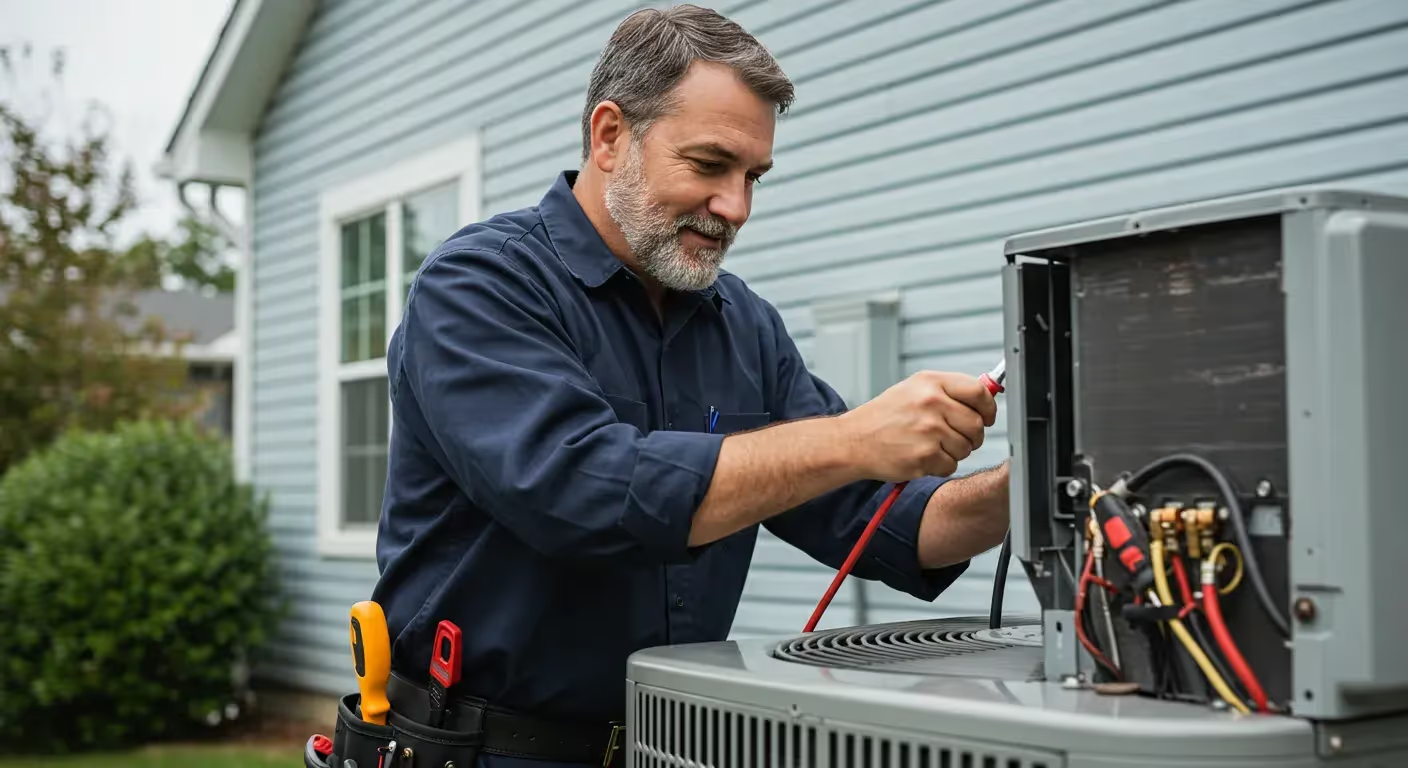
Upon arrival, the focus is on accurate diagnostics. Modern air conditioning systems are complex machines involving high-voltage electricity, high-pressure refrigerants, and intricate airflow dynamics. A noise in the compressor might actually be caused by a restriction in the metering device, or a frozen coil might result from a dirty filter rather than a leak. We utilize advanced diagnostic tools to read system pressures, measure superheat and subcooling, and test electrical components for resistance and continuity.
This thorough approach covers the entire cooling ecosystem. We inspect the indoor air handler, the outdoor condenser unit, the thermostat calibration, and the ductwork accessibility. Residents in Munfordville understand that humidity control is just as important as temperature reduction. Therefore, checking the condensate drain lines for clogs and algae buildup is a standard part of the service protocol to prevent water damage and ensure proper dehumidification.
The service appointment includes:
- Comprehensive System Evaluation: Testing of all safety controls, capacitors, contactors, and relays to ensure they are operating within manufacturer specifications.
- Refrigerant Level Checks: Verifying that the refrigerant charge is exact, as even a slight variance can significantly reduce efficiency and cooling capacity.
- Airflow Analysis: Measuring static pressure to ensure the blower motor is moving the correct volume of air across the evaporator coil.
- Electrical Safety Inspection: Tightening loose connections and inspecting wiring for signs of overheating or degradation.
The Process of Restoring Your Home Comfort
We have streamlined our service process to minimize disruption to your day while maximizing the effectiveness of the repair. We understand that inviting a technician into your home requires trust, which is why the process is transparent from start to finish. You remain informed at every decision point, ensuring there are no surprises regarding the scope of work or the final invoice.
Initial Dispatch and Arrival:
Once you request service, a technician is dispatched with a vehicle stocked with common parts and diagnostic equipment. We respect your time and provide clear arrival windows. Upon arrival, the technician will review the issues you are noticing, such as strange noises, warm air coming from vents, or short-cycling.
Detailed Diagnostic Phase:
The technician begins a systematic troubleshooting process. This involves isolating the electrical circuit, checking the thermostat communication, and physically inspecting the unit. We look for oil spots indicating leaks, swollen capacitors, burnt wires, or blocked coils. This phase is critical for distinguishing between a minor maintenance requirement and a major component failure.
Presentation of Findings and Options:
Before any wrench is turned for a repair, you receive a detailed explanation of the problem. If a part needs replacement, we explain what the part does and why it failed. If multiple options exist—such as repairing an aging part versus replacing it with a modern equivalent—those options are presented clearly. You approve the work before we proceed.
Execution of Repairs:
Once authorized, the repair is performed immediately using high-quality, OEM-grade parts whenever possible. Whether it is brazing a refrigerant line, replacing a fan motor, or clearing a condensate trap, the work is done to code. We adhere to strict environmental standards regarding refrigerant handling and recovery.
System Testing and Cleanup:
After the repair, the system is not just turned on; it is stress-tested. We monitor the system through a full cooling cycle to ensure the temperature drop across the coil is adequate and the unit shuts off properly when the thermostat is satisfied. The work area is cleaned, and all debris or old parts are removed from your property.
Determining When to Repair vs. Replace
One of the most difficult decisions a homeowner faces is whether to invest in a repair for an existing unit or to upgrade to a new system. This decision often arises when a major component, like a compressor or evaporator coil, fails on an older unit. Making the right financial choice requires balancing the immediate cost of repair against the long-term efficiency and reliability of a new system.
We often recommend using the "5,000 Rule" as a baseline for this decision. Multiply the age of your equipment (in years) by the estimated cost of the repair (in dollars). If the total exceeds $5,000, replacing the unit is generally the more increasingly prudent investment. For example, if you have a 12-year-old unit and the repair costs $500, the total is 6,000, suggesting replacement is wise. Conversely, a $300 repair on a 5-year-old unit (Total: 1,500) makes repair the clear winner.
Beyond the math, there are technical factors that Carter Heating and Cooling considers when advising you:
Refrigerant Type:
Older systems often utilize R-22 refrigerant (Freon), which has been phased out and is now prohibitively expensive to restock. If your older system has a refrigerant leak, simply "topping it off" is rarely cost-effective. Modern systems use R-410A or newer eco-friendly alternatives that are more efficient and readily available.
Energy Efficiency (SEER2 Ratings):
Air conditioning technology has advanced rapidly. A unit installed 15 years ago likely has a Seasonal Energy Efficiency Ratio (SEER) of 10 or 12. New regulations require higher minimum efficiencies. upgrading to a high-efficiency system can reduce monthly energy bills by a significant margin, essentially helping the new unit pay for itself over time.
Frequency of Breakdowns:
If you find yourself calling for service every spring and twice during the summer, the cumulative cost of service calls and minor repairs is likely exceeding the monthly payment of a financed new system. A reliable system provides peace of mind that an older, "limping" system cannot offering.
Comfort Issues:
As units age, they lose capacity. If your AC runs continuously but never quite reaches the set temperature, or if you have hot and cold spots throughout the house, the system may simply be at the end of its mechanical life. New systems often feature two-stage or variable-speed compressors that provide superior humidity control and consistent temperatures.
Local Considerations for Munfordville Homeowners
Operating an air conditioning system in Central Kentucky presents specific challenges due to our distinct climate and local infrastructure. The transition from cool, damp springs to hot, humid summers places a heavy load on HVAC equipment. In Munfordville, humidity control is often just as critical as temperature control. An oversized unit will cool the house too quickly without running long enough to remove moisture, leading to a "clammy" feeling and potential mold growth. Conversely, an undersized unit will run continuously, driving up utility bills without satisfying the thermostat.
Permitting and Code Compliance:
Any significant alteration to your HVAC system, particularly full replacements or ductwork modifications, must adhere to local building codes. These regulations ensure that electrical connections are safe, gas lines (if applicable for furnace combinations) are secure, and units are properly spaced from property lines. We handle the logistical details of ensuring all work remains compliant with city and county regulations.
Utility Infrastructure:
Local power fluctuations can impact the longevity of sensitive electronic components in modern AC units. We frequently recommend the installation of surge protectors specifically designed for HVAC systems to guard against voltage spikes that can fry circuit boards or compressor motors.
Seasonal Maintenance Windows:
In this region, the ideal time for preventive maintenance is early spring. Waiting until the first 90-degree day in July often results in longer wait times due to high demand. Homeowners who schedule pre-season checks ensure their capacitors are within range and coils are clean before the heavy lifting of summer begins.
Why Professional Diagnosis Matters
In the age of online tutorials, some homeowners attempt to diagnose AC issues themselves. However, modern HVAC equipment involves high voltage (240V) and high-pressure gases that pose significant safety risks to untrained individuals. Furthermore, misdiagnosing a problem can lead to expensive mistakes. For instance, replacing a thermostat when the issue is actually a tripped safety float switch in the attic results in wasted money and continued downtime.
Professional service ensures that warranties remain intact. Most manufacturer warranties explicitly state that parts must be installed by a licensed professional to remain valid. DIY repairs often void these warranties, leaving you responsible for the full cost of future failures.
We bring specific tools to the job that are not standard in a homeowner’s toolbox:
- Manifold Gauges: To accurately read saturation temperatures and pressures.
- Multimeters: To trace low-voltage control shorts and check high-voltage amperage draw.
- Leak Detectors: Electronic sniffers that can pinpoint refrigerant leaks that are invisible to the naked eye.
- Psychrometers: To measure the wet-bulb and dry-bulb temperature of the air entering and leaving the system.
Common Air Conditioning Failure Points We Resolve
Understanding what goes wrong can help you communicate effectively when you request service. While every system is unique, we frequently encounter and resolve specific issues in the Munfordville area.
Frozen Evaporator Coils:
Ice should never appear on your air conditioner. If you see ice on the outdoor lines or the indoor coil, it indicates a problem. This is usually caused by restricted airflow (dirty filters, blocked vents) or low refrigerant levels. Continuing to run a frozen unit can permanently damage the compressor.
Clogged Condensate Drains:
Your AC removes gallons of water from the air daily. If the drain line clogs with algae or debris, water can back up. Modern systems have float switches to shut the unit off to prevent water damage, resulting in a system that simply won't turn on.
Capacitor Failure:
Capacitors act like batteries that give your motors the jolt they need to start. They are the most common component to fail during heat waves. When a capacitor dies, the fan or compressor may hum but fail to spin, leading to overheating.
Contactors and Relays:
These electrical switches control the power flow to the compressor and fan. Over time, the contacts can become pitted or burnt, preventing the unit from receiving power or causing it to stick in the "on" position.
Thermostat Calibration Issues:
Sometimes the unit is fine, but the brain controlling it is confused. We resolve issues where the thermostat reads the wrong temperature or fails to send the correct signals to the equipment.
Ensuring Long-Term Efficiency
Beyond the immediate repair, our service aims to improve the overall efficiency of your cooling system. A clean, well-tuned machine uses less electricity to provide the same amount of cooling. We inspect the condenser coil for dirt and debris accumulation. Cottonwood, grass clippings, and dust can form a blanket over the outdoor coil, preventing heat release. This forces the compressor to work harder and run hotter, shortening its lifespan.
We also examine ductwork for leaks. In many homes, cooled air escapes into the attic or crawlspace through gaps in the ductwork before it ever reaches your living rooms. Sealing these leaks is one of the most effective ways to lower utility bills and improve comfort in rooms that are historically difficult to cool.
Ready to Restore Your Comfort?
Ignoring strange noises, weak airflow, or rising energy bills will only lead to more significant repairs down the road. Your home comfort system is vital for navigating the Kentucky summer safely. Whether you require an emergency repair to get through a heatwave or a comprehensive inspection to prevent future breakdowns, professional assistance is the most reliable path forward.
Do not let a malfunctioning air conditioner compromise your comfort for another day. Take action now to ensure your system is operating at peak performance.
Call Carter Heating and Cooling today to schedule your air conditioning service or to learn more about our repair and installation solutions.

Great Service at a Fair Price
Veterans Discount


Senior Discount

Law Enforcement

Fire fighters/ems

Hear From Your Neighbors!
Hear from your neighbors to see how our commitment to dependable service and lasting comfort has made a difference in their homes.