

How can we help today?
Choose an option to see quick actions and get help faster.Whole House Dehumidifier Repair in Munfordville, KY
Whole House Dehumidifier Repair in Munfordville, KY
Struggling with indoor humidity in Munfordville? Contact Carter Heating and Cooling for reliable dehumidifier repairs and restore your home's comfort now.
Instant Relief for Your Dehumidifier Woes
High indoor humidity levels in Munfordville can turn a comfortable home into a breeding ground for mold and allergens quickly when your system fails. Carter Heating and Cooling provides immediate, professional diagnostics and repair to restore the balance of moisture in your home; contact us today to schedule your service.
Living in a humid subtropical climate means your whole-house dehumidifier is not a luxury—it is an essential component of your home’s infrastructure. When this system malfunctions, you face sticky air, potential structural damage from moisture, and increased strain on your air conditioning unit. We understand the urgency required to fix these issues before they escalate into costly remediation projects.
- Rapid System Diagnostics: Our technicians identify the root cause of failure, from sensor errors to compressor issues, often providing same-day assessments.
- Transparent Repair Costs: You receive a clear explanation of the necessary repairs and a firm quote before any work begins.
- Warranty-Backed Service: All repairs are performed to manufacturer standards and backed by warranties that ensure long-term performance.
Licensed, insured, and ready to serve—your satisfaction is guaranteed.
Comprehensive Diagnostics and Repair Scope
When a technician arrives at your property, the primary objective is to accurately isolate the mechanical or electrical failure within the dehumidification system. Unlike portable units, whole-house systems are integrated into your HVAC ductwork or dedicated closet spaces, requiring specialized tools for access and testing. The service visit focuses on restoring the unit to its original factory specifications rather than applying temporary patches.
The scope of a repair visit encompasses a full system audit. This ensures that the symptom you are noticing—such as a unit that runs constantly without removing water or a unit that refuses to turn on—is treated at the source. Technicians evaluate the refrigerant levels, electrical connections, and drainage mechanisms. In many cases, what appears to be a total system failure is a specific component issue that can be rectified efficiently.
During a standard repair appointment, you can expect the following assessments:
- Electrical Circuit Testing: Technicians check the voltage and amperage draw of the compressor and fan motor to ensure they are within safe operating ranges.
- Control Board Analysis: The electronic brain of the unit is tested to verify it is sending the correct signals to the humidistat and mechanical components.
- Refrigerant Charge Verification: If the unit is running but not dehumidifying, the refrigerant charge is measured to detect leaks or under-charge scenarios.
- Airflow and Static Pressure Checks: Proper airflow is critical; technicians measure static pressure to ensure the ductwork is not restricting performance.
- Condensate Drain Clearing: Blocked drains are a common cause of shutdowns; the entire drainage path is cleaned and tested for proper flow.
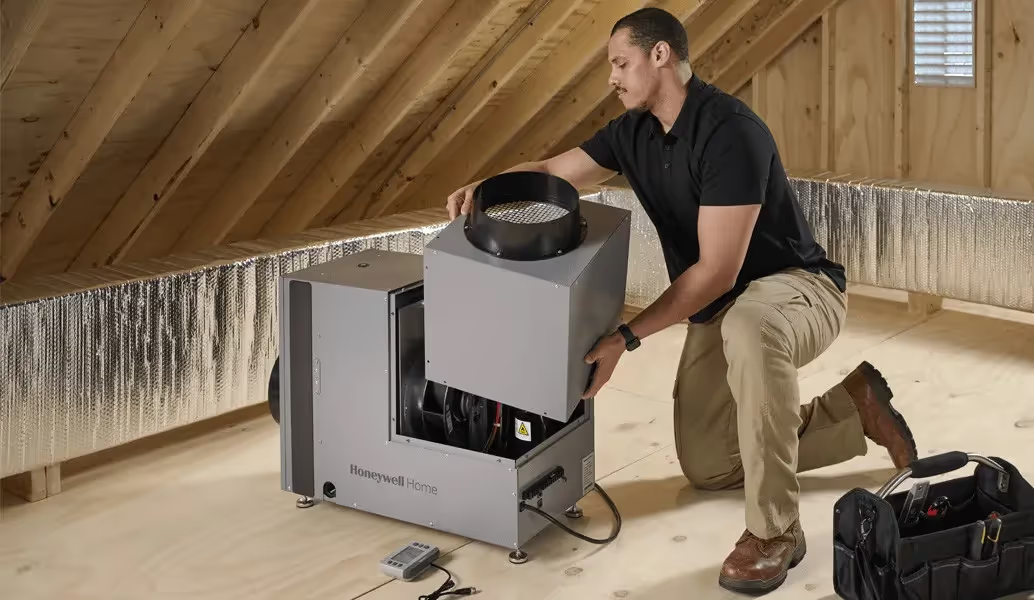
The Technical Repair Process From Start to Finish
Restoring a whole-house dehumidifier requires a methodical approach to ensure safety and system integrity. The process moves from isolation and safety checks to component replacement and performance verification. This structured workflow minimizes downtime and ensures that the repair addresses both the immediate failure and any underlying stressors on the system.
Technicians begin by isolating the unit from the power source to safely inspect internal components. This prevents electrical hazards while allowing for a detailed visual and instrument-based inspection. Once the unit is open, the technician systematically tests components based on the symptoms reported and the diagnostic codes present.
The repair workflow generally follows this sequence:
- Site Preparation and Safety Isolation: The area surrounding the unit is protected, and all high-voltage power sources are disconnected and locked out.
- Component Isolation: Using a multimeter, the technician tests individual components such as capacitors, relays, and sensors to identify the faulty part.
- Part Replacement or Repair: The defective component is carefully removed. For refrigerant-based repairs, the system may need to be evacuated and recharged. Electrical parts are replaced with OEM-equivalent components.
- System Reassembly: Once the new part is installed, the unit is reassembled, ensuring all seals and gaskets are tight to prevent air leaks.
- Operational Testing: Power is restored, and the system is forced into a run cycle. The technician monitors the humidity drop across the coil to verify the unit is actively removing moisture.
- Cycle Verification: The system is allowed to run through a complete cycle to ensure the humidistat effectively turns the unit off once the target humidity level is reached.
Evaluating Repair Viability Versus System Replacement
Deciding whether to repair an existing dehumidifier or invest in a new system is a financial and logical decision based on the age and condition of the unit. Whole-house dehumidifiers typically have a lifespan ranging from eight to fifteen years, depending on usage and maintenance. When facing a significant repair, it is crucial to weigh the cost of the fix against the remaining useful life of the equipment.
Homeowners must consider the "50% Rule." If the cost of the repair approaches or exceeds 50% of the cost of a new unit, replacement is often the more prudent financial choice. Additionally, if the unit utilizes an outdated refrigerant type that is becoming expensive or obsolete, investing in a repair may result in diminishing returns.
Key factors to consider when making this decision include:
- Age of the Equipment: Units over ten years old are nearing the end of their service life. A major repair on a unit this age is often followed by another failure shortly after.
- Frequency of Breakdowns: If the system has required multiple repairs in the last two years, it indicates that the internal components are failing sequentially.
- Compressor Health: The compressor is the heart of the system. If the compressor has failed, replacement of the entire unit is usually recommended due to the high labor and part costs involved.
- Energy Efficiency: Newer models are significantly more energy-efficient. Replacing an old, struggling unit can result in monthly utility savings that offset the installation cost.
- Warranty Status: If the unit is still under manufacturer warranty, a repair is almost always the right choice, as you may only be responsible for labor costs.
Navigating Regional Climate Challenges and Requirements
In Munfordville, the climate presents specific challenges that dictate how dehumidifiers must operate. The region experiences a humid subtropical climate, characterized by hot, muggy summers and variable spring weather. This environment places a heavy load on dehumidification systems, often requiring them to run for extended periods to maintain indoor relative humidity below the recommended 50-55% threshold.
Failure to maintain low humidity in this region does not just affect comfort; it impacts the structural integrity of the home. Wood floors can cup or warp, and drywall can absorb moisture, leading to mold growth behind paint and wallpaper. A functioning dehumidifier is the first line of defense against these climate-specific risks.
Local considerations for repair and operation include:
- Seasonal Load Variations: The system works hardest from May through September. Repairs should ideally be scheduled before the peak humidity season begins to avoid downtime during critical months.
- Crawl Space Encapsulation: Many local homes utilize crawl spaces. Dehumidifiers in these areas must be specifically rated for lower temperatures and tougher environmental conditions.
- Drainage Regulations: Condensate must be disposed of according to local building codes. In some setups, this requires condensate pumps to move water to a proper drain line rather than dumping it near the foundation.
- Electrical Capacity: Older homes may need circuit verification to ensure the electrical panel can handle the sustained draw of a high-capacity dehumidifier during peak summer heat.
Technical Precision and Manufacturer-Grade Standards
Choosing the right service provider for dehumidifier repair is about ensuring the longevity and efficiency of your system. Carter Heating and Cooling employs technicians who are trained to handle the complexities of both standalone and ducted dehumidification systems. The difference between a general handyman fix and a professional HVAC repair lies in the diagnostic tools used and the adherence to manufacturer protocols.
Modern whole-house dehumidifiers are sophisticated appliances involving refrigeration cycles, advanced electronics, and precise airflow calculations. A technician must understand psychrometrics—the study of air and moisture—to properly tune a system. Improper repairs, such as overcharging refrigerant or bypassing safety switches, can lead to catastrophic failures or fire hazards.
Professional service ensures the following standards are met:
- Accurate Load Calculation: Verifying that the unit is actually sized correctly for the space. A unit that is too small will run continuously and burn out; a unit that is too large will short-cycle and fail to control humidity.
- Proper Refrigerant Handling: Technicians are EPA-certified to handle refrigerants safely, ensuring no environmental contamination and optimal system pressure.
- Ductwork Integration: For ducted systems, technicians ensure that the supply and return connections are sealed and positioned to maximize moisture removal without disrupting the main HVAC system's airflow.
- Sensor Calibration: Humidistats can drift over time. Professionals calibrate these sensors to ensure the reading on your wall matches the actual moisture content of the air.
Maintaining Air Quality and Structural Integrity
The stakes of a malfunctioning dehumidifier go beyond simple discomfort. Excess moisture encourages the proliferation of dust mites and mold spores, which are primary triggers for allergies and asthma. Furthermore, sustained high humidity can damage electronics, musical instruments, and antique furniture. Addressing repairs promptly preserves both the health of the home’s occupants and the value of the property itself.
Ignoring the signs of a failing system—such as strange noises, ice buildup on coils, or a musty odor—often leads to more extensive damage. Water leaks from a frozen or clogged unit can damage ceilings and flooring. Proactive repair addresses these symptoms before they result in collateral damage to the home.
Restoring Comfort and Efficiency
A well-functioning whole-house dehumidifier is the unsung hero of indoor climate control. It allows your air conditioner to run less often by removing the latent heat (moisture) from the air, making the home feel cooler at higher temperatures. This synergy between the AC and the dehumidifier is vital for energy efficiency and comfort.
When repairs are conducted correctly, the system returns to peak efficiency. You will notice the difference immediately: the air feels lighter, odors dissipate, and the clammy feeling on skin and surfaces disappears. Investing in professional repair restores this level of environmental control.
Carter Heating and Cooling is dedicated to providing the expertise required to diagnose and resolve these complex issues efficiently. Do not let humidity compromise your home environment or your health.
Take control of your indoor air quality today—schedule your professional dehumidifier repair now.

Great Service at a Fair Price
Veterans Discount


Senior Discount

Law Enforcement

Fire fighters/ems

Hear From Your Neighbors!
Hear from your neighbors to see how our commitment to dependable service and lasting comfort has made a difference in their homes.