
How can we help today?
Choose an option to see quick actions and get help faster.Heating Tune-up in Munfordville, KY
Heating Tune-up in Munfordville, KY
Heating Tune-up in Munfordville, KY
Sudden Heating Issues? Fast Tune-Up Services Available!
When your heater quits in the middle of the coldest night, you need immediate and reliable solutions. At Carter Heating and Cooling, we offer quick, comprehensive heating tune-ups to ensure your comfort without delay. Contact us today to schedule your service or apply for financing to secure your home comfort.
- Certified technicians on-call 24/7 to handle any heating emergency.
- Same-day service to restore your heating system’s efficiency and performance.
- Affordable, upfront pricing with no hidden fees.
All services fully insured and compliant with Kentucky state HVAC regulations.
Comprehensive Heating Maintenance: What Is Included in Your Visit
A heating tune-up is not merely a superficial dusting of your equipment; it is a rigorous, technical examination designed to bring your system back to factory specifications. When you request a service visit in Munfordville, the goal is to identify potential failure points before they leave you without heat during a winter freeze. Professional maintenance addresses the mechanical, electrical, and safety components of your HVAC system to ensure reliable operation.
Safety Inspection and Carbon Monoxide Testing
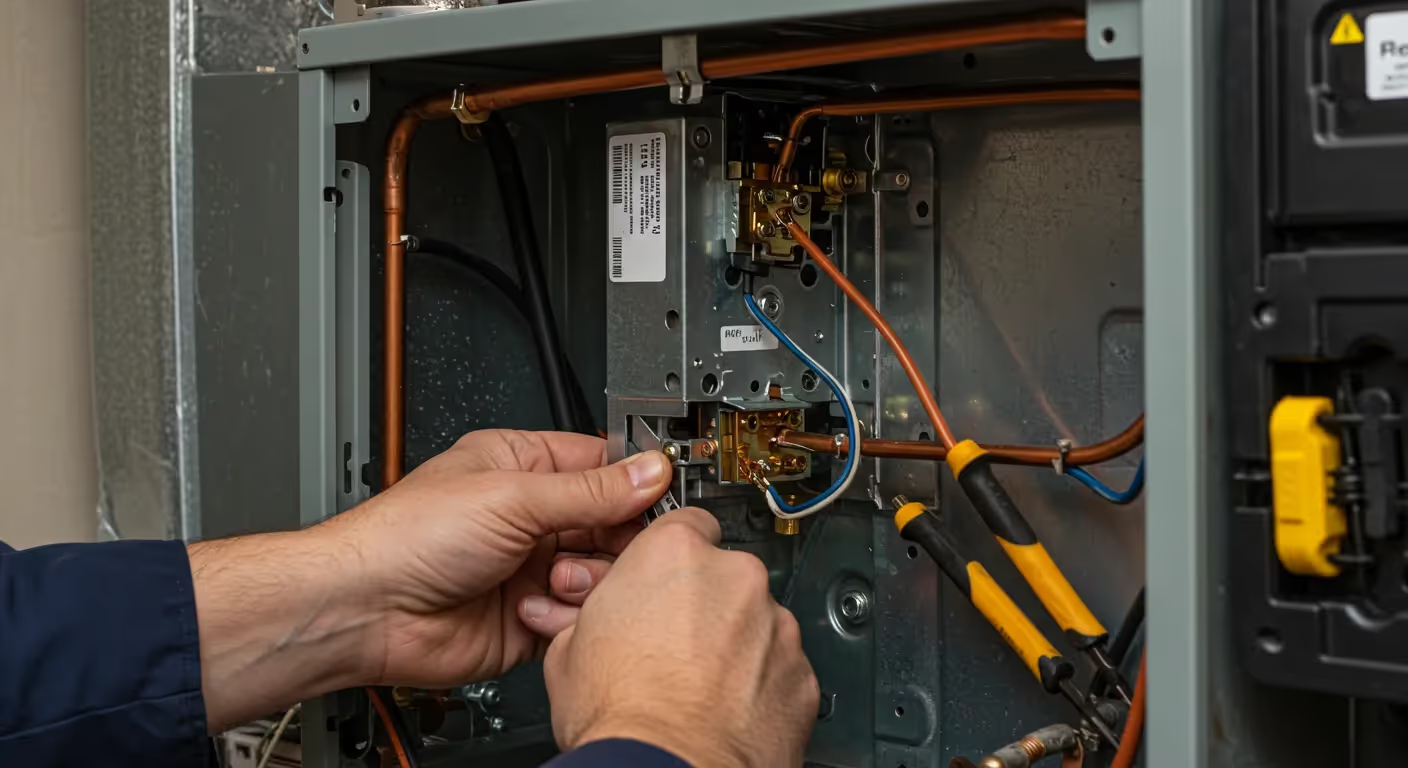
The most critical aspect of any heating maintenance visit is safety verification. For gas furnaces, this involves a detailed inspection of the heat exchanger. Over time, the constant expansion and contraction from heating cycles can cause hairline cracks in the metal. These cracks can allow carbon monoxide—a colorless, odorless gas—to escape into the living space. A professional tune-up includes testing for gas leaks, verifying proper venting of exhaust gases, and ensuring all safety switches (such as the limit switch and rollout switch) are functioning correctly.
Component Cleaning and Lubrication
Friction and dirt are the enemies of heating efficiency. During a tune-up, technicians focus on cleaning the blower assembly and the burner compartment. If the burners are dirty, they cannot achieve proper combustion, leading to wasted fuel and soot buildup. Additionally, moving parts such as the blower motor and inducer motor require precise lubrication. Without this, friction increases, causing the motors to overheat and eventually seize, resulting in expensive repairs.
Electrical Connection Tightening
Modern heating systems rely heavily on complex electrical circuits. Vibrations from normal operation can loosen wire connections over time. Loose connections create resistance, which generates heat and can lead to burnt wires or failed components. Technicians systematically inspect the control board, thermostat wiring, and capacitor performance. Ensuring that voltage and amperage draws are within the manufacturer’s specified range prevents premature component failure.
The Tune-Up Process: How We Restore System Performance
Understanding the workflow of a professional heating tune-up helps homeowners know what to expect during the service appointment. The process is designed to be efficient and thorough, minimizing disruption to your daily routine while maximizing the performance of your heating unit.
Initial System Diagnostics
The service begins with a baseline assessment. Before opening the unit, the technician operates the system to listen for unusual noises like rattling, banging, or squealing, which indicate mechanical stress. They also check the thermostat’s responsiveness. If the temperature reading on the wall does not match the actual room temperature, or if the system short-cycles (turns on and off too frequently), these are initial indicators of underlying issues that guide the rest of the inspection.
The 21-Point Tune-Up Checklist
Once the initial assessment is complete, the physical work begins. This involves a systematic checklist that covers every vital part of the heater.
- Inspection of the flue pipe for obstructions or corrosion.
- Cleaning and adjustment of the pilot light or igniter assembly.
- Inspection of the air filter and recommendation for replacement if clogged.
- Checking the condensate drain line (for high-efficiency furnaces and heat pumps) to prevent water damage.
- Measurement of temperature rise (the difference in air temperature entering and leaving the unit) to ensure the system is not overheating or underperforming.
- Calibration of the gas valve to ensure the correct pressure is being delivered to the burners.
- Verification of airflow settings to match the ductwork capacity.
Post-Service Performance Testing
After cleaning, tightening, and calibrating, the system is reassembled and run through a full heating cycle. This "test drive" confirms that the adjustments have resolved any efficiency issues. The technician will measure the system’s output against the baseline established at the start of the visit. You receive a detailed report of the work performed, the current status of the equipment, and any recommendations for future repairs if worn parts were detected.
Why Regular Maintenance Prevents Costly Breakdowns
Many homeowners view maintenance as an optional expense, but in reality, it is an investment that lowers the total cost of ownership. Skipping seasonal tune-ups often leads to "run-to-failure" scenarios where minor issues cascade into catastrophic system failures.
Extending Equipment Lifespan
Heating systems are significant investments intended to last 15 to 20 years. However, neglect significantly shortens this timeline. When components like the blower wheel are caked with dust, the motor has to work harder to push air. This added stress burns out motors years before their expected end of life. Regular maintenance ensures that the system runs under optimal conditions, allowing it to reach or even exceed its projected lifespan.
Reducing Monthly Energy Consumption
A well-tuned heater uses less energy to heat your home. When the air filter is clean, the burners are tuned, and the airflow is unobstructed, the system reaches the set temperature faster and maintains it with less effort. In contrast, a neglected system runs longer cycles to achieve the same level of comfort. This inefficiency shows up directly on your monthly utility bills. Regular calibration ensures you are paying for heat, not wasted energy.
Maintaining Manufacturer Warranties
Most heating equipment manufacturers include a specific clause in their warranty documentation: the warranty is valid only if the equipment receives regular professional maintenance. If a major part fails and you cannot provide proof of annual tune-ups, the manufacturer may void the warranty, leaving you responsible for the full cost of the replacement part. Keeping records of your service visits protects your warranty coverage.
Repair vs. Replace: Understanding When a Tune-Up Isn't Enough
While a tune-up can resolve many performance issues and prevent future problems, there comes a point where maintenance is no longer the most improved financial decision. Recognizing the signs that a system has reached the end of its viable life helps you avoid sinking money into a dying unit.
Age of the Unit
If your furnace or heat pump is over 15 years old, it is approaching the end of its useful life. Even with a tune-up, an older unit will inherently be less efficient than modern standards. New systems utilize advanced technology, such as variable-speed motors and modulating gas valves, which offer significant energy savings compared to single-stage units from two decades ago.
Frequency of Repairs
If you find yourself calling for repairs multiple times in a single winter, or if the repairs are becoming increasingly complex, it may be time to replace. A good rule of thumb is the "50% rule": if the cost of the repair approaches 50% of the cost of a new system, replacement is generally the wiser investment. A tune-up cannot reverse severe mechanical wear or corrosion that necessitates major component replacement.
Efficiency Drops and Comfort Issues
Does your home have cold spots? Is the air dry and uncomfortable? Are your utility bills rising despite usage remaining the same? These are signs that the system is losing compression or that the heat exchanger is failing. While a tune-up optimizes what is there, it cannot fix a system that is undersized or fundamentally worn out. In these cases, upgrading to a higher SEER or AFUE-rated unit provides better long-term value.
Heating Considerations for Munfordville Homeowners
Operating a heating system in Kentucky requires attention to specific regional factors. The local climate and infrastructure influence how your system performs and what kind of maintenance is most critical.
Handling Kentucky Winters
Munfordville experiences moderate winters with occasional snowfall and freezing temperatures. This climate often makes heat pumps a popular choice, as they are efficient in moderate cold. However, when temperatures drop significantly, the auxiliary heat strips (emergency heat) must engage. A tune-up ensures that this transition happens seamlessly. For homes with gas furnaces, the humidity of the region can accelerate corrosion on metal parts if not properly vented and drained. Ensuring your system is prepared for both the damp cold and the freezing spikes is essential for consistent comfort.
Local Utility Incentives and Compliance
Homeowners should be aware of local codes regarding HVAC operation. Proper venting and electrical adherence are not just safety issues but compliance requirements. Furthermore, many local utility providers offer rebates or incentives for maintaining high-efficiency systems. Keeping your system tuned up often qualifies you for these programs. Carter Heating and Cooling ensures that all maintenance work adheres to local Munfordville and Hart County safety codes, keeping your home compliant and safe.
Why Choose Professional HVAC Services
Attempting DIY maintenance on a heating system is rarely advisable due to the safety risks involved with gas lines, high voltage electricity, and combustion gases. Professional technicians bring the training, tools, and certifications necessary to perform the job correctly.
Certified Expertise
Technicians undergo rigorous training to understand the thermodynamics and electrical theory behind modern heating systems. They carry specialized tools, such as manometers for gas pressure and combustion analyzers for exhaust gases, which are not available to the average homeowner. This expertise allows for a depth of diagnostic capability that goes far beyond simply changing a filter.
Reliability You Can Trust
When you hire a professional service, you are paying for the assurance that if something goes wrong, there is a team ready to support you. Professional providers stand behind their work with labor warranties and satisfaction guarantees. Whether it is a routine check-up or an urgent fix during a storm, having a relationship with a reliable service provider ensures that your home remains a sanctuary against the cold.
Keep Your Home Warm With Confidence
Prevent unexpected breakdowns and rising energy costs by staying ahead of heating issues with professional maintenance. Carter Heating and Cooling delivers detailed tune-ups, expert diagnostics, and long-term solutions supported by maintenance plans, special HVAC offers, and financing options. Do not wait for the coldest night of the year—contact Carter Heating and Cooling today to schedule your heating tune-up and enjoy dependable comfort all winter long.
Don't wait for your system to fail on the coldest day of the year. Secure your peace of mind and lower your energy bills by scheduling your heating tune-up today. Our team is ready to restore your system to peak performance — contact us today.

Great Service at a Fair Price
Veterans Discount


Senior Discount

Law Enforcement

Fire fighters/ems

Hear From Your Neighbors!
Hear from your neighbors to see how our commitment to dependable service and lasting comfort has made a difference in their homes.