

How can we help today?
Choose an option to see quick actions and get help faster.AC Installation in Munfordville, KY
AC Installation in Munfordville, KY
Restore your home's comfort with rapid AC installation services in Munfordville. Ensure efficient climate control with certified technicians. Call now to schedule!
Restore Your Home’s Cool Comfort Immediately
Facing the harsh summer heat or preparing for the cold winter in Munfordville requires a reliable climate control system that does not fail when you need it most. Carter Heating and Cooling is ready to help you regain control over your indoor temperature today; contact us to discuss financing options or schedule your service.
When humidity levels rise and temperatures peak in the low 90s, an old or malfunctioning air conditioner becomes more than a nuisance; it becomes a safety hazard. We provide comprehensive installation solutions designed to handle the specific climate demands of Central Kentucky.
- Experience rapid installation services to restore safe temperatures to your home swiftly.
- Rely on certified technicians with deep knowledge of local building codes and climate challenges.
- Enjoy long-term peace of mind with robust manufacturer warranties and our own labor guarantees.
Our team handles all necessary permits and compliance requirements, ensuring your new system is installed correctly and legally from day one.
What to Expect from Your AC Installation Today
Choosing to install a new air conditioning system is a significant investment in your property and your daily comfort. When you move forward with an installation, the goal is to eliminate the inefficiency and unreliability of your current situation immediately. We prioritize a seamless transition from your old unit to a modern, high-efficiency system.
Modern installations go beyond simply swapping one metal box for another. The focus is on matching the equipment to the specific thermal characteristics of your home. In Munfordville, where humidity control is just as important as temperature control, proper equipment selection is critical. You can expect a thorough assessment of your existing ductwork to ensure it can handle the airflow of a modern, high-static pressure system.
The scope of work generally includes the safe removal and disposal of your old equipment, adhering to EPA regulations regarding refrigerant handling. Following removal, the installation team prepares the site, ensuring the pad is level and stable to prevent vibration noise and future wear. We also inspect the electrical connections and disconnect boxes to verify they meet current safety standards, upgrading them if necessary to handle the amperage of the new unit.
By the end of the day, the objective is to have a fully operational system that runs quieter, cools faster, and consumes less energy than the unit it replaced. We provide a complete walkthrough of the new thermostat and maintenance requirements, ensuring you understand exactly how to maximize the lifespan of your new asset.
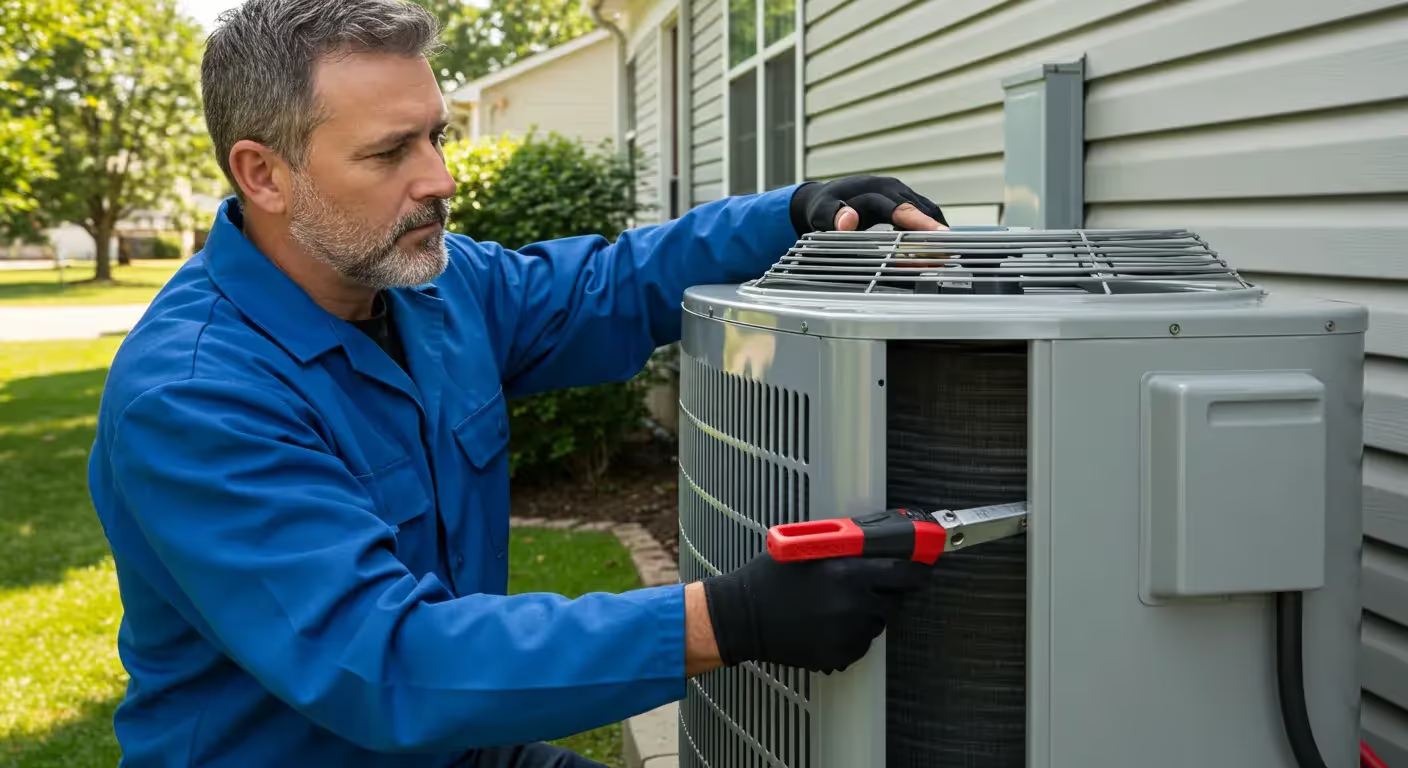
Our Step-by-Step AC Installation Process
A flawless installation relies on a strict, technical process. We do not skip steps or cut corners, as the longevity of your air conditioner is directly tied to the quality of the installation.
Load Calculation and Sizing
The process begins with a Manual J load calculation. We measure your home’s square footage, assess insulation levels, count windows, and evaluate the orientation of the house relative to the sun. This ensures the unit is neither too small (which causes it to run constantly) nor too big (which causes short-cycling and poor humidity removal).
Site Preparation and Protection
Technicians lay down drop cloths and wear shoe covers to protect your flooring. We clear the area around the outdoor condenser and the indoor evaporator coil. If the existing copper line set is reusable, we flush it thoroughly to remove old oil and contaminants. If not, we run new refrigerant lines to ensure system purity.
Equipment Placement and Connection
The indoor and outdoor units are positioned and secured. We braze the refrigerant lines using nitrogen purging to prevent oxidation inside the pipes, a crucial step that prevents future blockages in the expansion valve or compressor. Electrical wiring is connected and tightened to torque specifications to prevent overheating.
System Evacuation and Charging
Before releasing the refrigerant, we use a vacuum pump to remove moisture and air from the lines, measuring the vacuum down to 500 microns. This ensures a pure, sealed system. We then weigh in the exact amount of refrigerant required by the manufacturer’s specifications, adjusting for the length of the line set.
Final Commissioning and Testing
The system is powered on and tested for airflow, static pressure, and temperature differential (the difference in temperature between the supply and return air). We verify that the thermostat is communicating correctly with the equipment and that all safety switches are operational.
When to Opt for AC Replacement Over Repair
Deciding between repairing an aging unit and investing in a new system is a common dilemma for homeowners. While repairs can offer a short-term fix, there are specific technical and financial indicators that suggest replacement is the more prudent financial decision.
The 50% Rule
If the cost of the repair approaches or exceeds 50% of the value of a new system, replacement is generally recommended. Dumping significant money into a depreciating asset often leads to diminishing returns, especially if the warranty has expired.
Age of the System
Most air conditioners in the Kentucky climate last between 10 and 15 years. If your unit is approaching this age range, major components like the compressor or coils are likely nearing the end of their lifecycle. Replacing the unit proactively prevents emergency breakdowns during a heatwave.
Refrigerant Type
Older units often use R-22 (Freon), which has been phased out and is incredibly expensive to source. If your older unit has a refrigerant leak, the cost to recharge it may be exorbitant. Modern systems use R-410A or newer, more environmentally friendly refrigerants that are more efficient and affordable.
Frequent Breakdowns and Energy Bills
If you have required multiple service calls in the last two years, the system is becoming unreliable. Additionally, if you notice a steady increase in your energy bills despite normal usage, the internal efficiency of the unit has degraded. New SEER2-compliant systems can significantly reduce monthly utility costs, helping the new unit pay for itself over time.
Carter Heating and Cooling helps you evaluate these factors objectively, providing data-backed recommendations rather than sales pressure.
Local Insights: Permits & Seasonal Tips for Munfordville
Operating an HVAC system in Munfordville requires specific attention to regional variables. The local climate, characterized by high humidity in the summer and moderate snowfall in the winter, dictates how systems should be installed and maintained.
Permitting and Code Compliance
Local building codes change periodically to reflect new safety and efficiency standards. Any substantial modification to your home’s mechanical systems requires adherence to these codes. We manage the permitting process to ensure your installation passes all municipal inspections. This is vital not only for safety but also for the resale value of your home, as unpermitted work can complicate real estate transactions.
Humidity Management
In this region, an air conditioner must act as a dehumidifier. If a unit is oversized, it will cool the house too quickly and shut off before it has removed enough moisture from the air. This leads to a "clammy" feeling indoors and increases the risk of mold growth in ductwork. We size systems specifically to handle the latent heat load (humidity) prevalent in the area.
Electrical and Utility Considerations
We verify that your electrical panel has sufficient capacity for modern high-efficiency equipment. While newer units are often more energy-efficient, they may have different amperage requirements than systems installed 20 years ago. Ensuring your electrical infrastructure is sound prevents tripped breakers and fire hazards.
Seasonal Maintenance Strategy
Because the weather shifts distinctly across four seasons, your AC unit sits dormant for months at a time. We recommend installing units with crankcase heaters or ensuring proper startup procedures are followed in the spring to prevent compressor damage after a cold winter.
Advanced Technology and Efficiency Ratings
The HVAC industry has seen rapid technological advancements in recent years. Understanding these features helps you choose a system that offers the best comfort and lowest operating costs.
SEER2 Ratings
The Seasonal Energy Efficiency Ratio (SEER) measures cooling efficiency. The Department of Energy recently updated these standards to SEER2, which reflects more real-world testing conditions. Higher SEER2 ratings indicate a more efficient unit that costs less to run. We help you calculate the return on investment for higher-efficiency models based on your usage patterns.
Variable Speed Compressors
Traditional AC units operate at one speed: 100% capacity. They blast cold air until the thermostat is satisfied, then shut off. Variable speed or two-stage compressors can run at lower speeds to maintain a consistent temperature. This technology eliminates temperature swings, reduces noise, and provides superior humidity control.
Smart Thermostat Integration
Modern installations often include smart thermostats that learn your schedule and adjust temperatures automatically. These devices can be controlled remotely via smartphone, allowing you to cool your home before you arrive or monitor usage while you are away.
Why Professional Installation Matters
The single most important factor in the performance of an air conditioner is the quality of the installation. Even the most expensive, highest-rated equipment will fail prematurely if installed incorrectly.
Ductwork Integrity
A new AC unit cannot perform well if it is connected to leaky or undersized ductwork. We inspect the distribution system to ensure air is delivered efficiently to every room. Sealing ductwork prevents conditioned air from escaping into attics or crawlspaces, ensuring you get the cooling you pay for.
Refrigerant Charge Accuracy
An incorrect refrigerant charge reduces efficiency and damages the compressor. Overcharging can cause liquid refrigerant to enter the compressor (slugging), while undercharging causes the coils to freeze. We use precision digital gauges to ensure the charge is exact.
Airflow Balancing
Proper airflow is essential for heat exchange. We adjust blower speeds and dampers to ensure the system moves the correct volume of air across the evaporator coil. This maximizes cooling capacity and prevents the system from overheating.
Securing Your Comfort for the Long Haul
Your home is your sanctuary, and its temperature plays a massive role in your quality of life. An AC installation is not just a purchase; it is a long-term infrastructure upgrade for your property. By focusing on technical precision, proper sizing, and local climate adaptation, you ensure that your investment delivers consistent returns in the form of lower bills and higher comfort.
We are committed to providing Munfordville residents with installation services that stand the test of time. From the initial load calculation to the final thermometer check, every step is executed with professional rigor.
Don’t wait for a total system failure during the hottest week of the year. Upgrade your comfort and efficiency today by scheduling your consultation with Carter Heating and Cooling.
Call now to book your installation assessment or to learn more about our financing options.

Great Service at a Fair Price
Veterans Discount


Senior Discount

Law Enforcement

Fire fighters/ems

Hear From Your Neighbors!
Hear from your neighbors to see how our commitment to dependable service and lasting comfort has made a difference in their homes.